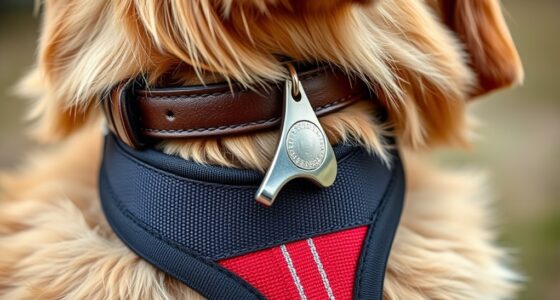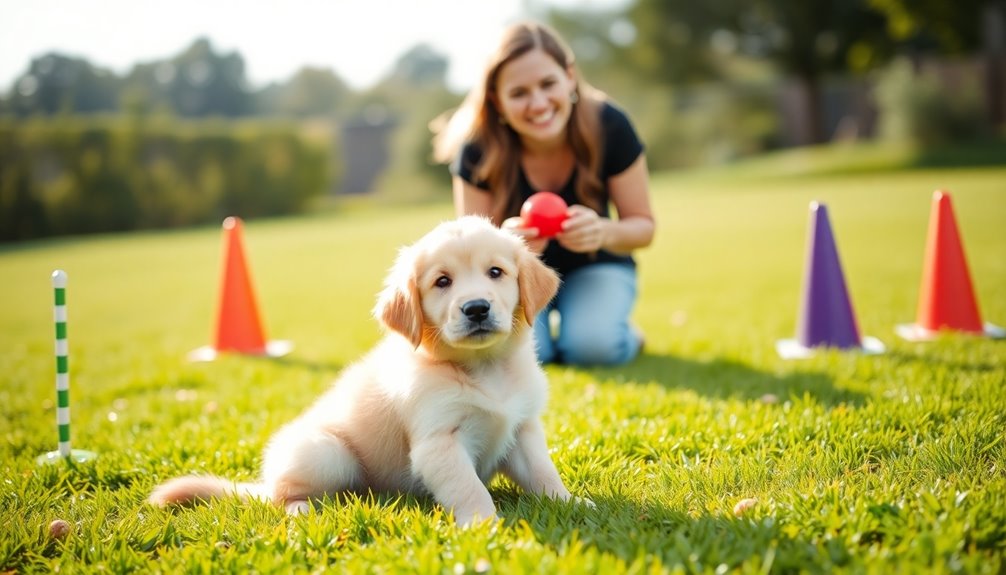

Puppy training is vital for teaching your pup good behavior and social skills. Focus on positive reinforcement, using treats or praise to encourage desired actions. Start with basic commands at home, then gradually introduce distractions in various environments. Keep sessions short, ideally 5 to 10 minutes, and always be patient. Remember, mistakes are part of the process, and consistency is key. There’s a lot more to explore on effective techniques and tools for a successful training journey.

Get pet supplies delivered free with Prime
- Fast, free delivery on millions of items
- Prime Video, Amazon Music and more included
- Member-only deals all year
Key Takeaways
- Use positive reinforcement techniques, such as treats and praise, to encourage desired behaviors in your puppy.
- Start training early, ideally within the first 3 to 6 months, to build a strong behavioral foundation.
- Create a distraction-free training environment at home before gradually introducing more challenging settings.
- Keep training sessions short (5-10 minutes) and practice daily for effective learning.
- Be patient and consistent, as mistakes are part of the puppy’s learning process.
As an affiliate, we earn on qualifying purchases.
Effective Training Methods for Puppies
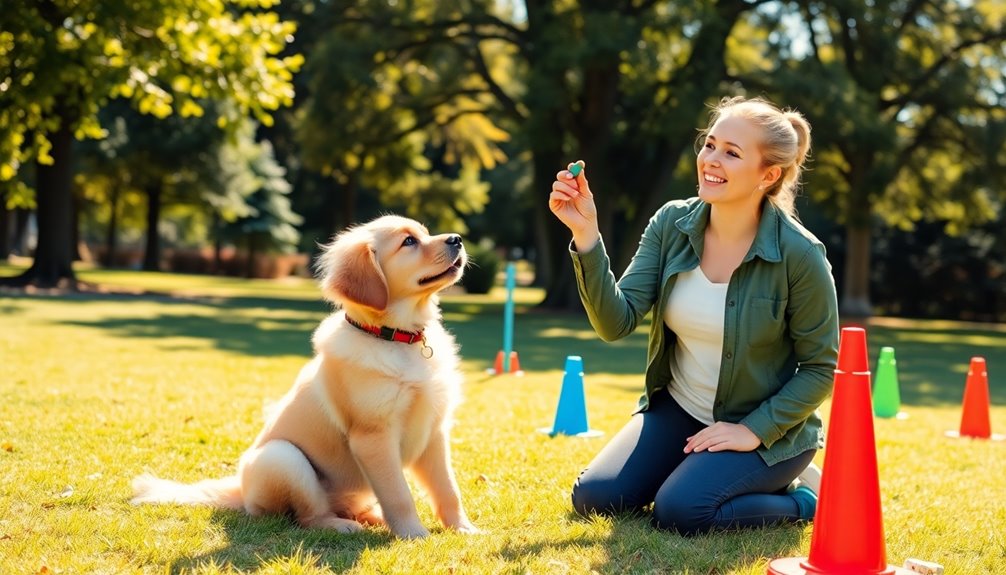
Effective training methods for puppies focus on building positive habits through clear communication and rewards. Positive reinforcement is key; by rewarding desired behaviors with treats or praise, you encourage your puppy to repeat those good habits. Different methods may yield varying results based on the dog’s temperament, which is why it’s important to tailor your approach to suit your puppy’s individual needs.
Clicker training can enhance this process, using a distinct sound to mark correct actions. Consistency in your commands and frequent training sessions helps your puppy understand what you expect. Early training, ideally within the first 3 to 6 months, sets a solid foundation for future behavior. Pay attention to your puppy’s body language and motivations—knowing what excites them will boost training effectiveness.
Essential Training Tools and Equipment
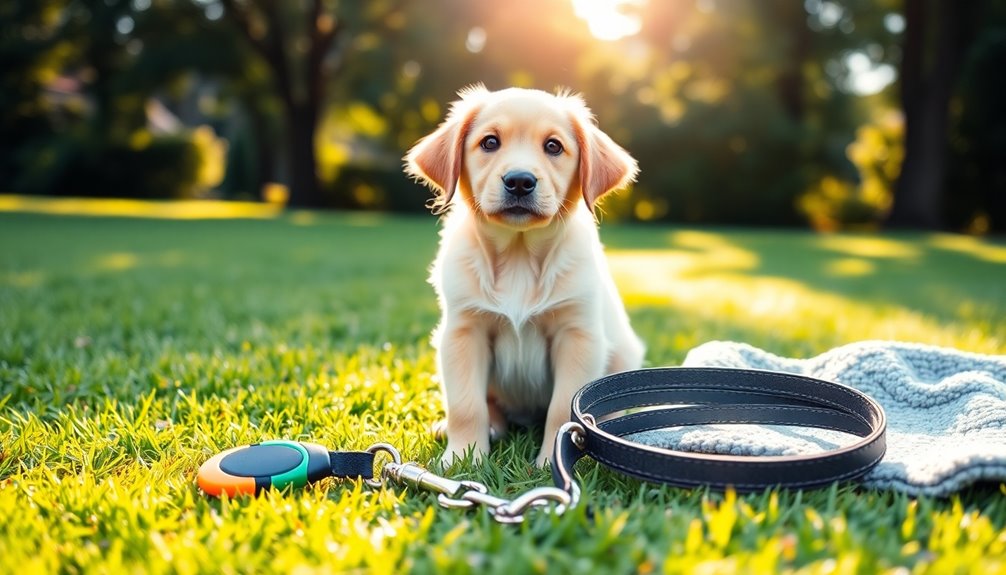
Training your puppy successfully requires the right tools and equipment to support your efforts. A sturdy harness and a reliable leash are essential for control during walks. Consider using a clicker for positive reinforcement, helping you mark desired behaviors effectively. Keep treats handy in a treat pouch for quick rewards. Multi-Function leashes can also enhance your training experience by providing versatility in how you manage your puppy during outings. A crate provides a safe space for your puppy, aiding in house training. For outdoor play, an X-Pen ensures a secure area while you supervise. Don’t forget a muzzle if your puppy struggles with fear or aggression. Lastly, interactive toys and training mats can enhance focus and teach specific behaviors, making training sessions more engaging. Each tool plays a vital role in your puppy’s training journey.
Creating the Right Training Environment

Creating the right training environment is crucial for your puppy’s success. Start training at home, where distractions are minimal, allowing your puppy to focus on basic commands like “sit” and “stay.” Once your puppy masters these, move to the driveway to introduce more distractions, gradually reducing treat rewards. Finally, progress to the park, the most challenging environment, where you can replace treats with vocal affirmations.
Setting up designated puppy zones and using crate training to provide secure spaces for learning is essential, as it helps establish a calm controlled environment during the initial training phase. Establish a consistent socialization routine to help your puppy adapt to different environments, and expose them to various sights and sounds to build confidence. This gradual approach will prepare your puppy for real-world situations effectively.
Understanding Behavioral Development

Understanding your puppy’s behavioral development is essential for fostering a well-adjusted dog. During the canine socialization stage, from 3 to 7 weeks, your puppy learns vital communication skills from littermates. If separated too early, they may lack social skills, leading to increased likelihood of harder biting during play.
From 7 to 12 weeks, the human socialization stage kicks in, where exposure to various people and environments is crucial. Positive interactions help shape their behavior, so introduce new experiences gradually to avoid fear.
Be mindful of fear impact periods between 8 to 14 weeks and 6 to 14 months; traumatic experiences here can lead to lasting fears. Consistent training and positive reinforcement are key to guiding your pup through these developmental stages and ensuring a confident, balanced adult dog.
Overcoming Common Training Challenges
As your puppy grows and develops, you’ll likely encounter various training challenges that can arise during this process.
One common issue is cue nagging; repeating commands too often can desensitize your pup, making it less responsive. Instead, use a single, clear cue and ensure your puppy is focused before giving commands. To avoid cue nagging, always aim to give the cue only once and capture your puppy’s attention beforehand.
Keep training sessions short—around 5-10 minutes—and practice daily to reinforce learning. Avoid scolding during accidents, as this can create anxiety; instead, emphasize positive reinforcement to encourage good behavior.
Lastly, remember that patience is crucial—puppies will make mistakes, so stay consistent and supportive.
Prioritizing Training Ethics and Safety
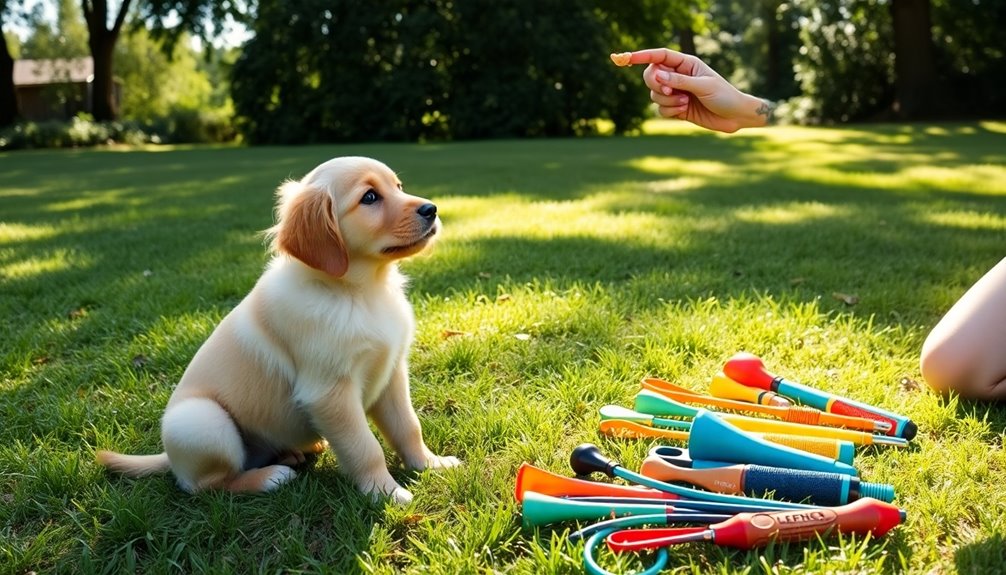
When you prioritize training ethics and safety, you set the foundation for a positive relationship with your puppy.
Start by ensuring your dog’s basic needs are met, following the five freedoms: freedom from hunger, thirst, discomfort, pain, fear, and distress. Access to food, water, and shelter is essential for dog well-being and should be your first priority.
Use positive reinforcement methods that promote trust without causing harm.
Create safe training environments, free from hazards, and use appropriate equipment like harnesses instead of choke collars.
Work with qualified trainers who understand ethical practices and have emergency protocols in place.
Avoid outdated aversive techniques and focus on a humane hierarchy, emphasizing respect and understanding.
Frequently Asked Questions
How Long Should Each Training Session Last for My Puppy?
When you’re planning training sessions, keep them short—around 5 to 15 minutes, depending on your puppy’s age and attention span.
Younger pups can only focus for about 5-10 minutes, while older ones might manage up to 15. It’s best to have multiple short sessions throughout the day.
Each session should concentrate on one specific command or skill, and always end on a positive note to reinforce what your puppy’s learned.
What Age Is Best to Start Training My Puppy?
When it comes to training your puppy, it’s best to strike while the iron’s hot.
Starting around 7 to 8 weeks old gives your pup the opportunity to grasp commands and behaviors effectively. At this age, they’re impressionable and eager to learn.
Early socialization is crucial too, as it shapes their interactions with the world.
Can I Train My Puppy Without Treats?
Yes, you can absolutely train without treats! Focus on using verbal praise, playtime, and toys as rewards.
Create a bond with your puppy through physical affection and engage their interest during training. You can also use clicker training effectively, gradually relying on the sound for reinforcement.
How Do I Know if My Puppy Is Learning?
Imagine your puppy’s tail wagging like a little flag of excitement.
You’ll know your puppy’s learning when they respond to commands with eager anticipation, their ears perked up and eyes bright.
Watch for consistent behaviors; if they sit or stay without hesitation, that’s progress.
Observe their interactions with others—social skills and confidence shine through.
If they explore new environments curiously, they’re adapting.
Trust your instincts and celebrate those little victories along the way!
What Should I Do if My Puppy Won’t Listen?
If your puppy won’t listen, first assess the environment for distractions that might be overwhelming.
Ensure they’re well-rested and fed to avoid fatigue or hunger.
Use clear signals and consistent commands to minimize confusion.
Incorporate positive reinforcement to encourage desired behaviors.
Keep sessions short and fun to maintain engagement.
Lastly, pay attention to their emotional state—if they’re scared or anxious, adjusting your approach can significantly improve their responsiveness.
Conclusion
Training your puppy is like planting a garden; with patience, care, and the right tools, you’ll nurture a loyal companion. As you cultivate their skills, remember that each command is a seed, growing into the strong bond you’ll share. Even when faced with weeds of challenge, persistence will help you maintain the beauty of your connection. So, water your efforts with love and understanding, and watch your puppy blossom into a well-behaved friend for life.
Halloween Picks
halloween
As an affiliate, we earn on qualifying purchases.