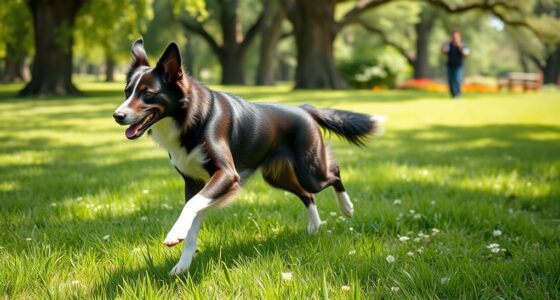

Dogs anticipate chains or leashes because they associate them with routines like walks, vet visits, or confinement. Past experiences, whether positive or negative, shape their reactions and expectations. To fix this, you can make leash time a calm, positive experience and gradually introduce routine variations. Building confidence through gentle training and clear signals helps reduce anxiety and anticipation. Keep exploring how to guarantee your dog feels comfortable—more tips are coming up.
Key Takeaways
- Dogs associate cues like grabbing the leash or words with previous stressful or positive experiences, triggering anticipation.
- Past negative experiences, such as rushed or unpleasant outings, can cause dogs to expect discomfort or stress.
- Proper socialization and controlled leash training help create positive associations and reduce anticipation.
- Introducing routine variations and calming responses can lessen negative expectations linked to leash time.
- Making leash routines enjoyable with treats and praise encourages calmness and diminishes anxious anticipation.
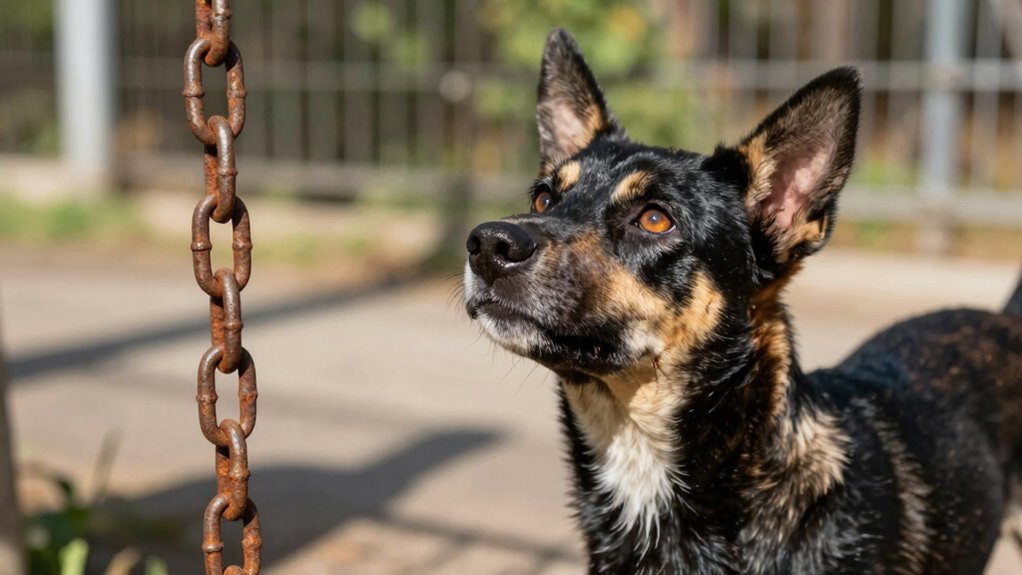
Many dogs start to anticipate their chains or leashes because they associate certain cues or routines with being confined. This anticipation often stems from repeated experiences where leash or chain time is linked with leaving the house, a walk, or even less pleasant moments like vet visits. Over time, your dog begins to recognize specific signals—such as grabbing the leash, picking up a harness, or even hearing certain words—and reacts with excitement, anxiety, or frustration. This isn’t just about the leash itself but the broader context of what the leash represents. If your dog has experienced stressful or rushed leash outings, they might develop negative associations that lead to anticipation. Conversely, if they’ve had positive, playful experiences during leash walks, anticipation might be more about eagerness.
To address this, it’s *essential* to incorporate consistent puppy socialization and leash training. Proper puppy socialization helps your dog form positive associations with new environments, people, and other animals, reducing anxiety linked to unfamiliar situations. When socialization includes gentle, controlled introductions to leashes and harnesses, your puppy learns that these are normal parts of their day, not signals of an impending stressful event. As they grow, ongoing leash training reinforces this understanding. Use treats, praise, and calm commands to make leash and chain time a positive experience. Gradually increase the duration and complexity of walks, ensuring your dog feels confident and safe during every outing. Additionally, understanding dog behavior and training techniques can greatly improve your approach and results. Incorporating positive reinforcement techniques can also make a significant difference in reducing anticipation.
Another effective way to fix anticipation issues is to change your routine slightly. Instead of always grabbing the leash immediately when you’re heading out, introduce some unpredictability. For example, spend time with your dog in the yard or inside, playing or practicing commands, before attaching the leash. This helps your dog associate leash time with fun and calmness, rather than just confinement or departure. Additionally, if your dog starts to anticipate the chain or leash, respond with a calm, reassuring tone and avoid overly enthusiastic reactions. Over time, this consistency helps your dog understand that leash time isn’t always linked to something stressful. Incorporating routine variation can further help reduce their expectations of negative experiences. Recognizing and addressing leash-related cues can also prevent your dog from becoming overly excited or anxious in anticipation.

The Original Sense-ation No-Pull Dog Training Harness (Black, Large Wide)
- Front-Leash Attachment: Original No-Pull Dog Harness
- Dog Training Aid: Teaches dogs to walk at your side
- Enhanced Walks: Makes walks more enjoyable
As an affiliate, we earn on qualifying purchases.
As an affiliate, we earn on qualifying purchases.
Frequently Asked Questions
Can Anticipation Behavior Vary Between Different Dog Breeds?
Yes, anticipation behavior can vary between different dog breeds. Breed differences and genetic predisposition influence how dogs react to routines or cues. Some breeds, like retrievers or herding dogs, are more prone to anticipation due to their working history and breed traits. You’ll notice this behavior more in breeds with strong instincts for specific tasks. Understanding these tendencies helps you tailor training to reduce unnecessary anticipation and improve your dog’s comfort.
Are There Specific Signs That Indicate a Dog Is Anxious About Chains?
Yes, signs include pacing, whining, trembling, or trying to avoid the chain. If your dog shows these behaviors during puppy separation or leash training, they might be anxious. You can help reduce their stress by gradually introducing the chain, offering positive reinforcement, and creating a calm environment. Recognizing these signs early allows you to address their anxiety, making future leash training and separation less stressful.
How Long Does It Typically Take to See Improvements After Training?
You’ll typically see improvements within a few weeks of consistent training techniques and behavior modification. Patience is key, as each dog responds differently. By sticking to positive reinforcement and gradually desensitizing your dog to triggers, you help build trust and reduce anxiety. Keep sessions short and frequent, and always celebrate progress. Over time, your dog will feel more comfortable and less anxious around chains, leading to lasting behavioral changes.
Is It Safe to Leave a Dog Chained for Extended Periods?
Leaving a dog chained for extended periods isn’t safe. It can cause physical harm and emotional stress. Instead, focus on leash training to improve controlled walks and provide environmental enrichment, like toys and regular playtime. These activities keep your dog mentally and physically stimulated, reducing the desire to anticipate chains. Always make certain your dog has a safe, comfortable space and isn’t left alone for long durations.
Can Medication Help Reduce a Dog’s Anticipation of Chains?
Medication can help reduce a dog’s anticipation of chains, especially when combined with behavioral modification. While some may worry about side effects, consult your vet to find the right medication effects for your dog’s needs. Medications can calm anxiety, making behavioral therapy more effective. Remember, medication isn’t a standalone fix; it works best alongside training that addresses the root of your dog’s anticipation.
Conclusion
Understanding why your dog anticipates chains helps you see the pattern forming like a delicate web. By consistently providing positive reinforcement and gradually easing restrictions, you can help your furry friend break free from that pattern. Remember, patience is your strongest tool—like turning a stubborn ship around in calm waters. With time and kindness, you’ll transform anxious anticipation into confident trust, allowing your bond to flourish as freely as a bird taking flight.