
If you want your cat to use an exercise wheel, focus on active, curious cats that love to chase toys or climb. These cats tend to enjoy the activity and are more likely to use the wheel regularly. Be patient and gentle when introducing it, as some cats need time to feel comfortable. Not all cats will take to it, but with the right environment and encouragement, many will. Keep exploring to find what works best for your feline friend.

Get pet supplies delivered free with Prime
- Fast, free delivery on millions of items
- Prime Video, Amazon Music and more included
- Member-only deals all year
Key Takeaways
- Naturally curious and playful, energetic cats that chase toys or climb are more likely to use exercise wheels.
- Cautious or reserved cats may require gentle encouragement and patience to try the wheel.
- Proper installation in quiet, secure areas and gradual introduction encourage initial use.
- Older or less mobile cats might not benefit from or use the wheel, so observe individual preferences.
- Providing alternative enrichment options ensures overall activity and well-being if the cat doesn’t use the wheel.
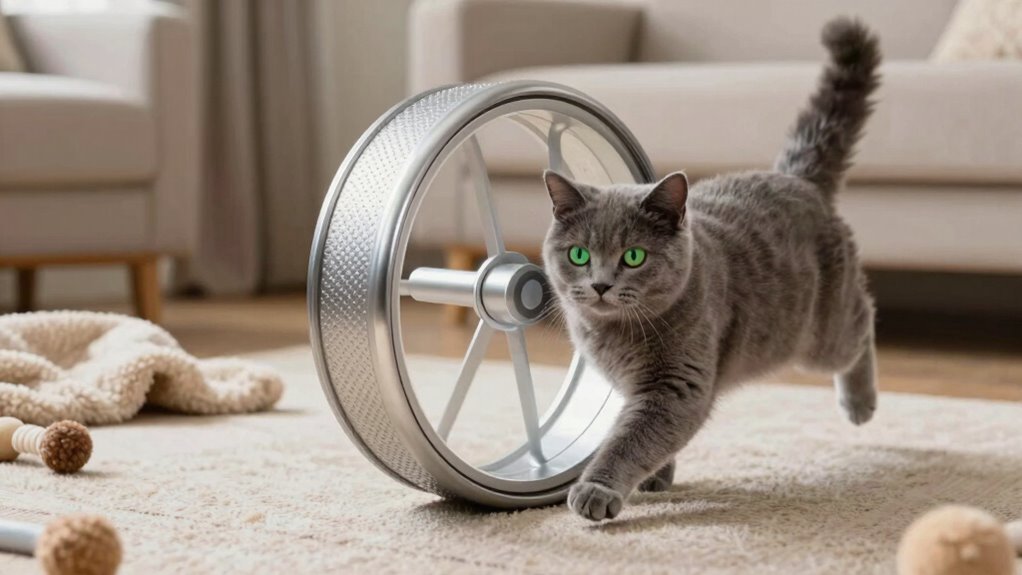
If you’re looking for a fun and engaging way to keep your cat active, exercise wheels are quickly gaining popularity among pet owners. These wheels offer a unique opportunity for cats to burn off energy indoors, especially for those who thrive on activity and mental stimulation. But before you buy one, it’s important to understand which cats are most likely to use them and how to set up the wheel properly. Your cat’s behavior plays a significant role in whether they’ll take to the wheel, so observing their natural tendencies can help you decide if it’s a good fit.
Cats that are naturally curious and playful tend to be the best candidates for exercise wheels. If your feline is energetic and loves chasing toys or climbing, they’ll probably enjoy running on the wheel. However, some cats are more cautious or reserved, and they might need extra encouragement or a gradual introduction. Knowing your cat’s personality helps you gauge their interest, but you should also consider their size and age. Very young kittens or older, less mobile cats might not find the wheel comfortable or safe to use.
Energetic, curious cats often enjoy exercise wheels; cautious or older cats may need gentle encouragement and patience.
When it comes to wheel installation, setting it up correctly is crucial for your cat’s safety and comfort. You want to place the wheel in a quiet, low-traffic area where your cat feels secure. Ensure the surface is non-slip to prevent accidental falls or injuries. The wheel should be at a comfortable height, allowing your cat to hop on easily without straining or jumping too high. Secure the wheel firmly to avoid wobbling or tipping over during use, which could scare your cat or cause injuries. Once installed, introduce the wheel gradually. Use treats or toys to entice your cat to explore it, and let them approach at their own pace. Don’t force them; patience is key. Some cats might need days or even weeks to become comfortable using the wheel regularly.
Keep in mind, not all cats will take to exercise wheels instantly. Some may never use them, and that’s okay. It’s essential to respect your cat’s preferences and provide alternative ways to stay active, like interactive toys or climbing trees. Providing enrichment activities is vital for their mental and physical health, especially if they are less inclined to use a wheel. Observing your cat’s individual preferences can help you tailor a more stimulating environment that suits their unique needs. Additionally, positive reinforcement can significantly encourage hesitant cats to try new activities and develop confidence. The goal isn’t to force your cat but to create an environment where they feel motivated and safe to engage in physical activity. With the right approach, patience, and understanding of your cat’s behavior, you can help them enjoy the benefits of the exercise wheel while ensuring their well-being.
As an affiliate, we earn on qualifying purchases.
Frequently Asked Questions
Are Exercise Wheels Safe for All Cat Breeds?
Exercise wheels are generally safe for many cat breeds, but you should consider the cat wheel durability and your cat’s size and activity level. Not all cats will use the wheel, so monitor their feline exercise safety. Make sure the wheel is sturdy, well-constructed, and free from sharp edges. Always supervise initial use to guarantee your cat adapts comfortably and safely, preventing potential injuries.
How Do I Introduce a Wheel to a Hesitant Cat?
To introduce a wheel to a hesitant cat, start slowly by observing their cat behavior and patience. Place the wheel in a familiar, quiet space and allow your cat to investigate it at their own pace. Use positive reinforcement, like treats or praise, to encourage interest. Incorporate enrichment strategies by gradually guiding your cat onto the wheel, making the experience fun and stress-free, helping them build confidence over time.
What Size Wheel Is Best for My Cat’s Weight?
You should choose a wheel that’s about 1.5 to 2 times your cat’s length for maximum comfort, especially if your cat is on the heavier side. The best wheel brands prioritize sturdy construction and smooth, quiet operation, making maintenance easier. Regularly clean the wheel to prevent debris buildup, and check for wear. Selecting the right size and quality guarantees your cat enjoys safe, active exercise without discomfort.
Can Exercise Wheels Help Reduce Obesity in Cats?
Yes, exercise wheels can help reduce obesity in cats by encouraging more physical activity. When your cat uses the wheel regularly, it boosts their energy expenditure and supports weight management. To keep your cat safe and motivated, observe their cat behavior and guarantee proper wheel maintenance, like keeping it clean and stable. This way, the wheel becomes a fun, effective tool for helping your cat stay healthy and active.
How Often Should My Cat Use the Exercise Wheel?
You should let your cat use the exercise wheel daily, about 10-15 minutes, to keep them active without overdoing it. Regular cat wheel maintenance guarantees safety, so check for wear and tear often. When choosing the right material, opt for non-slip surfaces and durable, easy-to-clean options. Monitor your cat’s enthusiasm and adjust usage time to prevent fatigue, making sure they enjoy their activity safely and comfortably.
Conclusion
Just like the legendary Alice chasing the White Rabbit, your feline friends might surprise you with their own adventures on an exercise wheel. While not every cat will take to it, those curious and energetic enough can find joy and exercise in this innovative activity. Embrace the possibility, and remember—sometimes, a little whimsy is all it takes to turn your home into a wonderland of fun and fitness for your cat.
Fall Picks
fall essentials
As an affiliate, we earn on qualifying purchases.