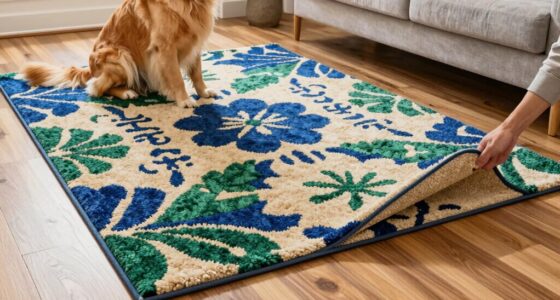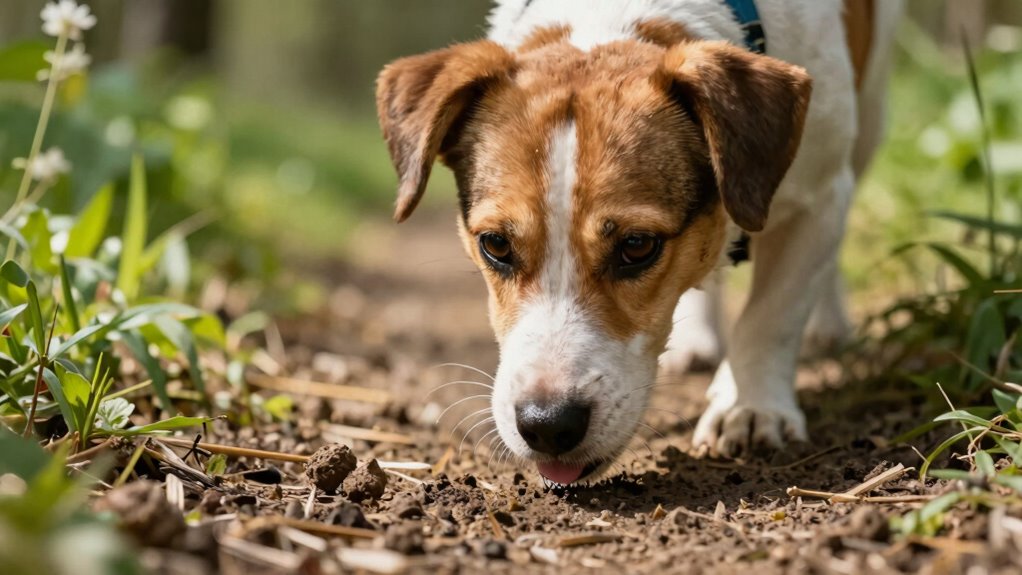

Sniff walks tire dogs more than longer walks because they engage their brain deeply through scent exploration, which is more mentally exhausting than just physical exercise. When your dog uses their nose to investigate the environment, they’re solving complex puzzles, gathering information about other animals, food, or humans. This mental effort requires focus and energy, making them tired in a different way. Keep going to discover how scent walks can transform your dog’s overall well-being.

Get pet supplies delivered free with Prime
- Fast, free delivery on millions of items
- Prime Video, Amazon Music and more included
- Member-only deals all year
Key Takeaways
- Sniff walks engage the dog’s brain more intensely than physical activity alone.
- Mental stimulation from scent exploration causes greater fatigue than longer, less engaging walks.
- Dogs process complex environmental information during sniffing, leading to deeper mental exhaustion.
- Slowing down for scent work prolongs mental engagement, increasing overall tiredness.
- The natural instinct to explore with their nose makes scent walks more mentally demanding.
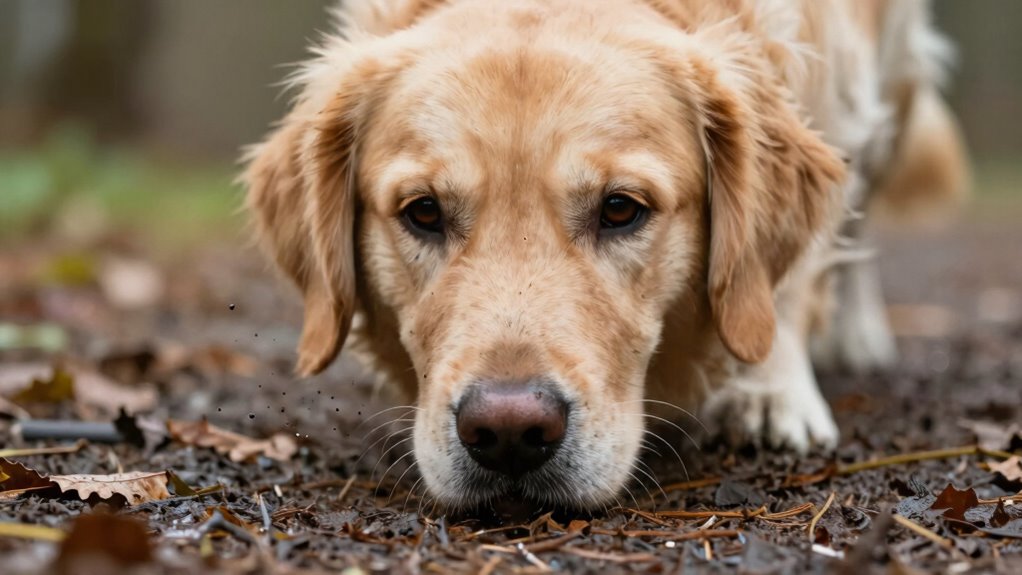
Taking your dog on a sniff walk isn’t just about exercise; it’s an essential mental activity that tires them out just as much as physical play. When you let your dog indulge in scent exploration, you’re providing a form of dog enrichment that stimulates their mind in ways that a standard walk simply can’t. Unlike straight-ahead walking, where your dog’s focus might be on following your lead or covering ground, a sniff walk invites them to engage their nose and brain deeply. This mental stimulation can be surprisingly exhausting, often more so than a longer, more traditional walk.
A sniff walk engages your dog’s nose and mind, providing vital mental enrichment that tires them out just as much as physical exercise.
Scent exploration taps into your dog’s natural instincts. Dogs have an extraordinary sense of smell—many times more sensitive than humans—and using that sense is like giving them a complex puzzle to solve. When they stop to sniff, they’re gathering a wealth of information about their environment, identifying other animals, finding food sources, or even picking up on the presence of other dogs or people. It’s a form of mental enrichment that keeps their brain active and engaged. This mental activity requires focus and cognitive effort, which tire them out just as much as strenuous physical activity. Understanding a dog’s natural instincts can help you better appreciate the importance of scent walks for their mental health.
Moreover, scent exploration slows down the walk, encouraging your dog to take their time and truly enjoy their environment. Instead of rushing from point A to B, you’re allowing them to methodically investigate their surroundings, which can lengthen the duration of the walk and deepen their mental engagement. This is especially beneficial for high-energy dogs or breeds that thrive on mental challenges. It also helps reduce anxiety and destructive behaviors by fulfilling their natural instinct to explore through scent. Recognizing the importance of mental stimulation can help you create more enriching and balanced walks for your pet. Incorporating sensory engagement into your routine can further enhance their mental and emotional well-being.
You’ll notice that dogs who get regular sniff walks often appear calmer and more satisfied afterward. They’ve had the chance to use their nose to solve a mental puzzle, which is an effective way to tire them out without necessarily increasing their physical exertion. Engaging in a scent walk can also promote better overall behavioral health, as it channels their energy into a constructive activity. Incorporating scent exploration into your routine not only enhances dog enrichment but also strengthens your bond, as you’re actively participating in their mental stimulation. It’s a simple change that makes walks more rewarding for your dog and more fulfilling for you, turning a basic outing into an enriching experience that truly satisfies their instinctual needs. Additionally, understanding and utilizing a dog’s natural sense of smell can help improve their overall well-being and reduce stress.
As an affiliate, we earn on qualifying purchases.
Frequently Asked Questions
Do Sniff Walks Improve a Dog’s Mental Health?
Yes, sniff walks improve your dog’s mental health by providing scent enrichment and mental stimulation. When you allow your dog to explore and sniff during walks, they engage their brains and satisfy their natural instincts. This mental activity reduces boredom and stress, leading to a happier, calmer dog. So, incorporating sniff walks into your routine can substantially boost your dog’s overall well-being and emotional health.
How Often Should I Give My Dog Sniff Walks?
You should give your dog sniff walks daily, making them part of walk enrichment. Dog scenting is a natural, tiring activity, so frequent sessions keep your pup mentally stimulated without overexertion. Think of it as a canine spa day—except instead of massages, they get to indulge in scent exploration. Regular sniff walks keep your dog happy, tired, and less likely to develop behavioral issues. Who knew mental exercise could be so delightful?
Can Sniff Walks Replace Regular Exercise?
Sniff walks can’t replace regular exercise because they focus on scent-based training and mental stimulation, not physical exertion. While they boost your dog’s scent detection skills and provide enrichment, they don’t burn enough calories or build endurance like longer walks or active play. To keep your dog healthy, combine scent-based activities with physical exercise, ensuring both mental and physical needs are met.
Are Sniff Walks Suitable for All Dog Breeds?
Sniff walks are like a tailor-made suit—they suit some dogs better than others. Breed preferences and age considerations play a big role; high-energy breeds may need more vigorous exercise, while older dogs or smaller breeds often thrive with sniff walks. You should tailor these walks to your dog’s specific needs, ensuring they get both mental stimulation and physical activity without overexertion.
How Do Sniff Walks Affect a Dog’s Behavior?
Sniff walks positively affect your dog’s behavior by engaging their senses through scent training, which helps reduce stress and excess energy. As your dog explores scents, they become more focused and calm afterward. Additionally, sniff walks promote social interaction with other dogs and people, boosting confidence and social skills. This mental stimulation makes your dog happier and more well-behaved, leading to a more balanced and content companion.
Conclusion
So, next time you take your dog out, remember that a quick sniff walk can tire them out just as much as a long one. Dogs thrive on mental stimulation, and letting them sniff their way around is like hitting two birds with one stone. It’s clear that sometimes, the best way to tire your dog isn’t by length but by engaging their mind. After all, a tired dog is a happy dog—and happier for everyone involved.
Halloween Picks
halloween
As an affiliate, we earn on qualifying purchases.