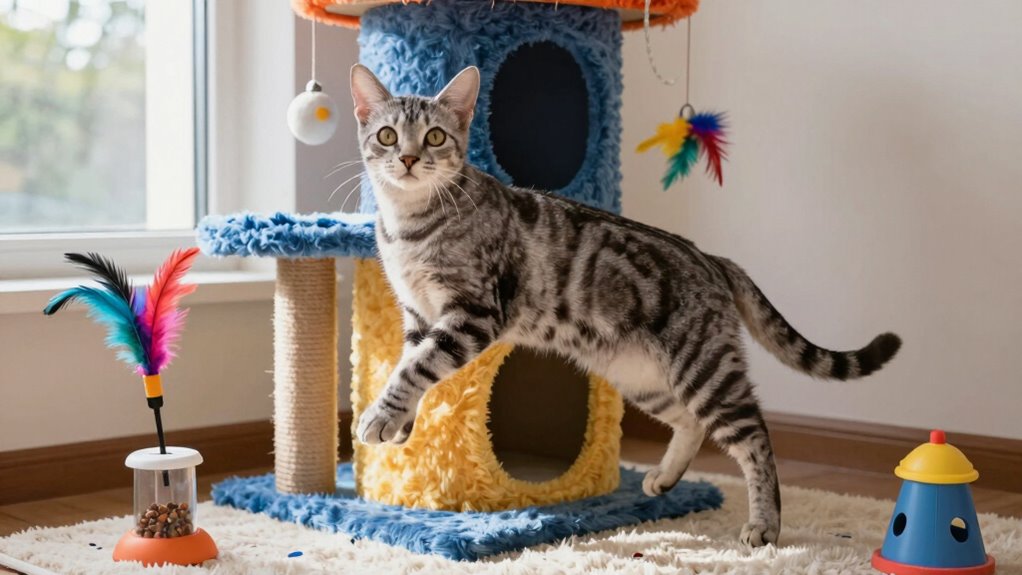
To humanely stop your indoor cat’s night zoomies, create an enriched environment with engaging toys, climbing trees, and scratching posts to keep them stimulated during the day. Schedule vigorous play sessions before bedtime to tire them out, and establish a consistent routine with calm activities like grooming and dim lighting in the evening. Monitoring their behavior and adjusting enrichment strategies can help reduce nighttime energy bursts—keep going to discover more effective tips.
Key Takeaways
- Schedule vigorous play sessions during dawn and dusk to mimic natural activity peaks and tire your cat before bedtime.
- Provide engaging toys like puzzle feeders and interactive wand toys to satisfy hunting instincts indoors.
- Create a stimulating environment with climbing trees, perches, and hiding spots to keep your cat mentally and physically active.
- Establish a consistent routine with calming rituals such as grooming and dim lighting to promote relaxation at night.
- Use environmental enrichment and monitor behavior to adjust activities, reducing boredom and preventing night zoomies humanely.
How Night Zoomies Disrupt Your Cat’s Sleep and Your Night
Night zoomies can markedly disrupt both your cat’s sleep and yours, especially when your feline bursts into frantic bursts of energy late at night. This sudden surge of activity is a common example of cat behavior that can disturb your rest. When your cat races around the house, it not only keeps you awake but also indicates they aren’t getting enough stimulation during the day. These energetic episodes often stem from boredom or pent-up energy, making them harder to control. Providing enrichment benefits, like interactive toys or play sessions, helps channel this energy productively. Incorporating a variety of interactive toys can further engage your cat and reduce nighttime activity. Additionally, designing your home environment to promote natural behaviors can help minimize these episodes. By addressing your cat’s natural instincts and offering proper outlets for their activity, you reduce the frequency of night zoomies, leading to quieter nights for both of you. Engaging your cat in stimulating activities during the day can also help tire them out and decrease these nighttime bursts.
Understand Your Cat’s Natural Activity Cycles to Reduce Night Zoomies
Pay attention to your cat’s natural sleep and activity patterns to better understand their energy levels. By adjusting playtimes to match these rhythms, you can help reduce nighttime zoomies. This approach makes it easier to keep your cat calm and your nights peaceful. Incorporating behavioral cues can further enhance your understanding of your cat’s activity needs.
Recognize Natural Sleep Patterns
Understanding your cat’s natural sleep patterns is key to reducing those disruptive night zoomies. Cats are crepuscular, meaning they’re most active at dawn and dusk, which explains their tendency to be energetic during nighttime hours. By observing when your cat typically sleeps and wakes, you can better align their routine with their instincts. Also, paying attention to their grooming habits and litter box habits helps you identify natural activity cycles. If your cat is grooming excessively or using the litter box frequently at certain times, it may indicate their internal clock. Recognizing these patterns allows you to schedule play and enrichment activities during their more alert periods, helping to tire them out before bedtime and reduce the likelihood of night zoomies. Additionally, understanding support breakfast habits is helpful, as providing a nutritious meal during the day can influence their energy levels and activity patterns at night.
Adjust Playtime Accordingly
Since cats are naturally most active during dawn and dusk, aligning their playtimes with these periods helps burn off excess energy before bedtime. In your indoor environment, schedule vigorous play sessions during these times to mimic their natural activity cycles. This reduces the likelihood of sleep disruption caused by sudden night zoomies. Keep play sessions engaging and varied, using toys that stimulate their hunting instincts. Avoid late-night play, as it can encourage hyperactivity when you’re trying to wind down. Instead, wind down with calm interaction afterward. By adjusting playtime accordingly, you help your cat burn excess energy during their natural activity peaks, making them more likely to rest peacefully through the night and ensuring a calmer, more restful sleep environment for both of you.
Why Enrichment Is Key to Preventing Night Zoomies in Indoor Cats

Enrichment plays a crucial role in preventing night zoomies because it keeps your indoor cat mentally and physically stimulated. When you provide opportunities for cat enrichment, you encourage your cat to engage in natural behaviors like stalking, pouncing, climbing, and exploring. These activities help burn off excess energy during the day, reducing the likelihood of hyperactivity at night. Without enough stimulation, your cat may become bored or anxious, leading to sudden bursts of energy when it’s supposed to rest. By enriching your cat’s environment with varied activities and opportunities for natural behaviors, you help establish a more predictable daily routine. This not only satisfies your cat’s instincts but also promotes calmness during nighttime hours, making those zoomies less frequent and less intense. Providing enrichment can also help prevent behavioral issues that contribute to nighttime hyperactivity. Additionally, understanding your cat’s lifecycle and performance metrics can help tailor enrichment activities to match their specific needs and energy levels. Incorporating interactive toys and regular play sessions can further enhance mental stimulation and reduce nighttime restlessness. Engaging your cat with diverse enrichment tools can help keep their environment stimulating and prevent boredom-induced hyperactivity.
Design a Playful Environment With Toys and Climbing Trees
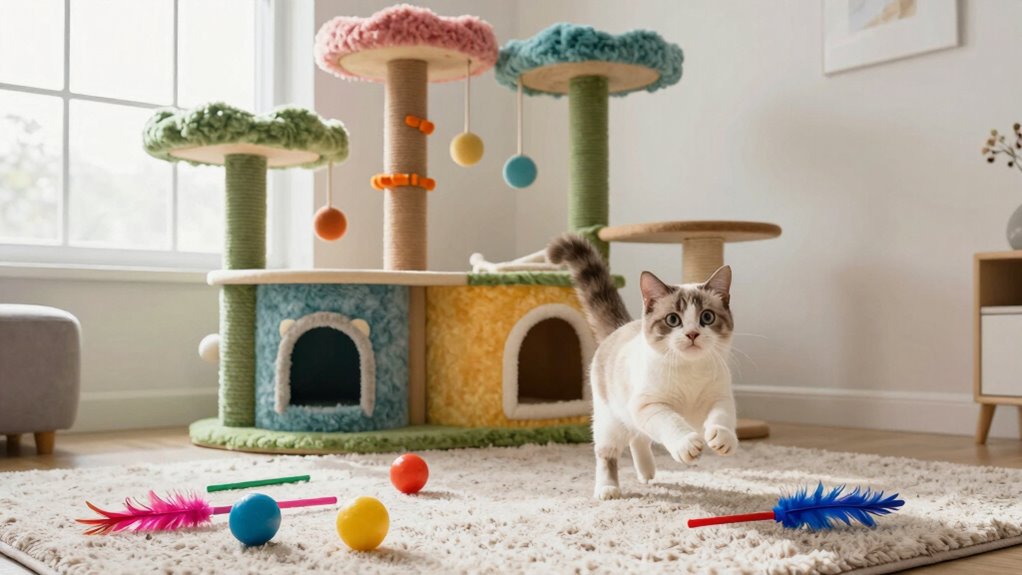
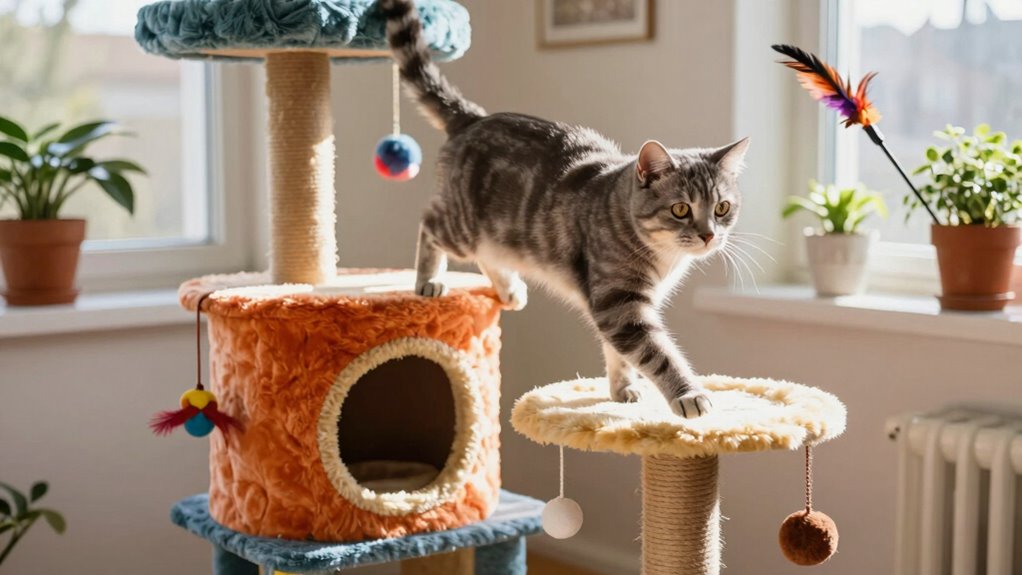
Creating a stimulating environment for your cat starts with offering a variety of toys that keep them engaged. Incorporate different climbing tree designs and interactive play stations to encourage activity and exploration. By mixing these elements, you’ll foster a playful space that prevents boredom and supports your cat’s natural instincts. Recognize that high craftsmanship in designing these features can enhance durability and safety for your feline friends. Paying attention to cat behavior patterns can help tailor the environment to better suit their needs and reduce the likelihood of disruptive behaviors. Additionally, selecting safe and non-toxic materials ensures a secure play area for your cat’s safety and well-being. Integrating stimulating features like scratching posts and hiding spots can further enrich their environment and promote healthy exercise.
Variety of Toys
Have you ever wondered how to keep your indoor cat entertained and mentally stimulated? A variety of toys can do just that. Incorporate items like catnip toys and puzzle feeders to engage your cat’s senses and problem-solving skills. Rotating toys regularly prevents boredom and keeps playtime exciting. Providing different textures and shapes encourages exploration. Consider this table to understand the benefits:
| Toy Type | Benefits | Example |
|---|---|---|
| Catnip toys | Stimulates hunting instinct | Plush mice |
| Puzzle feeders | Promotes mental engagement | Food puzzles |
| Wand toys | Encourages active play | Feather wands |
Mixing these options creates a stimulating environment that reduces night zoomies and keeps your cat happy indoors.
Climbing Tree Designs
To keep your indoor cat engaged and happy, incorporating climbing trees into their environment is essential. Well-designed climbing trees provide vertical space for exercise and mental stimulation, reducing the likelihood of night zoomies. When choosing a design, consider sturdy materials and multiple levels, perches, and hiding spots to mimic natural habitats. This type of enrichment supports healthy play, which benefits their overall cat nutrition by promoting activity and balanced weight. Additionally, a stimulating environment can positively influence litter box habits by decreasing stress and preventing inappropriate elimination. Ensure your climbing tree is placed in a quiet, accessible spot, and regularly refresh toys attached to it. Thoughtful design creates a playful space that keeps your cat physically active, mentally alert, and content indoors. Incorporating safe, durable materials also aligns with safety standards, ensuring a secure environment for your furry friend. Providing a variety of enrichment options can further enhance your cat’s well-being and reduce destructive behaviors.
Interactive Play Stations
Designing an engaging indoor environment involves integrating a variety of toys and climbing structures that encourage active play. Interactive play stations keep your cat stimulated, reducing boredom and night zoomies. Incorporate puzzle toys, feather wands, and scratching posts to channel their energy positively. Rotating toys regularly prevents boredom and encourages curiosity. Use climbing trees and shelves to satisfy their instinct to perch and explore. This setup can also improve litter box habits by giving your cat outlets for energy, reducing inappropriate elimination caused by stress. Additionally, interactive stations can influence vocalization patterns, helping your cat communicate needs more clearly. Consider this table to emphasize the importance of variety:
| Toy Type | Purpose |
|---|---|
| Puzzle Toys | Mental stimulation, reduces boredom |
| Climbing Structures | Physical activity, natural instincts |
| Feather Wands | Interactive bonding, exercise |
| Scratching Posts | Stress relief, territory marking |
Play With Your Cat Before Bed to Tire Them Out
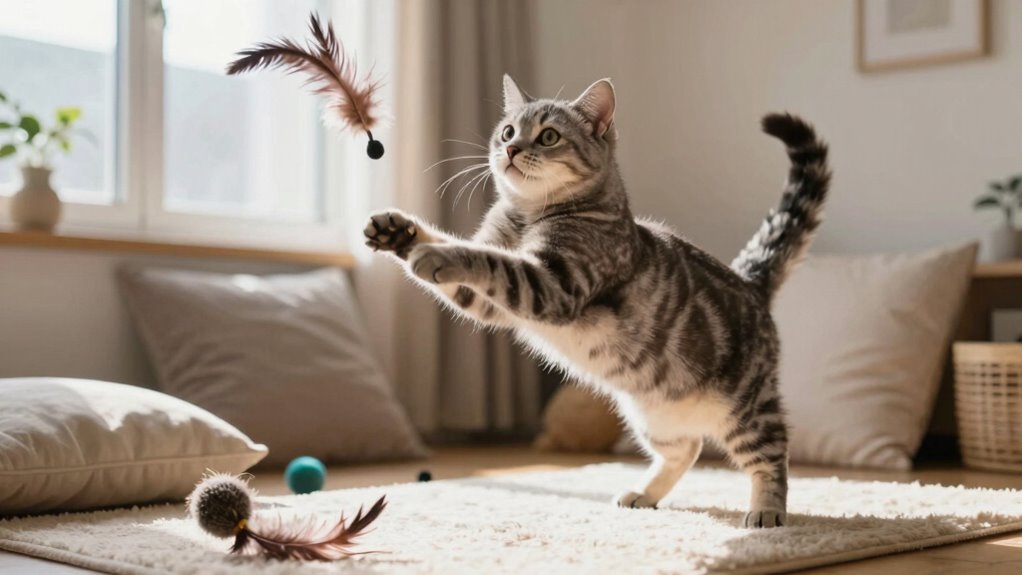
Engaging your cat in playtime before bed can help burn off excess energy and promote better sleep. When you actively play with your cat, you’re helping improve their sleep aesthetics by encouraging a calmer, more relaxed state when bedtime arrives. Tire them out with quick, energetic sessions that mimic hunting behaviors, reducing the likelihood of night zoomies. Plus, a good play session can positively impact dietary impacts, as it helps regulate their energy levels and prevents overeating or snacking late at night. This pre-bed activity ensures your cat is physically exhausted, making it easier for them to settle down peacefully. Incorporating calming routines into their evening schedule can further enhance their ability to unwind. Engaging in appropriate toys for active play is crucial in channeling their energy effectively. Consistent playtime before sleep becomes a crucial part of their routine, fostering a calm environment and improving overall sleep quality. Additionally, using interactive toys can help keep their mind engaged and prevent boredom-induced zoomies. Incorporating structured play sessions can also promote a sense of security and routine, making bedtime more predictable and soothing for your cat.
Use Food Puzzles to Calm Your Cat and Engage Their Mind
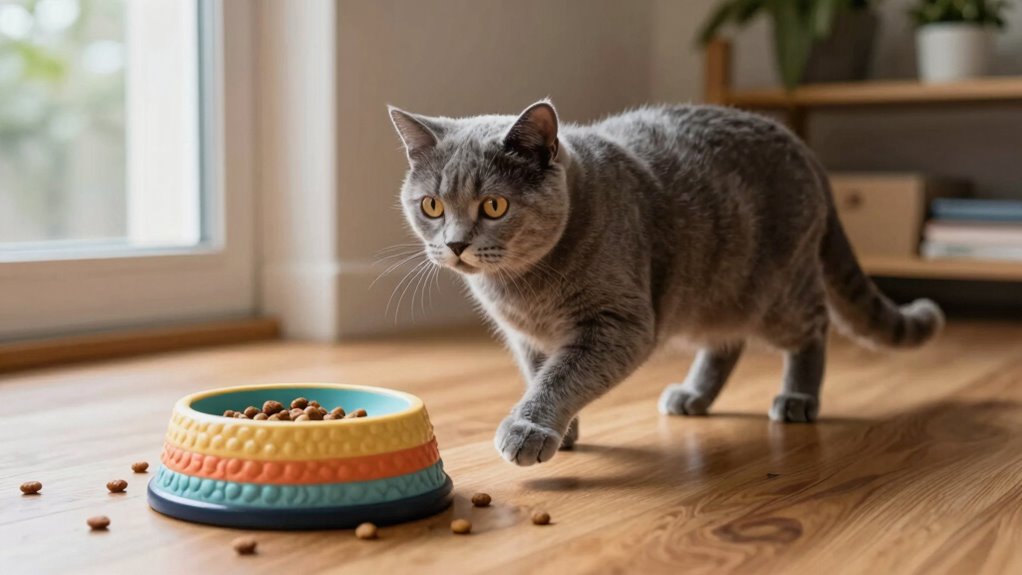
After a lively play session before bed, introducing food puzzles can further help your cat relax and stay mentally stimulated. These puzzles tap into feline psychology by providing a rewarding challenge that mimics hunting behaviors. Using food puzzles supports good cat nutrition by encouraging slow eating and preventing overeating, which can reduce anxiety and agitation. When your cat works to extract treats or kibble, it engages their mind and redirects focus away from nighttime zoomies. This mental stimulation helps calm their nervous energy, leading to more peaceful nights. Additionally, understanding cat behavior can help you select the most effective puzzle types to suit your feline’s preferences. Incorporating a variety of puzzles can keep your cat interested and continuously engaged. Moreover, choosing puzzles with appropriate difficulty levels ensures your cat remains challenged without becoming frustrated. Recognizing signs of ear wax odor or other odors can also alert you to health issues that might affect your pet’s behavior and well-being. Being attentive to your cat’s behavioral cues can further enhance your ability to choose the best enrichment activities for their individual needs.
Set a Consistent Routine for Calm and Restful Nights
Establishing a consistent daily routine helps your cat feel secure and relaxed at night. Regular playtimes, set feeding schedules, and calming rituals signal that it’s time to wind down. By sticking to these habits, you can promote calmness and guarantee restful nights for your feline.
Consistent Daily Playtime
Setting a consistent daily playtime helps your indoor cat feel relaxed and secure. Regular indoor activity provides essential cat enrichment, reducing restless energy and night zoomies. By establishing a routine, you create predictability that comforts your cat, making them less anxious and more content. Consistent play also strengthens your bond and encourages healthy exercise.
Think about how these small moments can transform your cat’s behavior:
- Creating a calm, stress-free environment for better sleep
- Giving your cat a sense of purpose and satisfaction
- Preventing destructive behaviors caused by boredom
- Building trust and deeper connection
- Watching your cat flourish with happiness and security
Set Regular Feeding Schedule
Have you noticed how unpredictable mealtimes can make your indoor cat seem restless or anxious? Setting a regular feeding schedule helps stabilize their routine, which promotes better sleep and reduces night zoomies. Consistent meal times support healthy cat nutrition and prevent overeating or boredom. To keep your cat engaged, consider placing safe indoor plants nearby for enrichment during mealtime. Use the table below to plan your schedule:
| Time | Meal Type | Notes |
|---|---|---|
| 8:00 AM | Breakfast | Fresh water available |
| 12:00 PM | Lunch | Include a small treat |
| 5:00 PM | Dinner | Avoid late-night feeding |
| 7:00 PM | Play & rest prep | Calm activities before bed |
| 10:00 PM | Final snack | Light feeding for comfort |
Designate Relaxation Rituals
Creating a calming bedtime routine can considerably improve your indoor cat’s sleep quality and overall well-being. Establishing relaxation rituals helps signal that it’s time to wind down, reducing night zoomies. Start by gently grooming your cat to promote comfort and bond. Make certain the litter box is clean and accessible, so your cat doesn’t feel stressed or distracted. Consistency is key—set a specific time for these calming activities each night. Dim the lights, speak softly, and avoid loud noises. These small actions create a peaceful environment that encourages restful sleep. When your cat associates these routines with relaxation, they’ll settle more easily at night and experience less anxiety or hyperactivity. A structured, soothing ritual makes nights calmer for both of you.
Humanely Manage Night Zoomies With These Simple Strategies
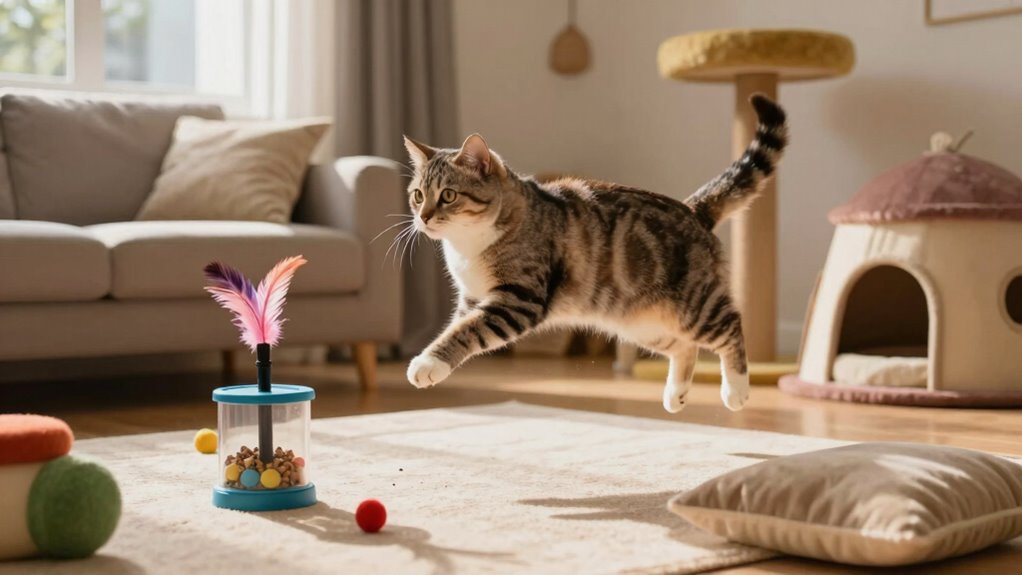
Night zoomies can be disruptive, but there are humane ways to manage them without causing stress to your cat. Understanding your cat’s sleep cycles and natural activity patterns helps you create a routine that aligns with their instincts. To reduce nighttime bursts of energy, engage your cat with play sessions before bedtime, mimicking their natural hunting behaviors. Use interactive toys or puzzle feeders to encourage controlled activity during the day. Establish a calming environment by dimming lights and providing cozy resting spots. Consistency is key—maintaining a regular schedule helps regulate their internal clock. By respecting your cat’s natural activity patterns and managing their environment thoughtfully, you can minimize night zoomies and promote more peaceful nights for both of you.
Watch Your Cat’s Behavior and Adjust Enrichment Tactics as Needed
Monitoring your cat’s behavior helps you determine if your current enrichment strategies are working or need adjustment. Pay close attention to their energy levels, playfulness, and sleep patterns. If your cat still exhibits excessive night activity, consider behavior monitoring to identify triggers. Use this insight to make targeted enrichment adjustments, such as adding more interactive toys or increasing daytime play sessions. Watch for signs of boredom or frustration, like scratching furniture or vocalizing, which suggest your tactics aren’t enough. Adjust your approach accordingly to better meet your cat’s needs. Consistently observing and tweaking enrichment tactics not only reduces night zoomies but also keeps your feline happy and engaged. Remember, flexible strategies are key to a peaceful, enriched indoor environment.
When Should You See a Vet About Excessive Night Activity?

Excessive night activity in your cat can sometimes indicate underlying health or behavioral issues that need professional attention. If your cat’s zoomies are sudden, persistent, or accompanied by other signs like hiding, loss of appetite, or lethargy, it’s time for a vet consultation. A behavioral assessment can help determine if stress, anxiety, or medical problems are causing the nighttime chaos. Consider this table:
| When to Seek Help | What It Means |
|---|---|
| Sudden increase in activity | Possible health or behavioral change |
| Additional symptoms present | Medical issue or stress |
| No improvement after enrichment | Underlying problem needs professional help |
Prompt action ensures your cat’s health and well-being while helping you manage their nighttime energy humanely.
Frequently Asked Questions
Can Certain Breeds Be More Prone to Night Zoomies?
Yes, certain breeds are more prone to night zoomies due to their breed tendencies and activity patterns. For example, Siamese and Abyssinians are naturally more energetic and playful, making them more likely to be active during the night. Understanding your cat’s breed tendencies can help you better manage their activity patterns, providing appropriate enrichment and playtime during the day to reduce nighttime hyperactivity and keep everyone happy.
How Does Lighting Affect My Cat’s Nighttime Activity?
Lighting influence greatly affects your cat’s nighttime activity. If the sleep environment is too bright or too dark, it can disrupt their natural rhythms, leading to more night zoomies. You should aim for a dim, consistent lighting setup that mimics dusk or dawn, helping your cat feel relaxed and sleepy. Keeping a calm sleep environment reduces their urge to play or run around during the night.
Are There Specific Toys That Help Reduce Night Zoomies?
You can reduce night zoomies with specific toys like interactive toys and puzzle feeders. For example, a cat named Luna started calming down at night after her owner introduced a puzzle feeder that kept her mentally stimulated during the day. These toys tire your cat out gradually and redirect energy, helping them sleep peacefully. Incorporate interactive toys and puzzle feeders into your cat’s daily routine to minimize those late-night bursts of energy.
What Are Safe Ways to Discourage Zoomies Without Harming My Cat?
To discourage zoomies safely, focus on environmental enrichment and understanding cat behavior. Play with your cat actively during the day to burn off excess energy, using toys like feather wands or laser pointers. Provide cozy hiding spots and climbing trees to keep them stimulated. Avoid punishing your cat; instead, redirect their energy with engaging activities. Consistent routines and interactive play help reduce night zoomies humanely.
How Can I Tell if My Cat’s Night Activity Is Unhealthy?
You can tell if your cat’s night activity is unhealthy by observing their sleep patterns and feline health indicators. If they sleep excessively during the day or seem restless at night, it may signal a problem. Look for signs like weight loss, changes in appetite, or lethargy. Consistent night zoomies combined with these indicators suggest you should consult your vet to rule out underlying health issues.
Conclusion
By blending playful pursuits with peaceful routines, you can peacefully prevent persistent night zoomies. Providing plenty of playtime, positioning playful prompts, and maintaining a predictable schedule helps tame your cat’s nighttime energy. With consistent care and compassionate caution, you create calm, cozy nights and contented, comforted cats. Remember, patience and persistence pave the path to peaceful slumber, turning restless nights into restful, relaxed rhythms.