

Spending time outside isn’t enough to provide true enrichment for your pet. Simply being outdoors doesn’t guarantee they’re engaged or stimulated. To truly enrich their experience, you need to create a environment that stimulates their senses with sights, sounds, and smells. Incorporate natural features, hide treats, or introduce textures to promote exploration and natural behaviors. If you want to learn how to transform yard time into a meaningful adventure, keep exploring these ideas.
Open a free Amazon Business account
Business pricing, bulk buying and tax-exempt orders.
As an affiliate, we earn on qualifying purchases.
Key Takeaways
- Simply being outdoors doesn’t guarantee mental or sensory stimulation for pets.
- Enrichment involves deliberate activities that engage a pet’s senses and natural instincts.
- Proper enrichment includes diverse sights, sounds, and smells, not just open space.
- Outdoor time becomes meaningful when tailored to stimulate a pet’s specific needs and behaviors.
- Enrichment techniques enhance mental health and exploration, beyond basic outdoor access.
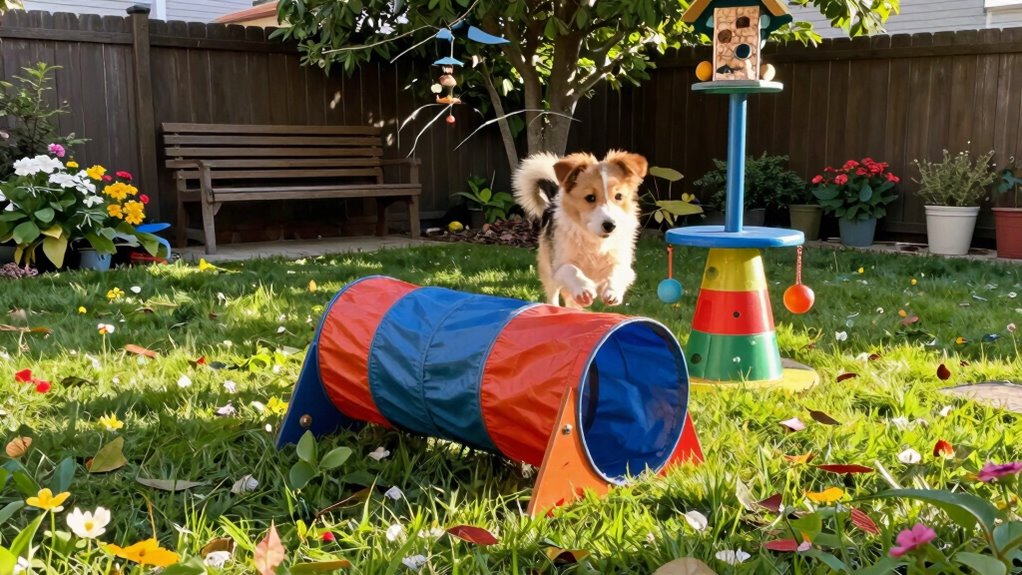
Spending time in your backyard isn’t just about relaxing; it’s an essential opportunity to enrich your pet’s life. While lounging outside is enjoyable, it’s important to recognize that simply being outdoors doesn’t automatically provide the kind of mental and physical stimulation your pet needs. To truly benefit from backyard time, you need to create an environment that encourages nature stimulation and sensory play. These elements are crucial for keeping your pet engaged, happy, and healthy.
Nature stimulation involves more than just letting your pet roam freely. It’s about designing an environment that offers diverse sights, sounds, and smells. You can do this by planting a variety of shrubs, flowers, and grasses that attract insects and birds, which pique your pet’s curiosity. Incorporate natural features like logs, rocks, or a small pond to add different textures and scents. When your pet explores these natural elements, they’re experiencing a range of stimuli that challenge their senses and keep their mind sharp. Developing an understanding of animal behavior can help you tailor these environments to better suit your pet’s needs. Additionally, observing how your pet interacts with these elements can give you insights into their preferences and natural instincts. Creating a balanced environment that mimics natural habitats can also promote biodiversity within your yard, benefiting local ecosystems. Incorporating environmental enrichment techniques can further enhance your pet’s outdoor experience by encouraging natural instincts and behaviors.
Design a natural backyard with diverse sights, sounds, and textures to stimulate your pet’s senses and curiosity.
Sensory play is another critical aspect of enriching your pet’s outdoor experience. It involves engaging their senses actively, encouraging exploration and discovery. You might hide treats or toys in different spots around the yard, encouraging your pet to sniff out and uncover them. Use different materials such as bark, leaves, or sand to create textured zones for digging or pawing. These activities stimulate your pet’s sense of smell, touch, and hearing, making their outdoor time more meaningful. Remember, dogs, in particular, thrive on scent-based activities, so providing scent trails or hiding treats in a way that requires sniffing can turn ordinary yard time into a stimulating adventure. Incorporating sensory enrichment techniques can significantly enhance your pet’s mental engagement and overall well-being.
outdoor sensory enrichment toys for dogs
As an affiliate, we earn on qualifying purchases.
As an affiliate, we earn on qualifying purchases.
Frequently Asked Questions
How Do I Measure if My Pet Is Truly Enriched?
You can measure if your pet is truly enriched by observing their behavior for signs of engagement and curiosity. Look for increased sensory stimulation, like sniffing new scents or exploring different textures, and cognitive challenges, such as problem-solving or playfulness. If your pet shows enthusiasm, curiosity, and mental stimulation during activities, it indicates they’re experiencing genuine enrichment, not just backyard time, which is more passive.
Can Backyard Time Replace Professional Enrichment Activities?
Backyard time can’t replace professional enrichment activities because it often leads to backyard boredom, which can mask true enrichment needs. Enrichment myths suggest that outdoor time alone suffices, but your pet benefits most from structured, engaging activities tailored to their instincts and preferences. You should incorporate diverse stimuli and interactive play, ensuring your pet’s mental and physical health, rather than relying solely on the outdoors for enrichment.
What Signs Indicate My Pet Isn’T Getting Enough Mental Stimulation?
You’ll notice your pet isn’t getting enough mental stimulation if they show playful behaviors less often, exhibit boredom indicators like excessive licking or scratching, or become withdrawn. You might also see them lose interest in toys or routines. These signs suggest your pet needs more engaging activities. Keep an eye out for these cues, and introduce new challenges or enrichment to keep their mind active and happy.
Are Certain Breeds More Prone to Enrichment Needs?
Yes, certain breeds have specific enrichment priorities due to breed tendencies. For example, high-energy breeds like Border Collies or Labrador Retrievers need more mental and physical stimulation to stay happy and healthy. You should tailor enrichment activities to their breed tendencies, providing puzzle toys, agility exercises, or training sessions. Recognizing these breed-specific needs guarantees your pet’s enrichment priorities are met, preventing boredom and behavioral issues.
How Often Should Enrichment Activities Be Changed or Varied?
Like changing a record on a vintage player, you should vary enrichment activities regularly—about every one to two weeks. Incorporate garden games and sensory puzzles to keep your pet engaged and stimulated. Switching things up prevents boredom and encourages mental and physical activity. Observe your pet’s interest; if they seem uninterested, it’s time for a new challenge. Regular variation keeps enrichment fresh and exciting for your furry friend.
Conclusion
Remember, backyard time isn’t the same as true enrichment — it’s like the difference between a quick snack and a full-course feast. While your pet might love lounging outside, genuine enrichment sparks their mind, body, and spirit in ways that can transform their life. Don’t settle for just a backyard visit; aim to create experiences so enriching they could turn a simple day into an adventure of a lifetime. Your pet deserves nothing less than extraordinary!
Fall Picks
fall essentials
As an affiliate, we earn on qualifying purchases.