Pet stains often come back because residual urine seeps deep into porous surfaces like carpet fibers and wood, trapping organic compounds like proteins and salts. These residues cling stubbornly, causing odors and reappearance over time. Cleaning with just water or basic products usually doesn’t remove everything. Using enzyme cleaners and proper techniques can break down these substances effectively. Keep exploring to discover trusted methods for long-lasting stain and odor removal.
Listen free for 30 days with Audible
Thousands of audiobooks and originals — cancel anytime.
As an affiliate, we earn on qualifying purchases.
Key Takeaways
- Organic compounds in pet urine, like proteins, can cling to surfaces and re-react, causing stains to reappear after cleaning.
- Residual urine deep within porous materials continues to emit odors and can trigger re-staining over time.
- Inadequate cleaning methods may leave behind residues that react with cleaning agents, leading to stain re-emergence.
- Enzymatic cleaners are essential to break down organic residues and prevent old stains from returning.
- Proper odor neutralization and residue removal require thorough, targeted cleaning and possibly professional assistance.
As an affiliate, we earn on qualifying purchases.
What Is Pet Urine Made Of and Why Does It Stick Around?
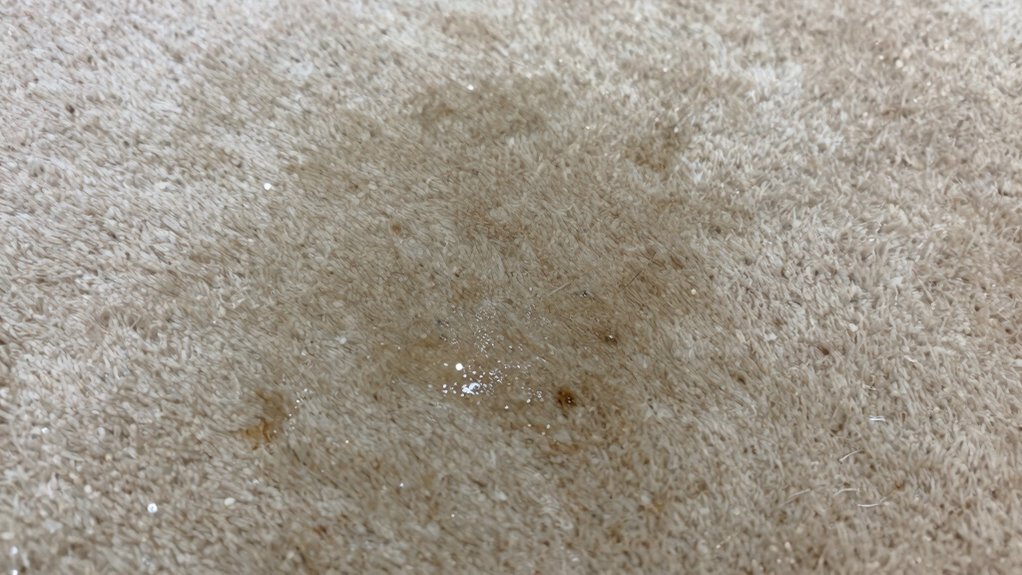
Pet urine is composed mainly of water, urea, creatinine, and salts, but it also contains proteins and other organic compounds. Its chemical composition makes it challenging to fully remove, as organic compounds can cling to surfaces. When cleaning, enzymes target these proteins to break them down through enzymatic breakdown, helping to eliminate odors and stains. However, if residues remain, the chemical makeup of urine’s organic compounds can cause stains to reappear over time. Understanding this composition helps you realize why some cleaning methods fall short. The enzymes work by breaking down complex molecules, but incomplete removal leaves behind organic residues that can attract bacteria and cause odors to resurface. This is why thorough cleaning and proper enzyme use are essential for permanent stain removal. Additionally, residual organic compounds can contribute to bacterial growth, further complicating odor and stain issues if not properly addressed. Proper cleaning techniques that ensure complete removal of these residues are crucial for long-lasting results. Using advanced cleaning solutions that break down organic residues more effectively can further improve stain permanence and odor control.
Why Do Pet Stains Keep Coming Back? The Role of Residual Urine and Porous Materials
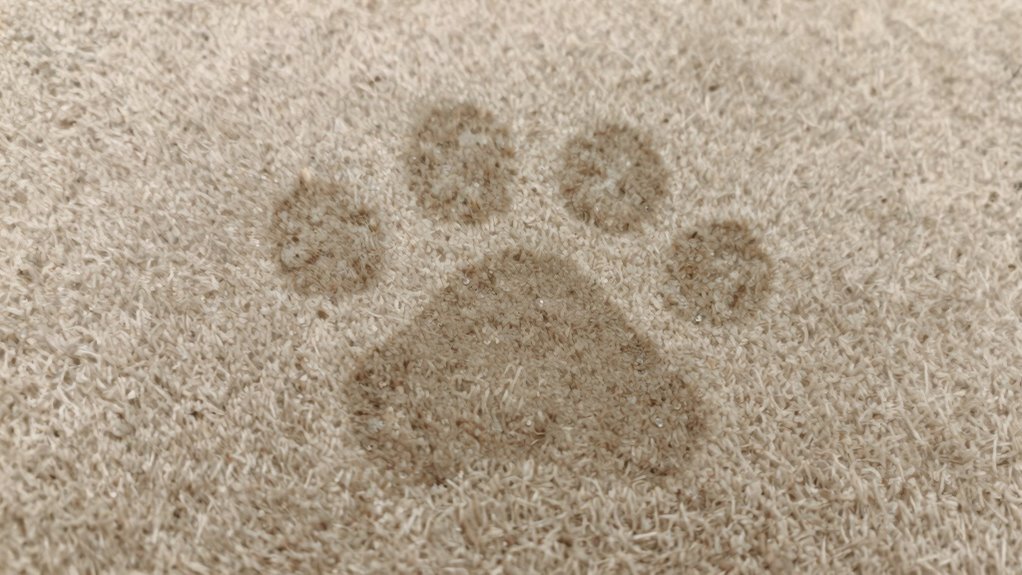
Residual urine can cause stains to reappear because it seeps into porous materials like carpet fibers, upholstery, and wood. These materials absorb urine, trapping odor molecules and residue buildup deep within. Over time, this residual urine continues to release odors, making it seem like the stain is returning even after cleaning. The porous nature of these surfaces allows urine components to settle below the surface, where they can react with cleaning agents or environmental factors, leading to re-staining. Odor absorption compounds can also attract pets back to the same spot, encouraging repeated soiling. To prevent this cycle, it’s essential to thoroughly remove residue and deodorize porous materials, ensuring that no residual urine remains that could cause stains or odors to resurface later. Proper cleaning techniques and residue removal are crucial for long-lasting results. Additionally, using appropriate cleaning products that break down urine compounds can help prevent re-soiling caused by residual odors. Employing deep cleaning methods can further ensure that all traces of urine are eliminated from porous surfaces, which is especially important considering the cryptid mysteries that sometimes involve unexplained animal behaviors and sightings. Incorporating enzymatic cleaners specifically designed for pet stains can effectively break down proteins in urine, reducing odor and stain reappearance.
How Do Cleaning Methods Affect Pet Stain Reappearance? Tips for Better Results

The effectiveness of your cleaning methods directly impacts whether stains and odors will reappear. Choosing the right cleaning product is vital; opt for enzymatic cleaners designed for pet stains to break down organic residues. Adjust the pH balance of your cleaning solution to neutralize acids and bases that cause lingering spots. Here are three tips to improve your results:
- Select cleaning products with the correct pH to prevent re-soiling.
- Ensure thorough absorption of urine and residues during cleaning.
- Reassess your cleaning approach regularly to avoid residual odor build-up.
- Incorporate knowledge of Free Floating to understand how proper cleaning strategies can protect your investments from long-term issues, just as choosing energy-efficient and reliable European Cloud Servers can safeguard your digital assets over time.
Easy Tips for Removing Pet Stains and Keeping Them From Returning

To effectively remove pet stains and prevent them from coming back, you need simple, consistent steps. First, blot the area to remove excess moisture. Then, apply an odor neutralizer or enzyme cleaner directly to the stain. Odor neutralizers help eliminate lingering smells that attract pets back to the same spot, while enzyme cleaners break down organic matter causing the stain. Let the product sit for the recommended time to work effectively. Avoid scrubbing harshly, which can spread the stain or damage the surface. After treatment, rinse with clean water and blot dry. Consistently using enzyme cleaners helps prevent re-soiling, keeping your home fresh and stain-free. Remember, quick action and proper products are key to long-lasting results. Additionally, choosing the right cleaning routine based on surface type can help protect your belongings from damage. Incorporating proper cleaning techniques from reputable sources can further enhance stain removal effectiveness and prevent future issues. Moreover, understanding the chemistry of stains can guide you in selecting the most effective cleaning agents for different types of pet accidents. Being aware of stain composition can help tailor your cleaning approach for optimal results.
When Should You Call in a Professional for Sticky Pet Stains?
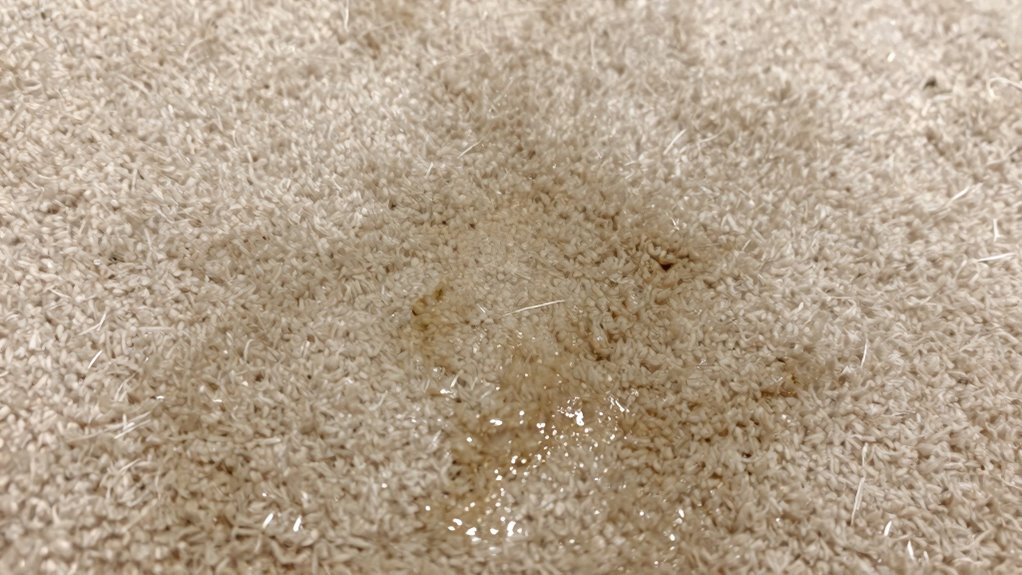
Sometimes, stubborn pet stains require professional help when your usual cleaning methods just won’t cut it. If odors persist despite cleaning, or if stains keep reappearing, it’s time to call in experts. Professionals excel at odor neutralization, ensuring lingering smells don’t attract your pet back to the same spot. They also use advanced stain masking techniques to hide stubborn discoloration. Consider these signs:
- Odors won’t fade after multiple cleanings
- Stains reappear despite your efforts
- The area remains sticky or causes discomfort
If any of these apply, a professional can assess the situation, treat the underlying cause, and restore your space effectively. Keep in mind that affiliate disclosures ensure transparency and trust when seeking professional services. Don’t settle for superficial fixes—address the root of the problem with expert help. Additionally, understanding the chemistry of pet stains can help you choose the most effective cleaning strategies. Recognizing the stain chemistry helps in selecting appropriate cleaning agents and methods to prevent reoccurrence. Being aware of vacuum features such as suction power and filters can also improve your ability to tackle pet hair and stains more effectively at home.
Frequently Asked Questions
Can Certain Cleaning Products Cause Pet Stains to Reappear?
Yes, certain cleaning agents can cause pet stains to reappear due to stain reversibility. If the cleaning products don’t fully break down the stain molecules or they leave behind residues, the stain can resurface over time. Some chemicals may also cause a chemical reaction that makes the stain more visible later. To prevent this, choose effective, enzyme-based cleaning agents and thoroughly rinse the area to guarantee all residues are gone.
How Long Do Pet Urine Residues Typically Remain Active?
Pet urine residues can stay active for weeks or even months if not properly cleaned. The urine residue provides nutrients that fuel bacterial activity, which can cause stains and odors to reappear over time. If you don’t thoroughly remove all traces of urine, the residues can remain dormant but still reactive when exposed to moisture or cleaning products. Regular deep cleaning is essential to eliminate urine residue and prevent bacterial activity from causing old spots to come back.
Are Some Materials More Prone to Stain Reoccurrence Than Others?
Ever wondered why some materials seem to attract stains more? Highly porous surfaces and materials with high surface absorption are more prone to stain reoccurrence because they trap pet urine residues deep within. These materials hold onto moisture and odors, making it harder to fully remove stains. To prevent this, choose non-porous surfaces or treat porous materials properly, ensuring residues don’t seep in and cause future reappearance.
What Are the Signs That a Stain Has Fully Been Removed?
You’ll know a stain has been fully removed when you perform stain detection and see no discoloration or residue. Cleaning indicators, like the absence of lingering odor and no visible marks, also confirm the job’s done. Check the area under different lighting and wait a few minutes to guarantee no new discoloration appears. When you’re confident there’s no stain left, you’ve successfully completed the cleaning process.
Do Pet Stains Sometimes Re-Emerge After Heavy Cleaning or Over Time?
Yes, pet stains can re-emerge after heavy cleaning or over time. While you might think you’ve removed the urine residue, cleaning chemicals might not eliminate all the microscopic urine residues embedded in the fibers. Over time, these residues reactivate, causing the stain to appear again. Heavy cleaning can sometimes push residues deeper, making them harder to fully remove. The key is thorough cleaning and using enzyme-based solutions designed to break down urine residue.
Conclusion
Understanding why pet stains reappear helps you stay one step ahead. Think of residual urine as stubborn ghosts that linger in your carpets, ready to haunt you if not fully gone. By using the right cleaning methods and acting promptly, you can banish these stains for good. Remember, with a little patience and the proper approach, you’ll turn your home from a crime scene back into your cozy haven—stain-free and smelling fresh.
Fall Picks
fall essentials
As an affiliate, we earn on qualifying purchases.