To wash kennels and patios without spreading germs, use proper pressure-washing techniques combined with a germ-free system. Avoid high pressure that forces bacteria into cracks or disperses them into the air. Incorporate disinfectants that are compatible with your equipment and follow a careful sanitation routine. Regular equipment maintenance and using features like filtration and UV sterilization help prevent cross-contamination. Keep surfaces dry and clean to reduce bacteria buildup—discover how to optimize your process for maximum safety.
Key Takeaways
- Use low-pressure settings and proper techniques to prevent dispersing germs into cracks and porous surfaces.
- Combine pressure washing with appropriate disinfectants to eliminate pathogens effectively.
- Sanitize equipment thoroughly after each use to prevent cross-contamination between areas.
- Incorporate natural airflow and drying strategies to reduce airborne germ spread and moisture retention.
- Regularly inspect and maintain pressure-washing systems to ensure effective, germ-free cleaning without surface damage.
Why Pressure Washing Can Spread Germs in Kennels and Patios

Although pressure washing can effectively clean kennels and patios, it also has the potential to spread germs if not done carefully. When high-pressure water forces biological hazards, like bacteria or parasites, into cracks and porous surfaces, you risk contaminating surrounding areas. Without proper technique, pressure washing can disperse germs into the air or onto nearby surfaces, increasing infection risks. Additionally, the use of chemical disinfectants during or after washing is vital, but if not applied correctly, they won’t eliminate all pathogens. Instead, they might create chemical residues that threaten animals and humans. To prevent this, it’s essential to combine careful pressure washing with appropriate disinfectant use, ensuring germs are eradicated and not redistributed. Proper maintenance of cleaning equipment and understanding air purification methods can also help reduce airborne contaminants during the cleaning process. Incorporating proper cleaning protocols can further enhance sanitation efforts and minimize the spread of germs. Furthermore, selecting the right pressure settings ensures thorough cleaning without damaging surfaces or dispersing contaminants further. Properly disinfecting surfaces after pressure washing is crucial for comprehensive sanitation and safety. Implementing correct disinfection techniques is essential for effective pathogen elimination and maintaining a healthy environment.
How Germ-Free Washdown Systems Prevent Cross-Contamination
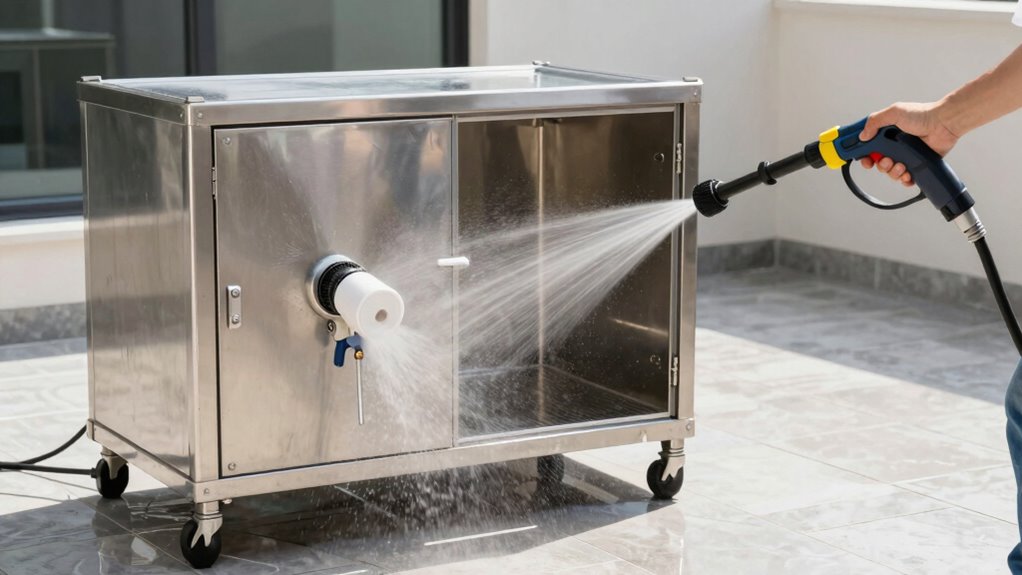
Germ-free washdown systems guarantee your equipment stays sanitized, reducing the risk of spreading bacteria between areas. By thoroughly cleaning and disinfecting tools and surfaces, you prevent cross-contamination from one kennel or patio to another. This proactive approach helps keep your environment safe and hygienic for both staff and animals. Incorporating Free Floating techniques can further enhance the effectiveness of these systems by ensuring even coverage and reducing stagnant areas where germs could thrive. Additionally, implementing proper maintenance practices ensures the longevity and consistent performance of the washdown systems, further safeguarding against contamination. Regularly monitoring and adjusting system performance can optimize cleaning efficiency and prevent microbial buildup, keeping your environment healthier. Emphasizing energy-efficient solutions in system design can also contribute to more sustainable operations while maintaining high sanitation standards. Consistent training for staff on hygiene protocols can further reduce the risk of microbial spread and maintain a germ-free environment.
Sanitization of Equipment
Proper sanitization of equipment is essential to prevent cross-contamination between kennels and outdoor patios. Implementing effective disinfection protocols and equipment sterilization guarantees germs don’t spread. You should regularly:
- Use high-quality disinfectants compatible with your pressure-washing system
- Follow manufacturer guidelines for equipment sterilization procedures
- Clean nozzles and hoses after each use to eliminate residue
- Maintain a schedule for routine sanitization, especially after cleaning contaminated areas
Prevents Cross-Contamination
Germ-free washdown systems are designed to prevent cross-contamination by ensuring that pathogens don’t transfer between kennels and outdoor patios. They enhance infection control by using high-pressure, sanitized water to thoroughly clean surfaces, removing dirt and microbes effectively. These systems minimize microbial spread by preventing the transfer of germs from contaminated areas to clean ones, reducing the risk of disease transmission. These systems often include separate hoses, nozzles, or chambers to keep clean and dirty water separate, further reducing contamination chances. By using a controlled, hygienic process, you eliminate the need for harsh chemicals and reduce the risk of spreading germs through manual cleaning. Additionally, system design plays a crucial role in maintaining hygiene standards and preventing cross-contamination. Implementing proper hygienic protocols ensures that the washdown process remains effective and safe. Proper disinfection techniques are essential for eliminating residual microbes and maintaining a germ-free environment. Incorporating advanced sanitation technologies can further enhance the effectiveness of germ-free washdown systems. Moreover, understanding and utilizing contamination control methods can optimize the process for maximum safety. Ultimately, germ-free washdowns provide a safer environment, safeguarding animals and staff from preventable infections.
Features to Look for in Germ-Free Kennel and Patio Washdowns

When choosing a washdown system for kennels and patios, it’s vital to prioritize features that guarantee thorough sanitation and safety. Look for systems that incorporate UV sterilization to eliminate germs effectively without chemicals. Biodegradable cleaning agents ensure eco-friendly sanitation, reducing environmental impact. Additionally, consider adjustable pressure settings to prevent damage to surfaces. Easy-to-clean nozzles and hoses improve efficiency and hygiene. A built-in filtration system helps remove debris and bacteria from water, maintaining cleanliness. The inclusion of germ-killing technology further enhances sanitation effectiveness, providing peace of mind. Furthermore, selecting systems with field‑of‑view considerations ensures comprehensive coverage during cleaning. Incorporating water circulation features can also help optimize cleaning cycles and ensure thorough rinsing. Choosing equipment with efficient filtration systems can significantly improve water quality and reduce waste. Implementing disinfection protocols within these systems can further ensure the elimination of pathogens, making the environment safer for animals and humans alike. By selecting a system with these features, you guarantee a germ-free environment while supporting sustainable and effective cleaning practices.
How to Set Up a Safe and Effective Washdown Routine

Establishing a safe and effective washdown routine begins with planning a clear schedule and selecting the right equipment. Consistent cleaning schedules ensure you don’t miss spots and help maintain hygiene standards. Determine how often you need to wash kennels and patios based on usage and contamination risk. Proper staff training is vital; guarantee everyone understands the correct procedures, including equipment operation and germ prevention techniques. Educate staff on handling cleaning agents safely and using pressure washers effectively without causing damage or spreading germs. Document your routine so it’s easy to follow and review regularly. Incorporating a simple documentation system can streamline your process and ensure consistency across staff members. Additionally, understanding the importance of wave and wind in outdoor cleaning can improve air circulation and drying times, reducing the risk of lingering germs. Recognizing how airflow dynamics influence drying can help optimize your washdown process. Being aware of natural airflow patterns can further enhance safety by dispersing airborne contaminants more effectively. Incorporating knowledge of pressure-washing techniques ensures thorough cleaning without damaging surfaces or spreading bacteria. By establishing a well-organized schedule and investing in thorough staff training, you create a reliable system that keeps your kennels and patios sanitary and safe for animals and staff alike.
Troubleshooting Common Kennel and Patio Washdown Issues
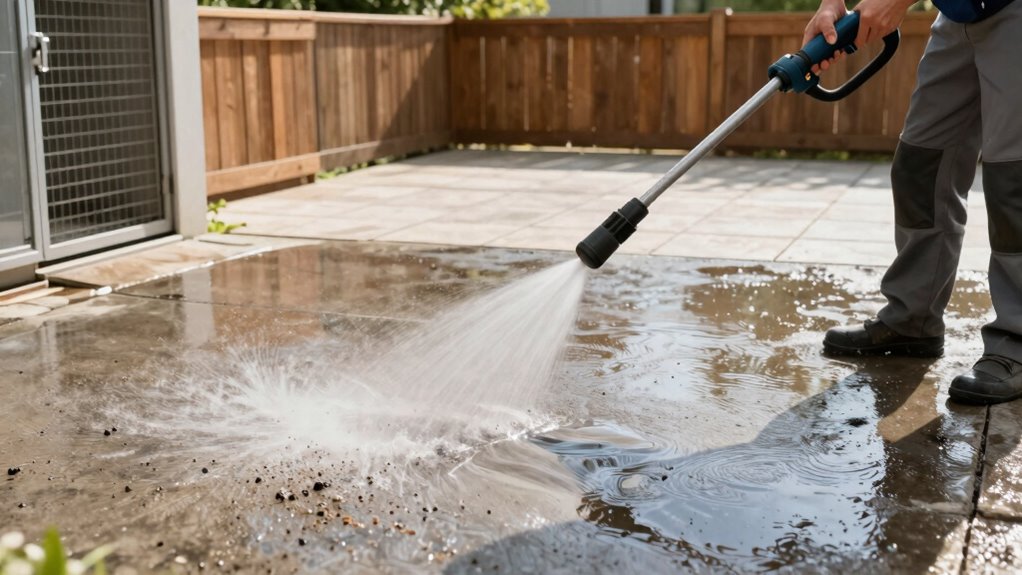
If your washdown isn’t working properly, you might notice spray pattern issues or inconsistent water flow. Using the right water temperature is essential to effectively clean without causing damage or discomfort. You also need to stay vigilant to prevent cross-contamination between areas, ensuring your kennel and patio stay hygienic. Regularly inspecting and maintaining your equipment helps avoid infection risks and ensures optimal performance.
Common Spray Pattern Problems
Spray pattern problems are common issues that can hinder the effectiveness of your kennel and patio washdown. An inconsistent or uneven spray can leave dirt or germs behind. To troubleshoot, start by checking your nozzle selection, as the wrong nozzle can cause irregular spray patterns. Common problems include a weak or dribbling flow, uneven coverage, or a misaligned spray. You might experience a narrow or overly broad spray, reducing cleaning efficiency. To fix these issues:
- Switch to the correct nozzle for the task
- Clean or replace clogged nozzles
- Adjust the nozzle tip for a proper spray pattern
- Check for damage or wear in the nozzle assembly
Proper nozzle selection and maintenance guarantee a consistent spray pattern, making your washdown more effective and germ-free.
Effective Water Temperature Use
Using the correct water temperature is essential for effective kennel and patio washdowns because hot water helps loosen dirt, grease, and germs more efficiently. If the water is too cold, cleaning becomes less effective, leaving behind grime and bacteria. Conversely, excessively hot water can damage surfaces or cause discomfort. Adjust your pressure settings based on the water temperature; higher pressure works better with warm water, while lower pressure may be needed when using hotter water to prevent surface damage. Always test your water temperature before starting, ensuring it’s warm enough to clean thoroughly without risking harm or equipment issues. Properly balancing water temperature and pressure settings guarantees a deep, germ-free clean without spreading contaminants or causing damage.
Preventing Cross-Contamination
Cross-contamination can occur quickly during kennel and patio washdowns if you aren’t careful, spreading germs from one area to another. To prevent this, focus on disinfectant compatibility by choosing products suited for pressure washing and surfaces. Adjust water pressure regulation to avoid splashing contaminated water onto clean areas. Always use separate nozzles or tools for different zones to minimize cross-contact. Regularly clean and disinfect equipment after each use to eliminate germs and prevent buildup. Keep your washdown area organized, and don’t forget to rinse thoroughly to remove residual disinfectants or dirt. By implementing these practices, you reduce the risk of spreading infections and maintain a safe, hygienic environment for your animals and staff.
Tips for Maintaining a Germ-Free Environment After Pressure Washing

After pressure washing your kennel and patio, it’s essential to take steps to keep the area germ-free. Regularly disinfect outdoor seating and grooming stations to prevent bacteria buildup. Use pet-safe disinfectants that effectively kill germs without harmful residues. Keep the area well-ventilated to help surfaces dry quickly, reducing mold and bacteria growth. Encourage frequent cleaning of pet grooming tools and accessories to avoid cross-contamination. Schedule routine inspections to identify any areas that may need re-cleaning or disinfecting. Educate yourself and others on proper hygiene practices, like washing hands before and after handling pets. By maintaining a clean environment consistently, you’ll ensure your outdoor space stays safe and healthy for both your pets and visitors.
Choosing the Right Germ-Free Washdown System for Your Needs
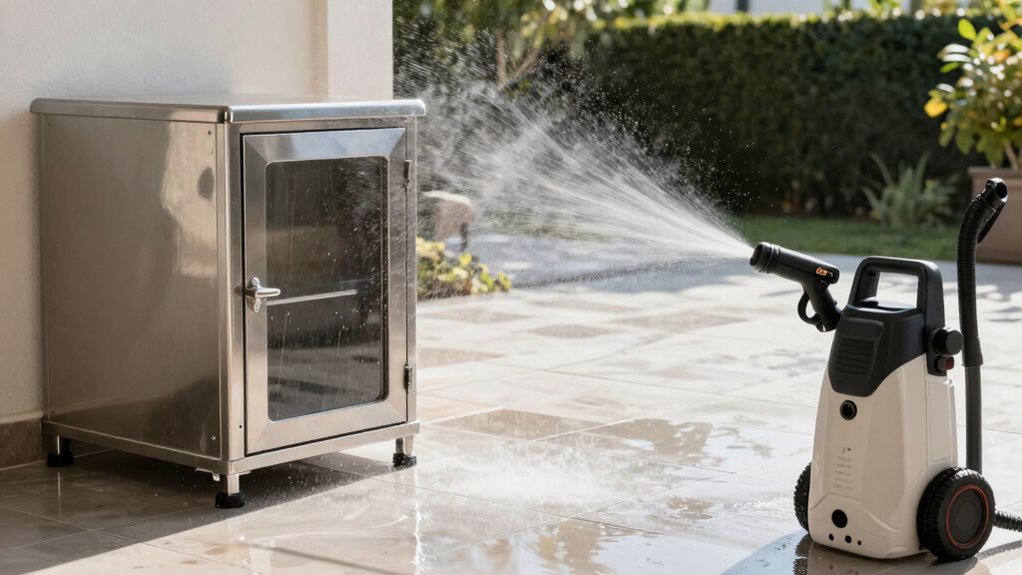
Choosing the right germ-free washdown system is essential to maintaining a clean and safe environment for your pets and visitors. To do this effectively, consider how the system integrates with your cleaning schedules and staff training. A suitable system should be easy to operate and maintain, guaranteeing consistent sanitation. Focus on features like automated disinfection, minimal chemical use, and compatibility with your cleaning routines. Proper staff training ensures everyone understands how to use it correctly, preventing cross-contamination. When selecting a system, keep these factors in mind:
- Ease of use and maintenance
- Compatibility with existing cleaning schedules
- Effective germ elimination capabilities
- Clear staff training protocols
Making an informed choice helps ensure a hygienic space without spreading germs.
Frequently Asked Questions
Can Pressure Washing Damage Kennel or Patio Surfaces?
Pressure washing can damage kennel or patio surfaces if you’re not careful. To prevent this, you should focus on proper surface preparation and use the right pressure settings. Regular equipment maintenance ensures your washer functions correctly, preventing accidental damage. Always test a small area first, adjust the pressure accordingly, and keep the nozzle at an appropriate distance. This way, you protect your surfaces while thoroughly cleaning without causing harm.
How Often Should I Disinfect My Washdown Equipment?
You should disinfect your washdown equipment after every use—because who wants to spread germs like a bad rumor? Follow a strict disinfection frequency to keep everything sanitary and avoid cross-contamination. Stick to a consistent washdown schedule, and don’t forget to sanitize nozzles and hoses regularly. Think of it as your secret weapon against germs—because clean equipment is happy, healthy equipment. Keep it spotless, keep it safe.
Are There Eco-Friendly Germ-Free Washdown Options Available?
Yes, eco-friendly germ-free washdown options are available. You can use biodegradable detergents and natural disinfectants that effectively clean without harming the environment. These products are safe for your pets, your family, and the planet. Look for options labeled as environmentally friendly or plant-based. They provide powerful cleaning while reducing chemical runoff and pollution, ensuring your washdown process stays both effective and sustainable.
What Safety Precautions Are Necessary During Pressure Washing?
You should always wear personal protective equipment like gloves, goggles, and waterproof clothing when pressure washing to prevent injuries and exposure to germs. Make sure your equipment is well-maintained, checking hoses, nozzles, and pressure settings before use. Follow safety guidelines, keep a safe distance from the spray, and avoid electrical hazards by ensuring outlets are protected. Proper safety precautions keep you safe while effectively cleaning without spreading germs.
How Do I Train Staff to Use Germ-Free Washdown Systems Properly?
You need to hit the ground running with staff training on germ-free washdown systems by demonstrating proper techniques from the get-go. Show them how to handle equipment carefully, disinfect thoroughly, and avoid cross-contamination. Encourage hands-on practice and regular refresher courses to keep skills sharp. When everyone’s on the same page, you’ll prevent germs from spreading and keep your facility safe—it’s a win-win situation.
Conclusion
By choosing a germ-free washdown system, you reduce the risk of spreading infections—studies show that proper cleaning can cut pathogen transmission by up to 90%. Regular maintenance and a safe routine keep your kennels and patios spotless and healthy. Don’t overlook the importance of advanced systems; they’re your best defense against cross-contamination. Protect your animals and staff by investing in effective, germ-free pressure washing—you’ll see the difference in cleanliness and safety every day.