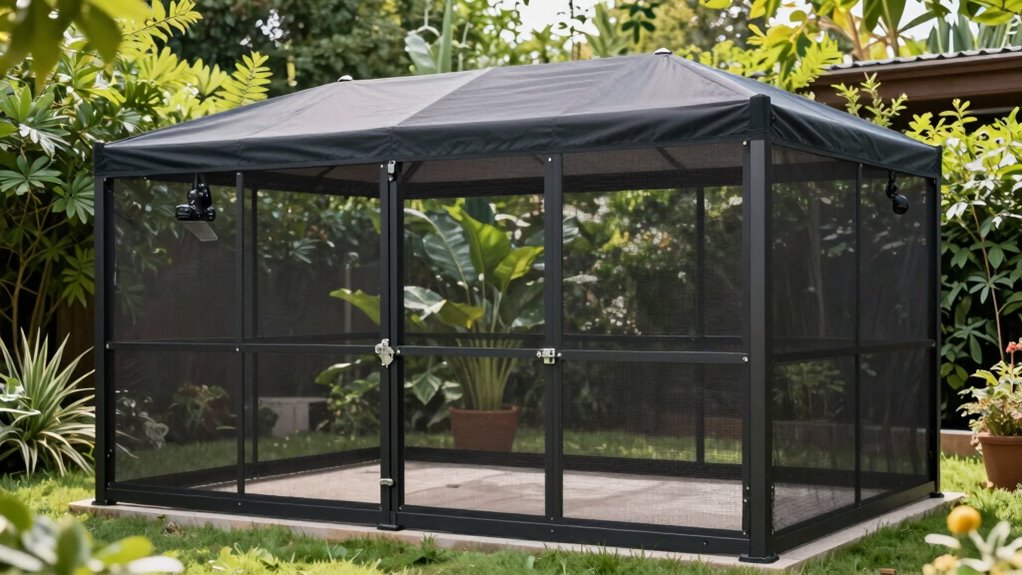

To keep your catio safe, start with providing ample shade using fabric, shade cloths, or natural cover from trees to prevent overheating and guarantee ventilation. Use sturdy, pet-safe mesh like stainless steel or vinyl-coated wire, keeping it tight and reinforced. Predator-proof your enclosure by sealing gaps, extending fencing underground, and adding overhangs. Secure all entrances, monitor weather regularly, and conduct routine checks to maintain durability. Continue exploring further tips to fully protect your cats outdoors.

Get pet supplies delivered free with Prime
- Fast, free delivery on millions of items
- Prime Video, Amazon Music and more included
- Member-only deals all year
Key Takeaways
- Provide shaded areas using non-toxic fabrics or natural cover to regulate temperature and ensure ventilation.
- Use durable, pet-safe mesh like stainless steel or vinyl-coated wire, ensuring a tight fit without gaps.
- Reinforce fencing and extend underground or add overhangs to prevent digging or climbing by predators.
- Secure entrances with sturdy latches and install weather covers; monitor weather conditions with alerts and protective measures.
- Regularly inspect and maintain mesh, shade, and structure; clean debris; check for damage; and observe cat behavior for safety.
Why Shade Is Essential for a Safe and Comfortable Catio
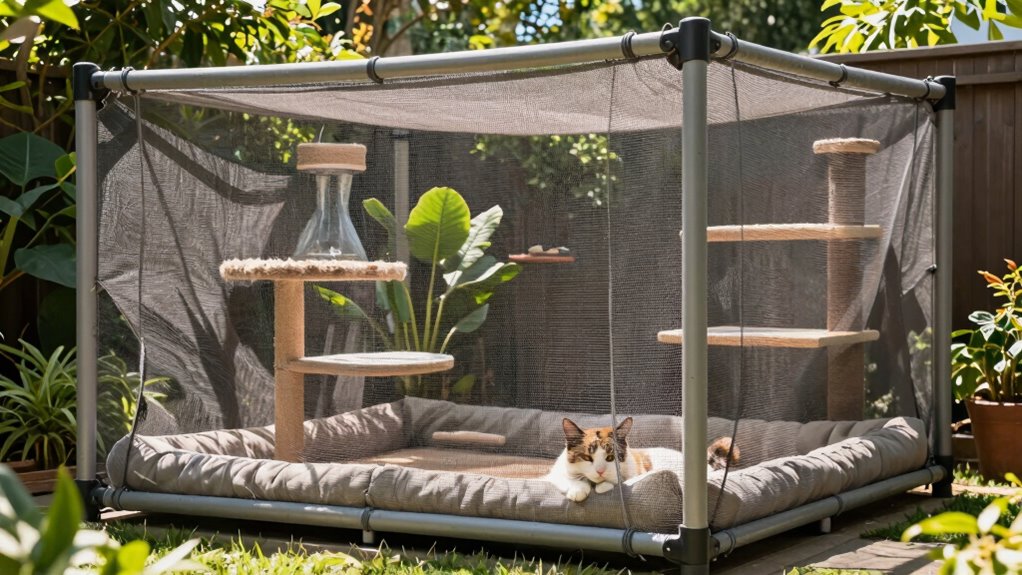
Shade is essential for keeping your cat safe and comfortable in a catio. It helps regulate temperature, preventing overheating during hot days. When selecting shade materials, prioritize plant safety—avoid toxic or prickly plants that could harm your cat. Use non-toxic fabrics, shade cloths, or sturdy pergolas to provide effective cover. These materials block direct sunlight while allowing airflow, creating a cool, inviting space. Proper shading also protects your plants from sunburn and stress, ensuring your outdoor space remains healthy. Additionally, natural shade from trees or bushes can provide a more integrated and relaxing environment. Incorporating shade structures designed for outdoor safety can further enhance protection from the elements. Remember, a shaded catio encourages your cat to relax and explore without the risk of heat exhaustion. By choosing the right shade materials and ensuring plant safety, you create a secure and cozy environment where your feline can enjoy the outdoors comfortably. Ensuring adequate ventilation within the shaded area is also crucial to maintaining a comfortable temperature and airflow. Proper airflow management can prevent humidity buildup and reduce the risk of pests. Incorporating climate control strategies, such as fans or misting systems, can further enhance comfort during the hottest days.
How to Choose Sturdy, Pet-Safe Mesh to Keep Cats In and Visitors Out
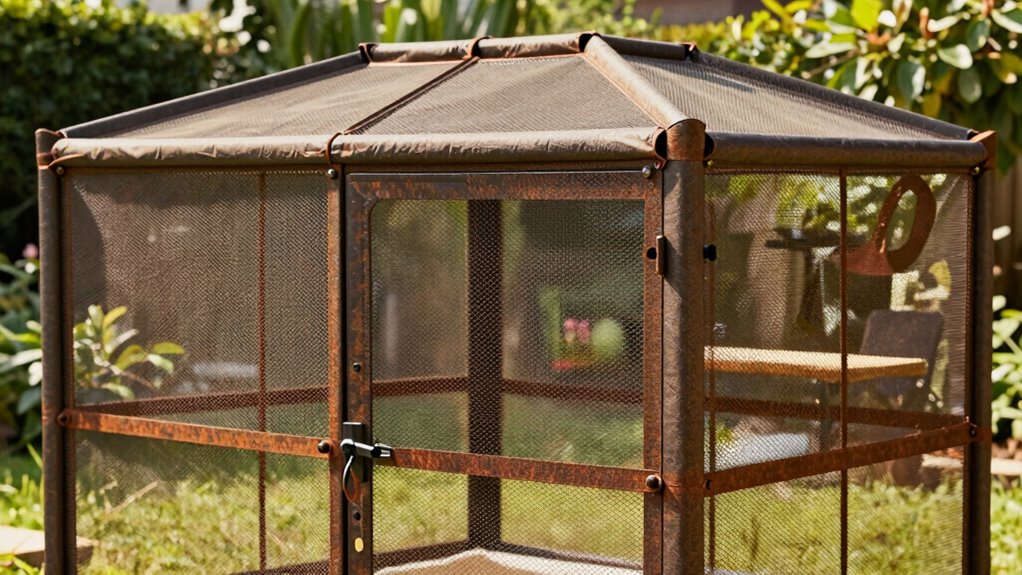
Choosing the right mesh for your catio is crucial to guarantee it’s sturdy enough to withstand weather and curious cats, while also being safe for your pets. Focus on mesh durability to ensure it resists tearing, rust, and UV damage over time. Opt for pet-safe materials like stainless steel or vinyl-coated wire, which are non-toxic and secure. Avoid cheap or flimsy options that might give way under pressure or weather conditions. Measure carefully to ensure the mesh fits tightly and has no gaps, preventing cats from escaping and visitors from entering. Reinforce corners and edges for added strength. Proper material selection is essential to ensure long-lasting safety and reliability. By selecting durable, pet-safe materials, you create a safe, long-lasting enclosure that keeps your cats in and unwanted visitors out. Additionally, choosing weather-resistant mesh ensures your enclosure remains secure and intact through changing seasons. Incorporating UV-resistant materials can further prolong the lifespan of your mesh, reducing maintenance and replacement costs over time. To enhance durability, consider selecting mesh with anti-corrosion properties, which can significantly extend its lifespan in outdoor conditions. Also, selecting corrosion-resistant options can help maintain the enclosure’s integrity over many years.
Steps to Predator-Proof Your Catio and Prevent Outdoor Dangers
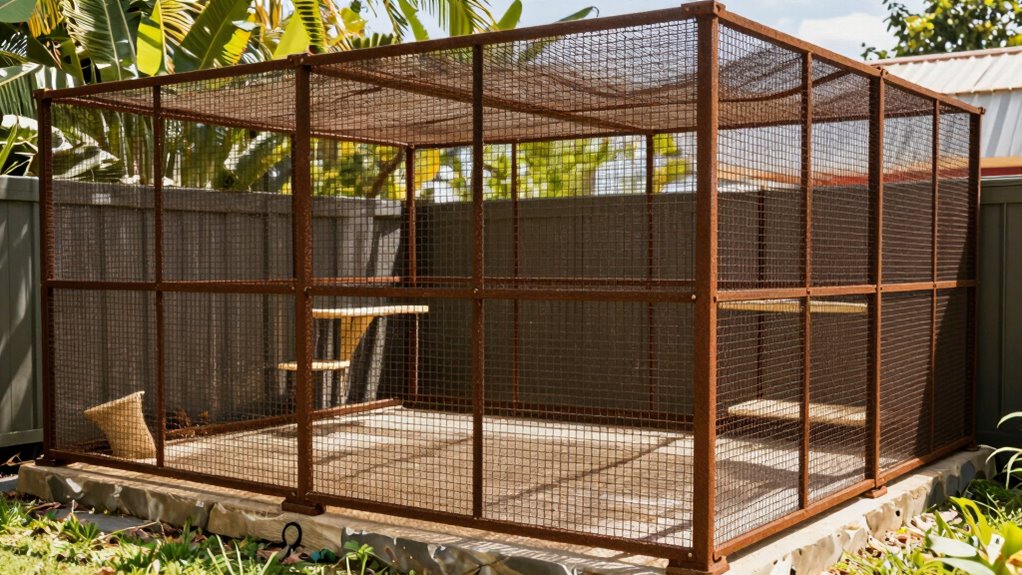
To effectively predator-proof your catio and keep outdoor dangers at bay, you need to identify and seal all potential escape points and entry routes for predators. Start by inspecting fencing configurations, ensuring there are no gaps or weak spots. Reinforce any vulnerable areas with sturdy material. Incorporate natural deterrents like scent barriers or motion-activated devices around the perimeter to discourage predators from approaching. Consider extending fencing underground or adding overhangs to prevent digging or climbing. Regularly check for signs of tampering or damage. Additionally, fencing integrity is crucial to ensure that predators cannot exploit small openings or weaknesses. By combining secure fencing configurations with natural deterrents, you create a safer environment that minimizes the risk of predators gaining access and keeps your cats protected during outdoor adventures.
Securing Entrances and Monitoring Weather for Ongoing Safety

Once you’ve secured the perimeter of your catio, the next step is guaranteeing that entrances remain safely closed and monitored. Entrance security is essential to prevent your cat from escaping or unwanted animals from getting in. Use sturdy latches and check that doors close properly each time. Additionally, weather monitoring helps you prepare for changing conditions. Keep an eye on forecasts for rain, wind, or extreme heat, and be ready to close or shield entrances accordingly. Protect your catio from sudden weather shifts by installing covers or adjustable shades near the entrances. Regularly inspecting locks and weatherproofing measures ensures ongoing safety. Staying vigilant about weather and entrance security creates a safe, comfortable environment for your cat, minimizing risks from outdoor elements or accidental escapes. Incorporating smart appliances such as automated weather sensors can further enhance your monitoring capabilities and ensure continuous safety. Employing connected safety devices can provide real-time alerts and help you respond promptly to environmental changes or security breaches. Additionally, using weather-resistant materials for doors and enclosures can extend durability and safety in variable weather conditions, especially when paired with proper maintenance routines.
Routine Checks and Maintenance to Keep Your Catio Secure
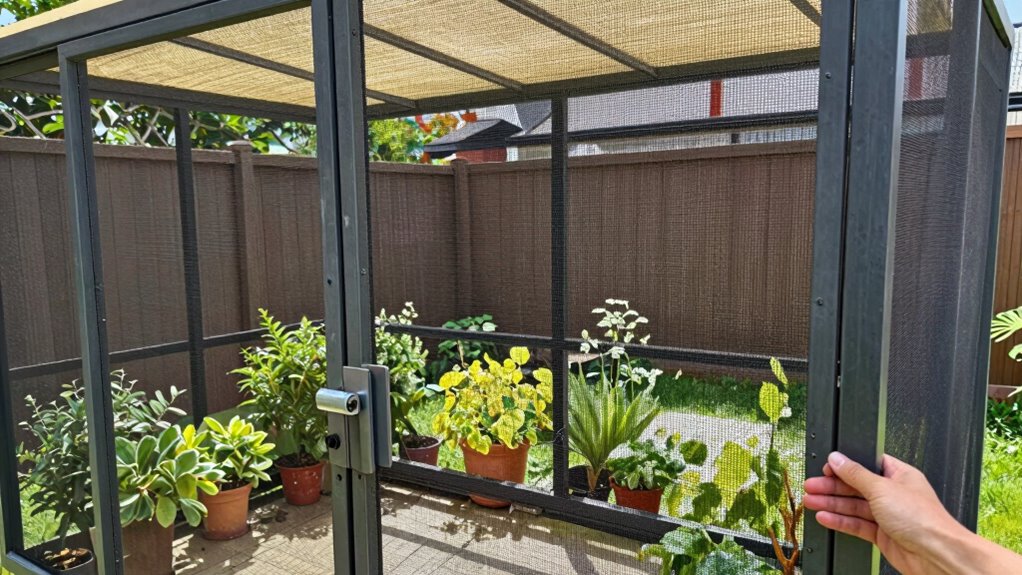
Regularly inspecting your catio is essential to maintain its security and prevent potential issues. Check for any damage to the mesh, shade, or structure that could allow escapes or predators to enter. Observe your cat’s behavior during these inspections—if they seem anxious or overly cautious, it might indicate a problem. Ensure all latches and doors function properly to prevent accidental escapes. Routine maintenance also involves cleaning debris or nests that could compromise the enclosure’s integrity. Incorporate feline enrichment by regularly revitalizing toys and scratching posts inside the catio, which encourages healthy activity and reduces stress. Additionally, understanding ergonomics can help you design a safer and more comfortable space for your cat to enjoy. Paying attention to sleep comfort factors such as proper shade and secure mesh can also enhance your cat’s overall well-being. Regularly assessing the enclosure’s durability helps you identify areas needing reinforcement before problems arise. A well-maintained enclosure also supports preventing predators, ensuring your cat remains safe. This proactive approach supports a safe environment that keeps your cat secure and content while resisting wear and tear over time. Keeping a close eye on these aspects ensures your cat stays safe, happy, and stimulated, while maintaining a secure environment that resists wear and tear over time.
Frequently Asked Questions
How Often Should I Inspect My Catio for Potential Safety Issues?
You should inspect your catio for potential safety issues at least once a month. Regular catio maintenance and safety inspections help catch problems like loose mesh, sharp edges, or predator entry points early. After storms or severe weather, do a quick check to make sure everything remains secure. Consistent inspections keep your cat safe and happy, preventing accidents and ensuring the enclosure stays predator-proof and in good condition.
What Are the Best Materials for Predator-Proofing My Catio?
Imagine a fortress built with your cat’s safety in mind. Use strong metal mesh, like galvanized steel or hardware cloth, to prevent predators from slipping through. Pair this with weather-resistant materials, ensuring durability against rain, wind, and sun. These choices create a barrier that’s both sturdy and long-lasting, giving your feline friend a secure space to explore while keeping unwanted visitors out. You’re building peace of mind, one secure layer at a time.
How Can I Prevent Other Animals From Entering Through the Mesh?
To prevent wildlife intrusion through your mesh, you should reinforce the mesh with a sturdy, wildlife-proof material like galvanized steel or hardware cloth. Regularly inspect and repair any tears or weak spots, and confirm the mesh is tightly secured around the entire enclosure. Adding a lip or overhang can prevent animals from squeezing underneath. These steps create a robust barrier, keeping unwanted animals out and your cat safe.
Are There Specific Weather Conditions That Could Compromise My Catio’s Safety?
Ironically, the weather can be your cat’s biggest enemy. Extreme heat, heavy rain, or freezing cold can compromise your catio’s safety by weakening the mesh or causing structural damage. Seasonal changes also bring unpredictable weather hazards like strong winds or snow that may stress or harm your feline friend. Stay vigilant, regularly inspect your catio, and adapt it to withstand these weather conditions to keep your cat safe year-round.
What Signs Indicate My Catio Needs Urgent Repairs or Upgrades?
You should upgrade your catio immediately if you notice signs of wear, like significant mesh tears or loose areas. These issues compromise predator proofing and safety, putting your cat at risk. Also, check for rust, sagging shade, or damaged supports. If you see any of these signs, it’s time for repairs to guarantee your cat’s safe, secure outdoor space remains protected from predators and harsh weather.
Conclusion
By paying close attention to shade, mesh, and predator-proofing, you create a cozy haven where your feline friends can safely explore. A well-maintained catio offers peace of mind, allowing your cats to enjoy the outdoors without worry. Remember, the smallest details often hold the greatest importance. With careful planning and ongoing care, you nurture a space that gently safeguards their happiness, reminding you that true security begins with thoughtful dedication.
Halloween Picks
halloween
As an affiliate, we earn on qualifying purchases.