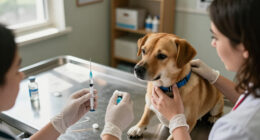
To prepare a pet first-aid kit, pack essentials like sterile gauze, adhesive tape, antiseptic wipes, tweezers, and a thermometer, along with pet-specific pain relievers and antibiotic ointments. Include safety items such as gloves, a muzzle, and emergency contacts. Keep tools to control bleeding and stabilize injuries nearby. Regularly check supplies, learn how to use each item, and continue exploring for detailed tips to keep your pet safe in emergencies.

Get pet supplies delivered free with Prime
- Fast, free delivery on millions of items
- Prime Video, Amazon Music and more included
- Member-only deals all year
Key Takeaways
- Include sterile gauze, adhesive tape, antiseptic wipes, scissors, and antibiotic ointment for wound cleaning and dressing.
- Pack tweezers, a digital thermometer, flashlight, and sterile gloves for examination and removing debris.
- Add pet-specific pain relievers, anti-inflammatory medications, and avoid human ointments unless approved by a vet.
- Keep emergency contacts, a muzzle or cloth, and supplies to control bleeding and prevent further injury.
- Ensure the kit is well-stocked, accessible, and you know how to use each item for immediate pet care.

Have you ever thought about what you’d do if your pet suddenly got injured or fell ill? Accidents can happen anytime, and being prepared can make all the difference. That’s where a well-stocked pet first-aid kit comes in. It’s not just about having supplies; it’s about knowing you can act quickly and confidently to help your furry friend until you reach a veterinarian. First, you’ll want to include basic items like sterile gauze pads and adhesive tape. These are essential for covering wounds and controlling bleeding. Keep a variety of sizes on hand, so you’re ready for anything from small cuts to larger injuries. You should also pack antiseptic wipes or solutions, like chlorhexidine or povidone-iodine, to clean wounds and reduce infection risk. Never use hydrogen peroxide or alcohol directly on your pet’s wounds, as these can be too harsh and delay healing.
Tweezers are another must-have, especially for removing splinters, ticks, or debris stuck in fur or skin. Pair that with a pair of scissors to trim fur around injuries or to open packaging of supplies. Have a digital thermometer ready to check your pet’s temperature if they seem unwell; normal body temperature varies among species, so know what’s typical for your pet. In addition, include a supply of sterile gloves to keep everything sanitary and avoid infecting wounds. A flashlight can help you examine injuries in low light or difficult-to-see areas. You’ll also want a small container of coconut oil or antibiotic ointment for minor cuts and scrapes, but avoid applying human ointments without veterinary guidance.
Having a pet-specific pain reliever or anti-inflammatory medication is useful, but only if prescribed by your vet—never give human medicine to your pet. A muzzle or soft cloth can be handy if your pet is in pain or frightened, preventing bites during treatment. Also, pack a list of emergency contacts, including your veterinarian, the nearest emergency animal clinic, and poison control for pets. Remember, your first goal is to keep your pet calm and prevent further injury. Having these supplies ready and knowing how to use them can help you provide immediate care and reduce your pet’s suffering until professional help arrives. Being prepared shows your pet you care and can make all the difference in an emergency.
As an affiliate, we earn on qualifying purchases.
Frequently Asked Questions
How Often Should I Update My Pet’s First-Aid Kit?
You should update your pet’s first-aid kit at least every six months, or more often if you notice items nearing expiration or running low. Check for expired medications, replace used supplies, and confirm everything is in good condition. If your pet’s health needs change, update the kit accordingly. Regularly reviewing and maintaining your kit guarantees you’re prepared for any emergencies, giving your pet the best care possible.
Are Specific Brands Recommended for Pet First-Aid Supplies?
You don’t need specific brands for pet first-aid supplies, but look for reputable, veterinarian-recommended options. Focus on quality, safety, and proper sizes for your pet. Generic or store brands can work well if they meet safety standards. Check ingredients and instructions carefully before purchasing. Your priority is ensuring the supplies are effective and safe, so choose trusted options and consult your vet for personalized recommendations.
Can I Use Human First-Aid Items on Pets?
Yes, you can use some human first-aid items on pets, but be cautious—pets aren’t just small humans. Always check labels carefully, and avoid products with alcohol, hydrogen peroxide, or certain medications that can harm them. Think of your pet’s health as a delicate flower; using the right supplies guarantees it stays safe and healthy. When in doubt, consult your vet before using any human remedies on your furry friend.
What Should I Do if My Pet Ingests a Toxic Substance?
If your pet ingests a toxic substance, act quickly. Call your veterinarian or an emergency pet poison hotline immediately. Try to identify what your pet ate and how much. Do not induce vomiting unless instructed by a professional. Keep calm and keep your pet still to prevent further absorption of the toxin. Follow the expert’s advice closely and bring any packaging or remnants with you to the vet.
How Can I Tell if My Pet Needs Emergency Veterinary Care?
Imagine your pet as a delicate clockwork, and any sudden irregularity signals trouble. If your pet struggles to breathe, collapses, has seizures, or shows extreme disorientation, act immediately. Uncontrollable bleeding, persistent vomiting, or unresponsiveness also indicate urgent care is needed. Trust your instincts—if something feels off or worsening, don’t hesitate. Contact your vet right away, because catching trouble early can be the difference between a quick fix and a crisis.
Conclusion
Now that you know what to pack in your pet’s first-aid kit, you’re practically a superhero ready for any emergency! With these supplies, you could handle anything from a tiny scrape to a wild animal attack—okay, maybe not that extreme, but you get the idea. Keep your kit stocked and your pet safe because, let’s face it, you never know when a tiny paw or a big adventure might need you to be the ultimate hero!
Halloween Picks
halloween
As an affiliate, we earn on qualifying purchases.