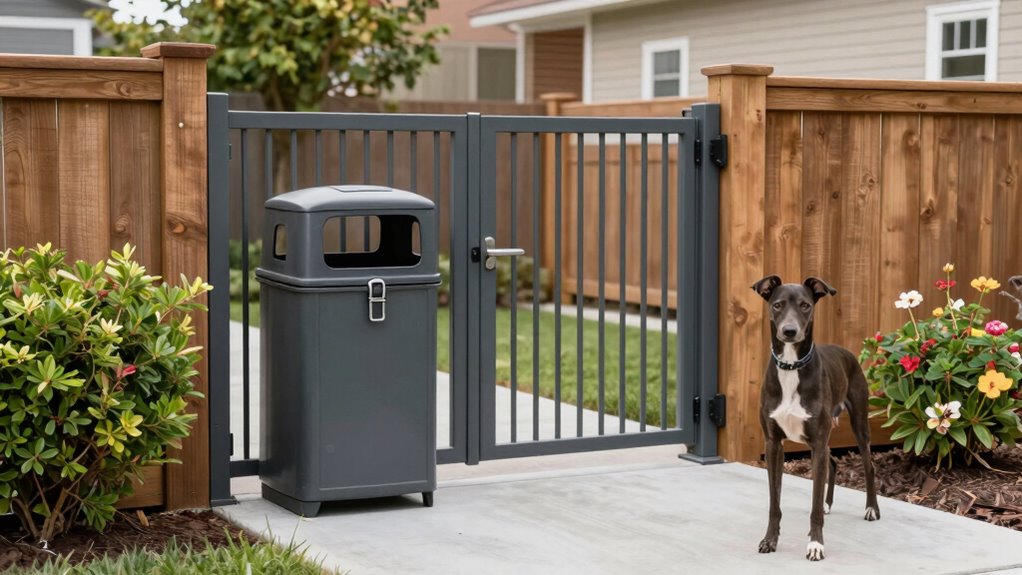
To stop your dog from raiding trash, choose a secure location away from high-traffic areas and in shaded spots to hide strong odors. Use sturdy, lidded containers or install fences and lockable enclosures to prevent access. Enhance deterrence with scent masking and visual barriers, and regularly maintain and clean the area to eliminate tempting scents. Properly designed and maintained, your trash setup can become much less appealing — learn more tips that really work.
Key Takeaways
- Place trash cans in shaded, hard-to-access corners away from common dog pathways to reduce scent exposure.
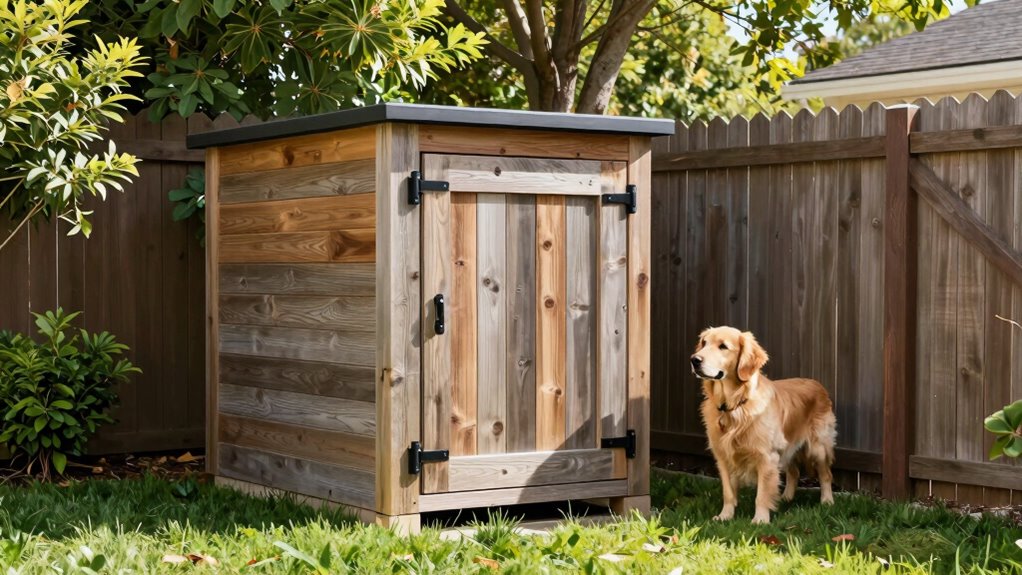
- Use sturdy, lockable enclosures with tight-fitting lids to contain odors and prevent tampering.
- Incorporate physical barriers like fencing or textured surfaces around trash areas to hinder dog access.
- Mask scents with odor-neutralizing materials such as coffee grounds or citrus peels near trash bins.
- Regularly clean and inspect trash containers, repairing damages promptly to eliminate attractants.
Understand Your Dog’s Trash-Raiding Habits and Triggers
To effectively prevent your dog from raiding the trash, you first need to understand what triggers their behavior. Dogs develop specific behavior patterns around trash, often driven by scent cues that attract them. Pay attention to when and how your dog approaches the trash can—do they sniff intensely or dig at certain times? Recognizing these signs helps you identify your dog’s unique triggers. Scent cues from leftover food or waste are powerful motivators, stimulating their natural foraging instincts. By observing these habits, you can better anticipate their actions and implement targeted strategies. Additionally, understanding the behavioral patterns that lead to trash raiding can help you develop more effective preventative measures. Recognizing the importance of scent cues in motivating dogs can guide you in creating more secure trash areas. Understanding these behavior patterns is essential for designing effective trash-proof setups and preventing your dog from becoming a habitual trash raider. Paying attention to environmental triggers can also help you modify the surroundings to reduce temptation and enhance your dog’s security. Incorporating knowledge of dog psychology can greatly improve your success in keeping the trash out of reach.
Choose the Best Spots for Your Trash Cans
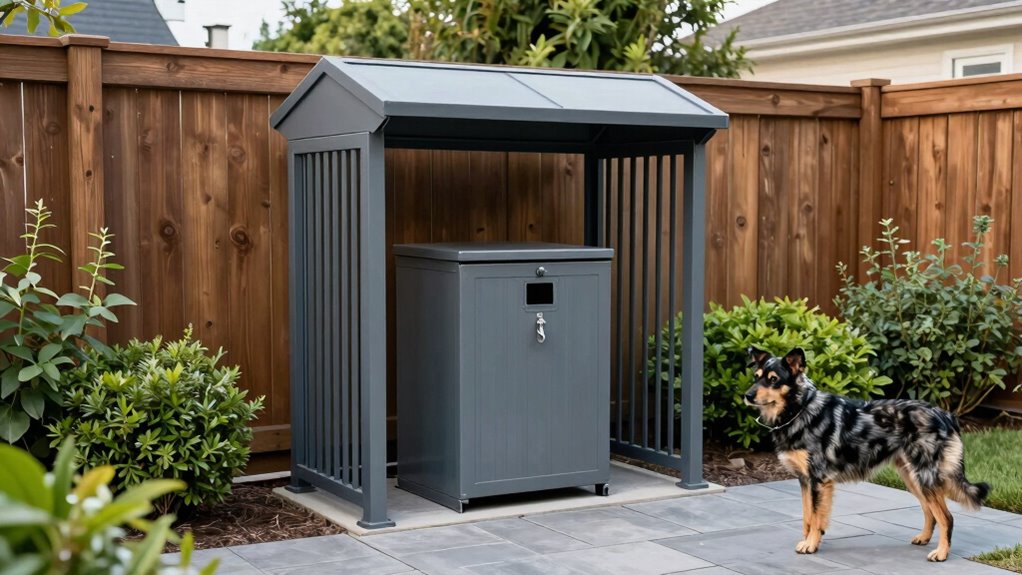
Choosing the right location for your trash cans is essential in preventing your dog from raiding the trash. The placement impacts accessibility and can deter curiosity or efforts to reach the garbage container. Consider these factors for ideal positioning:
Proper trash placement keeps your dog safe and prevents unwanted scavenging.
- Place the garbage container in a shaded, shaded area to reduce smell attraction
- Position it away from common dog pathways in your yard layout
- Use a corner that’s difficult for your dog to access
- Ensure it’s on a stable, level surface to prevent tipping
- Keep it close to the house for convenience but not in a high-traffic zone
- Additionally, understanding vintage design trends can help inform the best practices for trash area placement to effectively reduce dog raids. Incorporating traditional outdoor storage ideas can also enhance your trash area’s security and aesthetic appeal. Properly selecting outdoor storage solutions can further improve your yard’s overall safety and organization, especially when considering durable materials that withstand weather conditions.
Install Barriers and Features That Keep Dogs Out
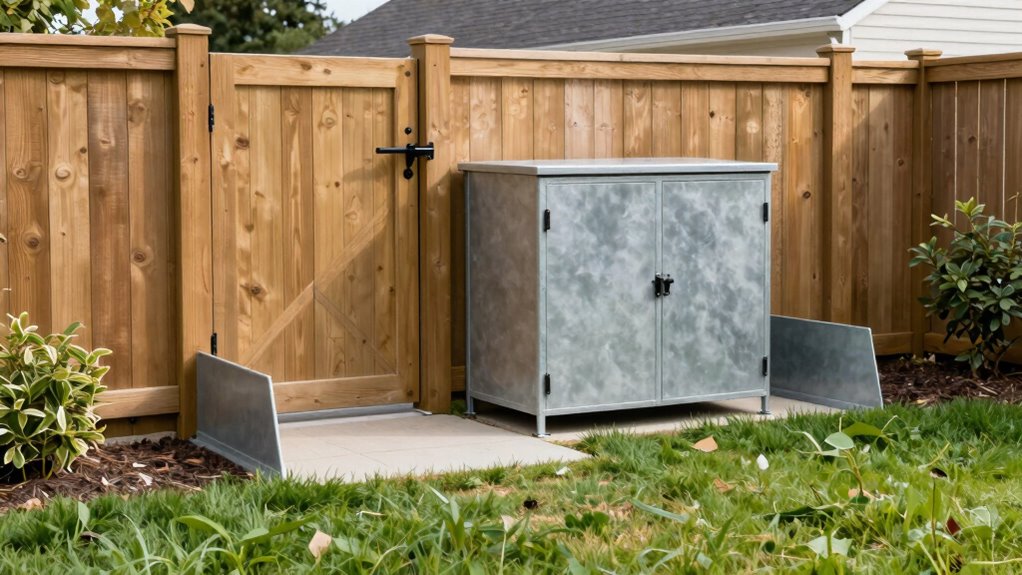
Installing barriers and features around your trash area provides an effective way to keep dogs out and prevent unwanted scavenging. Start by selecting sturdy containers with tight-fitting lids to reduce smell masking and discourage scent-driven raids. To enhance security, consider adding fencing or a lockable enclosure that restricts access. Here’s a simple visual:
| Barrier Type | Description |
|---|---|
| Chain-link | Allows airflow but keeps dogs out |
| Wooden fence | Tall and solid, blocks view and access |
| Metal enclosure | Durable and tamper-proof |
| Latching lid | Secures trash with no easy removal |
| Plant barriers | Thorny shrubs deter approach |
Combining these elements creates a strong physical barrier, minimizing scent cues and making your trash less attractive to dogs. For added effectiveness, choosing appropriate materials that complement your existing setup can further deter curious canines. Additionally, using electric fences or motion-activated devices can provide an extra layer of protection against persistent dogs. Using scent-neutralizing products around your trash area can also help reduce the smell that attracts scavengers. Implementing secure trash storage practices is also essential for maintaining a dog-proof area, and selecting high-quality, tamper-resistant containers can further enhance security.
Add Design Elements That Make Trash Less Attractive
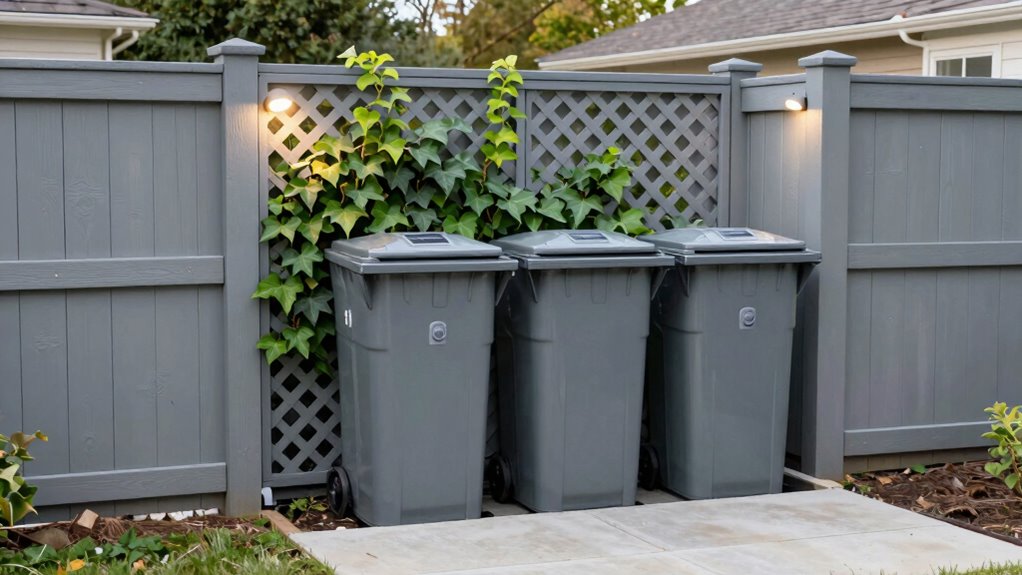
Making your trash less appealing to dogs involves thoughtful design choices that reduce odors and visual cues. Implement scent masking techniques like adding coffee grounds or citrus peels to cover smells that attract dogs. Use visual deterrents such as opaque lids or plants that obscure the trash from view. Incorporate physical barriers that hide trash containers from sight. Consider adding textured surfaces that make accessing trash more difficult. You can also use reflective materials or flags to signal that the area is off-limits. These design elements help diminish the visual appeal and scent signals that draw dogs in, effectively discouraging raids. Additionally, understanding the importance of visual deterrents can guide you in selecting the most effective methods. By combining scent masking and visual deterrents, you create a less enticing environment for dogs, reducing the likelihood of unwanted visits. Incorporating proper placement of trash areas can further minimize the chances of dog encounters. Furthermore, integrating secure enclosures can provide an extra layer of protection against curious canines. Using essential oils for odor control can also help neutralize smells that attract dogs and keep pets safe from harmful substances.
Keep Your Trash Area Secure With Regular Maintenance and Adjustments
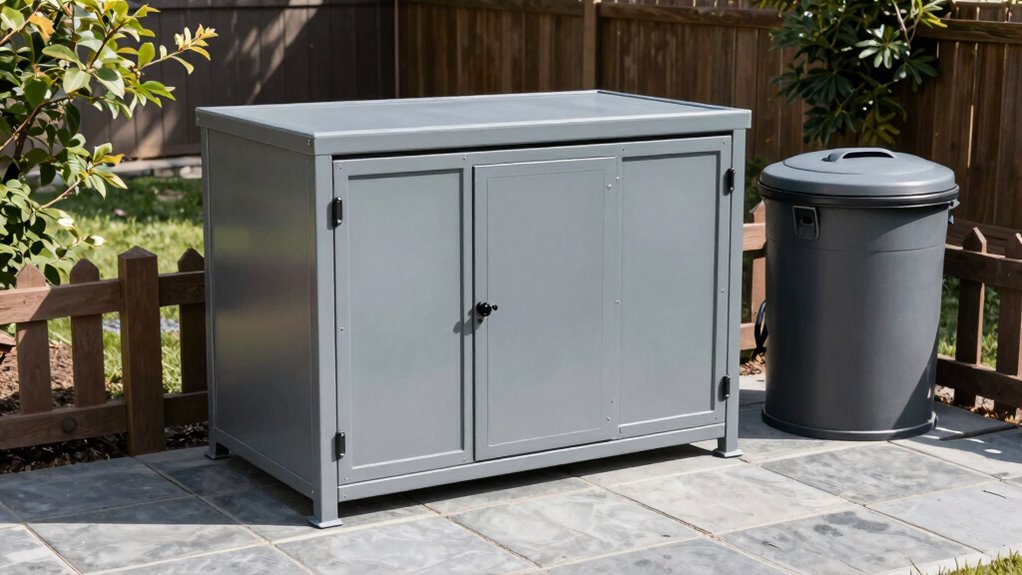
Regular maintenance and adjustments are key to keeping your trash area secure over time. Regularly inspect your trash cans and surrounding area to guarantee lids stay intact and seals are intact, preventing odors that attract dogs. Proper odor control is essential for trash can safety, so clean cans frequently and use deodorizing products when needed. Check for any damage or wear, and repair or replace components promptly to keep the area secure. Adjust placement if you notice persistent dog interest or attempts to access trash. Removing food residues and maintaining a tidy space reduces temptation and discourages raids. Consistent upkeep not only keeps your trash secure but also minimizes unpleasant odors, making the area less attractive to dogs and ensuring ongoing trash can safety. Incorporating security features such as locks or barriers can further enhance protection from curious or persistent animals. Additionally, understanding proper trash can placement can significantly reduce the likelihood of raids by keeping trash out of paw’s reach. Staying vigilant about trash can durability also helps prevent accidental damage that could compromise security.
Frequently Asked Questions
What Are the Safest Trash Container Materials for Dog-Proofing?
You should choose sturdy materials like metal containers or secure recycling bins to dog-proof your trash area. Metal containers are especially effective because they’re difficult for dogs to chew through or tip over, preventing unwanted raids. Recycling bins with tight-fitting lids also work well. Avoid flimsy plastic bins, as dogs can often break into them. Using durable, lockable containers keeps your trash secure and your dog safe from consuming harmful items.
How Can I Train My Dog to Avoid Trash Areas?
Think of your dog’s mind as a garden that needs careful nurturing. You can train your dog to avoid trash areas with positive reinforcement, rewarding good behavior immediately. Be consistent with boundaries—use commands and routines to set clear expectations. Over time, your dog learns which areas are off-limits, just like a gardener weeds out the unwanted. Patience and praise turn this training into a natural part of your dog’s habits.
Are There Eco-Friendly Barriers Suitable for Dog-Proof Trash Zones?
Yes, eco-friendly barriers like compostable barriers and biodegradable fencing work well for dog-proof trash zones. You can set up these sustainable options around your trash area to keep your dog out without harming the environment. These materials are durable enough for outdoor use and break down naturally over time, making them an excellent choice if you want to create an effective, eco-conscious boundary that discourages your dog from raiding the trash.
What Are Common Mistakes to Avoid When Designing Trash Areas?
Think of your trash area as a fortress—poor layout or insufficient security lets your dog be the invader. Avoid cluttered or open spaces that invite curiosity, and steer clear of weak barriers that don’t stand up to paws and noses. Failing to plan properly can turn your trash zone into a playground for your pup. Instead, use sturdy, well-placed barriers and thoughtful design to keep your trash safe from curious canines.
How Do Weather Conditions Affect Dog-Proof Trash Security?
Weather impact can considerably influence your trash area’s security. Seasonal challenges like heavy rain, snow, or strong winds can weaken barriers or cause lids to shift, making it easier for dogs to access trash. Hot weather might encourage dogs to dig or seek cool hiding spots, risking spills. To stay secure, regularly check and reinforce your dog-proof setup, especially after severe weather, ensuring it remains effective regardless of seasonal changes.
Conclusion
By understanding your dog’s trash-rading habits and making clever layout choices, you can turn your trash area into a fortress they can’t breach. Think of it as building a moat around your trash — the more obstacles you add, the less temptation there is. With regular maintenance and smart design tweaks, you’ll keep those pesky raids at bay, transforming your outdoor space into a trash-proof haven where your dog’s curiosity can’t cause chaos.