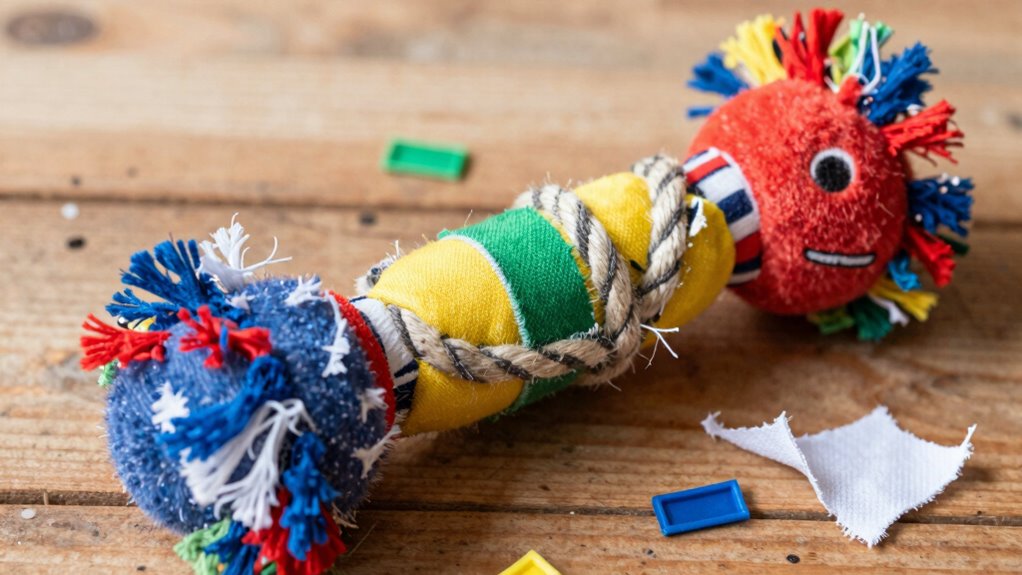

When making DIY tug toys, avoid materials with harmful chemicals, synthetic dyes, or treatments that could cause toxicity or allergic reactions. Steer clear of fabrics that fray easily or have loose fibers, which can pose choking or ingestion risks. Pick natural, untreated fabrics like cotton or hemp, and verify that your supplies are non-toxic and free from preservatives or chemical residues. For a safer, durable toy, focus on secure, sturdy materials—if you continue, you’ll discover more tips for choosing the best options.
Key Takeaways
- Avoid fabrics dyed with synthetic or chemical dyes to prevent toxin ingestion and allergic reactions.
- Use sturdy, tightly woven natural fibers like cotton or hemp to prevent fraying and choking hazards.
- Steer clear of materials treated with chemical finishes, flame retardants, or anti-moth agents.
- Refrain from using small, loose parts like beads or buttons that could detach and cause choking.
- Regularly inspect toys for wear, fraying, or loose components to ensure ongoing safety.

KONG Tug Toy – Dog Supplies for Tug of War – Natural Rubber Dog Toy for Outdoor & Indoor Playtime – for Medium/Large Dogs
Tug Toy for Dogs: This unique natural rubber dog toy encourages interactive play sessions; perfect for indoor and…
As an affiliate, we earn on qualifying purchases.
As an affiliate, we earn on qualifying purchases.
What Materials Should You Avoid When Making DIY Dog Tug Toys?

When making DIY dog tug toys, it’s essential to avoid materials that could harm your pet. Stay away from fabrics or fillers treated with toxic chemicals, as these can cause health issues if chewed or ingested. Also, avoid using materials dyed with harmful dyes, which may contain substances unsafe for dogs. These dyes can leach out during play, exposing your pet to potential toxins. Synthetic fabrics or plastics with unknown chemical treatments should be skipped too, as they may contain residues harmful to your dog’s health. Instead, choose natural, untreated fabrics like cotton or hemp, and verify that any dyes used are pet-safe. Prioritize materials that are durable, non-toxic, and free of harmful chemicals to keep your furry friend safe during playtime. Additionally, selecting vet-approved materials can further ensure your dog’s safety and well-being. Furthermore, understanding the chemical treatments used in manufacturing can help you make safer choices for your DIY toys. It’s also beneficial to research safe materials, including body piercing materials, to ensure your homemade toys meet safety standards.

Pet Passion Plush Durable Cotton Dog Toys with Coconut Fill for All Pet Breeds, Bunny, One Size
SUSTAINABLE – Crafted from 100% cotton and a coconut fiber fill.
As an affiliate, we earn on qualifying purchases.
As an affiliate, we earn on qualifying purchases.
How Can You Recognize Toxic Chemicals and Dyes in Craft Supplies?

You need to spot harmful dyes and chemicals in your craft supplies before making a DIY tug toy. Look for bright, unnatural colors and check labels for ingredients that might be toxic. Recognizing these signs helps guarantee your pet’s safety during the project. Additionally, being aware of chemical reactions within cells can help you identify safer, non-toxic options for your craft materials. Understanding material safety data sheets can give you deeper insights into the potential hazards of various substances used in your supplies. Consulting eco-friendly accommodations and sustainable materials can further ensure that your crafting process remains environmentally responsible. Being informed about vetted wave and wind options can also guide you toward safer, eco-conscious choices for your projects.
Identifying Harmful Dyes
How can you tell if craft supplies contain harmful dyes? Look for signs that dyes might be toxic, such as bright, unnatural colors or strong chemical smells. To be more certain, consider using chemical testing kits, which can detect harmful substances. When possible, opt for natural dyes, which are derived from plants, fruits, or vegetables, and are generally safer for pets. Always read labels carefully—products that don’t specify the type of dye used might contain synthetic, potentially toxic chemicals. If you’re unsure, do a patch test with a small amount of the dye on a hidden area first. Avoid dyes with vivid, unnatural hues or those labeled with vague terms like “artificial color,” as they’re more likely to contain harmful chemicals.
Recognizing Toxic Chemicals
Bright or unnatural colors in craft supplies often signal the presence of toxic chemicals or dyes. To spot these risks, look for clear chemical labeling on packaging. This labeling can help identify harmful substances before use. Additionally, learning dye detection techniques can alert you to unsafe colors—if a dye easily bleeds or stains, it might be toxic. Here are key steps:
- Check for proper chemical labeling and safety certifications.
- Perform a dye detection test by rubbing or washing the material to see if color transfers.
- Avoid supplies with vivid or neon hues that lack transparent ingredient lists.
- Understanding toxic chemical risks can further help you make safer choices for your craft projects.
- Recognizing signs of unsafe dyes can prevent exposure to potentially harmful substances.
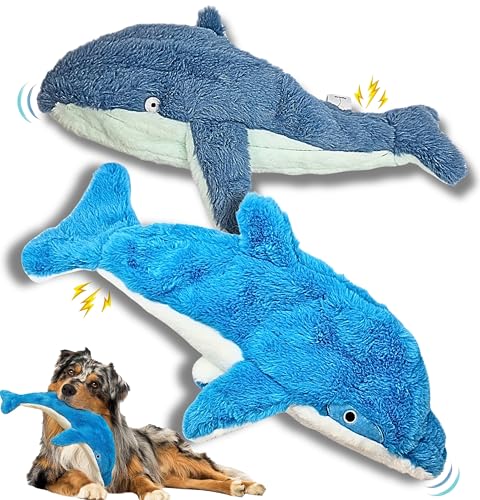
Crinkle Dog Toy – No stuffing Squeaky Dog Toy for Small, Medium & Large Breeds, Interactive Tough Toy Set – Ideal for Chewing, Teething & Fetch, Durable Pet-Safe Materials – Soft Blue Plush, Large
Interactive Play & Enrichment: Equipped with built-in squeakers at both the head and tail, combined with crinkle paper,…
As an affiliate, we earn on qualifying purchases.
As an affiliate, we earn on qualifying purchases.
Which Fabrics and Fibers Are Unsafe for Dog Toys?

Certain fabrics and fibers can pose risks to your dog’s safety. Synthetic fibers like nylon or polyester may contain chemicals that are harmful if ingested, while some natural fibers can harbor bacteria or mold. Additionally, beware of toxic dyes and treatments that might be used on fabrics, as they can cause allergic reactions or poisoning. To ensure safety, avoid materials that are not properly regulated or tested for pet toys. Furthermore, some fabrics may lack appropriate durability, making them more likely to fray or break apart, which can be ingested or cause choking hazards. It is also important to consider fiber composition, as some fibers are more prone to deterioration or bacterial growth than others. For added safety, look for fabrics with non-toxic finishes that are specifically designed for pet toys to minimize health risks.
Synthetic Fibers Risks
Many synthetic fibers and fabrics can pose risks for your dog, especially when used in homemade tug toys. These materials often contain chemical dyes that may be toxic if chewed or ingested. Additionally, synthetic fibers tend to break down into small, sharp fibers that could cause internal injuries or choking hazards. Here are three key concerns:
- Chemical Dyes: Some synthetic fabrics are dyed with dyes that can be toxic to dogs if ingested.
- Fiber Breakdown: Synthetic fibers may fray or shed, creating small pieces that pose choking or intestinal risks.
- Durability and Safety: Many synthetic materials are not designed for chewing and can quickly weaken, exposing your dog to potential ingestion hazards. Using natural fibers that are safe and free from chemical treatments can help prevent these issues and ensure your pet’s safety during play. Moreover, selecting materials that are non-toxic and specifically designed for pet toys can further reduce health risks. It is also important to consider that some synthetic fabrics may contain chemical dyes that are not approved for safe use around pets.
Natural Fibers Concerns
While synthetic fibers pose specific risks, natural fibers are not automatically safe for homemade dog toys. Some natural fibers, like cotton or wool, can pose choking hazards if they fray or unravel, creating small pieces your dog might swallow. Additionally, not all natural fibers are free from chemicals; untreated or processed fabrics may contain pesticides, dyes, or additives that are harmful. Unlike synthetic fibers, which often have chemical treatments, natural fibers can still carry residues that irritate your dog’s digestive system or skin. Always check that natural fibers are organic, unprocessed, and free from chemical treatments. Furthermore, fiber treatment processes can introduce harmful chemicals into natural fibers, making some unsuitable for pet toys. It is also essential to consider the chemical residues that might remain on natural fabrics after processing, which could pose health risks. Remember, just because a fabric is natural doesn’t mean it’s safe—be cautious and choose fibers specifically intended for pet use.
Toxic Dyes and Treatments
Are you aware that some fabrics and fibers used in homemade dog toys can contain toxic dyes and chemical treatments? These substances can pose health risks to your dog. To stay safe, avoid:
- Fabrics dyed with synthetic or vibrant chemical dyes, which may contain harmful toxins.
- Materials treated with chemical treatments like flame retardants or anti-moth chemicals.
- Fabrics that claim to use artificial or unnatural dyes instead of natural dyes, as these often contain hazardous substances.
- Choosing certified natural fabrics can further ensure the safety of your homemade toys.
Opt for natural fibers and dyes whenever possible. Natural dyes are derived from plants, minerals, or other organic sources, reducing the risk of chemical exposure. Always read labels and choose untreated, natural materials to create safe, non-toxic toys for your dog.

Chalk and Chuckles DIY Dog Tug Toy and Collar Kit – No-Sew Craft for Kids Ages 8+
What's Included: Set includes 4 fleece strips (40in each), 2 color cords, MDF pieces, stickers, and metal rings.
As an affiliate, we earn on qualifying purchases.
As an affiliate, we earn on qualifying purchases.
What Materials Can Cause Choking or Ingestion Hazards?
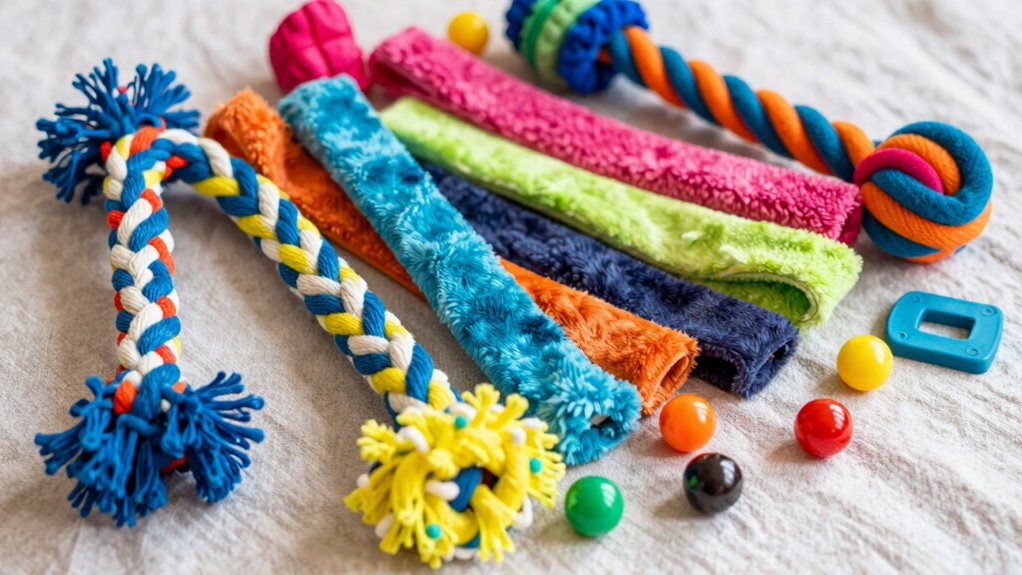
Certain materials used in DIY tug toys can pose serious choking or ingestion risks for your dog. Avoid fabrics that are loosely woven or easily frayed, as they can break apart and be swallowed. Poor fabric safety can lead to blockages or internal injuries. Additionally, be cautious of chemical hazards—some fabrics are treated with dyes, finishes, or chemicals that are toxic if ingested. Rope materials with loose fibers or thin strands can unravel and become lodged in your dog’s throat or digestive system. Small or soft parts, like beads or buttons, also present choking dangers if they come loose. Always choose durable, non-toxic fabrics and avoid anything that could splinter, fray, or break apart during play, keeping your dog safe from harm. Incorporating safe toy materials can help reduce exposure to potential hazards and promote healthier play. Air quality considerations can also be important when selecting materials for your dog’s toys, as poor air quality may increase the risk of respiratory irritation. Being aware of material safety issues can further help you select the best options for your pet’s safety.
How to Tell If a Material Is Non-Toxic and Safe for Your Dog?
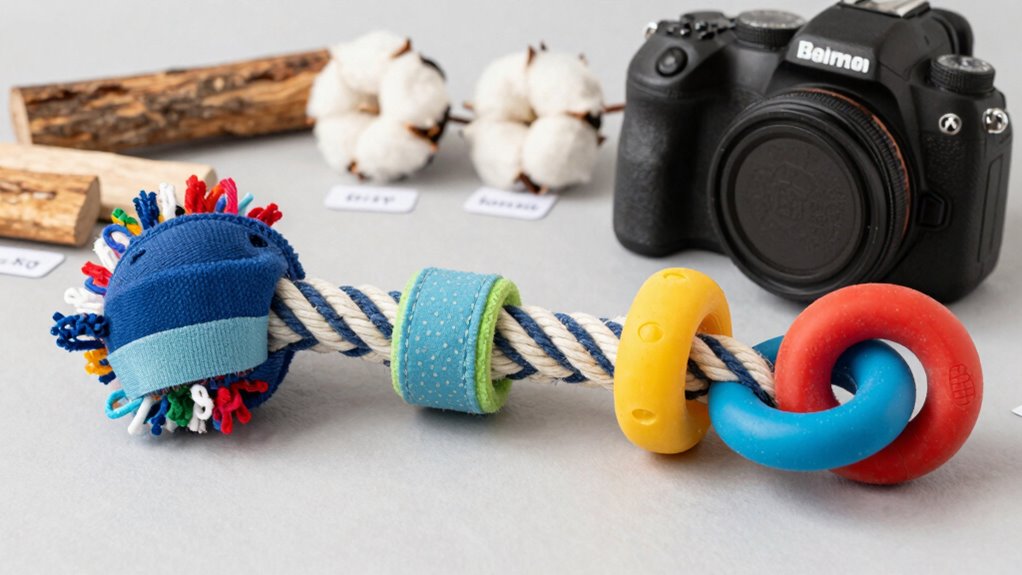
To guarantee the materials you choose are safe for your dog, it’s important to verify their non-toxic status before using them in DIY tug toys. Start with material testing: research if the material has been tested for chemical safety, ensuring it’s free from harmful additives. Next, look for products labeled as non-toxic or pet-safe—these often meet safety standards. Finally, check for any signs of chemical safety, such as the absence of strong odors or discoloration, which could indicate chemical treatments. Always opt for natural fibers like cotton or hemp, which are less likely to contain harmful chemicals. By thoroughly testing materials and verifying chemical safety, you ensure your dog’s safety while creating fun, safe tug toys.
Why Do Certain Materials Cause Allergies or Skin Irritations?
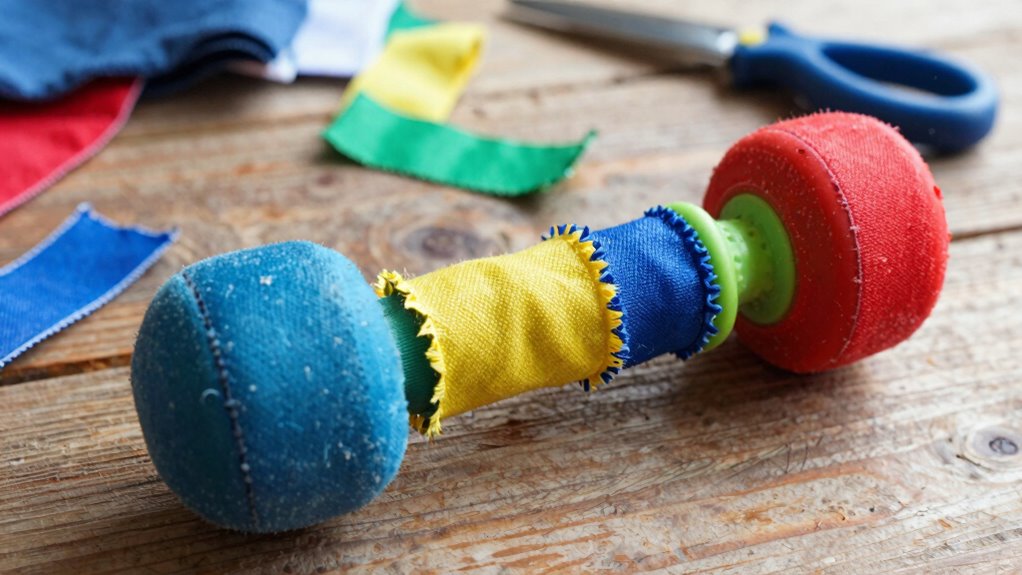
Materials can cause allergies or skin irritations because some contain allergens or chemicals that trigger sensitivities in your dog’s skin. When your dog comes into contact with these substances, it may develop allergenic reactions, leading to redness, itching, or swelling. Certain fibers, dyes, or preservatives in materials are common culprits. Dogs with sensitive skin are especially prone to these reactions, which can worsen over time if exposed repeatedly. Understanding that some materials contain irritants helps you avoid those that could cause discomfort or health issues. Choosing hypoallergenic or natural options reduces the risk of skin sensitivities. Always pay attention to your dog’s reactions and remove any materials that seem to cause irritation, ensuring your DIY tug toy remains safe and comfortable for your pet.
Tips for Testing Your DIY Tug Toy Materials for Safety
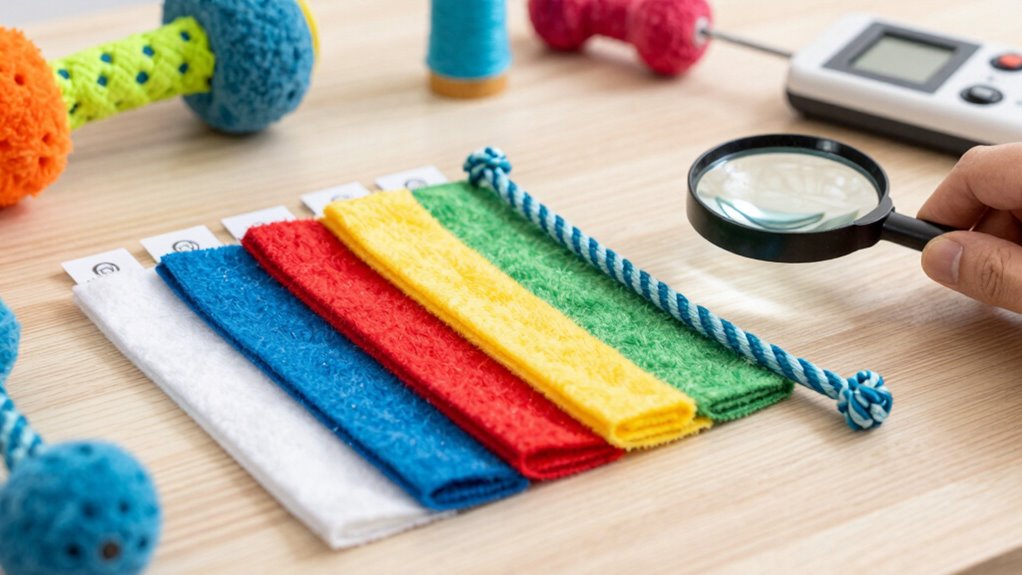
Before using your DIY tug toy, it’s important to test its materials for safety to prevent any allergic reactions or skin irritations. First, check dye safety by washing a small piece with soap and water to see if the color bleeds or stains. Second, examine fiber toxicity by gently biting or pressing the material; if it releases a strong chemical smell, avoid using it. Third, perform a patch test on your pet’s skin by rubbing a small section and observing for redness or irritation over 24 hours. These steps help guarantee your tug toy is safe, especially regarding dye safety and fiber toxicity. Taking these precautions minimizes risks and keeps playtime fun and injury-free for your pet.
The Best Safe and Durable Materials for DIY Dog Tug Toys

Choosing the right safe and durable materials is key to making a fun and long-lasting DIY dog tug toy. Opt for non toxic materials like natural cotton, nylon rope, or thick leather, which are known for their durability and safety. These materials help guarantee your dog’s safety while providing a sturdy surface for tugging and chewing. Avoid synthetic fabrics or materials treated with chemicals, as they can pose health risks. Natural fiber ropes are especially popular because they’re strong, easy to clean, and safe for dogs. Leather can also be a good choice if it’s free from dyes and chemicals. Always select materials that are free from harmful additives to create safe dog toys that stand up to playtime.
Common Mistakes to Avoid When Choosing Materials
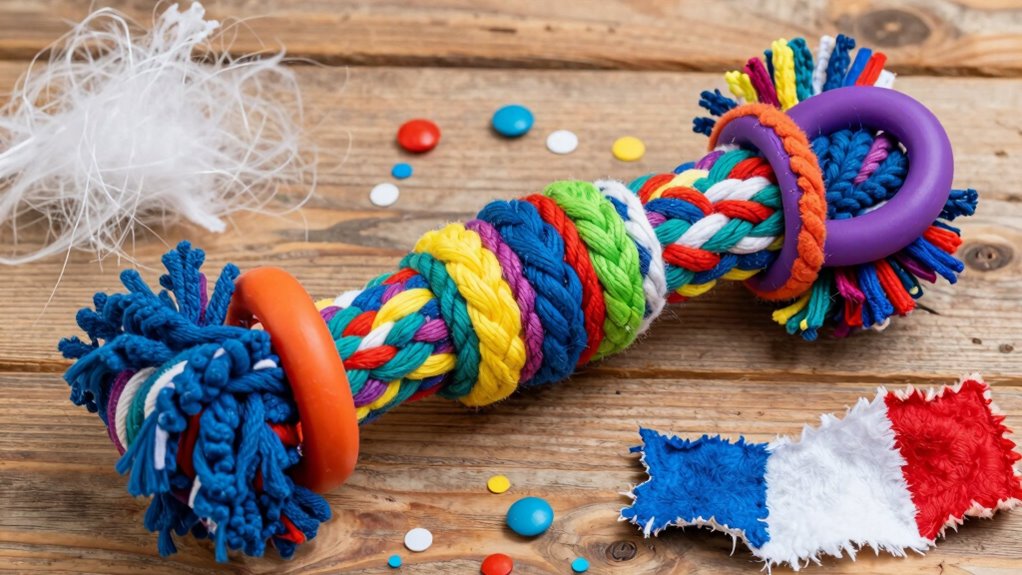
When selecting materials for your DIY tug toy, make certain to avoid toxic fabrics that could harm your dog. Steer clear of small parts that might pose a choking hazard, and skip dyes that could irritate your pet’s skin or stomach. Paying attention to these common mistakes helps ensure your toy is both safe and fun.
Avoid Toxic Fabrics
Using the wrong fabrics can pose serious health risks for your dog, so it’s crucial to select materials that are safe and non-toxic. Avoid fabrics with harsh chemicals or artificial dyes, which can be harmful if ingested or chewed. When choosing fabrics, consider these key points:
- Steer clear of fabrics that have undergone fabric dyeing without proper chemical testing, as residual chemicals may remain.
- Opt for natural, untreated textiles like cotton or hemp, which are less likely to contain toxic substances.
- Always check labels or manufacturer information to ensure fabrics are free from harmful dyes and chemicals.
Skip Small Parts
One common mistake is selecting toys with small, easily detachable parts that can pose choking hazards or cause intestinal blockages if swallowed. Small parts are dangerous because they can break off during play, especially with enthusiastic chewers. Always check that the materials you choose don’t include tiny components that could come loose. Even if a piece seems secure, repeated tugging can weaken seams or connections. Choking hazards are a serious risk for dogs, especially smaller breeds or those prone to chewing aggressively. To keep your pet safe, opt for sturdy, one-piece designs or materials that can’t break into small fragments. Avoid anything that could accidentally be swallowed, and regularly inspect the toy for loose parts or damage. This simple step helps prevent accidents and keeps playtime safe.
Steer Clear of Dyes
Dyes added to materials can pose health risks for your dog, especially if they contain harmful chemicals or unpredictable colorants. To keep your pet safe, avoid materials dyed with synthetic colorants or artificial dyes. Instead, look for natural dyes derived from plants or other non-toxic sources. Here are three tips to help you choose safer options:
- Check labels carefully—avoid items with synthetic colorants or bright, unnatural hues.
- Opt for natural dyes, like those from vegetables or herbs, which are less likely to cause allergies or poisoning.
- Test new materials for colorfastness to prevent bleeding that could expose your dog to harmful chemicals during play.
Steering clear of dyes reduces the risk of allergic reactions, ingestion of toxic substances, and long-term health issues for your furry friend.
How to Make Fun and Safe DIY Tug Toys for Your Dog
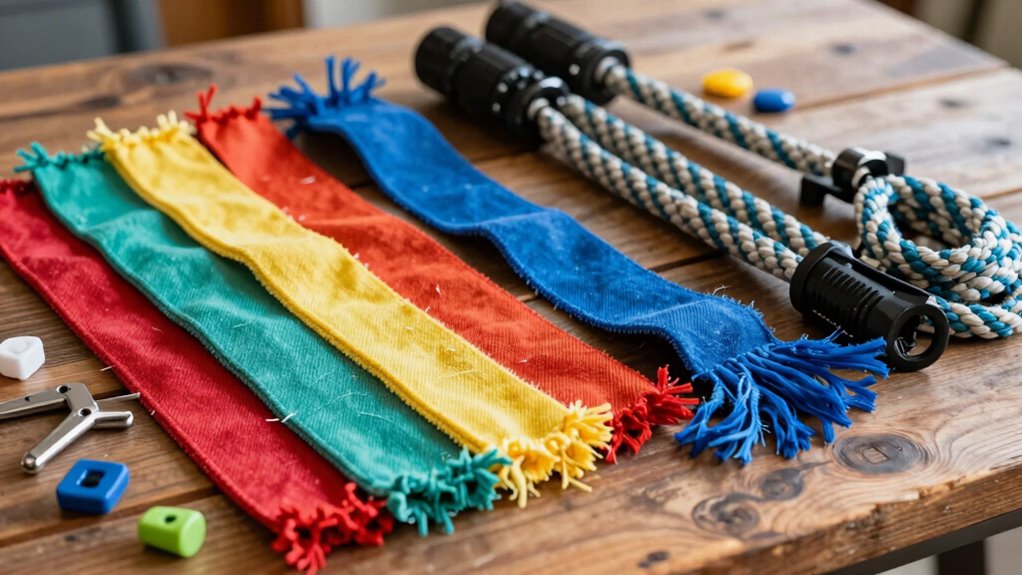
Creating a fun and safe DIY tug toy for your dog is easier than you might think, and it’s a great way to bond with your pet while ensuring their safety. Start by selecting fabric safety; choose natural, untreated materials like cotton or linen, and avoid fabrics treated with chemicals or dyes. Before using any fabric, check for chemical identification on labels to prevent exposing your dog to harmful substances. Use sturdy, non-toxic materials that can withstand tugging without fraying or breaking apart. Be sure to avoid synthetic fabrics or those with loose threads that could pose a choking hazard. Secure knots tightly and double-stitch for durability. By choosing safe fabrics and verifying chemical contents, you create a tug toy that’s both fun and safe for your furry friend.
Frequently Asked Questions
Are Natural Materials Always Safer Than Synthetic Options for DIY Dog Toys?
Natural materials aren’t always safer than synthetic alternatives for DIY dog toys. While natural options like cotton or wool seem gentler, they can still pose risks if they contain dyes, chemicals, or are easily ingested. Synthetic alternatives, such as durable nylon or rubber, often last longer and are safer if chosen carefully. Always check for non-toxic, pet-safe labels regardless of whether you pick natural or synthetic materials.
Can Certain Household Items Be Repurposed Safely for Tug Toys?
Imagine your dog’s tail wagging with excitement as you create a tug toy from household items. While repurposing items might seem fun, beware of household item hazards that can turn homemade toy risks into dangers. Avoid using items like rubber bands or plastic bags, which can cause choking or intestinal blockages. Instead, opt for sturdy, non-toxic materials to keep playtime safe, happy, and filled with wagging tails.
How Often Should I Inspect My DIY Dog Tug Toy for Damages?
You should inspect your DIY dog tug toy daily for wear and tear. Regular damage detection helps you spot fraying, loose threads, or broken parts early. If you notice any damage, it’s best to replace the toy immediately to prevent your dog from swallowing or choking on broken pieces. Consistent inspections keep play safe and ensure your tug toy remains durable and fun for your furry friend.
Are There Specific Colorants or Dyes Recommended for Pet-Safe Toys?
You want your dog’s tug toy to be safe and vibrant, so stick to pet-safe dyes and non-toxic colorants. These guarantee your furry friend isn’t exposed to harmful chemicals, dyes that bleed, or irritants. Choose dyes that are specifically labeled for pet toys, are free from heavy metals, and don’t fade easily. By selecting safe, bright, and non-toxic colorants, you protect your pet’s health and keep playtime fun and worry-free.
What Signs Indicate My Dog Has Ingested a Harmful Material?
If your dog has ingested a harmful material, you’ll notice signs of poisoning like vomiting, diarrhea, drooling, or difficulty breathing. Digestive upset, such as loss of appetite or abdominal pain, can also occur. Keep an eye out for lethargy or unusual behavior. If you see any of these signs, contact your veterinarian immediately. Quick action can prevent serious health issues and guarantee your pup receives the care they need.
Conclusion
Creating a safe DIY tug toy combines careful material choices with a bit of caution. While you want a toy that’s durable and fun, safety should always come first—because a playful tug can quickly turn into a risky chew. Think of it like baking: you can enjoy the process, but skip the toxic dyes and sharp fabrics. With the right materials, you’ll give your dog endless fun—without any surprises or hazards.