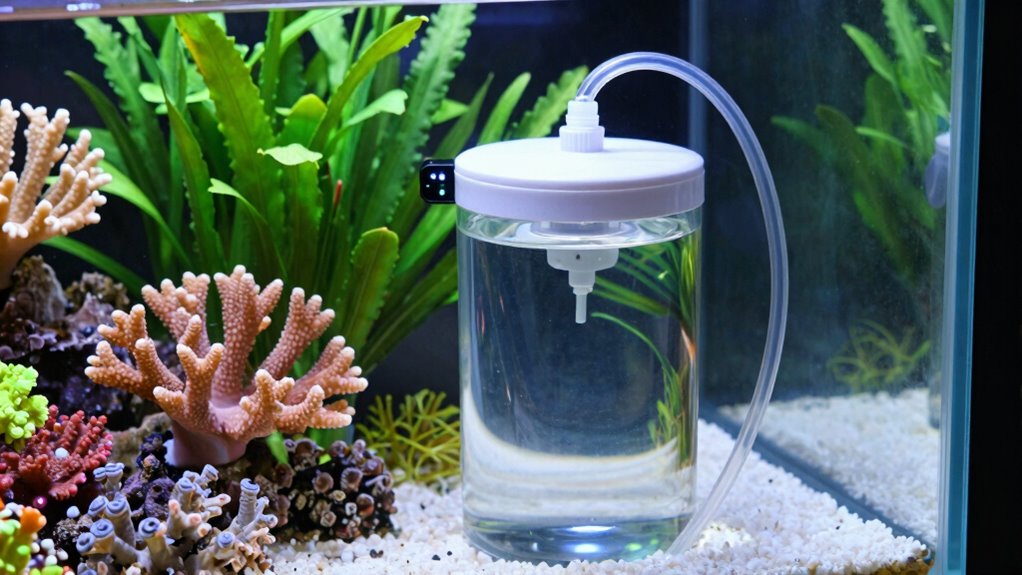
An auto top-off system helps prevent salinity swings by automatically replacing evaporated water, keeping your tank’s water level steady. It detects when water drops and adds fresh water, avoiding salt buildup that can stress marine life. To get the best results, choose a unit that minimizes pH fluctuations, ensures proper calibration, and fits your setup. Keep your system well-maintained for consistent performance—learn more about maintaining stable water parameters with these tips.
Key Takeaways
- Auto top-off systems automatically replenish evaporated water, preventing salinity fluctuations in your aquarium.
- Choose systems with integrated pH and temperature monitoring to maintain stable water parameters.
- Regular calibration and sensor cleaning ensure accurate water level detection and optimal performance.
- Proper setup and understanding evaporation rates help fine-tune the system for consistent salinity.
- Routine water testing and system maintenance prevent issues and ensure long-term salinity stability.
How Auto Top-Off Systems Keep Your Aquarium’s Salinity Stable

Auto top-off systems help maintain your aquarium’s salinity by automatically replacing evaporated water. As water evaporates, it leaves behind salts, causing salinity fluctuations that can stress your marine life. Without a reliable way to replenish lost water, salinity can rise quickly, disrupting the delicate balance your tank needs. An auto top-off system senses the water level, adding fresh, freshwater to replace what’s evaporated. This consistent addition prevents sudden changes in salinity, ensuring stable conditions. By automating this process, you avoid manual refills that are often inconsistent. The system keeps your water parameters steady, promoting a healthy environment for your aquatic inhabitants. Incorporating auditory cues or visual indicators can improve the system’s accuracy and reliability. Additionally, smart sensors can enhance detection precision, further stabilizing your tank’s salinity. Regular maintenance and calibration of the system are also crucial to prevent malfunctions and maintain optimal performance. Using reliable sensors and following manufacturer guidelines can help you achieve better consistency and peace of mind. Employing environmentally friendly materials in your auto top-off system can also contribute to a more sustainable setup. In short, auto top-off systems are essential for maintaining stable salinity and preventing the detrimental effects of water evaporation on your tank.
How to Choose an Auto Top-Off System That Maintains Consistent Water Parameters
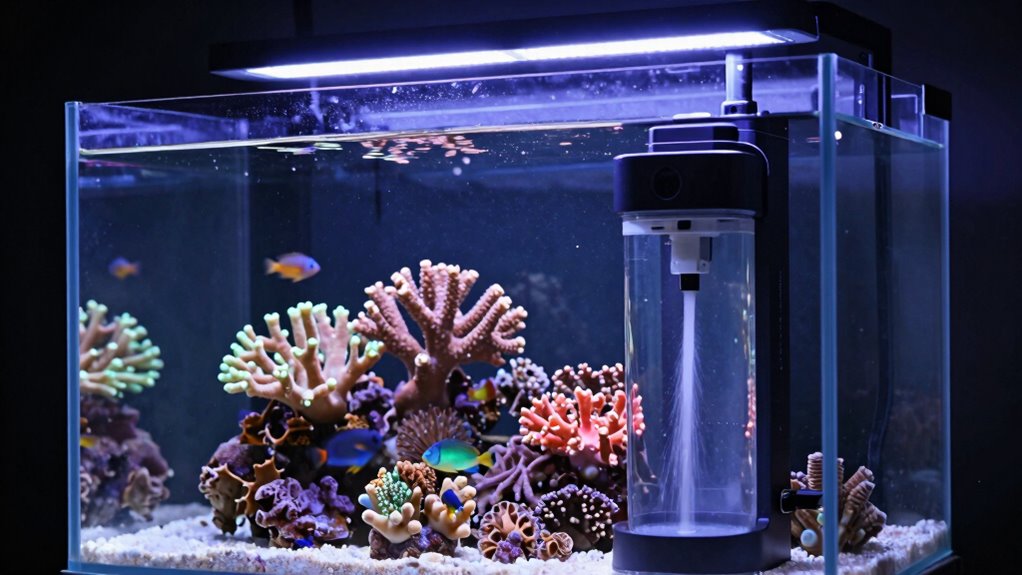
Choosing the right auto top-off system is vital for maintaining stable water parameters in your aquarium. Look for a system that can help minimize pH fluctuation, which can stress your marine life. Many advanced units monitor and adjust water levels to keep salinity consistent, reducing sudden changes that cause pH swings. Temperature control is also essential; select a system that integrates with your tank’s heater or includes its own to prevent temperature drops or spikes during top-offs. Reliable sensors and precise flow control ensure your water parameters stay stable. Avoid systems that only top off water without considering these factors, as fluctuations in pH and temperature can harm your aquatic environment. A well-chosen system promotes long-term health and stability in your tank.
How to Set Up and Calibrate Your Auto Top-Off System for Best Results
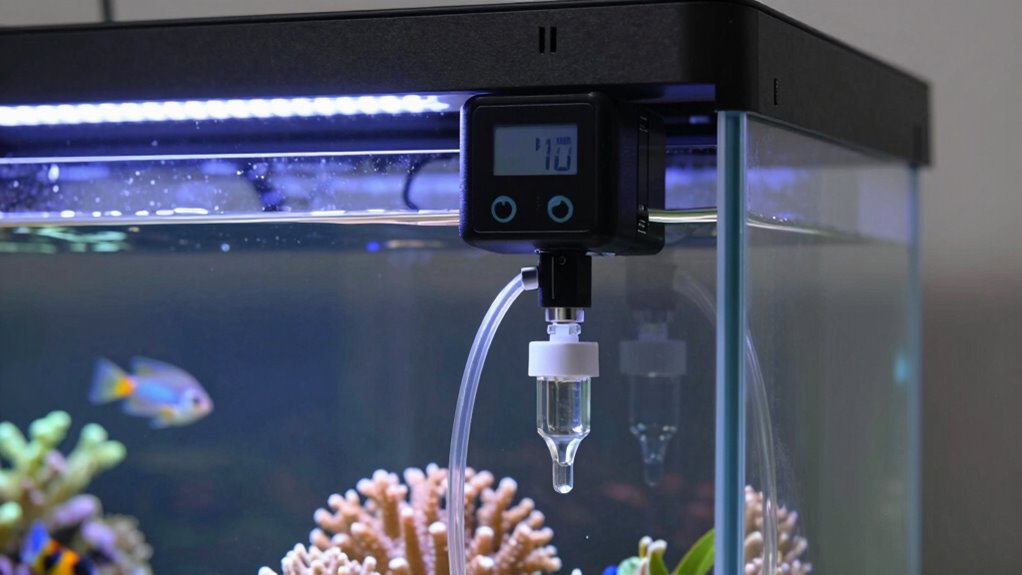
Setting up your auto top-off system correctly is essential for maintaining stable water parameters in your aquarium. Begin by following manufacturer instructions to install the sensors and fill the reservoir. Once installed, use calibration techniques to ensure your system measures water levels accurately; this might involve adjusting float switches or sensor readings until they match actual water levels. Regular maintenance routines are key—check sensors for dirt or algae, clean them periodically, and verify that the system dispenses the correct amount of water. Keep a close eye on evaporation rates and top-off intervals to fine-tune your setup. Proper calibration and routine maintenance help your auto top-off system perform reliably, preventing salinity swings and promoting a healthy, stable environment for your aquatic life. Additionally, understanding the load calculations of your system can help you select the best pump size and prevent overfilling or underfilling. It’s also beneficial to review safety guidelines to ensure your setup remains secure and reliable over time.
Troubleshooting Auto Top-Off Problems That Could Affect Salinity Stability
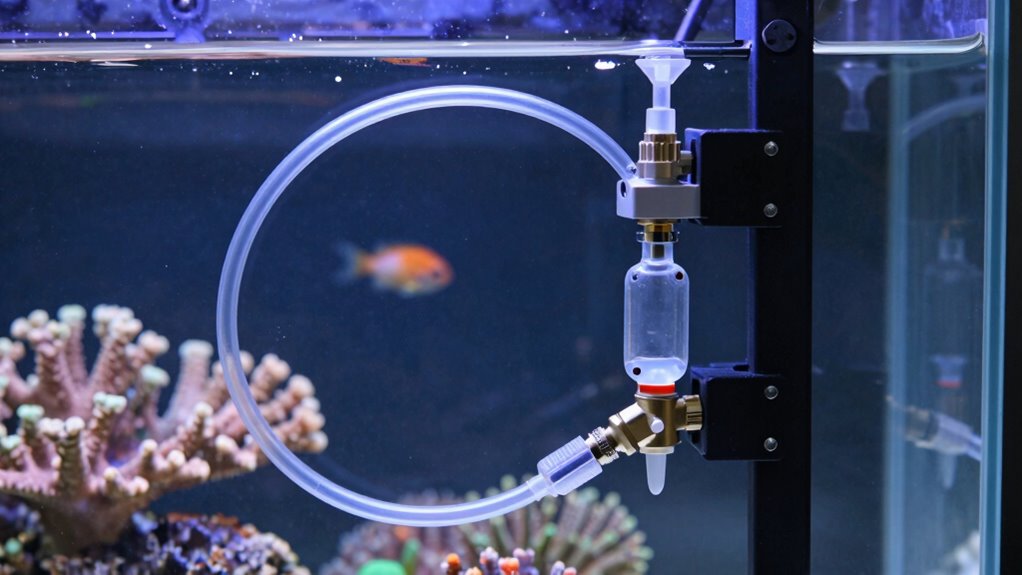
When your auto top-off system isn’t functioning properly, it can lead to fluctuations in your aquarium’s salinity, jeopardizing the health of your aquatic life. Start by checking the sensor calibration to guarantee it accurately detects water levels. If the sensor is misaligned or dirty, it may trigger incorrect top-off signals, causing salinity swings. Also, inspect the power supply; a weak or unstable power source can cause the system to malfunction or shut down unexpectedly. Make sure all connections are secure and the power source is consistent. Regularly calibrate sensors and verify the power supply to prevent false readings or system failures. Additionally, understanding heat distribution within your system can help identify underlying issues that may affect sensor performance. Proper fabric decoration markers can be used to label or identify components within your setup for easier troubleshooting. Monitoring water flow is also important because inadequate circulation can impact sensor accuracy and system responsiveness. Ensuring optimal aquarium environment conditions helps maintain stable water parameters and protects your tank’s inhabitants from harmful salinity fluctuations. Maintaining consistent water circulation can also improve sensor accuracy by preventing stagnant zones that might lead to false readings.
Extra Tips for Ensuring Water Parameters Remain Consistent Over Time
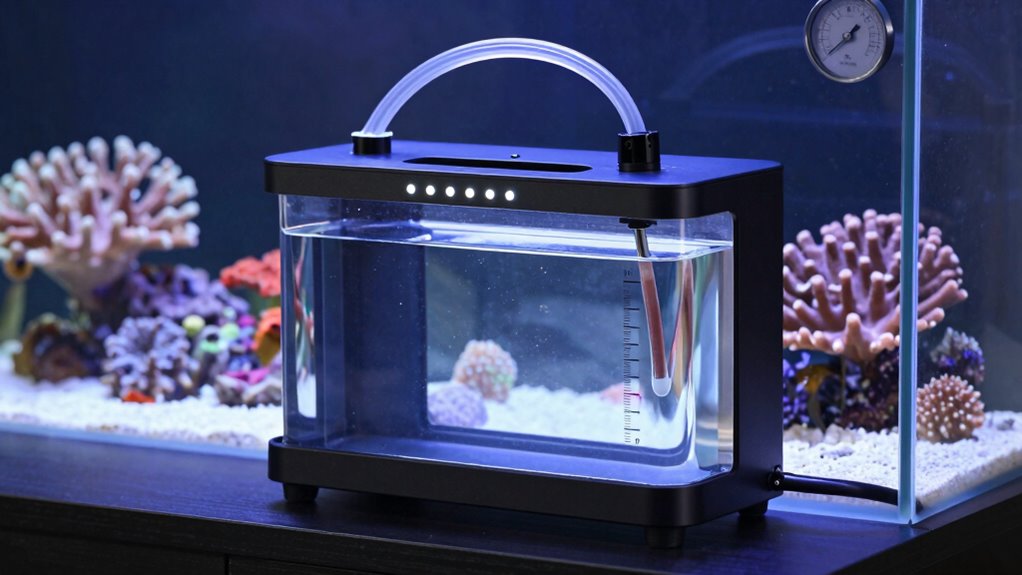
Maintaining consistent water parameters over time requires proactive monitoring and adjustments. Regular water testing is essential to track key factors like salinity, pH, and alkalinity, helping you catch fluctuations early. Schedule routine maintenance to clean sensors, calibrate testing kits, and replace any worn equipment. This preventative approach ensures your measurements stay accurate and reliable. Additionally, keep detailed logs of water test results to identify patterns and prevent gradual changes. Consistent testing and maintenance minimize the risk of salinity swings or other parameter shifts that could harm your tank inhabitants. Using automated monitoring systems can provide continuous data and alert you to deviations in real-time, further safeguarding your aquatic environment. By staying vigilant and addressing issues promptly, you’ll maintain a stable environment, promoting healthier corals and fish. Remember, small, regular efforts make a significant difference in long-term water quality stability. Regular water parameter monitoring is critical for early detection and correction of deviations, ensuring a balanced ecosystem. Properly managing aquarium water conditions further supports the overall health of your tank. Staying informed about AI ethicians and related careers can also provide insights into emerging technological safeguards that benefit complex systems like aquariums.
Frequently Asked Questions
What Are the Signs My Auto Top-Off System Is Malfunctioning?
If your auto top-off system malfunctions, you’ll notice water level fluctuations in your tank or sump. This often indicates sensor malfunction, causing inaccurate readings. You might see your system turning on or off unexpectedly or not activating when needed. Regularly check your sensors and connections to guarantee proper functioning. Addressing these signs quickly helps prevent salinity swings and keeps your aquarium stable.
How Often Should I Perform Maintenance on My Auto Top-Off Device?
You should perform maintenance on your auto top-off device every 1 to 3 months. Regularly check its calibration schedule to guarantee accuracy, and recalibrate if needed. Also, replace filters as recommended by the manufacturer, typically every few months, to prevent clogs and malfunctions. Keeping up with these tasks helps your system operate smoothly, maintaining proper salinity levels and preventing salinity swings in your aquarium.
Can Auto Top-Off Systems Be Used in Freshwater Aquariums?
Yes, auto top-off systems can be used in freshwater aquariums. They offer freshwater compatibility and provide significant benefits, such as maintaining consistent water levels and reducing manual maintenance. You’ll find that auto top-off benefits include preventing evaporation-related fluctuations, which helps keep your tank stable and healthy. Just make certain you select a system designed specifically for freshwater use to avoid any compatibility issues and maximize your tank’s health.
What Safety Features Should I Look for in an Auto Top-Off System?
Think of safety features as the backbone of your auto top-off system. You should look for electrical safety measures like grounded plugs and surge protection, which shield you from shocks. Sensor accuracy is equally vital—ensure the system has reliable, float or optical sensors to prevent overfilling. These features keep your aquarium safe, much like a sturdy bridge supporting your aquatic world through every fluctuation.
How Does Evaporation Rate Affect Auto Top-Off System Performance?
Evaporation variability directly impacts your auto top-off system’s performance by causing fluctuations in water levels. When evaporation rates change due to temperature or humidity, your system must adjust quickly to maintain salinity stability. If it doesn’t, salinity swings can occur, stressing your marine life. Regularly monitor evaporation patterns and confirm your auto top-off system is calibrated properly so it can respond effectively to these changes, keeping your tank balanced.
Conclusion
Ironically, the easiest way to keep your aquarium’s salinity stable is often the most overlooked—an auto top-off system. While it’s tempting to rely solely on fancy equipment, neglecting proper setup or maintenance can lead to more fluctuations than you’d expect. So, invest a little time now, and save yourself the frustration later. After all, preventing salinity swings is simple—if you remember that sometimes, the best tech is the one working quietly behind the scenes.