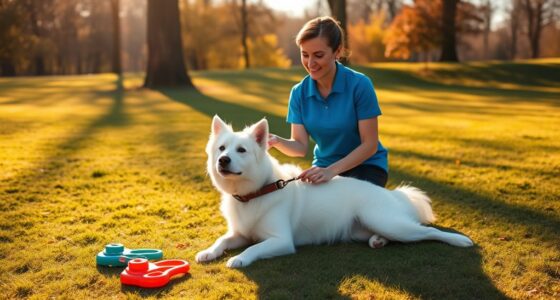

When working with overwhelmed dogs, keep a respectful, safe distance to help them feel secure. Watch for signs of stress like tucked tails, pinned-back ears, or wide eyes, and step back if you notice these cues. Maintain a calm environment by avoiding sudden movements and lowering yourself to appear less intimidating. Giving the dog space allows it to relax and regain composure. If you’re curious about how to read these signals and help more effectively, there’s much more to discover.

Get pet supplies delivered free with Prime
- Fast, free delivery on millions of items
- Prime Video, Amazon Music and more included
- Member-only deals all year
Key Takeaways
- Maintain a respectful distance until the dog shows signs of calm and relaxation.
- Observe body language to determine when the dog is comfortable approaching.
- Avoid forcing contact; allow the dog to initiate interaction at their own pace.
- Gradually decrease distance as the dog becomes more relaxed and confident.
- Respect individual thresholds to prevent overwhelming the dog further.

When a dog becomes overwhelmed, maintaining a safe distance can make all the difference in helping them feel secure. Recognizing your dog’s body language is essential in this moment. Signs like stiff posture, tucked tail, pinned-back ears, wide eyes, or lip licking indicate stress or discomfort. By observing these cues, you can gauge how close you should get and when to step back. Respecting their space allows them to regain composure without feeling cornered or threatened, which can escalate their anxiety.
Recognize signs of stress and give your dog space to feel safe and regain calm.
Using calming techniques alongside the safe distance rule is crucial. Keep your voice soft and gentle, avoiding sudden movements that could startle or heighten their stress. Sometimes, simply lowering yourself to their level or turning sideways can make you appear less intimidating. Offering a calm, steady presence reassures them that they’re safe. If they respond well, you might introduce gentle petting, but only if they show signs of relaxation—never force contact. Allow them to approach you when they’re ready, reinforcing that they control the interaction.
The key is to create a space where your dog feels in charge of their comfort. When overwhelmed, they often retreat or become hypervigilant. Maintaining a calm environment helps reduce their stress levels and encourages them to feel more secure. Maintaining a safe distance helps them decide when they’re ready to engage again, rather than feeling pushed into social interaction. You can employ calming techniques such as providing a quiet, familiar environment or offering treats from a distance, which helps build positive associations without overwhelming them further. These techniques work best when paired with patience and respect for your dog’s cues. Additionally, understanding stress signals** can help you respond more effectively to their needs. Being aware of body language cues** is also essential for accurately interpreting their emotional state.
Remember, every dog is different, and their thresholds vary. Some might need a few minutes to settle, while others may require much longer. During this time, avoid crowding them or forcing interaction. Instead, give them space, keep your movements minimal, and focus on creating a calm atmosphere. Eventually, as their body language indicates relaxation—such as loose muscles, soft eyes, and relaxed ears—you can gradually reduce the distance. Always pay attention to their signals and be ready to step back if they show signs of stress again.
In short, understanding and interpreting your dog’s body language, employing calming techniques, and respecting their need for space are vital components of the safe distance rule. This approach not only helps your dog feel secure during overwhelming moments but also strengthens your bond, showing them they can trust you to respect their boundaries. Patience and awareness are your best tools in helping your dog navigate stressful situations comfortably.
As an affiliate, we earn on qualifying purchases.
Frequently Asked Questions
How Can I Tell if My Dog Is Overwhelmed?
You can tell your dog is overwhelmed by observing their body language, such as pinned-back ears, lip licking, yawning, or avoiding eye contact. They might also show signs of stress like panting or trembling. To help, use calmness techniques like gentle petting or creating a quiet environment. If your dog seeks distance or appears tense, give them space and time to relax, ensuring they feel safe and secure.
What Are Signs of Stress in Dogs?
Spot signs of stress in your dog by noticing nervous nudges, rapid respiration, and restless movements. Pay attention to subtle shifts in dog body language—flattened ears, tucked tail, or avoiding eye contact signal discomfort. To help, use stress reduction techniques like creating calm environments, gentle voice tones, and giving your dog space. Recognizing these signals early allows you to respond swiftly, soothing your pup and strengthening your bond.
How Long Should I Maintain the Safe Distance?
You should maintain the safe distance until your dog shows clear behavioral cues of relaxation, like a loose body, soft eyes, or a wagging tail. Keep in mind environmental triggers that might cause stress, such as loud noises or unfamiliar people. Watch for signs of discomfort, and gradually decrease the distance as your dog becomes more relaxed. Patience is key; always prioritize your dog’s comfort and safety.
Can the Safe Distance Vary Between Dogs?
Yes, the safe distance can vary between dogs due to breed-specific behaviors and environmental factors. Some breeds are more sensitive or reactive, requiring a greater distance to prevent stress or aggression. Environmental factors like noise, crowding, or unfamiliar surroundings also influence how close you can safely get. Pay attention to your dog’s body language and adjust the distance accordingly, ensuring they feel safe and comfortable in different situations.
What Should I Do if My Dog Approaches Someone?
If your dog approaches someone, stay calm and use positive reinforcement to encourage good behavior. Employ your training techniques to guide your dog on appropriate interactions, ensuring they understand boundaries. During dog socialization, slowly introduce your dog to new people, rewarding calmness and proper greetings. Keep a safe distance if your dog seems overwhelmed, gradually decreasing it as your dog gains confidence. Consistent training helps your dog navigate social situations comfortably.
Conclusion
As you walk alongside your overwhelmed dog, imagine a gentle, invisible barrier softly shielding them from the chaos. Respect their need for space, allowing that quiet bubble of calm to grow. By honoring the safe distance rule, you create a sanctuary where trust blossoms, and fear dissolves like mist at dawn. With patience and understanding, you nurture a bond rooted in compassion—guiding your dog toward serenity, one gentle step at a time.
Evergreen bestsellers Picks
bestsellers
As an affiliate, we earn on qualifying purchases.