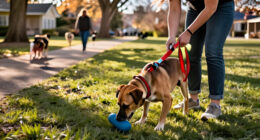
To build your dog’s confidence without flooding, start with gradual exposure to fears paired with plenty of positive reinforcement like treats or praise. Keep sessions short and calm, and respect your dog’s limits to prevent overwhelm. Create a secure environment with consistent routines, and avoid punishing or forcing your dog into stressful situations. By using gentle, step-by-step techniques, you’ll help your dog trust you more. If you want to learn more effective methods, continue exploring ways to support your dog’s confidence.

Get pet supplies delivered free with Prime
- Fast, free delivery on millions of items
- Prime Video, Amazon Music and more included
- Member-only deals all year
Key Takeaways
- Use gradual desensitization by slowly increasing stimulus intensity while rewarding calm behavior.
- Create a consistent routine to foster security and predictability for the dog.
- Avoid flooding; expose the dog to fears at a manageable pace to prevent overwhelm.
- Reinforce positive associations with feared stimuli through treats, praise, and gentle exposure.
- Build trust with patience, kindness, and allowing space for the dog to retreat if overwhelmed.

Have you ever wondered why some dogs seem constantly anxious or easily frightened? It’s a question many dog owners ask when they notice their pet trembling at the sound of a thunderstorm or cowering when faced with unfamiliar people. The truth is, dogs develop fears through a combination of genetics, past experiences, and their environment. Some may be naturally more sensitive, while others have been exposed to negative or overwhelming situations that left them feeling insecure. Understanding the root cause of your dog’s fear is the first step toward helping them build confidence.
Dogs’ fears stem from genetics, past experiences, and environment—understanding these helps build their confidence.
Instead of flooding your dog with overwhelming stimuli, focus on gradual, positive exposure. Flooding—exposing a dog to their fear trigger all at once—can backfire, increasing their anxiety and damaging trust. Instead, you want to create a safe, controlled environment where your dog can learn to cope at their own pace. For example, if your dog is afraid of loud noises, start by playing recordings at a low volume and rewarding calm behavior. Over time, increase the volume gradually, always ensuring your dog remains relaxed and comfortable. This approach, called systematic desensitization, helps your dog form positive associations with previously frightening stimuli.
Confidence-building also involves creating a sense of security through consistent routines and positive reinforcement. When your dog encounters something scary, avoid punishing or forcing them to face it head-on. Instead, encourage calm behavior with treats, praise, or play, and give your dog space to retreat if needed. This helps reinforce that they are in control and that you’re a source of support, not threat. Building trust is essential for reducing fear, so always respond with patience and kindness.
Another key element is teaching your dog simple commands and providing mental stimulation. Training sessions that focus on small, achievable goals can boost your dog’s confidence, making them feel more capable and resilient. When they succeed, reward them generously, which helps solidify their positive feelings about new experiences. Socialization is important too, but it should be done gradually and with dogs or people that are calm and non-threatening. This way, your dog gains exposure without feeling overwhelmed. Additionally, leveraging AI in Education concepts such as personalized learning can help tailor training techniques to your dog’s unique needs, fostering more effective confidence building.
As an affiliate, we earn on qualifying purchases.
Frequently Asked Questions
How Can I Tell if My Dog Is Truly Fearful or Just Shy?
You can tell if your dog is truly fearful by observing their body language and reactions. If they cower, tuck their tail, or try to hide when faced with new situations, they’re likely fearful. Shy dogs might be reserved but don’t exhibit extreme stress signals. Notice if your dog avoids certain people or objects consistently, and watch for signs of anxiety, like yawning or lip licking. Trust your instincts and seek professional help if unsure.
Are There Specific Breeds More Prone to Fearfulness?
Are some breeds more prone to fearfulness? Absolutely. Just as some plants thrive in shady spots, certain breeds like Chihuahuas, Jack Russell Terriers, and Shelties tend to be more nervous or anxious. But remember, breed isn’t destiny. Your dog’s environment, training, and socialization play vital roles. Pay attention to your dog’s cues, and with patience, you can help build confidence regardless of breed.
Can Fearfulness in Dogs Change Over Time?
Yes, fearfulness in dogs can change over time. With consistent, gentle training and positive reinforcement, you can help your dog build confidence and reduce their fears. It’s important to be patient and avoid forcing them into frightening situations, as this can worsen their anxiety. Over time, your dog can become more comfortable and secure, especially when you provide a safe environment and support their progress with calm, encouraging interactions.
How Do I Handle Fearfulness in a Multi-Dog Household?
You handle fearfulness in a multi-dog household by creating a calm, predictable environment that feels like a safe haven. Use gentle, consistent training to reinforce confidence, and give each dog individual attention to prevent jealousy. Avoid overwhelming them with too many new experiences at once. Be patient and persistent; over time, your dogs will learn to trust and feel secure, transforming chaos into calm and fear into confidence.
What Are Common Triggers That Increase a Fearful Dog’s Anxiety?
Common triggers that increase a fearful dog’s anxiety include loud noises, sudden movements, unfamiliar people, and new environments. You might notice their anxiety spike during thunderstorms, fireworks, or when strangers approach. Restrict exposure to these triggers gradually, and use positive reinforcement to help your dog feel safe. Avoid overwhelming them, and create a calm, predictable environment. Patience and gentle support are key to helping your dog build confidence and reduce fear.
Conclusion
Building your fearful dog’s confidence is about patience, consistency, and gentle exposure. It’s about creating a safe space where progress feels steady, not overwhelming. It’s about celebrating small victories and trusting the process. It’s about guiding your dog with kindness, supporting their growth, and fostering resilience. When you stay committed, when you remain calm, and when you encourage gently, you help your dog see the world as a place of safety, trust, and confidence.
Halloween Picks
halloween
As an affiliate, we earn on qualifying purchases.