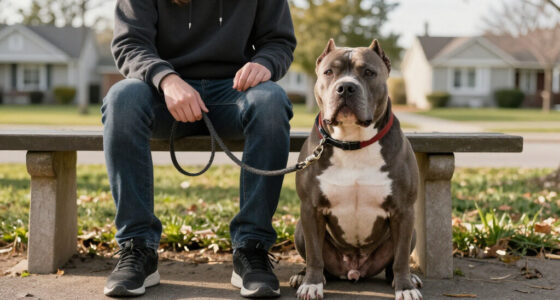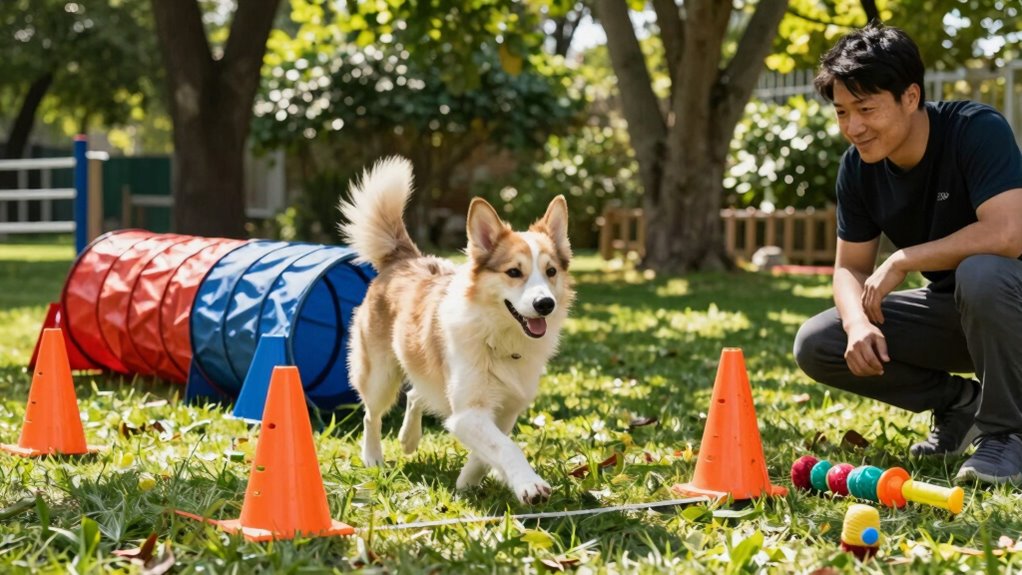

Creating a structured rehab routine helps your dog rebuild confidence after setbacks by promoting physical healing, reducing fear, and encouraging trust through consistent positive reinforcement. Incorporate gradual exposure to social situations, start with familiar places, and use calm, low-impact exercises like gentle leash walks and calming commands. Observe your dog closely and adapt the routine as needed to support emotional resilience. Keep in mind, steady progress and patience are key—continue exploring ways to support your dog’s recovery.

Get pet supplies delivered free with Prime
- Fast, free delivery on millions of items
- Prime Video, Amazon Music and more included
- Member-only deals all year
Key Takeaways
- Implement a structured, positive reinforcement-based routine to gradually rebuild trust and confidence.
- Use controlled, low-stress socialization to reintroduce dogs to new environments and companions.
- Incorporate gentle, low-impact exercises tailored to the dog’s injury and personality.
- Monitor body language and emotional cues to adjust activities and ensure emotional safety.
- Celebrate small victories to motivate progress and reinforce positive experiences during recovery.
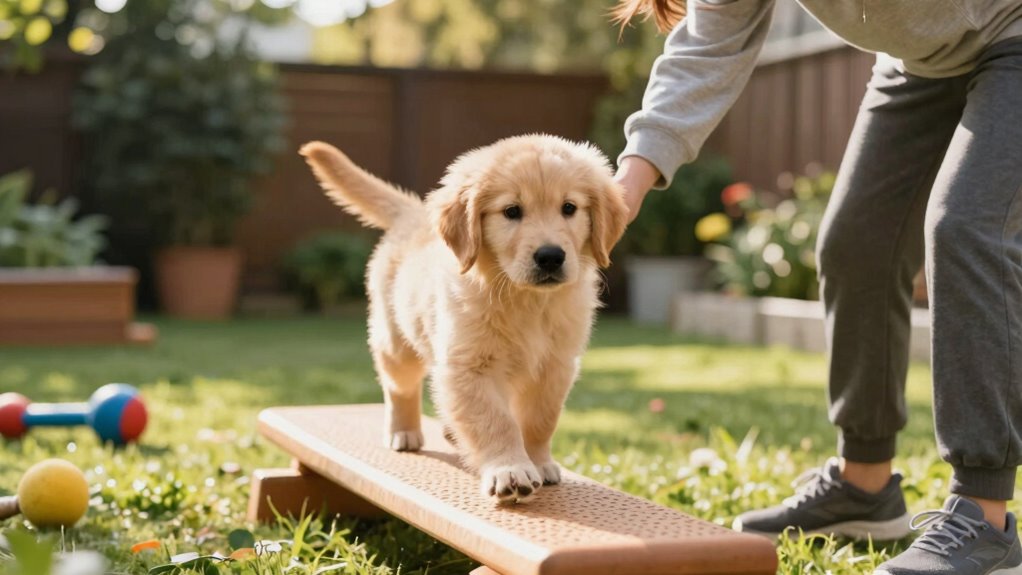
When your dog is recovering from an injury or surgery, establishing a structured rehab routine can make all the difference in their healing process. This routine not only promotes physical recovery but also helps rebuild their confidence, which can be fragile after setbacks. As you guide your dog through this phase, incorporating behavior modification techniques becomes essential. These techniques help address any fear or anxiety that may have developed, encouraging your dog to feel safe and secure once more. Consistent, positive reinforcement is key—rewarding calm behavior and progress reinforces their trust in you and the recovery process. Over time, this approach gradually reduces fear responses and builds resilience.
Socialization techniques are equally important during rehab, especially if your dog has become hesitant around new people, animals, or environments. Carefully reintroducing your dog to social situations in a controlled, low-stress manner can foster confidence. Start with familiar spaces and trusted companions, gradually increasing exposure as your dog shows readiness. Use treats, praise, and gentle encouragement to create positive associations with social interactions, helping your dog regain comfort in diverse settings. If your dog shows signs of fear or withdrawal, take a step back and proceed more slowly, ensuring the experience remains positive and stress-free. Remember, patience is crucial—pushing too hard can hinder progress and cause setbacks. Recognizing the importance of behavior modification techniques can significantly enhance your dog’s confidence during recovery. Incorporating proper exercise planning tailored to your dog’s condition can further support safe and effective healing. Additionally, understanding body language and emotional cues can help you better assess and respond to your dog’s needs throughout the process.
Reintroduce your dog gradually to social settings with patience, treats, and positive reinforcement to rebuild confidence and reduce fear.
Your rehab routine should be tailored to your dog’s specific needs, considering their injury, personality, and progress level. Incorporate short, frequent sessions focused on low-impact exercises that promote healing without overexertion. During these sessions, include behavior modification tasks such as gentle leash walks, calming commands, or supervised play, which reinforce trust and confidence. Use socialization techniques during walks or controlled visits to familiar places to help your dog regain their social footing gradually. Incorporating positive reinforcement strategies can further motivate your dog and foster a positive recovery experience. Establishing a consistent routine is also vital, as it provides predictability and reduces anxiety for your dog.
Throughout the process, keep a keen eye on your dog’s body language and emotional state. Celebrate small victories to motivate continued effort, and be ready to adapt your approach as needed. Patience, gentle encouragement, and a structured routine that integrates behavior modification and socialization techniques will help your dog rebuild their confidence after setbacks. Remember, recovery is a journey, and your steady support can make all the difference in helping your dog feel secure, happy, and confident again.
As an affiliate, we earn on qualifying purchases.
Frequently Asked Questions
How Long Does Dog Rehabilitation Typically Take?
Dog rehabilitation usually takes several weeks to months, depending on the dog’s age, temperament, and the setbacks they’ve experienced. During this time, you’ll focus on leash training and socialization exercises to rebuild their confidence. Consistent, positive reinforcement helps your dog feel secure and gradually overcomes fears. Remember, patience is key; some dogs adapt faster, but steady progress guarantees long-term confidence and trust.
Are Certain Breeds More Prone to Confidence Setbacks?
Yes, certain breeds are more prone to confidence challenges due to breed tendencies. For example, shy or sensitive breeds like Dachshunds or Greyhounds might struggle more with setbacks, requiring extra patience and tailored rehab routines. Recognizing these breed-specific tendencies helps you implement effective confidence-building exercises, ensuring your dog rebuilds trust and self-assurance quicker, especially after setbacks. Always consider your dog’s unique personality and breed traits during recovery.
Can Home Rehab Routines Replace Professional Training?
Home rehab routines can supplement professional guidance but shouldn’t fully substitute it. Alternative training methods, like positive reinforcement exercises you do at home, help rebuild your dog’s confidence after setbacks. However, professional guidance ensures you’re on the right track and addresses specific issues effectively. Combining both approaches provides a balanced strategy, giving your dog the best chance to regain confidence safely and confidently.
What Signs Indicate a Dog Is Regaining Confidence?
You’ll notice your dog’s body language and behavioral cues improving as they regain confidence. They’ll stand taller, relax their muscles, and approach new people or objects with curiosity instead of fear. Watch for tail wagging, a relaxed face, and open, friendly postures. If your dog’s movements become more confident and they show less hesitation or avoidance, it’s a clear sign they’re rebuilding trust and feeling more secure.
How Do I Update Routines as My Dog Improves?
As your dog improves, you should update routines by gradually increasing training consistency and introducing new socialization techniques. Keep sessions short and positive, rewarding confidence-building behaviors. Incorporate more challenging environments and diverse social interactions to boost their comfort. Always observe your dog’s responses, adjusting activities to prevent overwhelm. This steady progression helps reinforce their confidence, ensuring they feel secure and motivated to explore new experiences confidently.
Conclusion
By blending patience, praise, and persistent practices, you’ll pave the path for your pup’s progress. Consistent routines cultivate confidence, combating setbacks and creating a calmer, more courageous canine. Remember, rebuilding resilience requires repetition, reassurance, and a whole lot of love. Stay steadfast, and soon your furry friend will flourish, freeing fears and fostering newfound freedom. Your dedication drives their development, turning setbacks into successful strides. Keep caring, keep coaching, and watch your dog’s confidence shine brighter every day.
Halloween Picks
halloween
As an affiliate, we earn on qualifying purchases.