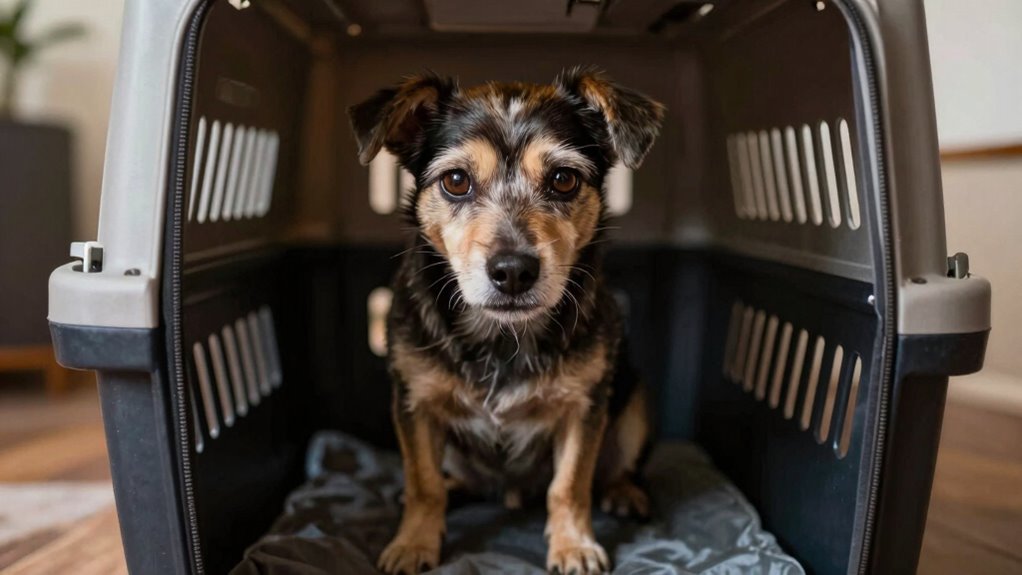
Dogs often panic in covered crates because they associate them with confinement, fear, or negative past experiences. If they haven’t been gradually introduced or if their crate feels unsafe, they may feel trapped and overwhelmed. To fix this, make the crate a positive space with treats, praise, and slow introductions. Creating a calming environment and practicing short, positive sessions can help your dog feel more secure. If you’re curious to learn more, there’s helpful advice to guide you further.
Key Takeaways
- Dogs may panic in covered crates due to negative associations or fear of confinement.
- Gradual, positive crate training helps build comfort and reduce anxiety.
- Creating a calming environment with familiar items and engaging toys eases panic.
- Address separation anxiety through short departures and consistent routines.
- Professional support can assist in severe cases and improve crate training success.

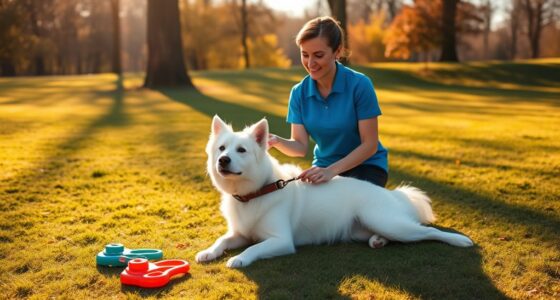
Have you ever wondered why some dogs panic when they’re placed in crates? It can be heartbreaking to see your furry friend frantic and distressed, especially when you’re just trying to help them feel safe and secure. The root of this panic often lies in a combination of factors like inadequate crate training and separation anxiety. If your dog hasn’t been properly introduced to the crate, they might associate it with negative experiences or feel trapped, which triggers their fear response. The key to overcoming this is to approach crate training gradually, making the crate a positive and familiar space rather than a place of punishment or confinement. Use treats, praise, and gentle encouragement to help your dog associate the crate with comfort and good things. Keep initial sessions short and increase the duration slowly, always observing your dog’s comfort level, so they don’t feel overwhelmed. Over time, this builds trust and helps your dog see the crate as a safe haven rather than a source of stress. Additionally, providing a calming environment can help reduce their anxiety and make crate time more comfortable. Creating a positive association with the crate can significantly reduce their fear and help them feel more secure. Incorporating desensitization techniques can also be effective in easing your dog’s anxiety around the crate. Establishing a consistent routine can also help ease their separation anxiety by providing predictability and reassurance. Dogs with separation anxiety often feel extreme distress when left alone, which can intensify their fear of being confined. To address this, you need to create a consistent routine that reassures your dog and minimizes their anxiety triggers. Practice leaving for short periods initially, then gradually increase the duration as your dog becomes more comfortable. Incorporating calming signals, like leaving a piece of clothing with your scent inside the crate, can help soothe them. Understanding the importance of crate comfort in reducing fear can make a significant difference in their response. Establishing a predictable schedule and providing engaging toys can also help your dog feel more secure. If separation anxiety is severe, consulting a professional trainer or veterinarian can be beneficial—they might suggest additional strategies or even medication to help your dog cope better.

Buddy Biscuits Trainers 10 Oz. Pouch of Training Bites Soft & Chewy Dog Treats Made with Bacon Flavor
Highly Palatable with natural pork liver base
As an affiliate, we earn on qualifying purchases.
As an affiliate, we earn on qualifying purchases.
Frequently Asked Questions
How Long Does It Take for a Dog to Get Used to a Crate?
It usually takes a few days to a few weeks for your dog to get used to a crate, depending on their personality. Make sure the crate size is appropriate—big enough for them to stand and turn around comfortably. Use a gradual introduction, starting with short periods and gradually increasing them. Consistent positive reinforcement and patience help your dog feel safe and settle into their crate more quickly.
Can Crate Training Cause Long-Term Anxiety in Dogs?
Crate training, if done wrong, can turn your dog’s mind into a stormy sea of anxiety. Long-term anxiety can develop if you ignore behavioral cues or rush crate conditioning, making the crate seem like a trap rather than a safe haven. To prevent this, take it slow, build positive associations, and respect your dog’s comfort level. Proper training turns the crate into a cozy retreat, not a source of fear.
Are Certain Breeds More Prone to Crate Panic?
Certain breeds are more prone to crate panic due to breed tendencies and crate sensitivity. For example, high-energy or independent breeds like Huskies or Terriers may find crates more stressful, especially if not properly introduced. Smaller or more anxious breeds, such as Chihuahuas or Dobermans, might also be more prone to crate panic. Understanding your dog’s breed tendencies helps you tailor crate training to reduce their anxiety effectively.
What Are Signs of Extreme Distress in a Crate?
You’ll notice signs of extreme distress in a crate through persistent crate noise, like barking or whining, and signs of separation anxiety, such as excessive panting or attempting to escape. Your dog may scratch or chew at the crate, drool excessively, or show signs of pacing. These behaviors indicate they’re overwhelmed or anxious. Recognizing these signs helps you intervene early and work on easing their stress to make crate time more comfortable.
Is It Okay to Leave a Dog in a Crate All Day?
Leaving your dog in a crate all day is like trapping a wild animal in a tiny cage—it’s not healthy or humane. While crate training helps with dog behavior, dogs need regular exercise, mental stimulation, and bathroom breaks. Crates should be a safe, comfortable space, not a long-term solution. If you’re away, consider a dog walker or pet sitter to guarantee your pup’s needs are met and prevent stress or anxiety.

EHEYCIGA Fluffy Dog Crate Bed for Extra Large Dogs, Plush Faux Fur Pad, Calming Anti Anxiety XL Bed for Crate, Washable Soft Warm Dog Mat with Non-Slip Bottom, Grey
ULTRA SOFT FLUFFY PLUSH SURFACE – EHEYCIGA dog bed made of fluffy and smooth faux fur fabric, which…
As an affiliate, we earn on qualifying purchases.
As an affiliate, we earn on qualifying purchases.
Conclusion
So, next time your pup treats the crate like a haunted house, remember—it’s not them being stubborn; it’s a cry for help in canine disguise. With patience, positive reinforcement, and a sprinkle of understanding, you can transform that panic into peace. After all, who knew that a cozy little den could become the canine equivalent of a psychological thriller? Embrace the challenge, and soon your dog will see the crate as their sanctuary, not a scene from “Nightmare on Dog Street.”

WEOK Heartbeat Puppy Toy, Comfort Cuddler Pillow, Dog Anxiety Relief Calming Aid,Heartbeat Stuffed Toy for Dogs,Puppy Heartbeat Toy Sleep Aid,Dog Heartbeat Toy for Pet
【Anxiety Relief】WEOK heartbeat puppy toy which is a simulation of the true pulsing heartbeat enables the puppy to…
As an affiliate, we earn on qualifying purchases.
As an affiliate, we earn on qualifying purchases.

NaturVet Quiet Moments Herbal Calming Room Spray Dog Supplement – Ideal for Cars, Dog Crates, New Environments – Helps Reduce Pet Stress, Storm Anxiety, Motion Sickness – 8 Oz.
HIGH-QUALITY ANXIETY SUPPLEMENT SPRAY FOR DOGS: Bring your pets the calm they need during separation, storms, grooming or…
As an affiliate, we earn on qualifying purchases.
As an affiliate, we earn on qualifying purchases.