After a bad dog-to-dog encounter, stay calm and observe your dog’s body language for signs of stress or injury. Create distance calmly and guide your dog away without pulling. Engage in calming activities like gentle petting or a quick walk to help your dog relax. Reinforce positive behavior with treats and avoid forcing socialization if your dog shows fear. For more tips on helping your dog recover, explore further strategies to guarantee their emotional and physical well-being.
Key Takeaways
- Observe your dog’s body language and behavior for signs of stress or injury.
- Calmly create distance from the other dog using gentle guidance and avoid sudden movements.
- Engage your dog in calming activities like treats, toys, or a gentle walk to reduce anxiety.
- Reinforce positive, confident behavior with praise and treats to rebuild trust and social skills.
- Monitor your dog closely over the following days and consult a veterinarian if concerning signs appear.
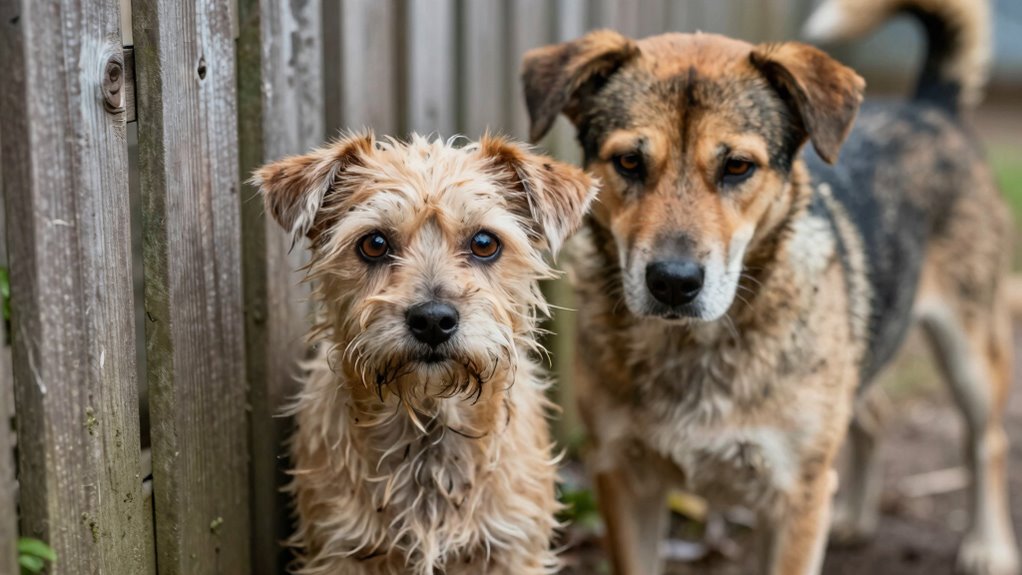
After a tense or aggressive dog-to-dog encounter, it’s essential to stay calm and assess the situation quickly. Your dog can pick up on your energy, so maintaining a composed demeanor is crucial. Observe your dog’s body language carefully—look for signs of fear, stress, or aggression. Dogs often communicate their feelings through tail position, ear orientation, hackles, and overall posture. If your dog is visibly tense, cowering, or showing signs of fear, it’s important to respond with calming techniques to help settle them. Speak softly, avoid sudden movements, and use a gentle voice to reassure them. You might also gently pet your dog in a calming manner, avoiding any stiff or tense movements, to help reduce their anxiety.
Remember, your goal is to de-escalate the tension in the moment. If your dog’s body language indicates they’re still on edge, try to create distance from the other dog as smoothly and calmly as possible. Use a leash if available, and guide your dog away from the scene without pulling or jerking. Keep your movements slow and deliberate to prevent escalating their stress further. Calm techniques like deep, steady breathing for yourself can help set a peaceful tone, which in turn influences your dog’s emotional state. If your dog is visibly frightened, avoid punishing or scolding them; instead, focus on making them feel safe and secure. Recognizing stress signals early can help you intervene more effectively. Additionally, being aware of canine communication cues can improve your response in such situations.
Engaging in desensitization exercises gradually and patiently can help your dog regain confidence in social situations, reducing the likelihood of reactivity in the future. Once you’ve moved away from the scene, take some time to observe your dog’s behavior and body language closely. If they seem anxious or unsettled, engage in calming activities such as gentle massage or offering a favorite toy or treat. Sometimes, a quick walk or distraction can redirect their focus and help them regain composure. Incorporating positive reinforcement during these moments can also reinforce calm and confident behavior. If your dog shows signs of lingering fear, avoid forcing them into situations that could trigger another reaction. Instead, gradually reintroduce socialization at a pace they’re comfortable with, using positive reinforcement to rebuild their confidence.
Additionally, understanding the importance of patience during recovery can be vital in helping your dog feel secure again. In the aftermath of a rough encounter, it’s also wise to monitor your dog for any signs of injury or stress-related issues. If you notice any unusual behavior or physical signs of injury, consult your veterinarian promptly. The key is to remain patient and consistent, reinforcing calmness and security through gentle handling and positive experiences. Over time, this approach can help your dog recover emotionally and reduce the likelihood of future conflicts.

BARK&SPARK Advanced Calming Chews for Dogs – Separation Anxiety Relief for Dogs w/Hemp Oil + Melatonin – Relief During Fireworks, Storms – Aggressive Behavior, Barking, Stress Aid – 90Chews
Soothing Calm: Looking for a remedy to help your pet relax and can support them during stressful situations?…
As an affiliate, we earn on qualifying purchases.
As an affiliate, we earn on qualifying purchases.
Frequently Asked Questions
How Can I Tell if My Dog Is Severely Injured?
You can tell if your dog is severely injured by performing a quick dog injury assessment, looking for signs of trauma like bleeding, limping, swelling, or difficulty moving. Watch for unusual behavior such as whimpering, yelping, or reluctance to walk. If you notice any of these signs, it’s essential to seek veterinary care immediately. Don’t delay, as prompt treatment can prevent further complications and guarantee your dog’s recovery.
When Should I Seek Professional Dog Training Advice?
You should seek professional dog training advice when you notice persistent issues with your dog’s behavior, especially after a dog-to-dog encounter. A trainer can help you understand your dog’s behavior and teach effective training techniques to improve interactions. If your dog shows signs of aggression, anxiety, or fear that don’t improve with basic training, consulting a professional makes sure you address underlying issues safely and effectively.
Can I Prevent Future Dog Conflicts?
You can prevent future dog conflicts by understanding dog body language and practicing bite prevention. Visualize a calm, confident dog versus one that’s tense and defensive—your awareness of these cues helps you intervene early. By recognizing signs of stress or aggression, you can redirect or remove your dog from potential triggers. Consistent training and socialization strengthen your dog’s confidence, reducing the risk of conflicts and ensuring safer, more positive interactions.
What Signs Indicate My Dog Is Traumatized?
You’ll notice your dog shows signs of trauma through specific dog body language, like lowered ears, tucked tail, or avoiding eye contact. Post-encounter anxiety may cause your dog to become clingy, tremble, or refuse to go outside. Watch for sudden changes in behavior, such as increased barking or withdrawal. Recognizing these signs helps you support your dog’s emotional recovery and seek professional help if needed.
How Do I Handle Other Dogs’ Reactions During Walks?
Did you know that 70% of dogs experience social anxiety after rough encounters? During walks, handle other dogs’ reactions by maintaining calmness and using leash safety. Keep your dog at a safe distance if needed, and use gentle socialization techniques to gradually rebuild their confidence. Never force interactions; instead, reward calm behavior and stay vigilant. Your calmness will help your dog feel secure and better handle unexpected responses from others.

Doggie Language: A Dog Lover's Guide to Understanding Your Best Friend
As an affiliate, we earn on qualifying purchases.
As an affiliate, we earn on qualifying purchases.
Conclusion
Even if the dog encounter was stressful, remember that accidents happen, and it’s okay to feel shaken. Taking the right steps—like calmly evaluating the situation, providing comfort, and consulting a professional if needed—can help your pup recover emotionally and physically. Don’t be too hard on yourself; every owner faces setbacks. With patience and care, you’ll both bounce back stronger, turning a tough experience into a chance to strengthen your bond and build better habits for the future.

WEOK Heartbeat Puppy Toy, Comfort Cuddler Pillow, Dog Anxiety Relief Calming Aid,Heartbeat Stuffed Toy for Dogs,Puppy Heartbeat Toy Sleep Aid,Dog Heartbeat Toy for Pet
【Anxiety Relief】WEOK heartbeat puppy toy which is a simulation of the true pulsing heartbeat enables the puppy to…
As an affiliate, we earn on qualifying purchases.
As an affiliate, we earn on qualifying purchases.

ARCA PET Cat & Dog First Aid Kit for Car – Pet Emergency Kit for Home Office Travel – Dog Camping Essentials with Digital Thermometer, Muzzle & Mini First Aid Pouch
ENSURE PET SAFETY ON THE GO with our dog travel accessories, dog must haves in pet travel. Our…
As an affiliate, we earn on qualifying purchases.
As an affiliate, we earn on qualifying purchases.