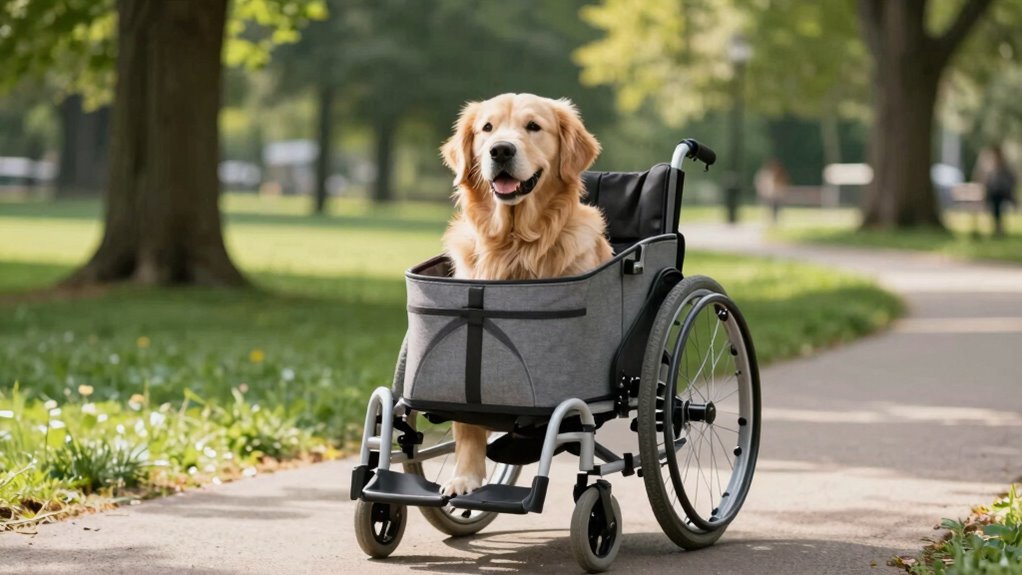

Introducing a dog wheelchair early can substantially improve your dog’s quality of life before noticeable decline happens. Watch for subtle signs like difficulty climbing stairs or dragging a hind leg, and consult your vet promptly. Early support helps maintain muscle strength, reduces discomfort, and prevents secondary issues, making the shift easier for both of you. Being proactive ensures your dog stays comfortable and active longer. If you keep exploring, you’ll find helpful tips to recognize the best timing for your furry friend’s needs.
Open a free Amazon Business account
Business pricing, bulk buying and tax-exempt orders.
As an affiliate, we earn on qualifying purchases.
Key Takeaways
- Early signs like difficulty climbing stairs or hesitation indicate it’s time for a wheelchair, often before complete immobility.
- Veterinarian advice can guide timely introduction, preventing muscle atrophy and joint stiffness.
- Using a wheelchair early supports normal activity levels and reduces frustration or behavioral issues.
- Proactive wheelchair use preserves muscle strength and enhances overall comfort and happiness.
- Transitioning early makes adaptation easier and promotes a natural, supportive movement experience.
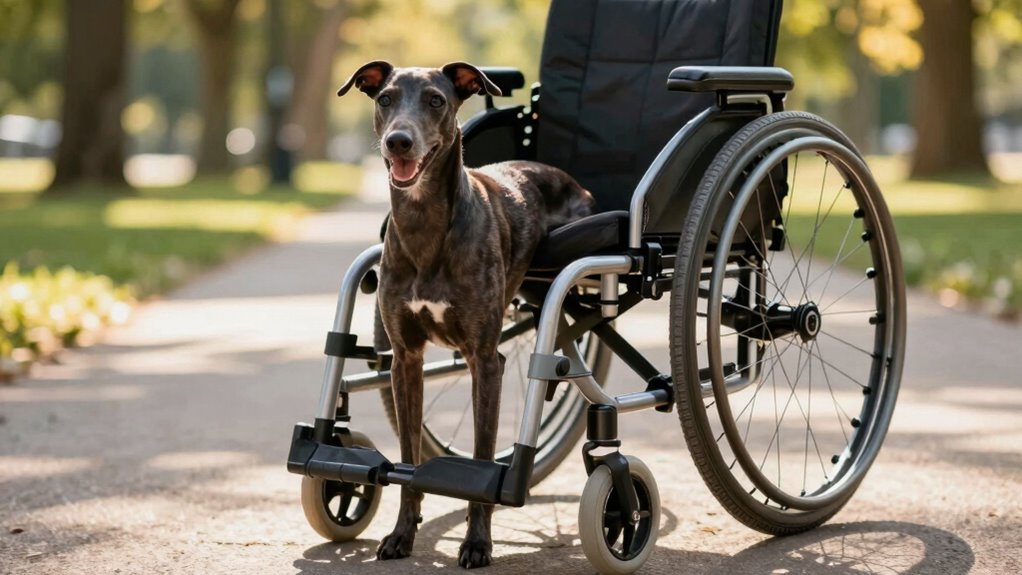
When it comes to using a dog wheelchair, timing is everything. Knowing when to introduce assistive technology can make a significant difference in your dog’s quality of life. Many owners hesitate, hoping their pet will recover or improve naturally, but sometimes early intervention with mobility aids is the best choice. A dog wheelchair isn’t just about helping your pet walk; it’s about maintaining their independence, comfort, and happiness for as long as possible. Recognizing the signs when your dog could benefit from a wheelchair early on allows you to act proactively, rather than waiting until mobility issues become severe.
You might notice subtle changes first—your dog struggles to climb stairs, hesitates before jumping, or drags a hind leg during walks. These signals often go unnoticed or are dismissed as temporary discomfort. However, these are key indicators that assistive technology, like a well-fitted dog wheelchair, could support their movement and prevent further strain or injury. The earlier you introduce mobility aids, the smoother the transition will be for your pet. Waiting too long can lead to muscle atrophy, joint stiffness, or behavioral changes caused by frustration or pain. By acting promptly, you help preserve their muscle strength and encourage normal activity levels, which are crucial for their mental and physical well-being.
Timing also involves understanding your dog’s overall health status. If your veterinarian suggests that your dog’s mobility is declining due to age, injury, or illness, it’s wise to consider a wheelchair sooner rather than later. Early intervention with assistive technology can slow down the progression of mobility issues, giving your pet a better chance to maintain a sense of normalcy. It’s not just about physical support but also about emotional stability—your dog’s confidence in moving around increases when they’re supported properly, reducing anxiety or fear associated with mobility loss. Recognizing the importance of early mobility support can also help prevent secondary health problems and improve your dog’s overall comfort.
Additionally, recognizing the importance of early mobility support can help prevent secondary health problems and improve your dog’s overall comfort. Furthermore, introducing a dog wheelchair early can be easier for both of you. Dogs adapt more quickly when they’re introduced to their mobility aids before their movement becomes severely limited. You’ll find it easier to fit and adjust the wheelchair, and your pet will be less stressed during the process. This proactive approach ensures that the transition feels natural, helping your dog regain confidence and continue enjoying daily activities. Being aware of the signs of mobility decline allows owners to act in a timely manner, reducing stress for everyone involved. Ultimately, recognizing the right timing for a wheelchair isn’t about waiting until your dog is completely immobile but about understanding that early support through assistive technology can lead to a healthier, happier life for your furry friend.
dog wheelchair for mobility support
As an affiliate, we earn on qualifying purchases.
As an affiliate, we earn on qualifying purchases.
Frequently Asked Questions
Can a Dog Use a Wheelchair Temporarily or Permanently?
Yes, your dog can use a wheelchair temporarily or permanently, depending on their needs. Alternative mobility aids like wheelchairs support recovery and improve quality of life. You should also incorporate dog rehabilitation exercises to strengthen muscles and promote healing. Consult your vet to determine the best approach, ensuring the wheelchair suits your dog’s condition and lifestyle, whether it’s a short-term solution or a long-term aid.
How Do I Know if My Dog Is Ready for a Wheelchair?
Think of your dog’s readiness like a puzzle piece fitting perfectly; if they’re showing signs of mobility challenges and struggling with exercise modifications, a wheelchair might be just right. Watch for sustained difficulty walking or standing, reluctance to move, or muscle weakening. If your vet confirms these signs and your dog still shows interest in activity, it’s likely time to evaluate a wheelchair, helping them regain independence earlier than expected.
Are There Age Restrictions for Dog Wheelchair Use?
There aren’t strict age restrictions for dog wheelchair use, but you should consider your dog’s mobility needs. Puppies often benefit from wheelchairs to support developing limbs, while senior dogs use them to aid mobility and reduce discomfort. If your elderly dog struggles with walking or standing, a wheelchair can substantially improve quality of life. Always consult your vet first to ensure it’s the right choice based on your dog’s age and health condition.
What Signs Indicate My Dog’s Condition Is Worsening?
If your dog’s joint flexibility decreases or you notice fewer mobility cues, it’s a sign their condition might be worsening. Watch for increased difficulty in standing, limping, or reluctance to move. You may also see swelling or stiffness. These signs indicate your dog needs prompt veterinary attention. Early intervention can help manage pain and improve quality of life, so stay alert to changes in your dog’s mobility and joint flexibility.
How Long Does It Take for a Dog to Adjust to the Wheelchair?
It usually takes about a week or two for your dog to adjust to the wheelchair, but the adaptation period varies. During this time, you should regularly assess your dog’s comfort, watching for signs of ease or discomfort. Keep sessions short initially, gradually increasing as your dog becomes more confident. Patience and positive reinforcement help speed up the adaptation process, ensuring your dog feels secure and comfortable in their new mobility aid.
Conclusion
You might think your dog doesn’t need a wheelchair until they struggle, but sometimes, early use can be like planting a seed before a storm hits—preparing them for smoother sailing. I saw a dog regain confidence after starting wheelchair use sooner than expected, turning a moment of despair into a story of resilience. Remember, timely support isn’t just about mobility; it’s about giving your furry friend the chance to embrace life’s adventures with renewed joy.
NFL season / tailgating Picks
team gear
As an affiliate, we earn on qualifying purchases.