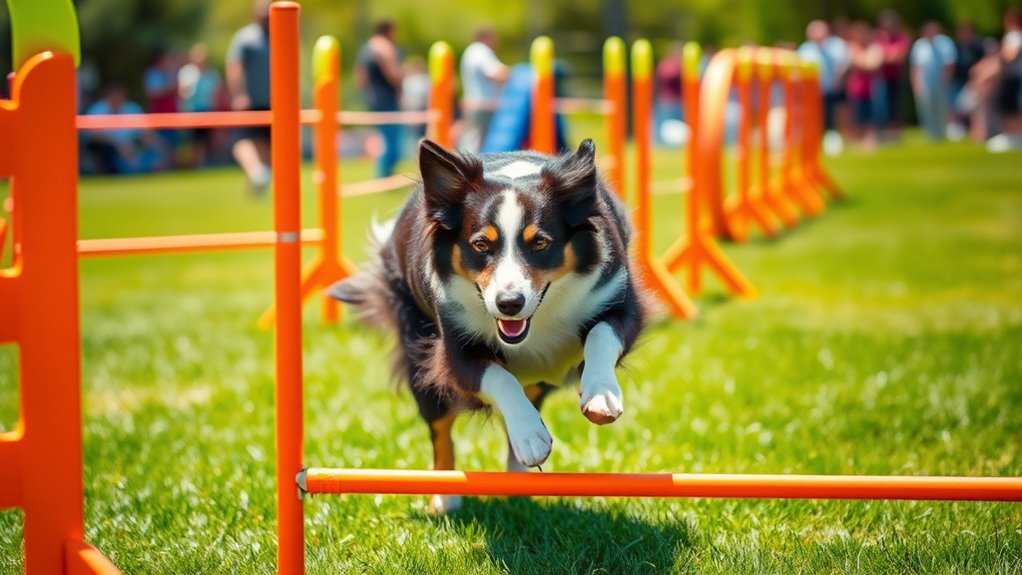

Agility training for dogs isn’t just fun; it packs mental and physical benefits that’ll enhance your dog’s overall well-being. It helps keep them fit, improves strength and flexibility, and fosters better focus while maneuvering obstacles. More than that, it sharpens their problem-solving skills and builds confidence. Plus, you’ll bond even more as you work together. If you want to discover how agility training can transform your dog’s experience, there’s much more to uncover.
Key Takeaways
- Agility training boosts physical fitness by improving cardiovascular health, muscle strength, flexibility, and balance through engaging obstacle courses.
- It provides mental stimulation by encouraging problem-solving and adaptability, enhancing focus amidst distractions.
- Successful completion of obstacles builds confidence in dogs, preventing boredom and destructive behaviors.
- Group sessions promote socialization, helping dogs interact positively with others and reducing reactivity towards unfamiliar dogs.
- Training reinforces communication between dog and owner, fostering trust and emotional connection through positive reinforcement techniques.

Agility training for dogs is an exciting way to boost your pet’s physical fitness and mental sharpness while strengthening your bond. This engaging activity involves maneuvering through obstacle courses featuring jumps, tunnels, and contact obstacles. To get started, your dog should have basic obedience skills like “sit,” “stay,” and “come.” The primary objective of agility training is to enhance your dog’s physical fitness and mental stimulation while deepening the connection between the two of you.
Agility training enhances your dog’s fitness and mental sharpness while fostering a deeper bond between you both.
The physical health benefits of agility training are impressive. It encourages healthy weight management through increased exercise, helping your dog maintain a fit physique. You’ll notice improvements in cardiovascular fitness, as this activity strengthens the heart and builds endurance. Additionally, your dog will develop muscle strength by tackling various obstacles, leading to enhanced flexibility and balance. By participating in agility training, you also reduce the risk of injury, as it strengthens bones and joints. A complete workout for overall physical health is achieved through these varied activities.
Beyond physical benefits, agility training offers substantial mental stimulation. Your dog will engage in problem-solving as they maneuver through complex obstacle courses, which sharpens their adaptability and response to new situations. Successfully completing obstacles can boost your dog’s confidence, while improving their focus and attention in the face of distractions. This mental engagement keeps your furry friend from becoming bored and exhibiting destructive behaviors.
Socialization is another key aspect of agility training. Group sessions provide opportunities for your dog to interact with other dogs, fostering a sense of community. Exposure to different environments helps your dog adapt to new settings and challenges, reducing reactivity and aggression towards other dogs. As you work together, you and your dog build trust and strengthen your bond through teamwork.
Communication between you and your dog improves as well. Agility training enhances your understanding of verbal and hand cues, creating a more cohesive training experience. Trust builds naturally as you both engage in structured learning and celebrate achievements together. Positive reinforcement, such as treats and praise, encourages good behavior and nurtures a strong emotional connection.
For those interested in getting started, agility training can be done with adjustable equipment like jumps, tunnels, and weaves. You can create DIY courses at home or seek out professional facilities for expert guidance. Regardless of your setup, prioritizing safety will guarantee a rewarding experience for both you and your dog. Engaging in agility training can lead to a longer, happier life for your beloved pet, filled with joy, health, and connection.

Lifepro PawRunner Dog Treadmill for Small Dogs, Dog Treadmill for Medium Dogs, Pet Treadmill for Dogs up to 130lbs, Dog Pacer Treadmill Indoor Dog Running Machine, Small Dog Treadmill for Dog Fitness
IMPROVE YOUR DOG'S HEALTH: PawRunner doggy treadmill improves your pet's blood circulation and blood pressure. Our dog running...
As an affiliate, we earn on qualifying purchases.
Frequently Asked Questions
How Long Does It Take to Train a Dog in Agility?
Training your dog in agility typically takes several months to a year, depending on your dog’s age and prior experience.
You’ll start with basic skills and gradually progress to more complex obstacles. Regular practice, ideally 15-20 minutes daily, is essential for consistent improvement.
Remember, patience is key. With dedication and the right approach, you’ll see your dog develop agility skills and confidence over time.
Enjoy the journey together!
What Equipment Is Needed for Dog Agility Training?
Imagine your dog zipping through a course like a comet streaking across the sky! To make that happen, you’ll need some essential equipment.
Start with tunnels for speed, jumps for aerial finesse, and weave poles for agility. Don’t forget cones to guide your course and pause tables for obedience.
As you advance, consider adding A-frames and dog walks. Each piece of equipment shapes your dog’s agility skills like a sculptor molding clay!
Can Any Breed Participate in Agility Training?
Yes, any breed can participate in agility training!
Most dogs, regardless of size or mix, can join in as long as they’re physically sound and meet age requirements. You’ll find that many organizations allow mixed breeds to compete, though some may have specific rules.
Just guarantee your dog is social and fit enough to tackle the challenges. It’s a fantastic way for you and your dog to bond while having fun together!
Are There Age Restrictions for Dogs in Agility Training?
Did you know that nearly 70% of dogs can start agility training by 12 months?
However, there are age restrictions to take into account. You can introduce flatwork and tunnels as early as 8 weeks, but wait until your dog is fully grown for high-impact activities.
Generally, full-sized jumps and weave poles come into play between 12-18 months. Always verify your dog’s physical maturity and health align with the agility training you choose.
How Can I Find Local Agility Training Classes for Dogs?
To find local agility training classes for your dog, start with a Google search using terms like “dog agility training near me.”
Check out social media groups where dog owners share recommendations.
Visit local pet stores for flyers or bulletin boards with class information.
Don’t hesitate to ask friends or fellow dog owners for suggestions.
Finally, attend community events to connect with trainers and discover available classes in your area.

Lastforever Dog Treadmill for Small & Medium Dogs, Quiet 2.5HP Motor, Remote Control, LED Display, Indoor Pet Exercise Treadmill with Safety Leash (Small/Medium/Large/6.5MPH/Incline)
Indoor Dog Exercise, Rain or Shine:Give your dog consistent daily exercise at home—no weather limits, no missed walks....
As an affiliate, we earn on qualifying purchases.
Conclusion
In the end, you might think agility training is just about jumping through hoops and weaving between poles, but it’s so much more. As your dog masters these skills, you’ll discover that you’re the one transformed—mentally sharper and physically engaged. Who knew that while teaching your pup to fly through an obstacle course, you’d also be strengthening your bond and boosting your own well-being? It seems the real winners of agility training are often the humans behind the leash.

CIIHI Dog Treadmill for Medium Small Dogs - 265lbs Weight Capacity Pet Running Machine with 360° Rotatable Display - 2 in 1 Treadmill for Pet Fitness with Move Wheels and Remote Control
【Multifunction Display and Remote】The 360° rotatable display of the dog treadmill enables you to read speed, time, etc....
As an affiliate, we earn on qualifying purchases.

Dog Treadmill, HotFeed Dog Slat Mill for Medium Dogs, Doggy Treadmill with Brake & Plastic Track, Dog Pacer Treadmill to Keep Active and Fit, Up to 250LBS(Medium)
【Enhanced Safety】: This upgraded treadmill features a fiberglass running belt, which is splinter-free and far more durable than...
As an affiliate, we earn on qualifying purchases.