
As your dog matures, their nutritional needs change, so you’ll need to switch from puppy to adult food typically around one year old, though smaller breeds may do so sooner. Puppy food has higher protein, fat, and essential nutrients to support growth, while adult formulas focus on maintaining energy, weight, and overall health. Adjusting your dog’s diet at the right time helps prevent health issues and keeps them happy and healthy—continue to explore to learn more.
Key Takeaways
- Puppy food has higher protein, fat, and calories to support growth, while adult food balances nutrients for maintenance.
- Transition from puppy to adult food typically occurs around one year, depending on breed size.
- Puppy formulas contain easily digestible ingredients and DHA for brain and eye development.
- Adult formulas focus on energy balance, coat health, and immune support with lower fat content.
- Senior dog food includes joint-supporting ingredients and antioxidants to address aging needs.

Choosing the right food for your dog depends on their age, as puppies and adults have different nutritional needs. When your pup is still growing, their body requires a specific balance of nutrients to support rapid development, strong bones, and healthy organs. As your dog matures, those needs shift, and their diet should adapt accordingly to maintain health and prevent issues related to aging. Recognizing these differences and adjusting your dog’s food at the appropriate times guarantees they stay happy, energetic, and healthy throughout their life.
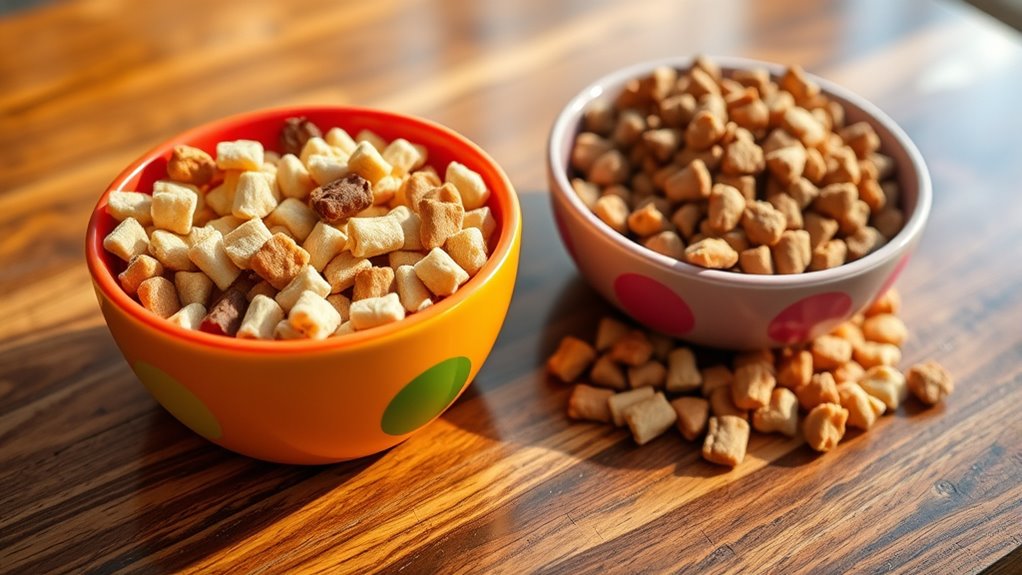
In the puppy stage, your dog needs higher levels of protein, fat, and certain vitamins to fuel growth and development. Puppy formulas are specially designed with this in mind, providing easily digestible ingredients that support muscle growth, brain development, and a robust immune system. They often contain DHA, an omega-3 fatty acid critical for cognitive development and eye health. Because puppies tend to eat more frequently and in larger quantities relative to their size, these formulas are also calorie-dense to meet their energy demands without overfeeding. It’s important to follow feeding guidelines given on the packaging or by your vet, as overfeeding can lead to obesity and related complications.
As your dog transitions into adulthood, usually around one year of age (though it varies by breed), their nutritional needs change. Adult dog food shifts focus from growth to maintenance, emphasizing a balanced intake of nutrients that support energy levels, coat health, and immune function without the extra calories needed during puppyhood. Adult formulas typically contain lower fat and calorie content but maintain high-quality protein levels to preserve lean muscle mass. This is the stage where you’ll need to monitor their weight and activity level more carefully, as overfeeding can lead to obesity, which increases the risk of health problems like joint issues and diabetes. Feeding your adult dog the right amount of food, based on their activity level and breed size, helps keep them fit and healthy.
When your dog enters their senior years, usually around 7 years for small breeds and older for larger breeds, their dietary needs change once again. Senior formulas often include added fiber for digestion, joint-supporting ingredients like glucosamine, and antioxidants to bolster the immune system. These foods are usually lower in calories to prevent weight gain, which can strain aging joints and organs. Paying close attention to your senior dog’s weight, energy, and coat condition can guide you in choosing the best food. It’s also wise to consult your vet for recommendations tailored to their specific health status, ensuring they get the nutrients they need to enjoy a comfortable, active life in their golden years.

Purina Pro Plan High Protein Dry Puppy Food, Chicken & Rice, 6 lb Bag
- Brain and Vision Support: DHA from omega-rich fish oil
- Muscle Development: High-quality protein with chicken
- Immune System Support: Antioxidants for developing immunity
As an affiliate, we earn on qualifying purchases.
As an affiliate, we earn on qualifying purchases.
Frequently Asked Questions
How Do I Transition My Puppy to Adult Food Smoothly?
You should shift your puppy to adult food gradually over 7-10 days. Mix a small amount of adult food with their current puppy food, increasing the adult portion each day. This slow shift helps their digestion adjust without upset. Always monitor their response, and if they show signs of discomfort, slow down the process. Consulting your vet ensures the new diet meets their nutritional needs.
Are There Specific Ingredients to Avoid in Puppy and Adult Foods?
You should avoid foods with artificial preservatives, colors, and flavors, as they can harm your dog’s health. Stay away from high levels of fillers like corn or soy, which provide little nutritional value. Also, steer clear of excessive sodium and artificial sweeteners. Always check ingredient lists and choose products with high-quality proteins, healthy fats, and essential nutrients. Your goal is to prioritize natural, wholesome ingredients that support your pet’s growth and well-being.
How Do Portion Sizes Differ Between Puppy and Adult Dog Foods?
You should serve puppies smaller portions more frequently, typically three to four times a day, to support their growth. Adults usually eat twice daily with larger portions. Always follow the feeding guidelines on the packaging, adjusting based on your dog’s weight, activity level, and health. Keep an eye on their body condition and avoid overfeeding, which can lead to obesity and health issues later on.
Can Feeding Adult Food to Puppies Harm Their Development?
Feeding adult food to puppies can harm their development, as it often lacks the necessary nutrients and calories they need for growth. Puppies require higher protein, fat, and specific nutrients to support their rapidly developing bodies. If you give them adult food too early, they may experience stunted growth, nutritional deficiencies, or health issues. Always feed puppies food formulated for their age to guarantee healthy development.
When Should I Switch My Dog From Puppy to Adult Food?
You should switch your dog from puppy to adult food around 12 months for small breeds or 12-18 months for larger breeds. Keep an eye on their growth and development; consult your vet if you’re unsure. Shift gradually over a week to prevent digestive upset. This change supports their evolving nutritional needs, helping them stay healthy and energetic as they mature.
Conclusion
Switching from puppy to adult food marks a new chapter in your dog’s life, much like trading tiny paws for steady strides. While puppy food fuels rapid growth with nutrient-packed bites, adult food balances maintenance and energy. Think of it as moving from a vibrant, bustling nursery to a calm, focused classroom. Embrace this change, and you’ll nourish your dog through every stage, ensuring they thrive today and into the future.