TL;DR

Get pet supplies delivered free — and shop member deals
- Fast, free delivery on millions of items
- Access to Prime Big Deal Days deals on October 6–7
- Prime Video, Amazon Music and more included
Animal-themed Halloween costumes work for kids, adults, and groups because animals are easy to recognize and suit simple DIY looks as well as elaborate outfits. Choose a costume that lets you see, breathe, walk, and stay comfortable for the weather, then use simple details such as ears, a tail, or face paint to bring the animal to life.
A pair of felt ears can turn your favorite black hoodie into a cat costume before the kettle boils. That’s the charm of animal-themed Halloween costumes: one familiar shape, color, or sound is often enough for people to get the idea.
You can choose a classic cat, a fluffy rabbit, a dramatic bat, or a dinosaur with a tail that swishes behind you. Families can build a shared look around a farm, woodland, or safari, while pet costumes offer another option when your animal enjoys wearing clothes. The right choice depends on more than the photo: you’ll want room to walk, clear vision, weather-ready layers, and materials that don’t irritate.
Below, you’ll find ideas for costumes that are easy to recognize, ways to make a convincing outfit at home, and practical checks for kids, adults, and pets. A little planning can keep the evening fun from the first doorstep to the last piece of candy.
Choose a familiar animal and highlight one signature feature, such as cat ears, bat wings, or a lion’s mane.
Build a DIY costume from clothes you own, then add lightweight ears, a tail, or face paint.
Test the full outfit by walking, sitting, and trying on your coat; check visibility, breathing, and tripping hazards.
Coordinate family costumes around a shared setting while letting each person choose an animal and a comfortable outfit.
Dress pets only if they tolerate the costume; supervise them and remove it at any sign of discomfort.
Pick an animal people recognize at a glance
Animal-themed Halloween costumes are easiest to recognize when you start with a familiar animal and highlight one or two signature features. Cat ears, a rabbit’s long ears, bat wings, or a lion’s mane tell people what you are before you say a word.
Classic choices include cats, dogs, bats, wolves, lions, rabbits, farm animals, and dinosaurs. They’re popular because they are easy to recognize, and you can scale each idea up or down: black clothes and a headband make a quick cat, while a padded dinosaur suit creates a bigger, bouncier look.
Think about where you’ll wear the costume. A sleek black cat works well at a school party where you’ll sit and move through crowded rooms; a bulky dinosaur might be better for a short outdoor event with plenty of space. For a child who dislikes masks, a headband, a little face paint, and a shirt in the animal’s color can do the job without covering their face.
Animal costumes are a Halloween staple because they suit many ages and can range from a single accessory to a full outfit. If you’re choosing between two ideas, try each one with the shoes and coat you’ll actually wear. The animal that still feels comfortable after a few minutes is more likely to work for the whole evening.
animal themed Halloween costume for kids
As an affiliate, we earn on qualifying purchases.
As an affiliate, we earn on qualifying purchases.
Make a convincing animal costume from clothes you own
You can make a recognizable animal costume with three basics: a matching outfit, an animal feature such as ears, and an optional tail or face detail. A gray sweatshirt, paper ears, and a yarn tail can suggest a mouse without a shopping trip or a complicated sewing pattern.
- Choose the base: Look through your closet for the right color and a comfortable fit. Brown or tan clothes work for a bear, while white and pink can suggest a rabbit.
- Add the signature feature: Use a headband with felt ears, a cardboard beak, or wings made from fabric. Attach pieces securely, but keep them light.
- Finish with one clear detail: Add a soft tail, whiskers drawn with face paint, or a simple nose. Skip anything that blocks your view or makes breathing difficult.
- Test the whole outfit: Walk, sit, reach, and try on your coat. Fix slipping ears and snagging tails before Halloween night.
For example, a child can wear a brown hoodie and leggings, add rounded felt ears, and carry a paper honey pot as a bear’s prop. An adult can turn a striped shirt and homemade paper ears into a tiger, using face paint for stripes rather than a hot, full-head mask.
DIY often costs less when you reuse clothes and accessories already at home, though special materials can add up. Store-bought outfits save crafting time, but sizing, stitching, and comfort vary. Check the care label and seams before you buy; a costume that looks plush on a hanger can feel scratchy or restrictive after an hour.
Compare DIY and store-bought costumes before you spend
DIY costumes give you more control over fit and reuse, while store-bought costumes usually offer quicker styling and more elaborate details. The better choice depends on your available time, budget, and tolerance for sewing or last-minute fixes.
| Choice | Best for | Check before Halloween |
|---|---|---|
| DIY from clothes you own | Quick, low-cost looks and flexible sizing | Make sure accessories stay attached and don’t snag |
| DIY with new supplies | Personal details or a specific animal design | Add up material costs and allow time for testing |
| Ready-made costume | Convenience and detailed shapes or textures | Check the size, seams, vision, breathing, and care label |
| Borrowed, rented, or secondhand outfit | Saving money and reducing one-time purchases | Check cleanliness, fit, condition, and missing pieces |
Say you need a lion costume for a Friday school parade and only have a Wednesday evening free. A ready-made mane paired with brown clothes may be a practical middle ground; you get the signature feature without needing to sew a full suit.
For a family choosing a shared theme, borrowed and secondhand pieces can also make it easier to dress everyone without buying five complete outfits. A green shirt, homemade frog eyes, and a reusable umbrella lily pad can carry a frog look from Halloween into the dress-up box. Keep flame safety in mind, too: read labels and keep fabric, tails, and wings away from candles and other open flames.
Keep your costume comfortable, visible, and easy to move in
A comfortable costume lets you see clearly, breathe freely, walk without tripping, and adjust to the weather. Before heading out, test the complete outfit rather than judging it while it hangs neatly on a chair.
Costumes can hide practical problems. A long wolf tail may catch under a shoe, oversized animal feet can trip you on stairs, and a tight hood can feel stifling after a few minutes. Add reflective details or carry a light for trick-or-treating after dark, especially if a dark costume blends into the street.
Try these checks at home:
- Walk and turn: Check that the tail, wings, and feet don’t drag, snag, or block your steps.
- Test sight and breathing: Look side to side and speak normally in any hood or mask. If you feel trapped or can’t see well, switch to ears, makeup, or a headband.
- Match the layers to the forecast: Lightweight fabric suits warm indoor parties; base layers under a roomy costume can help outside in cold weather.
- Check texture and fit: A sensory-sensitive wearer may prefer a familiar hoodie and soft ears over scratchy faux fur or face paint.
Imagine a child in a plush lion suit walking from a warm living room into a chilly evening. A thin, breathable layer underneath can add warmth without making the suit tight, while a reflective strip on the back helps drivers see the child. For babies and toddlers, choose soft, simple outfits without small detachable pieces, and keep their faces uncovered so you can see and comfort them easily.
Coordinate a family theme without matching from head to toe
A family animal theme works best when everyone shares a setting but gets to choose an animal they like. A woodland group, for example, could include a fox, an owl, a rabbit, and a bear without requiring matching outfits or identical colors.
Start with a theme that makes sense to your group: farm animals, safari animals, backyard wildlife, or pets and their owners. Then let each person choose one creature and build the look from a familiar clothing base. One person might wear a spotted shirt as a leopard, while another adds a red scarf and felt ears for a fox.
This approach is useful when ages, comfort needs, and budgets differ. A toddler may be happiest in a soft lamb onesie, while an older sibling prefers a DIY bat cape and an adult chooses a cat headband over a full outfit. If someone uses a mobility aid, plan the costume around easy movement and clear access rather than attaching decorations that could catch in wheels or handles.
For a real-world example, a family heading to a neighborhood parade could use a forest theme: brown clothes and antlers for a deer, an owl mask replaced by a safe headband, and green felt leaves on a reusable jacket for a tree frog. Pick a shared detail—such as green accents or leaf-shaped name tags—to make the group look connected in photos. No one has to wear a costume that feels wrong just to make the theme work.
Dress your pet only if the outfit feels easy for them
A pet costume is suitable only when your pet can walk, see, breathe, and regulate body temperature without distress. Choose a lightweight, nonrestrictive outfit, supervise your pet, and take it off if they seem uncomfortable.
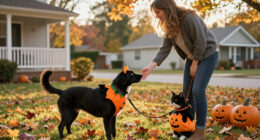
Some dogs happily trot around in a soft bandana or a simple cape; others freeze, paw at the fabric, or try to escape. Cats often prefer a brief photo in a familiar, loose accessory—or no costume at all. Watch your animal’s behavior rather than assuming a still pet feels relaxed.
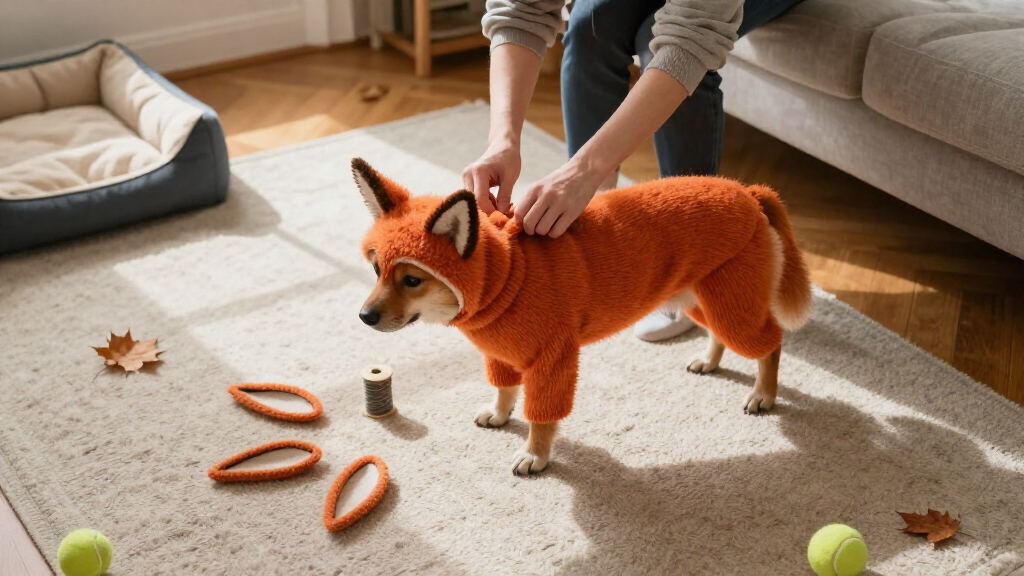
Try a short test at home well before Halloween. Let your dog sniff a lightweight bee costume, put it on briefly if the dog accepts it, and see whether the dog can sit, turn, and walk normally. If the dog pants heavily, keeps scratching, or moves stiffly, remove the outfit and use a festive collar or a themed photo backdrop instead.
A pet’s costume should never restrict the neck, chest, legs, sight, or breathing, and you should not leave an animal unattended in clothing. A dog or cat who dislikes fabric can still join the fun beside a pumpkin-shaped bed or an owner in a matching animal costume. If you have questions about your pet’s health or ability to tolerate clothing, ask your veterinarian; don’t force the outfit for a picture.
Reuse your costume and avoid last-minute waste
You can get more value from an animal costume by choosing reusable clothes and accessories, then storing or passing them on after Halloween. A sturdy hoodie, a pair of fabric ears, and a detachable tail can become dress-up supplies long after the candy wrappers are gone.
Before buying new pieces, check what you already have, ask a friend about borrowing, or look at secondhand options. A denim jacket with felt patches could work as a farm animal look this year and return to everyday wear later once you remove the patches. Reusable face paint and a simple headband can serve several different costumes.
After the celebration, wash the outfit according to its care label and inspect small pieces before storing it. Donate or swap wearable costumes you’ve outgrown, and keep damaged accessories away from toddlers and pets. If a costume is too worn to pass on, save intact fabric pieces for a later craft rather than storing a whole outfit that no one will wear.
Costumes change with the year’s trends, so a particular “top” animal can vary by source and season. You don’t need to chase a current ranking to choose well: a comfortable, familiar creature can be just as fun as the newest character-inspired look. The fox ears you make this year may become a rabbit’s next year; a little imagination does more work than a closet full of one-night outfits.
Frequently Asked Questions
What animal costumes are popular for Halloween?
Cats, dogs, bats, wolves, lions, rabbits, farm animals, and dinosaurs are familiar choices. Current favorites change from year to year, so pick an animal that suits your style and feels comfortable to wear.
What is an easy animal costume to make at home?
Start with clothes in a matching color, then add ears and one clear detail such as a tail or face paint. A black outfit, cat ears, and drawn whiskers make a quick cat costume without a mask.
How can I keep an animal costume warm outdoors?
Wear a breathable base layer under a costume with enough room to move, or choose a design that fits over a coat. Test the layers together at home so sleeves, tails, and shoes don’t catch or restrict your steps.
Are animal costumes safe for babies and toddlers?
They can be, if the outfit fits well, allows free movement, and has no small detachable pieces that could become a choking hazard. Choose soft materials, keep the face uncovered, and avoid accessories that could snag.
How should I dress my dog or cat for Halloween?
Use a lightweight, well-fitting outfit only if your pet tolerates it, and supervise them while they wear it. Make sure they can walk, see, breathe, and regulate their temperature, then remove the costume if they seem distressed.
Conclusion
Choose the animal you’ll enjoy being, then make the outfit fit your actual evening: the weather, the walk, the party, and the person wearing it. A pair of ears and a comfortable hoodie can beat an elaborate suit that makes you stumble.
Keep the face clear, the steps steady, and the costume pieces ready for another year. Halloween is more fun when you can move like the animal you came to be.
Fall Picks
fall essentials
As an affiliate, we earn on qualifying purchases.