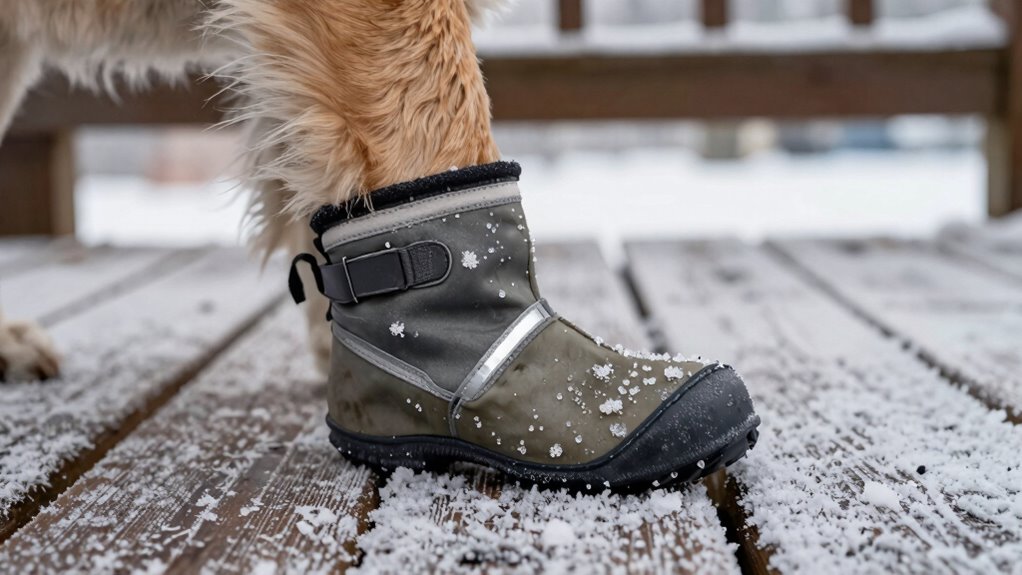
To effectively protect your dog’s paws in cold weather, use well-fitted booties to shield against ice, salt, and chemicals. Applying paw wax before walks creates a helpful barrier, while regular paw inspections catch any issues early. Shortening outdoor time and rinsing paws afterward reduce chemical residue risks. Combining these practices keeps paws warm, safe, and healthy. Keep exploring for more tips to guarantee your dog’s winter outings stay cozy and protected.

Get pet supplies delivered free with Prime
- Fast, free delivery on millions of items
- Prime Video, Amazon Music and more included
- Member-only deals all year
Key Takeaways
- Use well-fitting booties designed for cold weather to provide a physical barrier against ice, salt, and chemicals.
- Apply paw wax before walks to create a protective, insulating layer over paw pads.
- Rinse paws after outdoor activities to remove harmful chemicals and prevent ingestion.
- Regularly inspect paws for cuts, irritation, or signs of cold injury like frostbite.
- Shorten walk durations and choose safe routes to minimize exposure to icy and hazardous surfaces.
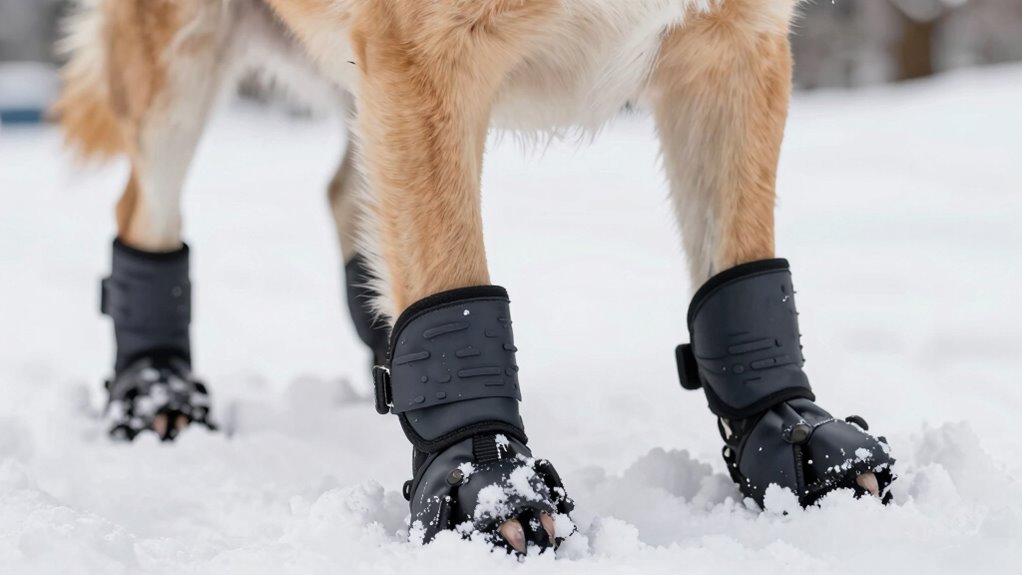
As temperatures drop, your pet’s paws become vulnerable to cold, ice, and harmful chemicals like salt and antifreeze. These elements can cause discomfort, irritation, or even injury if you don’t take proper precautions. To keep your furry friend safe during winter walks, it’s vital to focus on paw pad insulation and outdoor activity safety. Proper paw pad insulation helps retain your dog’s natural warmth, preventing frostbite and soreness. There are various ways to achieve this, from specialized booties to natural remedies like paw wax. Booties offer a physical barrier against the cold and chemicals, but only if they fit well and are comfortable enough for your pet to tolerate. Paw wax, on the other hand, creates a protective layer over the paw pads, helping to repel moisture, ice, and salt. Applying paw wax before heading outside forms a barrier that insulates and shields your pet’s paws from harsh elements. Additionally, choosing biodiverse environments for walks can help your pet experience varied terrain that promotes natural paw health and resilience. Incorporating seasonal paw care routines can further enhance your pet’s protection during winter months. Regularly inspecting your pet’s paws after outdoor adventures ensures you catch any issues early, especially since different terrains can introduce unique hazards. Being aware of and managing winter terrain hazards can significantly reduce your pet’s risk of injuries or irritation.
Beyond protection, outdoor activity safety involves more than just paw care. Always check the weather forecast before heading out and avoid going for walks during extreme cold or icy conditions. When you do go out, keep your walks shorter, especially if your pet is not used to winter weather. Be mindful of surfaces your pet walks on; icy sidewalks, frozen puddles, and snowdrifts can hide dangers like sharp objects or toxic substances. Salt and chemicals used for melting ice pose additional risks, as they can burn paw pads and be toxic if ingested. Rinsing your pet’s paws with water after walks helps remove any residual chemicals, reducing the risk of irritation or poisoning. Monitoring your pet during outdoor activities is vital. Watch for signs of discomfort, such as limping, licking paws excessively, or lifting paws off the ground. If your pet shows any of these signs, it’s best to cut the walk short and check their paws for signs of injury or irritation. Wearing protective gear like booties not only helps with paw pad insulation but also offers a layer of safety against ice, snow, and chemicals. Proper paw care routines and protective measures can make winter outdoor activities safer and more comfortable for your pet. Regularly inspecting your pet’s paws after outdoor adventures ensures you catch any issues early. Remember, outdoor activity safety isn’t just about preventing immediate injuries but also about maintaining your pet’s overall comfort and health throughout the winter months.
As an affiliate, we earn on qualifying purchases.
Frequently Asked Questions
Are There Natural Remedies to Protect Paws From Cold?
Yes, there are natural remedies you can try. Before walks, apply paw wax or natural oils like coconut oil to create a barrier against ice melt and cold surfaces. Use paw wipes to clean off ice melt residue after walks, preventing irritation. Keep your dog’s paws moisturized to prevent cracks, and avoid walking in areas with harsh chemicals. These simple steps help protect paws naturally and keep them healthy during cold weather.
How Often Should I Check My Dog’s Paws in Winter?
Think of your dog’s paws like delicate winter boots—they need regular checks. In winter, you should examine their paws after every walk, especially if they’ve been on salted or icy surfaces. Cold weather paws can develop cracks or irritation quickly. By inspecting frequently, you catch problems early and keep your pup comfortable. Regular winter paw care guarantees their paws stay healthy and protected, making every walk safer and more enjoyable.
Can Paw Protection Products Cause Allergies?
Paw protection products can cause allergenic reactions if your dog has ingredient sensitivities. Always check the label for potential irritants and avoid products with fragrances or harsh chemicals. If your dog shows signs of allergy—like redness, swelling, or licking—discontinue use and consult your vet. Being cautious with ingredient sensitivities helps prevent allergic reactions and keeps your pup comfortable during cold weather.
What Are Signs of Paw Frostbite?
Don’t ignore the warning signs of paw frostbite, as they can develop quickly. You’ll notice signs like pale or grayish paw pads, swelling, and sensitivity to touch. If the paw temperature feels unusually cold or hard, it’s a red flag. Frostbite symptoms also include limping, whining, or paw licking. Act fast—warm the paws gently and consult a vet if symptoms worsen. Cold weather paw protection can prevent these issues from the start.
Are There Homemade Solutions for Paw Protection?
Yes, you can create homemade paw protection using DIY paw wax or homemade balms. These solutions typically involve simple, natural ingredients like beeswax, coconut oil, and shea butter, which form a protective barrier against cold and salt. Just melt and mix the ingredients, then let them cool. Applying this homemade balm before walks helps keep your pet’s paws moisturized and shielded from harsh winter elements effectively.
Conclusion
When winter’s chill bites, don’t leave your paws to fend for themselves. With the right protection, you’ll keep your furry friend comfortable and safe, no matter how frosty the weather. Remember, a little foresight now can prevent a lot of suffering later—think of it as your modern-day armor against Old Man Winter’s wrath. So, gear up and give those paws the care they deserve. After all, even in the coldest of days, love keeps us warm.
Fall Picks
fall essentials
As an affiliate, we earn on qualifying purchases.