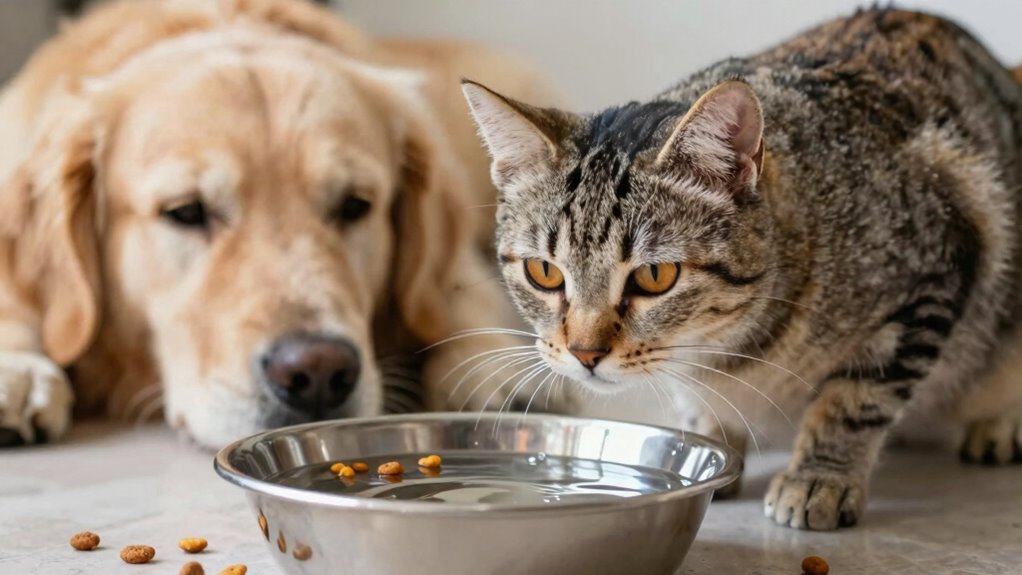
You might notice your pet guards water instead of food because water is a crucial resource tied to their survival instincts and territorial drives. Unlike food, which can be stored or shared temporarily, water must be constantly available. Pets see it as essential for hydration and health, so they defend this resource when they feel threatened or uncertain. Understanding these natural behaviors can help you better support your pet’s well-being—continue exploring to learn how to create a calm environment.
Key Takeaways
- Water is a vital resource essential for survival, prompting pets to guard it instinctively.
- Guarding water reflects territorial behavior and resource defense, especially if water access is perceived as limited.
- Pets may prioritize guarding water over food because water cannot be stored or shared temporarily.
- Sudden guarding behavior can indicate health issues like dehydration or kidney problems.
- Providing multiple water sources and understanding natural instincts can reduce water guarding tendencies.
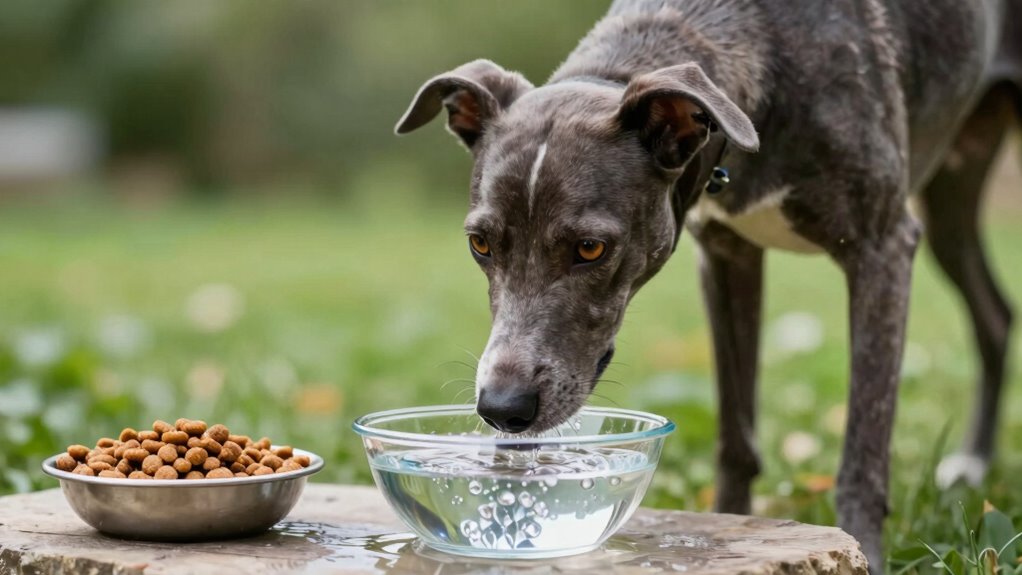
Have you ever wondered what your pets truly need to stay healthy? It’s more than just food — water plays a vital role in their well-being. You might notice that some pets guard their water bowls fiercely, while they’re more relaxed about their food. This behavior isn’t random; it’s rooted in natural instincts and their understanding of survival. Pet territoriality often extends beyond just space to include essential resources like water. Your pet may see the water source as a precious commodity, especially if they’ve experienced scarcity or competition in the past. Because water is necessary for life, they feel the need to defend their hydration spot from other animals or even from you if they perceive a threat or competition. This guarding behavior highlights how hydration habits are deeply ingrained in your pet’s survival instincts. Unlike food, which can sometimes be shared or stored temporarily, water is a continuous necessity. Your pet might be more possessive of water because they know they need it constantly to stay healthy, regulate body temperature, and support organ functions. Recognizing that resource scarcity can influence their guarding behavior helps you better understand their instincts and respond appropriately.
Understanding this behavior helps you better interpret your pet’s actions. When they guard their water bowl, it’s not about being possessive for the sake of it — it’s a natural response to guarantee their hydration needs are met. If they feel their water source is threatened, they may become defensive, which can look like growling or snatching the bowl away. This is especially true if you or other animals come too close when they’re drinking. Recognizing pet territoriality in relation to water can help you create a more comfortable environment for your furry friend. Providing multiple water sources in different areas might reduce their anxiety about hydration and diminish their need to guard. Also, paying attention to their hydration habits can give you clues about their health. If they suddenly become more aggressive around water or refuse to drink, it could indicate health issues like kidney problems or dehydration. Proper hydration is essential for your pet’s overall health and well-being, and understanding their natural instincts can help you support their needs better.
Additionally, understanding the natural instincts of pets can help you better manage their environment and reduce stress. In the end, respecting your pet’s instinctual need to guard water is part of caring for their well-being. Providing enough clean, fresh water and understanding their territorial behaviors allows you to foster a sense of security. When you do that, you help guarantee they stay properly hydrated, healthy, and happy. Remember, their behavior around water isn’t just about possession — it’s about survival, instinct, and the fundamental need to stay alive and well.
As an affiliate, we earn on qualifying purchases.
Frequently Asked Questions
Do All Pets Prefer Guarding Water Over Food?
Not all pets prefer guarding water over food. You’ll find that some pets develop water guarding behaviors due to specific behavioral triggers or past experiences. During pet training, you can address these behaviors by encouraging sharing and establishing boundaries. Your pet’s guarding tendencies depend on individual personality and environment, so it’s essential to observe and work through behavioral triggers to promote healthier, more relaxed interactions around both water and food.
How Does Water Guarding Behavior Vary Among Different Species?
Imagine a dog fiercely guarding a water bowl during a drought; this showcases species behavior driven by territorial instincts. Water guarding varies among species, with some, like cats, more protective due to their territorial nature, while others, like rabbits, rarely guard water. These behaviors highlight how different species prioritize resources based on their survival needs and territorial instincts, influencing how they respond to perceived threats around water sources.
Can Environmental Changes Influence Water Guarding Tendencies?
Yes, environmental changes can influence water guarding tendencies. When your pet experiences environmental stress or perceives threats to their territory, their territorial instincts may intensify, leading them to guard water sources more fiercely. Alterations like new pets, changes in routine, or habitat modifications can heighten this behavior. By creating a stable environment, you can reduce their territorial instincts and help minimize water guarding, promoting a calmer, more relaxed pet.
Is Water Guarding Linked to a Pet’s Health or Nutritional Needs?
Imagine your pet hovering protectively over their water bowl, eyes alert, as if guarding a precious resource. Water guarding often links to their hydration needs and health indicators, signaling they might feel unwell or stressed. If your pet exhibits this behavior, it’s a sign to check their health and make certain their hydration needs are met. Understanding this can help you maintain their well-being and address any underlying health concerns.
How Can Owners Encourage Pets to Share Water and Food?
To encourage your pets to share water and food, you should use positive reinforcement and create a calm environment. Recognize that territorial instincts may make them hesitant, but social sharing can be fostered through gentle, consistent interactions. Offer treats when they approach the shared resources, and avoid scolding. Over time, your pets will associate sharing with positive experiences, helping them feel more comfortable and cooperative around water and food.
Conclusion
As you watch your pet linger near their water bowl, you notice the gentle ripple of their reflection, a silent guardian of hydration. It’s not just about quenching thirst; it’s a quiet act of trust and instinct. Their watchful eyes shimmer with loyalty, guarding what sustains them. In this simple ritual, you see a rhythm—a heartbeat of nature’s design—reminding you that sometimes, it’s the water they cherish most, quietly, fiercely, and forever.