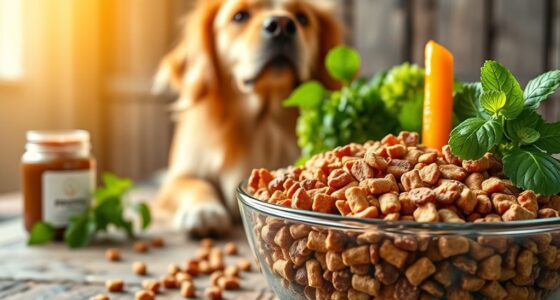

As someone caring for small dogs, it’s essential to address their unique nutritional needs. Giving them food designed for larger breeds can lead to growth problems or obesity, while ignoring their fast metabolism may cause deficiencies. You should provide tailored, calorie-rich diets, monitor portions carefully, and consult your vet for supplements. Small dogs require special attention to avoid health issues later. Keep exploring to understand the best ways to support your tiny friend’s health and longevity.
Key Takeaways
- Avoid feeding small breed puppies the same diet as larger breeds; they need higher calorie, nutrient-dense food for rapid growth.
- Over-supplementing with calcium or other nutrients can cause growth issues and health problems in small dogs.
- Provide multiple small meals daily to match their fast metabolism and prevent obesity or nutritional deficiencies.
- Regularly adjust diets based on age, activity level, and health status to meet their evolving needs.
- Recognize small dogs’ unique metabolic rates and tailored nutritional requirements to ensure long-term health and vitality.

Although small dogs may seem like low-maintenance companions, they actually have big needs that require your attention and care. One of the most important aspects of caring for a tiny pup is understanding their rapid puppy growth. Because they grow quickly in their first few months, their nutritional needs are different from those of larger breeds. You might assume that feeding them the same amount or type of food as bigger dogs is okay, but that’s a mistake. Small breeds often require diets specially formulated to support their fast development, including higher calorie and nutrient density to keep up with their quick growth spurts. Ignoring these needs can lead to growth abnormalities or developmental issues down the line.
Small dogs have unique growth needs; proper nutrition supports healthy development and prevents future health issues.
Dietary supplements are another crucial component in supporting your small dog’s health, especially during puppyhood. While a balanced commercial diet often provides the essential nutrients, some pups benefit from additional supplements, such as calcium, omega-3 fatty acids, or joint support formulas. These supplements can promote healthy bone development, shiny coats, and overall vitality. However, it’s vital to consult your veterinarian before adding any supplements to your pup’s diet. Over-supplementing can cause more harm than good, leading to imbalances or toxicity. The goal is to support their puppy growth without overloading their tiny systems.
Many owners overlook the importance of proper portion control and feeding schedules. Small dogs tend to have faster metabolisms, which means they burn through energy quickly, and their small stomachs require frequent, smaller meals. Overfeeding can cause obesity, which is a common problem in small breeds, and can strain their tiny joints and organs. Conversely, underfeeding can stunt their growth and weaken their immune systems. Paying close attention to portion sizes and feeding your pup multiple small meals each day helps maintain a healthy weight and supports their rapid development. Additionally, understanding the specific nutritional needs of small breeds can help prevent common health issues associated with imbalanced diets. Recognizing their unique metabolic rates is essential for tailoring an effective feeding routine that keeps them healthy and energetic. Being aware of breed-specific health risks can further guide your dietary choices and support preventative care.
Another common mistake is neglecting the importance of a tailored diet that considers their age, activity level, and health status. Puppies need different nutrients than adult or senior dogs, and their dietary needs evolve as they grow. Regular vet visits and discussions about diet can help you adjust their nutrition plan appropriately, ensuring they get what they need at every stage of puppy growth. It’s also beneficial to learn about nutritional requirements specific to small breeds to optimize their health. Remember, small dogs may be adorable and seemingly fragile, but they have complex nutritional needs that, if ignored, can lead to health issues later in life. Your attentive approach to their diet and supplements will pay off with a happy, healthy companion.
small breed puppy food high calorie
As an affiliate, we earn on qualifying purchases.
As an affiliate, we earn on qualifying purchases.
Frequently Asked Questions
How Often Should Small Dogs Be Fed Each Day?
You should feed your small dog twice a day, sticking to a consistent feeding schedule. Portion control is key, so avoid overfeeding by measuring their meals carefully. Small dogs have faster metabolisms, which means they need regular, balanced meals to stay healthy. Maintaining a routine helps prevent obesity and digestive issues. Always adjust portions based on your dog’s age and activity level, and consult your vet for personalized advice.
Are Specific Ingredients Better for Small Dog Nutrition?
You should prioritize high-quality ingredients for your small dog’s nutrition, as they substantially impact health and longevity. Studies show that dogs fed with better ingredient quality experience fewer health issues. Look for foods with real meat, whole grains, and fresh vegetables. Incorporate safe dietary supplements like omega-3s for coat health. Avoid fillers and artificial additives; your small dog deserves the best ingredients to thrive and stay energetic.
Can Small Dogs Eat the Same Food as Large Dogs?
Yes, small dogs can eat the same food as large dogs, but you should focus on breed-specific dietary needs and portion control. Smaller breeds often require higher calories and different nutrient balances, so choose foods formulated for their size. Always monitor portion sizes to prevent overfeeding, and consider consulting your vet for personalized advice. Proper nutrition supports your small dog’s health and helps avoid common size-related dietary mistakes.
How Do I Know if My Small Dog Is Overweight?
Like the tale of the hare and the tortoise, small dogs can easily become overweight if you’re not careful. To know if your small dog is overweight, check their waistline—can you feel their ribs easily? Use portion control and monitor their weight regularly. If their body condition seems off, consult your vet for guidance on weight management. Staying attentive helps keep your tiny companion healthy and happy.
What Are Signs of Nutritional Deficiencies in Small Dogs?
You might notice signs of nutritional deficiencies in your small dog through behavioral changes like increased lethargy or irritability. Physical signs include dull coat, dry skin, or weight loss. Vitamin deficiencies can cause issues such as weak bones or poor immune response. If you observe these signs, consult your vet promptly to adjust your dog’s diet and guarantee they get the essential nutrients they need for peak health.
Conclusion
So, next time you’re feeding your tiny pup, remember: they’re not just miniature dogs, they’re gourmet food critics in disguise. Don’t skimp on nutrients or fall for flashy treats—they’re watching, judging, and secretly plotting their snack revenge. Keep their bowls full of balanced meals, not junk, or you might just find yourself hosting a tiny, but ferociously hungry, canine revolution. After all, big needs deserve big respect—no matter their size!