
To guarantee your bird gets the right benefits, place full-spectrum lights about 12 to 24 inches above the cage, adjusting based on the fixture and bird size. Keep the lights on for 10 to 12 hours daily to mimic natural daylight, and provide about 12 hours of darkness at night for rest. Regularly observe your bird’s behavior and tweak the setup as needed to keep them healthy and happy. More tips on perfect lighting setup await if you keep exploring.
Key Takeaways
- Position full-spectrum lights 12 to 24 inches above the cage for optimal UV exposure without causing discomfort.
- Provide 10 to 12 hours of full-spectrum light daily to mimic natural daylight cycles.
- Use automated timers to ensure consistent lighting schedules and prevent overstimulation.
- Adjust light placement and timing based on bird behavior and health indicators.
- Incorporate around 12 hours of darkness at night to support natural rest and circadian rhythms.
If you want your bird to stay healthy and vibrant, providing proper lighting is essential. Full-spectrum lights mimic natural sunlight, which is crucial for maintaining your bird’s overall health and well-being. These lights play a significant role in influencing bird behavioral patterns, such as activity levels, feeding, and grooming, by simulating the natural light environment they would experience outdoors. Understanding how to position these lights and manage their timing can make a noticeable difference in your bird’s happiness and health.
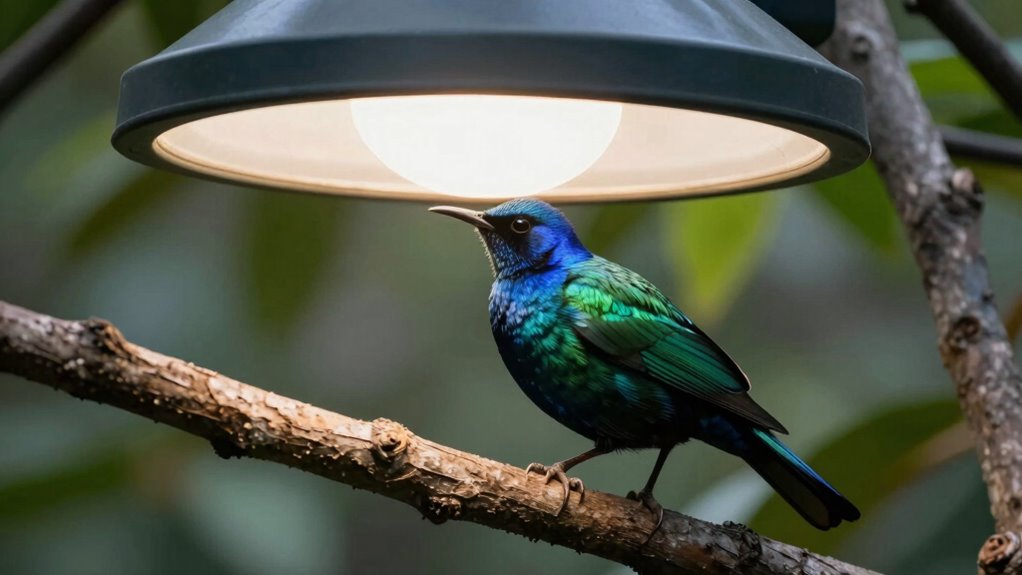
Birds are sensitive to light spectrum variations, and these differences can affect their biological rhythms. Full-spectrum lights emit a broad range of wavelengths, including ultraviolet (UV) light, which is vital for many avian species. UV exposure supports vitamin D synthesis, calcium absorption, and overall immune function. When considering the distance of the light source, it’s important to place it at an appropriate height—usually about 12 to 24 inches above your bird’s cage—to ensure the light adequately covers the entire enclosure without causing discomfort or eye strain. If the light is too close, it may cause overheating or stress; too far, and its effectiveness diminishes. Adjusting the distance based on your specific light fixture and your bird’s size helps optimize benefits without risking harm.
Proper light placement (12-24 inches above) ensures your bird receives UV benefits without discomfort or harm.
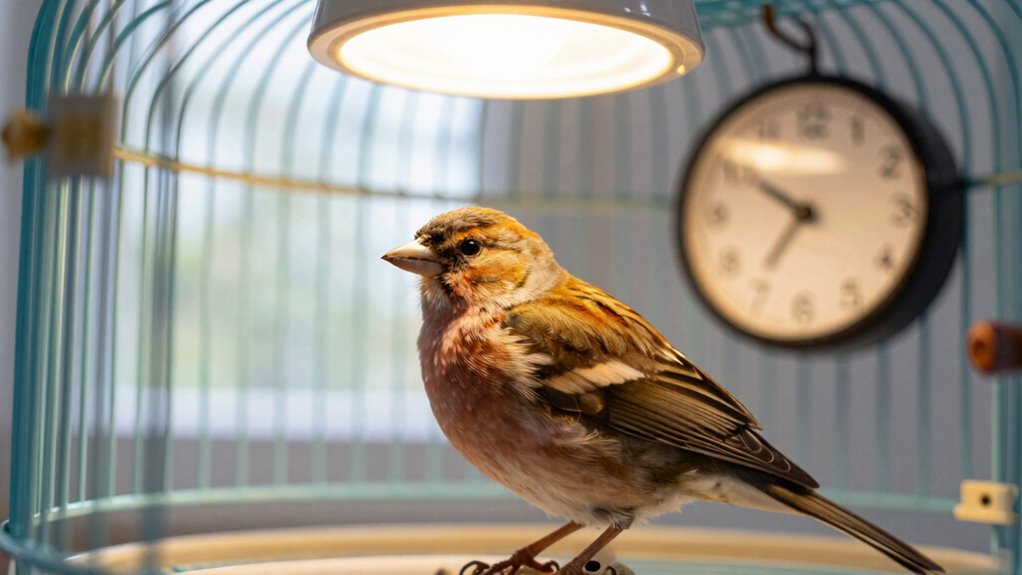
Timing is equally important. Birds are diurnal creatures, meaning they thrive with a daily cycle of light and dark that mirrors natural conditions. Providing about 10 to 12 hours of full-spectrum light each day helps regulate their circadian rhythms, encouraging natural behavior patterns such as foraging and social interaction during the day. It’s equally vital to give your bird a period of darkness at night—around 12 hours—to allow for rest and recovery. Using automated timers simplifies this process, ensuring consistency and preventing overstimulation. Light exposure at the right times supports their activity levels and prevents issues like lethargy or stress caused by irregular lighting schedules. Additionally, understanding the importance of full-spectrum lighting can help you create a more natural environment for your bird. Monitoring your bird’s behavior will give you clues about whether the lighting setup is effective. If your bird appears restless, overly aggressive, or lethargic, it may be a sign that adjustments are needed. Proper placement, appropriate light spectrum, and consistent timing all work together to support natural bird behavioral patterns. Remember, providing a balanced lighting environment isn’t just about health—it’s about creating a stimulating, natural habitat that allows your bird to thrive. With careful attention to distance and timing, full-spectrum lighting can significantly enhance your pet’s quality of life. Additionally, incorporating light cycle management can further improve their overall well-being by mimicking natural daylight patterns. Maintaining an awareness of light spectrum variations can also help you optimize your setup for your bird’s specific needs.

HappyBird Lighting Bird Cage Light with Chew Guard – Full Spectrum LED Pet Light – Simulates Natural Environment – Safe for Hookbill Birds – Easy to Install – (18" Long)
- Simulates Natural Photoperiod: Replicates natural light cycles for birds
- Full Spectrum LED: Gentle, glare-free, UV-free lighting
- Bird Safe Design: Safe for soft-billed birds and reptiles
As an affiliate, we earn on qualifying purchases.
As an affiliate, we earn on qualifying purchases.
Frequently Asked Questions
Can Full-Spectrum Lighting Improve My Bird’s Feather Condition?
Yes, full-spectrum lighting can improve your bird’s feather condition by supporting feather hydration and healthy molting cycles. The right lighting mimics natural sunlight, encouraging your bird to produce vibrant feathers and shed old ones properly. You’ll notice better feather quality, less dryness, and smoother molts. Make sure to place the light at the correct distance and provide consistent exposure to maximize these benefits and promote overall feather health.
Are There Specific Brands of Full-Spectrum Lights Recommended for Birds?
Yes, there are specific bird light brands you can consider. Popular full spectrum lamp options include brands like Zoo Med, Reptile UVB, and Exo Terra, known for quality and safety for birds. When choosing, make certain the light provides the right UVB and UVA spectrum, and always follow the manufacturer’s instructions for distance and duration. These brands help support your bird’s health, feather condition, and overall well-being effectively.
How Often Should I Replace My Bird’s Full-Spectrum Light Bulbs?
Think of your bird’s full-spectrum bulb as a glowing sun that needs regular refreshment to shine its brightest. You should replace it every 6 to 12 months, depending on its lighting duration and bulb lifespan. Over time, the light’s quality dims, just like a fading sunset. Regular replacement guarantees your bird gets consistent, healthy lighting, supporting their well-being and mimicking natural sunlight’s essential role.
Can Full-Spectrum Lights Help With My Bird’s Behavior Issues?
Yes, full-spectrum lights can help improve your bird’s behavior by providing essential UVB benefits that mimic natural sunlight. These lights promote healthy vitamin D3 production, which supports overall well-being. Make sure the light intensity is appropriate for your bird’s species and that you provide a consistent light schedule. Proper use of UVB lighting can reduce stress and encourage natural behaviors, leading to a happier, healthier bird.
Are There Any Safety Concerns With Using Full-Spectrum Lights Around Birds?
You might think that bright, full-spectrum lights pose no risks, but UV safety and light intensity matter. If you don’t monitor how close the lights are or the duration you keep them on, you could cause eye or skin irritation for your bird. Always choose lights designed for avian safety, keep them at appropriate distances, and limit exposure time to prevent harm. Your careful setup guarantees your bird benefits safely from the lights.
Conclusion
Understanding the right distance and timing for full-spectrum lights can considerably improve your bird’s health and happiness. Did you know that birds exposed to proper lighting can have a 30% increase in reproductive success? By ensuring your feathered friend gets the right amount of light each day, you’re helping them thrive both physically and mentally. So, stay attentive to their lighting needs, and you’ll notice a happier, healthier bird in no time.