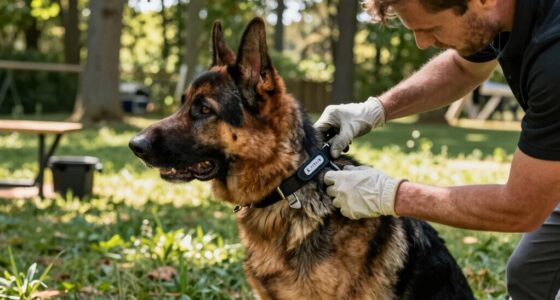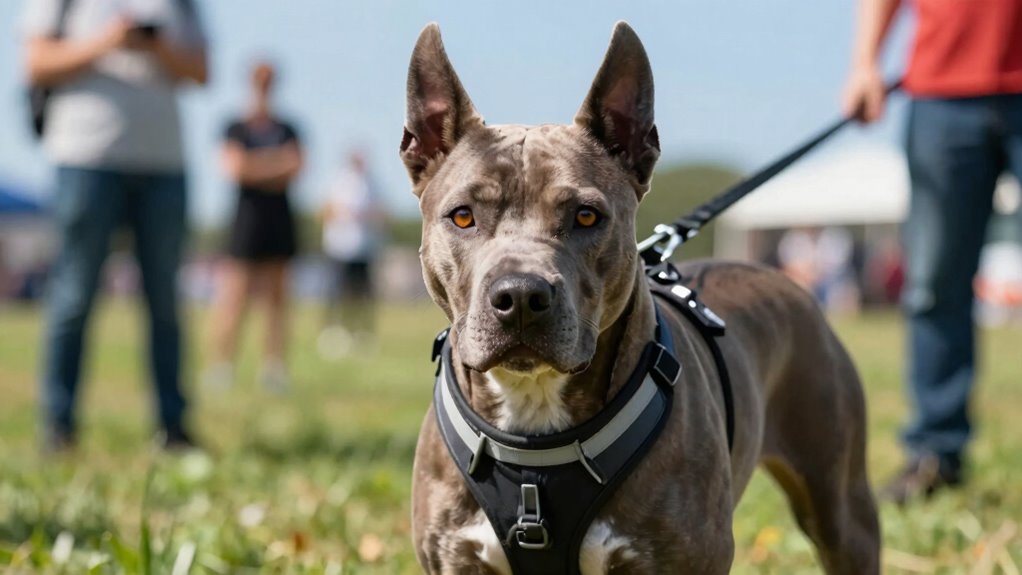

To establish a strong start-line routine, you should use consistent commands, gestures, and actions to build familiarity and confidence. Practice in different environments to improve your dog’s adaptability and reduce reactivity. Gradually introduce distractions to teach focus and eye contact. Keep the routine brief, predictable, and reward calmness and attention. Getting these elements right will help your dog stay focused, calm, and reliable when it counts most. Keep going to discover more tips for success.
Key Takeaways
- Establish a consistent start-line routine with familiar commands, gestures, and actions to build confidence and automatic responses.
- Practice in varied environments to improve adaptability and reduce reactivity to new surroundings.
- Gradually introduce distractions during training to enhance focus and teach dogs to ignore outside stimuli.
- Keep routines brief, predictable, and include specific actions like sitting or standing at designated spots.
- Reinforce calmness and focus through rewards, ensuring trust and reducing stress before the start.
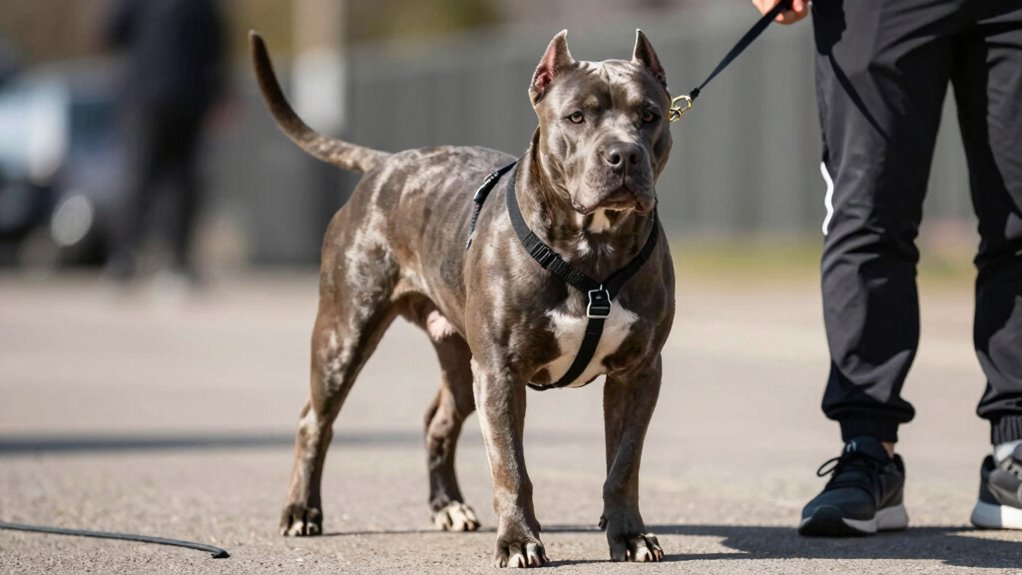
Have you ever wondered how top working dogs stay focused and ready at the start line? It often comes down to a well-established start-line routine that emphasizes training consistency and minimizes environmental distractions. When your dog learns to anticipate what’s coming and associates certain cues with the start of work, they become more confident and less prone to distraction. Consistent routines help your dog understand what’s expected, whether it’s a competition or a working scenario, and build a mental cue that signals it’s time to focus.
Training consistency is the backbone of a successful start-line routine. You want your dog to know that every time you approach the start line, the process will be similar. This means using the same commands, gestures, and sequence of actions. For instance, if you always give the “focus” command or make a particular hand motion before the start, your dog will associate those signals with getting ready. Repeating this routine regularly ingrains the behavior so that your dog automatically tunes in when they see or hear those cues. Consistency not only sharpens focus but also reduces anxiety, as your dog learns to trust the routine and understand what’s coming next. Establishing training consistency early on can significantly improve performance and confidence. Practicing in varied environments helps your dog become adaptable and less reactive to new surroundings, which is crucial for reliable performance. Incorporating training in different settings also ensures your dog remains attentive regardless of the environment, further reinforcing the importance of consistency. Additionally, positive reinforcement during these routines encourages your dog to associate focus with rewards, making the process more effective. Consistent routines also aid in building reliability, so your dog knows what to expect every time, which enhances their overall performance.
Consistency in commands and routines sharpens focus and builds trust for confident, stress-free performances.
Environmental distractions can be a challenge, especially in busy competition settings or unfamiliar grounds. To combat this, you need to prepare your dog well in advance. Practice in varied environments, gradually introducing distractions like noise, movement, or other animals, so your dog learns to stay focused regardless of what’s happening around them. During training, you can simulate distractions and teach your dog to maintain eye contact or stay in a specific position. When they’re able to ignore outside stimuli and stay focused on you, they’re more likely to perform reliably when it counts.
Your start-line routine should incorporate specific, familiar actions that your dog associates with readiness. For example, having a designated spot where your dog sits or stands, giving a consistent signal, and then rewarding calmness and focus. Keep the routine brief but predictable, so your dog isn’t overwhelmed or confused. Over time, this routine becomes second nature, and your dog’s attention sharpens just before the start. By maintaining training consistency and actively working on minimizing environmental distractions, you set the stage for your working dog to be calm, focused, and ready to perform at their best right from the start.

Race&Herd Original Dog Scent Training Kit, Scent Work Training Kit for Dogs – Nosework for Dog Mental Stimulation Agility Training Equipment for Dogs, Brain Games Smell Training Kit for Loss of Smell
- Complete Scent Training Kit: Includes tools for backyard and at-home training
- Mental Enrichment Toys: Enhances focus and cognitive skills
- Obedience and Behavior Support: Promotes problem solving and good behavior
As an affiliate, we earn on qualifying purchases.
As an affiliate, we earn on qualifying purchases.
Frequently Asked Questions
How Long Should the Start-Line Routine Last?
The start-line routine should last about 1 to 3 minutes. Keep it short to maintain your dog’s motivation and guarantee it stays focused. Consistency is key, so perform the same activities each time to build routine familiarity. This helps your dog understand what’s expected, reducing anxiety and increasing confidence. Adjust the duration based on your dog’s attention span, but never let the routine drag on too long, or motivation may wane.
What Equipment Is Essential for the Routine?
You’ll need essential equipment that’s durable and reliable, like a sturdy leash, a well-fitted collar, and a comfortable mat for your dog to sit on. Visualize your dog patiently waiting, equipment in place, ready for training. Consistent use of this gear reinforces routine and focus. Choosing durable tools guarantees they withstand daily training, helping your dog stay calm and prepared at the start line, setting the stage for success.
How Do I Handle Distractions During the Routine?
To handle distractions during the routine, stay calm and use distraction management techniques like redirecting your dog’s attention with a favorite toy or treat. Maintain routine consistency by practicing in different environments to build resilience. If your dog gets distracted, gently guide them back to focus without frustration. Consistent training helps your dog learn to ignore distractions and stay engaged, ensuring the routine remains effective and your dog stays focused.
When Should I Introduce New Routines to My Dog?
You should introduce new routines gradually once your dog consistently responds well to current commands, demonstrating stability through training consistency. Timing is key—wait until your dog shows confidence in their existing routine before adding new elements. Use behavioral reinforcement to encourage positive responses, ensuring they understand and adapt to changes smoothly. This steady approach helps your dog stay focused, confident, and enthusiastic to learn, making shifts seamless and effective.
How Do I Modify the Routine for Different Working Dogs?
To modify the routine for different working dogs, you should consider their breed-specific needs and your training consistency. Adjust commands, signals, and timing to suit each breed’s temperament and working style. Stay consistent with your cues and routines to reinforce familiarity. For example, high-energy breeds may need more movement or varied exercises, while calmer breeds benefit from slower, more focused routines. Tailoring the routine helps keep your dog engaged and effective in their work.
Conclusion
By establishing a consistent start-line routine, you set the stage for your working dog’s focus and success. Think of it like tuning a musical instrument—when everything’s aligned, the performance flows seamlessly. I once watched a handler’s routine turn a distracted dog into a laser-sharp worker in moments. With patience and consistency, you create a rhythm that transforms chaos into harmony, ensuring your dog’s full potential is always within reach.