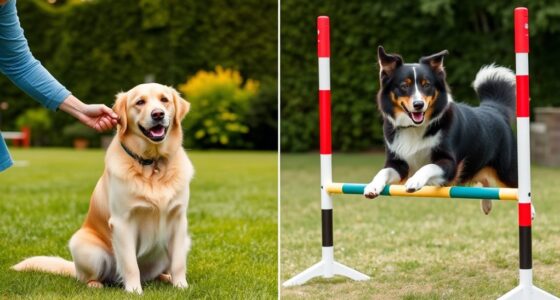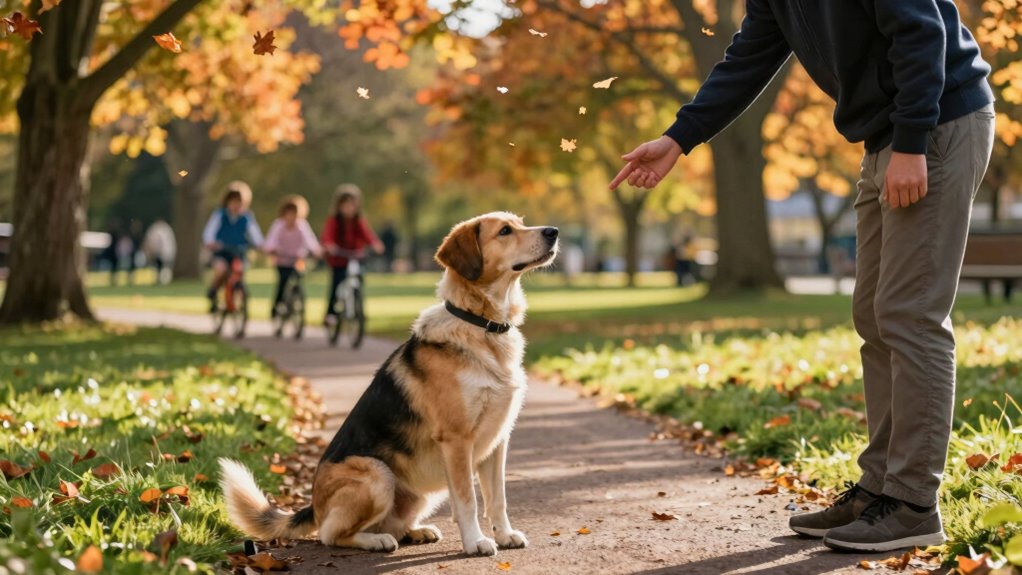

To train your dog through distractions without overfacing them, start in a calm indoor setting with basic commands like sit and stay, using soothing praise and treats. Gradually introduce small, controlled distractions, ensuring your dog stays confident and relaxed. Move to busier outdoor areas only when your dog can handle minor distractions comfortably. Consistently reinforce positive behaviors and adjust the level of distraction as needed. Keep practicing in different environments to build resilience—more tips follow to help you succeed.

Get pet supplies delivered free with Prime
- Fast, free delivery on millions of items
- Prime Video, Amazon Music and more included
- Member-only deals all year
Key Takeaways
- Start training indoors in a calm environment before gradually introducing mild distractions.
- Use positive reinforcement consistently to keep your dog motivated and confident.
- Introduce distractions gradually, increasing difficulty only when your dog remains focused.
- Keep sessions short and use calming techniques to prevent overwhelm or frustration.
- Monitor your dog’s reactions and reduce distractions if signs of stress or loss of focus appear.
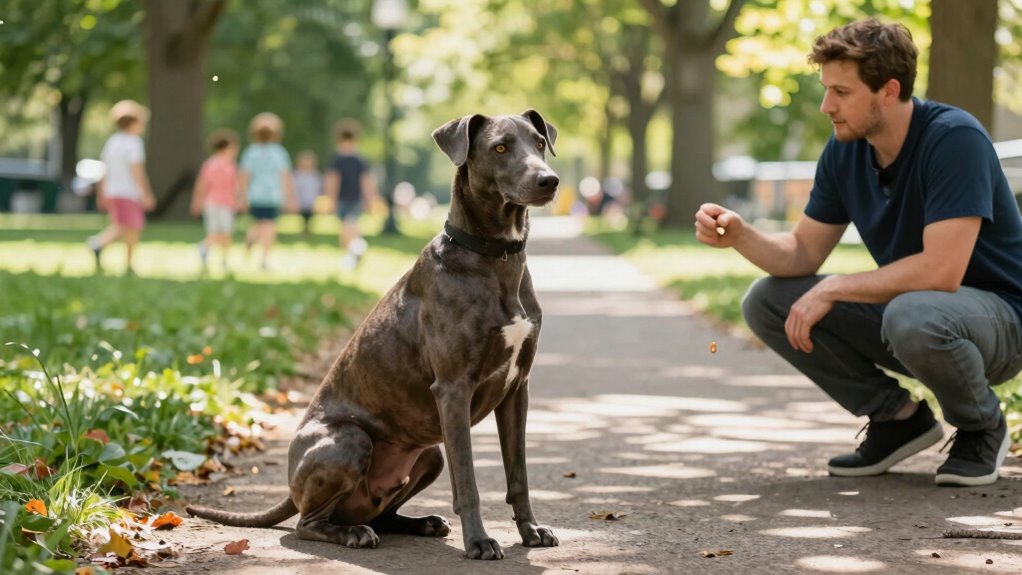
Training your dog amid distractions can be challenging, but it’s essential for building focus and confidence. When your dog learns to stay calm and attentive despite environmental interruptions, you set the foundation for reliable behavior in real-world situations. To do this effectively, you need to incorporate calming techniques and focus on gradual exposure. These methods help your dog adapt to distractions without becoming overwhelmed or frustrated.
Start by creating a calm environment indoors, where you can practice basic commands like sit, stay, or heel. Use calming techniques such as gentle praise, soothing voice commands, or a calming treat to help your dog relax during training. When your dog is calm, it’s easier to teach them to ignore minor distractions. Once your dog is comfortable indoors, introduce small, controlled distractions gradually. For example, play soft background noise or have a friend walk past at a distance. This gradual exposure allows your dog to learn that distractions are manageable and don’t mean the end of training sessions.
As your dog gets better at ignoring these minor distractions, increase the challenge slowly. Move training sessions to busier areas, like your backyard or a quiet park, but keep the environment controlled. In these settings, keep distractions manageable—perhaps a few people or other dogs at a distance—and continue using calming techniques to maintain your dog’s focus. If your dog begins to lose attention or becomes anxious, reduce the intensity of the distractions and reinforce calm behavior before progressing again. This step-by-step approach prevents overfacing your dog and helps build their confidence gradually. Additionally, understanding dog training principles can help you tailor your approach for more effective results.
Throughout this process, always keep training sessions positive and rewarding. Use treats, praise, and patience to reinforce calm, focused behavior. Remember, the goal isn’t to eliminate distractions but to teach your dog how to stay attentive despite them. Consistency is key; practicing regularly in different environments helps your dog generalize learned skills and remain composed under various circumstances. Recognizing distraction management as a key training goal ensures you stay focused on building your dog’s resilience and confidence over time. Developing a solid understanding of environmental stimuli and how they influence your dog’s behavior can further enhance your training success. Being aware of how distraction levels fluctuate in different settings allows you to adapt your training plan more effectively.
As an affiliate, we earn on qualifying purchases.
Frequently Asked Questions
How Do I Know When My Dog Is Overwhelmed During Training?
You’ll notice your dog is overwhelmed when stress signals like yawning, lip licking, or turning away appear, and their focus cues fade. If your dog seems distracted, anxious, or stops responding, it’s time to pause. Keep training sessions short and positive, gradually increasing distractions. Watch for these signs, and if they show up, step back to calmer environments, helping your dog regain focus and avoid overexposure.
What Are the Best Treats for Training Through Distractions?
Think of treats as your dog’s fuel in the race of distraction tolerance. Opt for high-value treats like small pieces of chicken, cheese, or commercial training treats with strong aroma and appealing flavor. These treats act as a magnet, drawing your dog’s focus back to you amid chaos. They motivate your dog through distraction, helping build confidence and reinforcing good behavior even when the environment isn’t perfectly quiet.
How Long Should Training Sessions Last in Distracting Environments?
You should keep training sessions in distracting environments to around 5-10 minutes to prevent your dog from becoming overwhelmed. Focus on manageable distraction types, gradually increasing complexity as your dog improves. Maintain consistent training frequency, ideally daily or every other day, to reinforce learning without overloading your dog. Short, frequent sessions help your pup stay engaged and build confidence while handling various distractions effectively.
Can Training in Distracting Environments Improve Overall Obedience?
Did you know 70% of dogs improve obedience when trained in distracting environments? Yes, training in various distraction types can markedly boost your dog’s overall obedience. By maintaining training consistency, you help your dog learn to focus despite distractions. This approach strengthens their responsiveness and confidence, making commands stick in real-life situations. So, exposing your dog gradually and consistently to distractions is a powerful way to enhance their obedience.
How Do I Gradually Increase Distraction Levels Effectively?
You should start with desensitization techniques, gradually exposing your dog to low-level distractions while maintaining focus. Use distraction management strategies, like rewarding calm behavior, to help them adapt. Slowly increase distraction levels by adding more stimulating environments, but always guarantee your dog remains successful and confident. This gradual process helps prevent overfacing, building their resilience step-by-step and reinforcing training in increasingly challenging situations.
Conclusion
Remember, patience is a virtue when training your dog through distractions. Keep sessions positive and gradual, building confidence step by step. If your dog starts to feel overwhelmed, take a step back and reduce the distractions. Like the saying goes, “Slow and steady wins the race.” With consistent, gentle practice, you’ll strengthen your bond and help your dog succeed without overfacing them. Trust the process, and progress will follow.
Fall Picks
fall essentials
As an affiliate, we earn on qualifying purchases.