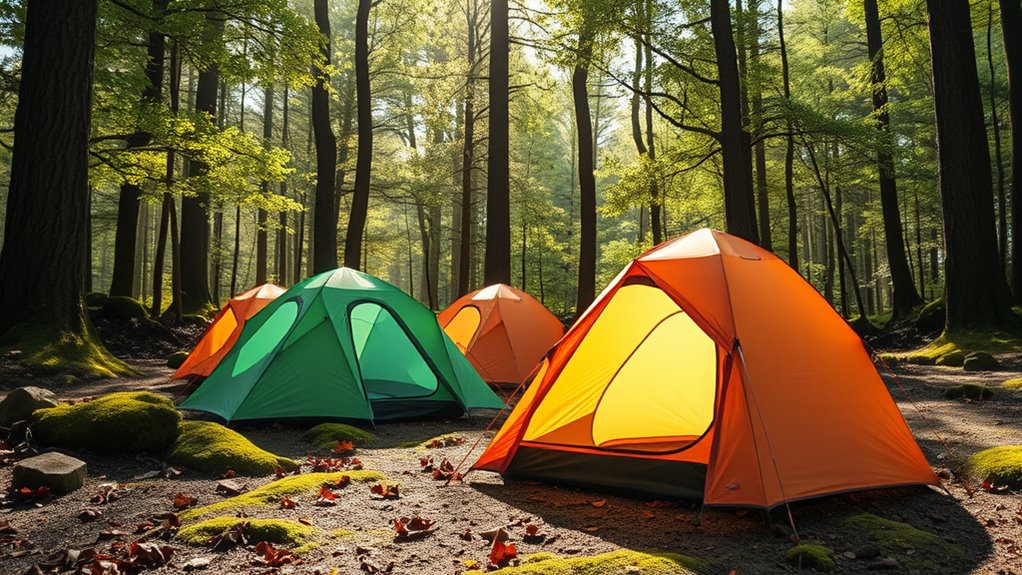

Ultralight camping tents can cut pack weight, but the right choice depends on how much room and weather protection you need. I’d put the Naturehike Star Trail first for its listed low weight and one- or two-person options; the Naturehike Cloud-Up stands out for solo backpackers, while the Clostnature two-person is a practical alternative for sharing a shelter. The main tradeoffs are weight versus interior space, single-wall simplicity versus condensation management, and four-season claims versus ventilation and livability. Capacity labels alone don’t tell you whether your sleeping pads and gear will fit. Read on for the full comparison and a guide to choosing for your route, conditions and group size.

Get pet supplies delivered free with Prime
- Fast, free delivery on millions of items
- Prime Video, Amazon Music and more included
- Member-only deals all year
Complete the kit
Key Takeaways
- The Naturehike Star Trail leads on listed weight. Its 2.3-pound one-person and 2.76-pound two-person figures make it the clearest weight-focused option in this lineup, though buyers should check the model-specific setup and usable space.
- Solo and shared shelters solve different problems. The Cloud-Up is explicitly a one-person tent, while the Star Trail offers a two-person configuration; a shared tent can save carried shelter weight per person but may feel cramped with two pads and gear.
- Capacity ranges need closer scrutiny. Several Clostnature listings span multiple person counts, so buyers should confirm the exact configuration rather than assume every size has the same weight, layout or included components.
- Two doors and a double layer offer practical benefits. The ShinHye listing calls out both features, which can aid entry and ventilation, but that construction may not be the lightest choice compared with more stripped-down designs.
- Repeated and near-duplicate listings make model verification important. The roundup includes several similar Clostnature and Camppal titles; compare the selected size, packed weight, dimensions and included parts before choosing between them.



| ultralight camping tent | Water resistance | Doors | Weight | Occupancy |
|---|---|---|---|---|
| Night Cat Backpacking Tent for | 3000 mm | 1 | 2 kg (4.4 lb) | — |
| Clostnature 2 Person Lightweig | PU 5000 mm | — | — | 2 person |
| Naturehike Star Trail Ultralig | 1500 mm+ | 1 | — | 2 person (listed) |
| Forceatt 2-3 Person Waterproof | — | — | 5.5 lb | — |
| Clostnature Lightweight Backpa | — | — | — | — |
| Clostnature 1/1.5/2/3/4/6 Pers | 5000 mm | 2 | — | — |
| ShinHye Backpacking Tent 2/3/4 | — | 2 | — | — |
| JELUCAMP 2 Person Dome Tent | 3000 mm | 1 | 4.3 pounds | 2 person |
| Camppal 1 Person Tent for Camp | 4000 mm | 1 | 1.23 kg | 1 person |
| Camppal 1 Person Tent for Camp | 3500–4000 mm | 1 | 3.75 pounds | 1 person |
| Camppal 1 Person Tent for Camp | 4000 mm | 1 | 3.75 lbs | 1 person |
| Night Cat 2-Person Backpacking | 3000 mm | — | 4.4 lbs | 2 people |
| Clostnature 1/2/3/4 Person Lig | — | — | — | — |
| Clostnature 1/2/3/4 Person Lig | PU 5000 mm | 1 | — | 1 person |
| Naturehike Cloud-Up 1 Person T | 4000 mm+ | — | 3.57 lbs | — |
More Details on Our Top Picks
Night Cat Backpacking Tent for 1-2 Persons, Lightweight Waterproof Camping & Hiking Tent, Easy Setup, Single Layer, 2.2×1.2m
The Night Cat suits solo hikers who want a basic shelter that goes up quickly, with a stated setup time of just 1–2 minutes. Its 2 kg weight is manageable for casual backpacking, though it is notably heavier than the solo-use 2.3 lb Naturehike Star Trail. The 3000 mm water-resistance rating and coated Oxford floor offer a useful rain barrier, while the single-layer design keeps setup straightforward. That simplicity comes with less separation between sleeping space and the weather than a double-layer tent provides. At 2.2 m by 1.2 m, it is best treated as a roomy solo shelter rather than a dependable two-person option. One door also means less convenient entry than the two-door Clostnature tent. I’d choose it for uncomplicated trips, not weight-focused mileage or shared use.
Pros:- Stated 1–2 minute setup keeps pitching simple.
- 3000 mm water-resistance rating and coated Oxford floor provide rain protection.
- Compact dimensions suit a solo sleeping setup.
- Single-layer construction avoids managing a separate inner tent and fly.
Cons:- At 2 kg, it is heavier than the 2.3 lb solo-use Naturehike Star Trail.
- Single door and 1.2 m width make sharing less convenient.
- Single-layer construction offers less separation between the sleeping area and condensation or weather.
Best for: Solo campers who value a quick, uncomplicated pitch and want a compact shelter for general outdoor trips.
Not ideal for: Ultralight backpackers counting every ounce, or two people who want separate doors and more usable sleeping width.
- Listed occupancy:1 person
- Weight:2 kg (4.4 lb)
- Dimensions:2.2 m × 1.2 m (7.0 ft × 3.8 ft)
- Height:1.2 m
- Water resistance:3000 mm
- Doors:1
- Frame material:Fiberglass
Our verdict“Choose the Night Cat for straightforward solo trips where fast setup matters more than a minimal pack weight or two-person comfort.”
Clostnature 2 Person Lightweight Backpacking Tent, Waterproof, Easy Setup, Ultralight
The Clostnature earns its place for couples who value two doors and two vestibules as much as low carried weight. Those separate entry points reduce the awkwardness of climbing over a tentmate, and vestibules give muddy shoes and packs a place outside the sleeping area. Its 4.52 lb minimum trail weight is heavier than the Naturehike Star Trail’s listed 2.3 lb solo weight, but the Clostnature provides more sharing-friendly access and a freestanding aluminum-pole design. A 5000 mm PU coating and sealed seams make its rain protection a stronger stated spec than the Star Trail’s 1500 mm+ rating. The tradeoff is bulk: packed dimensions of 16.5 by 5.9 by 5.9 inches may frustrate hikers chasing a very small load. I’d pick it for practical two-person trips, not solo ultralight ambitions.
Pros:- Two doors make entry and exit easier for two occupants.
- Two vestibules provide covered storage outside the sleeping area.
- 5000 mm PU coating and sealed seams offer strong stated rain protection.
- Freestanding design and aluminum poles support a flexible pitch.
Cons:- At 4.52 lb minimum trail weight, it is much heavier than the solo-use Naturehike Star Trail.
- Packed dimensions may be bulky for hikers focused on minimizing pack volume.
- The listed 7 ft 3 in by 4 ft 11 in floor can feel limited when both occupants carry bulky gear.
Best for: Two-person backpacking teams who want separate doors, gear vestibules, and a freestanding pitch.
Not ideal for: Solo hikers prioritizing the smallest, lightest shelter, or pairs who need generous interior space beyond the listed dimensions.
- Occupancy:2 person
- Minimum trail weight:4.52 lb
- Total weight:5.29 lb
- Packed size:16.5 × 5.9 × 5.9 in
- Tent dimensions:7 ft 3 in × 4 ft 11 in × 3 ft 10 in
- Water resistance:PU 5000 mm
- Doors and vestibules:2 doors; 2 vestibules
- Poles:Aluminum
Our verdict“Pick the Clostnature if two-person access and weather protection matter more than carrying the lightest possible shelter.”
Naturehike Star Trail Ultralight Backpacking Tent, 2.3 lb for One Person, 2.76 lb for Two Persons
Weight is the Naturehike Star Trail’s clearest advantage: its listed 2.3 lb solo weight puts it well below the 4.52 lb minimum trail weight of the Clostnature two-person tent. That difference can matter on long routes, where a lighter shelter leaves more room in the pack for food or other essentials. The mesh inner helps airflow and keeps insects out, while the compact 17.7 by 5.1 inch packed size suits a streamlined kit. The compromise is a 1500 mm+ water-resistance rating, lower than both the Clostnature’s 5000 mm and the Forceatt’s 3000 mm. It also has just one door, so sharing is less convenient than in the Clostnature. Its ultralight appeal is strongest for solo three-season use, not winter trips or sustained wet-weather priorities.
Pros:- Listed 2.3 lb solo weight is the lightest stated option among these five products.
- Compact 17.7 by 5.1 in packed size supports a smaller pack load.
- Full-coverage mesh inner provides ventilation and insect protection.
- Three-minute setup and freestanding design suit straightforward campsites.
Cons:- 1500 mm+ water resistance is below the Clostnature’s 5000 mm and Forceatt’s 3000 mm ratings.
- One door is less convenient for two occupants than the Clostnature’s two-door layout.
- Three-season design is not suited to winter conditions.
Best for: Solo backpackers who prioritize low shelter weight and a compact packed shape for three-season routes.
Not ideal for: Winter campers, hikers expecting prolonged heavy rain, or partners who want two doors and easy independent access.
- Occupancy:2 person (listed)
- Listed solo-use weight:2.3 lb
- Listed two-person weight:2.76 lb
- Packed size:17.7 × 5.1 in
- Water resistance:1500 mm+
- Fly and floor materials:10D nylon fly; 20D nylon floor
- Doors:1
Our verdict“Choose the Star Trail for solo three-season trips where reducing shelter weight outweighs stronger rain specifications and shared-use convenience.”
Forceatt 2-3 Person Waterproof and Windproof Camping Tent, Lightweight Aluminum Backpacking Tent for 3-4 Seasons
The Forceatt is the pick here for backpackers who want a stated balance of 3000 mm water resistance and aluminum poles without moving to a heavier family shelter. At 5.5 lb, it is close to the Clostnature’s 5.29 lb total weight, but the Forceatt’s listed capacity extends to three people and its floor measures 88.6 by 53.1 inches. That is useful for two campers who prefer a little more room, though it is unlikely to feel generous at full capacity. Mesh windows and ceiling vents help with airflow, but the product data does not give ventilation dimensions, so I would not rank it above the Clostnature for well-documented shared-use convenience. The 43.3-inch interior height is also modest. It makes more sense for weather-conscious pairs than for hikers chasing the lowest pack weight.
Pros:- 3000 mm waterproof rating is higher than the Naturehike Star Trail’s 1500 mm+ rating.
- 7001-series aluminum poles offer a sturdy frame material.
- Mesh windows and ceiling vents provide routes for airflow.
- Floor dimensions accommodate two campers more plausibly than three.
Cons:- At 5.5 lb, it is far heavier than the Naturehike Star Trail.
- The 43.3 in interior height limits upright movement.
- Ventilation dimensions and included footprint or carry bag are not specified.
Best for: Two-person backpackers who want aluminum poles and a higher stated water-resistance rating than the Naturehike Star Trail.
Not ideal for: Solo ultralight hikers, or three campers who need ample sleeping room and clear ventilation specifications.
- Listed capacity:2–3 people
- Weight:5.5 lb
- Interior floor dimensions:88.6 × 53.1 in
- Interior height:43.3 in
- Waterproof index:3000 mm
- Pole material:7001-series aluminum
- Tent material:Polyester
Our verdict“Choose the Forceatt for a pair seeking a sturdier, weather-focused shelter, and skip it if minimum weight is the main goal.”
Clostnature Lightweight Backpacking Tent for 1-6 Persons
This Clostnature’s strongest distinction is its range of listed capacities, from one to six people, which makes it a more adaptable family of options than the fixed-capacity Naturehike Star Trail. The supplied measurements and weights, however, match a specific two-person configuration: 7 ft 3 in by 4 ft 11 in, with a 5.29 lb total weight and 4.52 lb minimum trail weight. I would not assume those figures apply to every size. In the documented setup, two doors, two vestibules, mesh walls, and a freestanding frame make it more practical for sharing than the single-door Night Cat. Its 5000 mm PU coating is a strong stated rain spec, though that protection comes with more carried weight than the Star Trail’s ultralight solo setup. Choose the right capacity version before buying.
Pros:- Listed capacity options range from one to six people.
- Documented configuration has two doors and two vestibules for easier shared use.
- 5000 mm PU coating and sealed seams provide strong stated rain protection.
- Freestanding design and aluminum poles make the listed setup versatile.
Cons:- The supplied weight and dimensions appear to describe the two-person configuration, not every capacity.
- At 4.52 lb minimum trail weight, the documented setup is heavier than the Naturehike Star Trail.
- Capacity changes can affect carried weight and fit, so the listing requires careful size selection.
Best for: Campers choosing among different group sizes who want a Clostnature-style freestanding tent with two doors and vestibules.
Not ideal for: Hikers seeking a single clearly specified ultralight configuration, or buyers who need confirmed dimensions and weight for a size other than the documented two-person setup.
- Listed capacity range:1–6 persons
- Documented configuration dimensions:7 ft 3 in × 4 ft 11 in × 3 ft 10 in
- Total weight:5.29 lb (2.4 kg)
- Minimum trail weight:4.52 lb (2.05 kg)
- Packed size:16.5 × 5.9 × 5.9 in
- Material:Polyester with PU 5000 coating
- Doors and vestibules:2 doors; 2 vestibules
- Frame:Freestanding; aluminum poles
Our verdict“Choose this Clostnature when you need a capacity option tailored to your group, but confirm the selected size’s weight and dimensions before packing.”
Clostnature 1/1.5/2/3/4/6 Person Lightweight Backpacking Tent
I’d choose this Clostnature when a changing group size matters more than chasing the lightest possible solo setup. Its listed 3-person capacity, freestanding dome design, and two doors make shared use more practical than the single-person Camppal tents, while the stated three-minute setup helps keep camp chores short. The 5000 mm water-resistance rating is a strong listed figure for wet three-season trips, and mesh walls support airflow. The tradeoff is that the product is offered in several occupancy versions, so the exact size you select matters; a three-person tent also carries more bulk than a dedicated solo shelter. I’d favor it for backpackers sharing gear or trips with variable head counts, not for hikers prioritizing the smallest pack load or winter protection.
Pros:- Two doors make entry and exit easier when sharing the tent.
- Listed 5000 mm water resistance suits wet three-season outings.
- Freestanding dome design can simplify pitching at camp.
- Mesh walls support ventilation.
Cons:- A three-person version is less suited to weight-focused solo trips than the single-person Camppal options.
- Three-season rating does not make it a winter shelter.
- Long-term durability details are limited in the supplied product information.
Best for: Small groups or backpacking partners who want two doors, a quick freestanding setup, and a tent offered in multiple capacity options.
Not ideal for: Solo hikers focused on minimum carry weight, or winter campers who need a shelter rated beyond three seasons.
- Listed occupancy:3 person
- Water resistance:5000 mm
- Doors:2
- Vestibules:3
- Design:Freestanding dome
- Setup time:3 minutes
- Poles:2
Our verdict“Pick this Clostnature for shared three-season trips where flexible capacity and two-door access matter more than a minimal solo pack weight.”
ShinHye Backpacking Tent 2/3/4 Person – Ultralight Dome Portable Waterproof Camping Tent with Two Doors and Double Layer
The ShinHye stands out for a two-door, double-layer layout in a compact two-person configuration. That arrangement gives each camper an exit and helps separate mesh ventilation from rain protection, a useful comfort advantage over the single-door JELUCAMP. Its aluminum poles are another point of distinction: unlike JELUCAMP’s fiberglass poles, aluminum is the more appealing listed material for backpackers who value a light, portable frame. The supplied information does not give a tent weight or a numeric hydrostatic rating, though, so I can’t rank it confidently against the lightest options or verify how its waterproofing compares with the Clostnature’s stated 5000 mm. I’d shortlist it for two-person fair-weather-to-rainy-season trips, while buyers wanting documented weight or a defined water-resistance figure should look elsewhere.
Pros:- Two doors provide each camper with convenient access.
- Double-layer construction pairs mesh ventilation with a rainfly.
- Aluminum poles are a useful backpacking-oriented frame choice.
- Materials include no-see-um mesh for insect protection.
Cons:- No product weight is supplied, making pack-load comparisons difficult.
- The waterproof description lacks a numeric water-resistance rating.
- Two-person capacity may feel restrictive for larger groups or extensive gear.
Best for: Two backpackers who want separate doors, mesh ventilation, and an aluminum-pole frame for three-season trips.
Not ideal for: Weight-counting hikers who need a listed packed weight, or buyers who require a numeric waterproof rating before choosing.
- Listed occupancy:2 person
- Doors:2
- Pole material:Aluminum
- Main materials:210T polyester fibre, 210D Oxford fabric, and B3 no-see-um mesh
- Floor material:Polyester with PU coating
- Rooms:2
- UV protection:Yes
Our verdict“Choose the ShinHye for two-person trips where ventilation and dual-door access matter more than having a published weight and waterproof rating.”
JELUCAMP 2 Person Dome Tent – Lightweight Waterproof Camping & Backpacking Tent
For hikers who want a straightforward two-person dome with its weight and dimensions clearly stated, JELUCAMP is easier to evaluate than the ShinHye, which does not list a weight in the supplied details. At 4.3 pounds, it is portable, but I would not treat it as the lineup’s lightest choice. The 3000 mm water-resistance rating provides a concrete reference point, though it is lower than the 5000 mm listed for the larger Clostnature. The 86.6-inch floor length and 59.1-inch width define a reasonably generous footprint for two, while the single door is less convenient for a pair than the ShinHye’s two-door arrangement. Fiberglass poles and a three-season rating suit simpler trips, but this is not my pick for demanding weather or gram-focused routes.
Pros:- Listed weight of 4.3 pounds makes carry comparisons possible.
- 3000 mm water-resistance rating provides a clear specification.
- 86.6-inch floor length and 59.1-inch width offer defined interior dimensions.
- Two-pole dome design supports a simple pitching format.
Cons:- One door is less convenient for two campers than the ShinHye’s dual-door layout.
- At 4.3 pounds, it is not the strongest choice for strict ultralight goals.
- Fiberglass poles and a three-season rating are less suited to demanding winter use.
Best for: Two campers who want stated interior dimensions, a defined waterproof rating, and a simple three-season dome for backpacking or general camping.
Not ideal for: Pairs who want separate exits, hikers minimizing every ounce, or campers seeking a shelter for winter conditions.
- Occupancy:2 person
- Weight:4.3 pounds
- Water resistance:3000 mm
- Doors:1
- Floor dimensions:86.6 × 59.1 inches
- Maximum height:43.3 inches
- Pole material:Fiberglass
Our verdict“Choose JELUCAMP if you want a dimensioned, moderately lightweight two-person tent and can accept one door and a 4.3-pound carry weight.”
Camppal 1 Person Tent for Camping, Hiking, Mountain, Hunting, Backpacking, 4-Season, Windproof, Rainproof, Waterproof
This Camppal is the more clearly specified solo option for hikers who want four-season positioning without moving to a heavier shared tent. Its stated 1.23 kg weight, aluminum poles, and 4000 mm water resistance give buyers useful reference points that the ShinHye does not provide. Compared with the other Camppal in this group, its dimensions and materials are described, but the second Camppal lists a 3.75-pound weight and 3500–4000 mm resistance, so the figures are close rather than a clear performance gap. The sleeve-mounted pole arrangement may take more care than a clip setup, and the supplied details do not specify added ventilation features. I’d choose it for solo trips where weather range matters more than shared space, while treating four-season claims as no substitute for checking conditions and pitching requirements.
Pros:- Listed 1.23 kg weight supports pack-load planning.
- 4000 mm water resistance is clearly specified.
- Aluminum poles are suited to a lightweight backpacking shelter.
- Four-season rating offers broader stated use than the three-season JELUCAMP.
Cons:- Single-person capacity rules out shared use.
- One door and no listed extra ventilation features may limit comfort.
- Sleeve pole attachment may be less convenient than the clip setup listed for the Clostnature.
Best for: Solo backpackers seeking a lightweight shelter with aluminum poles and stated water resistance for trips spanning more than mild three-season conditions.
Not ideal for: Pairs, campers who need two-door access, or buyers who prioritize detailed ventilation information and a roomy interior.
- Occupancy:1 person
- Weight:1.23 kg
- Water resistance:4000 mm
- Dimensions:8.2 ft L × 2.95 ft W × 2.95 ft H
- Doors:1
- Pole material:Aluminum
- Pole attachment:Sleeve
Our verdict“Pick this Camppal for solo trips where a stated low weight and four-season rating take priority over extra space and detailed ventilation features.”
Camppal 1 Person Tent for Camping, Hiking, Mountain Hunting, Backpacking, 4-Season Waterproof Windproof Rainproof
This second Camppal earns a separate place for its combination of 3.75-pound listed weight and a stated three-minute setup, making it the clearest quick-pitch solo choice in this group. It shares the first Camppal’s four-season, single-person focus, but the first model lists a lighter 1.23 kg weight and 4000 mm water resistance; this version gives a 3500–4000 mm range instead. Its listed rip-stop fabric and aluminum pole support the durability story, though the product data identifies just one pole and does not give fuller frame details. The single door and limited capacity keep it less versatile than the two-person JELUCAMP or dual-door ShinHye. I’d consider it for solo hikers who value a fast, compact pitch, but not as a roomy or clearly best-in-class ultralight choice.
Pros:- Listed weight of 3.75 pounds makes it straightforward to plan a solo pack load.
- Three-minute assembly time suits quick camp stops.
- Rip-stop fabric and an aluminum pole are listed for the shelter.
- Four-season rating and 3500–4000 mm water resistance broaden its stated weather use.
Cons:- At 3.75 pounds, it is heavier than the other Camppal’s listed 1.23 kg.
- Single-person capacity limits room for a partner or substantial gear.
- One door and one listed pole provide fewer layout details than the two-door ShinHye.
Best for: Solo backpackers who want a quick setup, a stated carry weight, and a four-season-rated shelter for one person.
Not ideal for: Two-person trips, campers needing multiple exits or extensive gear space, and hikers seeking the lowest listed weight in this lineup.
- Occupancy:1 person
- Weight:3.75 pounds
- Water resistance:3500–4000 mm
- Inner dimensions:8.2 ft L × 2.95 ft W × 2.95 ft H
- Doors:1
- Assembly time:3 minutes
- Poles:1 listed
Our verdict“Choose this Camppal if a fast pitch and a stated 3.75-pound weight matter more than the lower listed weight of its sibling model.”
Camppal 1 Person Tent for Camping Hiking Mountain Hunting Backpacking, 4-Season Windproof Rainproof Waterproof
Among these solo tents, the Camppal is the one I’d shortlist when weather protection matters more than minimum pack weight. Its four-season rating and 4000 mm water resistance make it a more weather-oriented choice than the three-season Naturehike Cloud-Up, while the 3.75-pound weight remains manageable for a solo shelter. Aluminum poles add support, and the listed setup time of about three minutes suits campers who want a straightforward pitch. The tradeoff is a narrow, single-person layout with one door and no vestibule listed, so gear organization and entry are less flexible than in the two-person Night Cat, which has dual doors and vestibules. I’d choose Camppal for exposed, colder trips where protection takes priority; for milder-weather miles, its added weight and basic layout are harder to justify.
Pros:- Four-season design is aimed at harsher conditions than the three-season Naturehike Cloud-Up.
- 4000 mm water resistance offers a clear specification for wet-weather protection.
- 3.75-pound listed weight is manageable for a weather-oriented solo tent.
- Aluminum support poles and a quick stated setup time make pitching more straightforward.
Cons:- Heavier than the 3.57-pound Naturehike Cloud-Up despite having room for only one person.
- One door and two pockets provide limited access and storage flexibility.
- No vestibule is listed, leaving less protected space for muddy or bulky gear.
Best for: Solo backpackers who camp in colder, windier conditions and prioritize four-season protection over the lightest possible load.
Not ideal for: Ultralight hikers focused on shaving pack weight, or campers who want a vestibule and easier two-sided access for gear.
- Occupancy:1 person
- Weight:3.75 lbs
- Water resistance:4000 mm
- Inner dimensions:8.2 ft L x 2.95 ft W x 2.95 ft H
- Doors:1
- Pockets:2
- Pole material:Aluminum
Our verdict“Choose the Camppal for solo trips where four-season protection comes before low pack weight and extra gear space.”
Night Cat 2-Person Backpacking Tent – Waterproof Lightweight Camping Tent for Hiking and Outdoor Use
The Night Cat stands apart from the solo tents here by giving two campers 31.24 square feet of floor area plus two vestibules for packs and footwear. That extra sheltered storage can make a shared trip more comfortable than splitting gear between a cramped interior and the ground. Two doors also let each person enter or leave without climbing over the other. At 4.4 pounds, though, this is a heavier carry than the solo Clostnature or Naturehike Cloud-Up, so the weight makes more sense when shared between two hikers. Its three-season rating and 3000 mm water resistance suit typical backpacking conditions, not winter use. The supplied description notes a quick setup, but less-detailed instructions may slow a first-time pitch. I’d pick it for pairs who value access and storage over a strictly ultralight load.
Pros:- Two doors make it easier for tentmates to enter and exit independently.
- Dual vestibules keep packs and footwear out of the sleeping area.
- 31.24 square feet of floor area gives two occupants a defined shared space.
- Aluminum poles and seam-taped construction support a practical three-season setup.
Cons:- At 4.4 pounds, it is heavier than the solo options and best carried as a shared load.
- Three-season construction is not intended for winter conditions.
- Assembly instructions may be less helpful to first-time tent users.
Best for: Two backpackers sharing a tent who want separate entrances and vestibules for packs, shoes, and other gear.
Not ideal for: Solo ultralight hikers or winter campers; its two-person weight is a burden alone, and its rating is three-season.
- Occupancy:2 people
- Weight:4.4 lbs
- Floor area:31.24 sq ft
- Dimensions:82.6 x 55.1 x 43.3 in
- Water resistance:3000 mm
- Doors and vestibules:2 doors; 2 vestibules
- Pole material:Aluminum
Our verdict“Pick the Night Cat when two hikers want dual entry and protected gear storage and are willing to share a heavier tent.”
Clostnature 1/2/3/4 Person Lightweight Backpacking Tent, Easy Setup
This Clostnature listing is a strong fit for hikers who pay attention to packed size and minimum trail weight: it lists a 2.97-pound minimum trail weight and a 15-by-5.1-by-5.1-inch packed size. Those figures make it easier to compare against the Camppal, whose listed 3.75-pound weight buys a four-season focus but not the same compact carry. The Clostnature is pitched as a freestanding, easy-to-set-up shelter, and its included repair kit is a useful backup for remote trips. Its tradeoff is a solo-oriented interior with limited room for extra gear, and the data provided does not specify a water-resistance rating or season rating. Compared with the more clearly specified Naturehike Cloud-Up, it offers a lower stated minimum trail weight but less detail for judging weather protection.
Pros:- 2.97-pound minimum trail weight is lighter than its 4-pound listed weight suggests for carried components.
- Compact stated packed size fits easily into a backpack.
- Freestanding setup is presented as accessible for hikers with limited pitching experience.
- A repair kit is included alongside the tent, flysheet, ropes, and stakes.
Cons:- Solo-oriented dimensions limit space for extra gear inside.
- The supplied specs do not state a water-resistance rating or season rating.
- The product title covers several capacities, while the listed dimensions are for a compact solo-style shelter.
Best for: Solo backpackers who want a compact packed tent and value a low listed minimum trail weight, included repair kit, and freestanding setup.
Not ideal for: Campers who need confirmed water-resistance or season specifications, or want room inside for a companion and substantial gear.
- Listed weight:4 lbs
- Minimum trail weight:2.97 lbs (1.35 kg)
- Packed size:15 x 5.1 x 5.1 in
- Dimensions:7 ft 3 in x 2 ft 8 in x 3 ft
- Pole count and material:2 aluminum poles
- Main material:Polyester
- Included accessories:Carry bag, inner tent, flysheet, ropes, stakes, repair kit
Our verdict“Choose this Clostnature if compact packing and low minimum trail weight matter more than fully specified weather ratings or extra interior room.”
Clostnature 1/2/3/4 Person Lightweight Backpacking Tent, Easy Setup
For a solo hiker looking for a stated waterproof rating, this Clostnature’s PU 5000 mm rating gives it a stronger documented rain-resistance figure than the 4000 mm Camppal and Naturehike Cloud-Up. Its dome form, mesh walls, and one vestibule also address common solo-tent needs: airflow inside and a place for gear outside the sleeping area. Compared with the Naturehike, however, the listing does not provide a weight or packed size, so I can’t rank its carry burden confidently in an ultralight roundup. One door keeps the design simple but offers less flexible access than the two-door Night Cat. The specs list only one guyline, despite 14 stakes, which may limit options for securing the tent in exposed wind. This suits rain-conscious solo campers more than gram-focused hikers.
Pros:- PU 5000 mm water resistance is the highest stated rating among these five products.
- One vestibule provides a separate place for footwear and packs.
- Mesh walls and two windows support airflow in a compact shelter.
- Fourteen stakes are included for pitching and securing the tent.
Cons:- The supplied product data does not state weight or packed size, limiting ultralight comparisons.
- One door is less convenient for access than the dual-door Night Cat.
- Only one guyline is listed, which may restrict additional wind bracing.
Best for: Solo hikers who want a specific high water-resistance rating, a vestibule, and ventilated mesh for three-season trips.
Not ideal for: Ultralight buyers who need a confirmed weight and packed size, or campers pitching in exposed, consistently high winds.
- Occupancy:1 person
- Water resistance:PU 5000 mm
- Doors:1
- Vestibules:1
- Windows:2
- Stakes and guylines:14 stakes; 1 guyline
- Form:Dome
Our verdict“Choose this Clostnature for solo three-season trips where a stated high water-resistance rating matters more than verified pack weight.”
Naturehike Cloud-Up 1 Person Tent, Waterproof Ultralight Backpacking Tent for Camping and Hiking
The Cloud-Up earns my overall solo pick by combining a 3.57-pound weight, compact packed dimensions, and a listed 20.34-square-foot inner area with a separate vestibule. It is lighter than the four-season Camppal and offers a more clearly documented packed size than either Clostnature listing, making it the most straightforward choice here for hikers balancing carry weight, shelter space, and packability. Its 4000 mm-plus water resistance and double-layer construction support wet-weather use, while the three-season rating sets a clear limit: this is not the choice for winter conditions where the Camppal is better aligned. The one-person capacity and single door also mean less flexibility than the two-person Night Cat. I’d favor it for solo backpacking across typical three-season trips, but skip it if winter coverage or a shared sleeping space is the priority.
Pros:- 3.57-pound listed weight keeps the solo carry lighter than the Camppal.
- Packed dimensions of 15.3 x 5.1 x 5.1 inches make packability easy to judge.
- A 4.84-square-foot vestibule separates some gear from the sleeping area.
- Double-layer construction and 4000 mm-plus water resistance suit three-season conditions.
Cons:- Three-season rating makes it a poor match for winter camping.
- One-person capacity and one door limit sharing and entry flexibility.
- The 20.34-square-foot inner area leaves limited room for bulky gear inside.
Best for: Solo backpackers seeking a compact, three-season tent with a stated weight, packed size, and vestibule for gear.
Not ideal for: Winter campers, pairs sharing one shelter, or hikers who require two doors and more spacious access.
- Capacity:1 person
- Weight:3.57 lbs
- Packed size:15.3 x 5.1 x 5.1 in
- Inner tent area:20.34 sq ft
- Vestibule area:4.84 sq ft
- Water resistance:4000 mm+
- Material:20D nylon with silicone coating
Our verdict“Choose the Cloud-Up for a compact, well-specified solo shelter for three-season backpacking, not winter trips or shared use.”

How We Picked
I ranked these ultralight camping tents by how well their listed features address backpackers’ competing needs: low carried weight, usable capacity, weather protection, setup demands, and versatility. Clear, model-specific information mattered because a weight or feature attached to one size may not apply to every configuration. I also treated terms such as “waterproof,” “windproof” and “four-season” as claims to investigate, not proof that a shelter suits every storm or winter trip.
The order favors options with a clearer fit for a defined buyer and more useful information for comparing them. The Naturehike Star Trail ranks highest for its stated low weight and selectable solo or shared use; the Cloud-Up serves solo hikers, while broader Clostnature lines offer capacity flexibility but require more careful model checking. Dome designs, double-wall construction, doors, and claimed seasonal coverage influence the tradeoffs, but no one feature outweighs fit, conditions and verified configuration. Similar or duplicate product titles are not treated as meaningfully distinct without clear differences to support that conclusion.
Factors to Consider When Choosing Ultralight Camping Tents
Choosing a light tent is not just a contest to find the smallest number on a product page. I’d start with the trips you actually take, then weigh packed weight against fit, weather exposure and setup complexity. These factors can prevent a light shelter from becoming an uncomfortable or unsuitable choice once you’re on the trail.
Compare packed weight for the exact configuration
Weight can change with tent size, poles, stakes and included accessories, so confirm the figure for the exact configuration you plan to buy. Check whether the published number means trail weight, minimum weight or a package that includes every component; those labels are not interchangeable. A tent body may look light on paper while the full set of poles and stakes adds weight to your pack. Split components between partners only if your group will stay together and each person can carry their share. A solo hiker may prefer one complete shelter that is easy to pack, while a pair can compare per-person weight. If the seller does not make the measurement clear, treat the claimed weight as a point to verify, not a precise basis for ranking.
Choose capacity by sleeping pads and gear, not the label
Person counts are a rough sizing guide rather than a promise of comfortable floor space. Measure your sleeping pads side by side and compare them with the tent’s interior dimensions, accounting for sloped walls that can reduce usable room near the head and feet. Decide whether packs and wet footwear need to stay inside; that choice can change the capacity you need. A two-person tent may suit a couple carrying minimal gear, but two wide pads or bulky winter bags can make it a tight fit. Solo hikers who value room may prefer a larger shelter despite its added weight. Ask whether the stated capacity applies to the exact size variant, especially for listings that offer several person counts.
Match wall design to condensation and weather exposure
Single-wall shelters can reduce parts and simplify a setup, but moisture from breathing may collect on the inner surface when temperatures, humidity and airflow combine. Double-wall designs separate the sleeping area from the rainfly, which can help manage condensation and keep bags away from a damp outer layer. That benefit may come with extra fabric, poles or setup steps. In humid forests, frequent rain and cold mornings, ventilation and adequate separation can matter more than a small weight saving. On dry trips where compact packing is a priority, a simpler design may be a reasonable tradeoff. Look for usable vents and a way to keep the fly clear of the inner tent rather than relying on a wall label alone.
Treat season claims as a starting point, not a guarantee
A “four-season” label does not tell you how a tent handles wind, snow loading or ventilation in warmer conditions. For exposed routes, inspect pole structure, anchor points, fly coverage and the availability of secure guyline attachment points. A shelter that blocks drafts may also trap more warmth and moisture when the weather is mild. For most three-season backpacking, airflow, rain coverage and sound pitching may matter more than a broad seasonal claim. If you expect snow or sustained high winds, seek specific construction details and guidance for those conditions rather than relying on the title. Choose a campsite and pitch with care; a tent’s rating cannot replace sound route and weather decisions.
Check setup demands and parts before heading out
A shelter described as easy to set up still needs practice, especially if its pole layout, clips or fly attachment are unfamiliar. Rehearse pitching at home and check that the process works on the ground you expect to encounter. Confirm what comes in the package, including stakes, guylines, footprint and pole-repair items; missing or optional parts can affect both weight and readiness. A footprint can protect the floor but adds carried weight, so consider whether your campsite habits and ground conditions justify it. After a wet trip, dry the tent fully before storage to limit mildew and fabric damage. Replacement poles and compatible accessories also matter for a shelter you expect to keep using over many seasons.
Spend extra weight where it improves the trip
The lightest shelter is not always the best backpacking choice if it leaves you without room to change clothes, store essential gear or ride out a night of rain comfortably. A small weight increase can be worthwhile when it buys a better fit, a useful vestibule, more doors or a design that suits repeated wet-weather use. On the other hand, carrying extra space and features on a short solo trip may offer little benefit. Compare the complete shelter system rather than tent body weight alone, including stakes and any footprint you plan to bring. Prioritize durability and repairability if you expect frequent use, since a shelter that needs early replacement can erase a small weight advantage. Decide which comfort features you will use regularly before accepting their weight cost.
Frequently Asked Questions
Is the lightest tent in this roundup automatically the best backpacking choice?
No. The Star Trail’s listed weights make it a strong weight-focused candidate, but weight alone does not show how well the tent fits your sleeping pads, how it handles condensation or whether its setup suits your trips. Check the complete packed configuration, including poles and stakes. A slightly heavier option may be a better match if you need more usable room, separate doors or a double-wall layout. I’d compare weight per person alongside the space and weather features you will actually use.
Should two backpackers buy a two-person tent or two solo tents?
A shared two-person shelter can reduce the combined shelter weight, especially when partners split components, and it keeps the group under one roof. Two solo tents give each person more privacy and independent flexibility, but they can add weight and take up more campsite space. The deciding factor is often interior fit: measure both pads and account for gear before assuming a two-person label means comfortable room. Also discuss who carries poles, fly and stakes, so the weight split feels fair. For trips where partners may separate or keep different schedules, independent shelters can be worth the added carry.
How should I compare listings that offer several tent sizes?
Treat each size as its own configuration rather than assuming a product family has one weight or layout. Confirm the selected size’s packed weight, floor dimensions, peak height, doors and included components before ordering. A one-person model and a six-person version may differ in more than floor area, and size options can have separate color or design variants. This matters particularly for the Clostnature listings in this roundup, which cover several capacity ranges and include similar titles. If the listing does not clearly tie specifications to the selected size, seek confirmation before relying on them.
Can a tent labeled four-season work for ordinary summer backpacking?
It may, but the label alone does not tell you whether it will be comfortable in warm weather. A design built to limit drafts can feel hot or hold moisture if ventilation is limited, while a well-ventilated shelter may be more pleasant on typical summer routes. Check the vent layout, fly design, doors and setup options, then compare them with the temperatures and rain you expect. For snow or strong winds, look for concrete details about poles, anchoring and weather protection rather than relying on the season claim. Match the shelter to your actual conditions, not the broadest description on its product page.
What should I verify before choosing between similar or repeated product listings?
Compare the exact model name and selected capacity first, then check packed weight, dimensions, fabric and pole details, doors, included stakes and any footprint. Similar titles do not prove the tents are identical, but they also do not prove a meaningful difference. Several entries here use near-identical Clostnature or Camppal wording, so I would avoid choosing by title alone. Confirm whether the listing refers to a refreshed version, a different size or simply a duplicate entry. If key specifications are missing or conflict across the listing, treat that uncertainty as a drawback and seek clarification.
Conclusion
For most backpackers prioritizing low listed weight with a choice of solo or shared sizing, I’d start with the Naturehike Star Trail as the best overall pick. The Clostnature two-person is my best value-style choice for shoppers who want a straightforward shared shelter, provided they confirm the exact size and specifications. For a premium-leaning solo choice, the Naturehike Cloud-Up is the standout by category and intended use, though the supplied listing details do not establish a clear upgrade in materials or features over every alternative. Beginners may prefer a clearly specified option with a simple setup claim, such as the JELUCAMP two-person dome, after checking the included parts and practicing the pitch at home. For buyers who want two doors and a double-layer design, the ShinHye fits that specific need better than the more weight-focused Star Trail. Whichever you choose, verify the exact configuration and fit before making weight or weather claims the deciding factor.