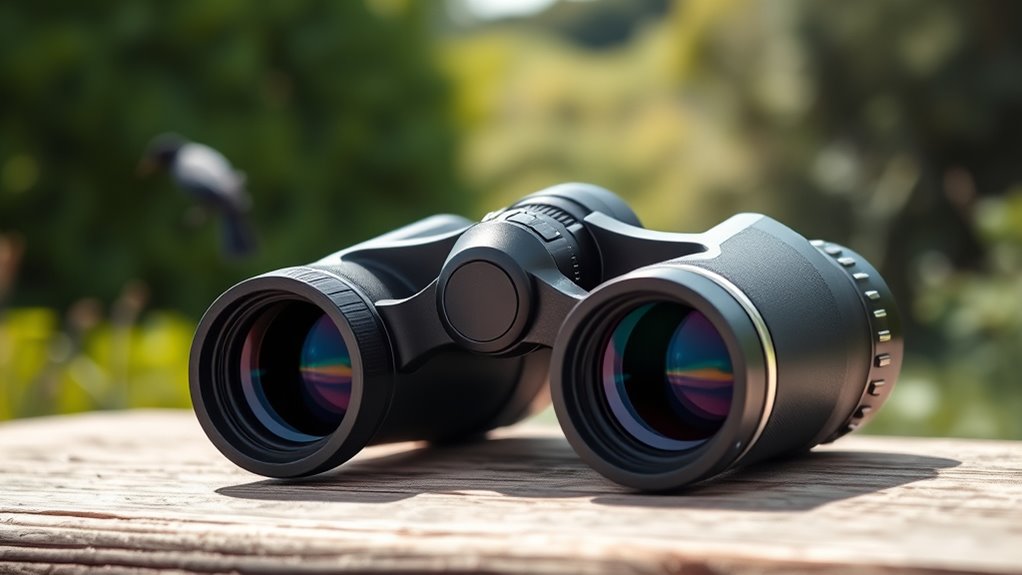

For most bird watchers seeking premium binoculars, I’d make the Nikon Monarch M5 8×42 my best overall pick for its ED glass, useful magnification, and all-around birding fit. The Athlon Midas UHD 8×42 stands out as another strong choice for its ED optics, while the ZEISS Terra ED Pocket suits buyers who put portability first. The main tradeoffs are steadier viewing with 8x magnification versus more reach with 10x, and full-size brightness versus compact carry. I compare those differences across all eight models below so you can match the binoculars to your birding habits.

Get pet supplies delivered free with Prime
- Fast, free delivery on millions of items
- Prime Video, Amazon Music and more included
- Member-only deals all year
Complete the kit


Key Takeaways
- The Nikon Monarch M5 8×42 is the strongest all-around fit: it pairs bird-friendly 8x magnification with ED glass and weather-resistant construction.
- Two 8×42 ED options lead on optical appeal: Nikon’s Monarch M5 and Athlon’s Midas UHD stand apart from the more basic-featured Celestron Nature DX and Nikon PROSTAFF P3.
- Higher magnification brings a handling tradeoff: the Vortex Triumph HD 10×42 offers more reach, while 8×42 models are generally easier to hold steady as birds move.
- The ZEISS Terra ED Pocket fills a different role: its compact format is better suited to travel and quick outings than long sessions that favor full-size binoculars.
- The Steiner Marine 7×50 is the specialist choice: its low magnification and large objective lenses favor a wide, steady view, but its marine-oriented format is less convenient for routine woodland birding.
| Steiner Marine Binoculars 7×50 for Adults and Kids, Waterproof, High Contrast Optics |  | Best for Steady, Wide-Area Scanning | Magnification: 7x | Objective diameter: 50 mm | Field of view: 356 ft at 1,000 yd | VIEW ON AMAZON | See Our Full Breakdown |
| Celestron Outland X 8×42 Binoculars for Birding & Nature Viewing |  | Best for Portable All-Weather Birding | Magnification: 8x | Objective lens diameter: 42 mm | Field of view: 7° | VIEW ON AMAZON | See Our Full Breakdown |
| Nikon Monarch M5 Binoculars 8×42 Waterproof Fogproof ED Glass Optics |  | Best Overall for Dedicated Birders | Magnification: 8x | Objective diameter: 42 mm | Close focus: 8.2 ft | VIEW ON AMAZON | See Our Full Breakdown |
| Athlon Optics 8×42 Midas UHD Gray Binoculars with ED Glass |  | Best for Color-Fringe Control | Magnification: 8x | Objective lens diameter: 42 mm | Field of view: 144 m at 1,000 m | VIEW ON AMAZON | See Our Full Breakdown |
| Vortex Triumph HD 10×42 Binoculars |  | Best for Distant Bird Detail | Magnification: 10x | Objective lens diameter: 42 mm | Optical system: HD | VIEW ON AMAZON | See Our Full Breakdown |
| ZEISS Terra ED Pocket Binoculars Compact, Waterproof, and Fast Focusing |  | Best Compact for Travel Birding | Magnification: 10x | Objective lens diameter: 25 mm | Eye relief: 16 mm | VIEW ON AMAZON | See Our Full Breakdown |
| Celestron Nature DX 8×42 Waterproof Binoculars for Bird Watching & Outdoors |  | Best for Beginner Birders | Magnification: 8x | Objective lens diameter: 42 mm | Field of view: 7.4° | VIEW ON AMAZON | See Our Full Breakdown |
| Nikon PROSTAFF P3 8×42 Binoculars Waterproof Fogproof Rubber-Armored Full-Size |  | Best for Eyeglass Wearers | Magnification: 8x | Objective lens diameter: 42 mm | Field of view: 377 ft at 1,000 yds | VIEW ON AMAZON | See Our Full Breakdown |
| premium binoculars for bird watching | Magnification | Field of view | Objective lens diameter | Waterproof |
|---|---|---|---|---|
| Steiner Marine Binoculars 7×50 | 7x | 356 ft at 1,000 yd | — | Yes |
| Celestron Outland X 8×42 Binoc | 8x | 7° | 42 mm | Yes |
| Nikon Monarch M5 Binoculars 8x | 8x | Wide | — | — |
| Athlon Optics 8×42 Midas UHD G | 8x | 144 m at 1,000 m | 42 mm | — |
| Vortex Triumph HD 10×42 Binocu | 10x | — | 42 mm | Yes |
| ZEISS Terra ED Pocket Binocula | 10x | 315 ft | 25 mm | — |
| Celestron Nature DX 8×42 Water | 8x | 7.4° | 42 mm | Yes |
| Nikon PROSTAFF P3 8×42 Binocul | 8x | 377 ft at 1,000 yds | 42 mm | Yes |
More Details on Our Top Picks
Steiner Marine Binoculars 7×50 for Adults and Kids, Waterproof, High Contrast Optics
The Steiner Marine 7×50 suits birders who scan shorelines, wetlands, or open water for long stretches. Its 7x magnification and 356-foot field of view make it easier to locate moving birds than with the higher-power Vortex Triumph HD 10×42, while the large 50 mm objectives support bright views. The sports auto focus is designed to keep distant subjects sharp without repeated focus adjustments, a useful advantage when birds move across a broad scene. Waterproof construction also fits exposed, damp habitats. The tradeoff is bulk: this is a heavier handheld choice than the Celestron Outland X 8×42, and its lower magnification gives less apparent detail on distant birds. I’d choose it for open-country scanning, not compact carrying or close, fine identification.
Pros:- Wide 356-foot field of view helps locate and follow moving birds.
- 7x magnification is comparatively steady for handheld scanning.
- 50 mm objectives support bright viewing in lower light.
- Waterproof construction suits wet outdoor habitats.
Cons:- Heavier than the 8×42 Celestron Outland X for extended handheld use.
- Lower magnification reveals less fine detail on distant birds than 10x models.
- Auto focus offers less flexibility for changing focus across nearby and distant subjects.
Best for: Birders who scan open water, marshes, or coastlines and value a broad view with minimal refocusing.
Not ideal for: Hikers seeking a lightweight all-day binocular or birders who need higher magnification for distant identification.
- Magnification:7x
- Objective diameter:50 mm
- Field of view:356 ft at 1,000 yd
- Waterproof:Yes
- Focus:Sports auto focus from 20 yd to infinity
- Image characteristics:High contrast, bright images with true-to-life colors
Our verdict“Choose the Steiner for bright, wide-area scanning in wet habitats, but skip it if low weight or distant detail matters more.”
Celestron Outland X 8×42 Binoculars for Birding & Nature Viewing
The Outland X is the practical carry-along pick in this group: its 8×42 format balances useful magnification with a lighter, portable build, and the 7-degree field of view helps keep moving birds in sight. BaK-4 prisms and multi-coated optics are intended to provide bright, color-accurate views, while waterproof and fogproof construction makes it a sensible partner for hikes in changing weather. Compared with the Nikon Monarch M5 8×42, the Outland X is a simpler option: the Nikon adds ED glass and a stated 8.2-foot close focus for more demanding viewing. The Celestron’s meaningful compromises are a focus adjustment that may feel less smooth and no included tripod adapter. I’d pick it for general outdoor birding, not for shoppers prioritizing refined optics or close-focus observation.
Pros:- Portable 8×42 design balances magnification and carry comfort.
- Wide 7-degree field of view helps track moving birds.
- Waterproof and fogproof construction is suited to variable weather.
- BaK-4 prisms and multi-coated optics support bright, color-accurate views.
Cons:- Focus adjustment may feel less smooth than on more refined models.
- Tripod adapter is not included.
- Less specialized for image refinement than the Nikon Monarch M5 with ED glass.
Best for: Hikers and beginning birders who want a portable 8×42 binocular for trails and changing weather.
Not ideal for: Birders who prioritize ED-glass image refinement, close-focus viewing, or a particularly smooth focus adjustment.
- Magnification:8x
- Objective lens diameter:42 mm
- Field of view:7°
- Waterproof:Yes
- Fogproof:Yes
- Prism type:BaK-4
- Housing material:Rubber-armored polycarbonate
- Tripod mountable:Yes; adapter not included
- Included accessories:Carrying case, neck strap, lens covers, rainguard, cleaning cloth
Our verdict“Choose the Outland X for portable, weather-ready trail birding; move up to the Monarch M5 if optical refinement and close focus are priorities.”
Nikon Monarch M5 Binoculars 8×42 Waterproof Fogproof ED Glass Optics
The Nikon Monarch M5 earns my best-overall spot by pairing the familiar 8×42 birding format with ED glass, dielectric prism coatings, and an 8.2-foot close focus. That combination is useful when a bird appears nearby in brush, then shifts to a distant branch: the wide field of view helps with tracking, while the close focus extends its range beyond simple long-distance scanning. Compared with the Celestron Outland X, the Monarch M5 is the more specialized choice for image detail and eyeglass-friendly viewing, thanks to its high-eyepoint, adjustable turn-and-slide eyecups. The tradeoff is a bulkier build than compact binoculars and a step up from basic models in cost. I’d choose it for frequent birding, but casual walkers may find the Outland X sufficient.
Pros:- ED glass and dielectric prism coatings support bright, high-resolution, accurate-color views.
- 8.2-foot close focus is useful for nearby birds and natural details.
- Wide field of view helps follow moving subjects.
- Adjustable high-eyepoint eyecups suit eyeglass wearers.
Cons:- Bulkier than compact models intended for minimal-pack carry.
- Costs more than basic binocular options.
- 8x magnification offers less apparent reach than the Vortex Triumph HD 10×42.
Best for: Regular birders and eyeglass wearers who want an all-weather 8×42 with close-focus ability and refined color detail.
Not ideal for: Casual users seeking the simplest lightweight option or birders who specifically need a compact binocular for minimal-pack outings.
- Magnification:8x
- Objective diameter:42 mm
- Close focus:8.2 ft
- Field of view:Wide
- Glass:ED glass
- Prism coating:Dielectric
- Weather protection:Waterproof and fogproof
- Eyecups:High-eyepoint, adjustable turn-and-slide
Our verdict“Choose the Monarch M5 for frequent birding that calls for close focus, eyeglass comfort, and refined 8×42 viewing.”
Athlon Optics 8×42 Midas UHD Gray Binoculars with ED Glass
The Athlon Midas UHD is aimed at birders who want an 8×42 view with extra attention to sharpness and color fidelity. Its ED glass is intended to reduce chromatic fringe, which can otherwise show as colored edges around high-contrast details such as a bird against bright sky. Fully multi-coated lenses and dielectric coatings support light transmission and color accuracy, while argon purging adds waterproofing and thermal stability for outdoor use. The Nikon Monarch M5 also offers ED glass in this roundup, along with a specified 8.2-foot close focus; Athlon’s listed advantage is long eye relief for eyeglass wearers, though its exact relief distance is not supplied. Weight is a tradeoff versus compact options, and the available details give no weight or field-of-view figure. I’d favor it for optical refinement, not for buyers needing a clearly documented carry weight or close-focus distance.
Pros:- ED glass is designed to limit chromatic fringe around high-contrast subjects.
- Fully multi-coated lenses and dielectric coatings support bright, accurate-color views.
- Argon purging provides waterproofing and thermal stability.
- Long eye relief is suited to eyeglass wearers.
Cons:- May be heavier than compact binoculars.
- No close-focus distance is provided in the supplied specifications.
- Field-of-view figure is not specified in degrees or feet.
Best for: Birders who want ED-glass color-fringe control in an 8×42 and need long eye relief for glasses.
Not ideal for: Buyers who need published weight and close-focus figures to compare fit, or who want a compact carry option.
- Magnification:8x
- Objective lens diameter:42 mm
- Field of view:144 m at 1,000 m
- Glass:ED glass
- Lens coatings:Fully multi-coated
- Prism coating:Dielectric
- Eye relief:Long eye relief; distance not specified
- Waterproofing:Argon purged
Our verdict“Choose the Midas UHD for ED-glass color control and long eye relief, but favor the Monarch M5 if close-focus documentation matters.”
Vortex Triumph HD 10×42 Binoculars
The Vortex Triumph HD 10×42 is the reach-first option here. Its 10x magnification makes distant birds appear larger than they do through the 8x Nikon Monarch M5 or Athlon Midas UHD, a useful advantage across fields, mudflats, and open water. The HD optical system and fully multi-coated lenses are designed for sharp, color-rich views, and waterproof, fogproof, shockproof construction suits rough outdoor carry. That added reach comes with a familiar birding tradeoff: higher magnification can make handheld movement more visible, and the supplied details do not list a field of view to compare tracking ease directly. Its 42 mm objectives also do not match the Steiner Marine’s 50 mm light-gathering aperture. I’d choose the Vortex when distant detail outranks a steadier, wider-feeling view.
Pros:- 10x magnification provides more apparent detail on distant birds than the 8x models.
- HD optical system and fully multi-coated lenses support sharp, color-rich images.
- Waterproof, fogproof, and shockproof construction suits demanding outdoor use.
- Tripod adaptable, with adjustable eyecups and diopter.
Cons:- Higher magnification can make handheld shake more apparent than with 8x binoculars.
- 42 mm objectives provide less aperture than the Steiner Marine 7×50.
- Field of view is not provided in the supplied specifications.
Best for: Birders who often identify distant subjects across open habitats and are comfortable managing a 10x handheld view.
Not ideal for: New birders who struggle to keep higher-power binoculars steady, or those who prioritize a wider field and lower-light scanning.
- Magnification:10x
- Objective lens diameter:42 mm
- Optical system:HD
- Lens coatings:Fully multi-coated
- Waterproof:Yes
- Fogproof:Yes
- Shockproof:Yes
- Tripod adaptable:Yes
- Eyecups and diopter:Adjustable rubber eyecups; adjustable diopter
Our verdict“Choose the Triumph HD when distant bird detail is the priority, but pick an 8x model for easier tracking and steadier handheld viewing.”
ZEISS Terra ED Pocket Binoculars Compact, Waterproof, and Fast Focusing
For birders who put portability ahead of a full-size view, the ZEISS Terra ED Pocket is the most travel-friendly choice here. Its 10x magnification brings distant birds closer than the 8x Celestron Nature DX and Nikon PROSTAFF P3, while the compact body and waterproof construction suit walks where carrying full-size binoculars feels like a burden. The fast manual focus can help when a bird shifts between branches, and its hydrophobic multi-coating is intended to keep the view usable in wet conditions. The tradeoff is its 25mm objective lens: it gathers less light than the 42mm lenses on the Celestron and Nikon, which can make dim woodland or dawn viewing less forgiving. Its 16mm eye relief may also be less comfortable for some eyeglass wearers.
Pros:- Compact, lightweight design is easier to pack than full-size 8×42 binoculars.
- 10x magnification gives distant birds more apparent size than the 8x Celestron Nature DX and Nikon PROSTAFF P3.
- Waterproof construction supports use in wet outdoor conditions.
- Fast, smooth manual focusing helps follow changing viewing distances.
Cons:- 25mm objective lenses gather less light than the 42mm lenses on the Celestron Nature DX and Nikon PROSTAFF P3.
- 16mm eye relief may be uncomfortable for some eyeglass wearers.
- 10x magnification can make it harder to hold the view steady than an 8x model.
Best for: Traveling birders and hikers who want a compact, waterproof pair with more reach than standard 8x binoculars.
Not ideal for: Birders who often watch in low light or wear glasses and need generous eye relief; the 25mm objectives and 16mm eye relief are limiting choices.
- Magnification:10x
- Objective lens diameter:25 mm
- Eye relief:16 mm
- Exit-pupil diameter:3.1 mm
- Prism type:Schmidt-Pechan
- Field of view:315 ft
- Water resistance:Waterproof
- Focus type:Manual
Our verdict“Choose the ZEISS Terra ED Pocket if easy packing and extra magnification matter more than the brighter, steadier view of a full-size 8×42.”
Celestron Nature DX 8×42 Waterproof Binoculars for Bird Watching & Outdoors
The Celestron Nature DX 8×42 is a practical starting point for birders who want a conventional full-size view without committing to higher magnification. Its 8x power and 42mm objectives make it easier to keep a moving bird in view than the 10x ZEISS Terra ED Pocket, while the wide 7.4-degree field helps scan foliage and open habitats. Fully multi-coated lenses, plus waterproof and fog-proof construction, suit changing outdoor conditions. The rubber-armored polycarbonate body adds grip without making the binoculars feel overly delicate on a trail. Compared with the Nikon PROSTAFF P3, the Celestron’s listed field-of-view figure is angular rather than linear, so the two figures are not directly comparable. Its tradeoffs are a tripod adapter that is not included and less reach than 10x options such as the ZEISS.
Pros:- 8x magnification provides a steadier, easier-to-track view than the 10x ZEISS Terra ED Pocket.
- 42mm objective lenses support brighter viewing than compact 25mm binoculars.
- Waterproof and fog-proof construction suits variable weather.
- Rubber-armored polycarbonate body offers a durable, grippy outdoor design.
Cons:- 8x magnification brings distant birds in less than the 10x ZEISS Terra ED Pocket.
- Tripod adapter is not included, adding a separate requirement for mounted viewing.
- Full-size 42mm design is less pocketable than compact binoculars.
Best for: New birders who want an all-weather 8×42 for woodland walks, backyard watching, and general outdoor use.
Not ideal for: Experienced birders who prioritize extra reach for distant birds or plan long, tripod-supported observation without sourcing an adapter separately.
- Magnification:8x
- Objective lens diameter:42 mm
- Field of view:7.4°
- Build material:Rubber-armored polycarbonate
- Waterproof:Yes
- Fog-proof:Yes
- Tripod mountable:Yes
Our verdict“Pick the Nature DX for an approachable, weather-ready 8×42 that favors easy tracking over the extra reach and portability of other options.”
Nikon PROSTAFF P3 8×42 Binoculars Waterproof Fogproof Rubber-Armored Full-Size
The Nikon PROSTAFF P3 8×42 earns its place for birders who want a comfortable full-size binocular, especially if they watch with glasses. Its 20.2mm eye relief is longer than the ZEISS Terra ED Pocket’s 16mm, giving eyeglass wearers a better chance of seeing the full view without pressing close to the eyecups. The 8x magnification also favors a steadier view of moving birds over the ZEISS’s 10x, and its 377-foot field of view at 1,000 yards supports scanning broad areas. Waterproof and fog-proof construction adds weather flexibility, while rubber armor protects the body and improves grip. Compared with the Celestron Nature DX, Nikon specifies a linear field-of-view distance, not the Celestron’s angular figure. The missing weight specification makes carry comfort harder to judge, and this full-size model is less packable than the ZEISS.
Pros:- 20.2mm eye relief is the longest specified in this group and suits many eyeglass wearers.
- 8x magnification offers a steadier view for tracking birds than the 10x ZEISS Terra ED Pocket.
- 377-foot field of view at 1,000 yards helps scan wider areas.
- Waterproof, fog-proof construction and rubber armor suit outdoor use.
Cons:- Weight is not specified, so buyers cannot readily judge extended-carry comfort.
- Full-size 42mm body is less compact for travel than the ZEISS Terra ED Pocket.
- 8x magnification provides less apparent reach than the ZEISS’s 10x.
Best for: Birders who wear eyeglasses and want long eye relief, a broad viewing area, and weather protection in a full-size 8×42.
Not ideal for: Travelers seeking pocketable optics or buyers who need a confirmed weight before choosing binoculars for extended carry.
- Magnification:8x
- Objective lens diameter:42 mm
- Field of view:377 ft at 1,000 yds
- Eye relief:20.2 mm
- Prism coating:Silver-alloy coating
- Waterproof:Yes
- Fog-proof:Yes
- Body material:Fiberglass-reinforced polycarbonate with rubber armor
Our verdict“Choose the PROSTAFF P3 if long eye relief and a wide, steady 8x view matter more than compact packing or a specified carry weight.”

How We Picked
I ranked these binoculars around the needs of bird watchers: finding a bird quickly, following movement, seeing detail in changing light, and keeping a comfortable grip during extended viewing. I weighed magnification and objective size alongside the stated optical features, weather protection, and form factor. ED glass helped distinguish models positioned for sharper viewing, while waterproof and fogproof construction mattered for use across changing outdoor conditions.
The order reflects overall birding fit, not a claim that one model suits everyone. The Nikon Monarch M5 leads for its balanced 8×42 configuration and ED optics; the Athlon Midas UHD follows as another ED-equipped full-size option. More specialized designs rank lower for general birding: the Vortex’s 10x reach can be harder to steady, the ZEISS is compact rather than full-size, and the Steiner’s 7×50 marine format is less aligned with typical woodland use. The Celestron and Nikon entry-level lines remain practical alternatives when straightforward handling matters more than premium optical features.
Factors to Consider When Choosing Premium Binoculars For Bird Watching
Before choosing, I’d match the binoculars to where and how you watch birds, not just the largest magnification or longest feature list. A good fit should let you locate a bird promptly, hold the view comfortably, and carry the binoculars for the length of your outing.
Choose Magnification You Can Hold Steady
Magnification affects both reach and how much hand movement you see. An 8x binocular is often easier for scanning branches and tracking birds in flight, while a 10x model can make a distant subject appear larger. Buyers sometimes choose 10x for the extra reach without accounting for the narrower, shakier view that can come with it. Try to weigh your usual viewing distance against your ability to keep the image steady, especially if you do not plan to use support. For mixed woodland and open-country birding, 8x is a useful starting point; frequent long-distance viewing may favor 10x.
Balance Objective Size, Brightness, and Carry Weight
The objective lens size influences how much light the binoculars can gather, but larger lenses usually add bulk. That tradeoff matters when you walk for hours or keep binoculars ready on a strap. A full-size 8×42 is a versatile format for varied outdoor conditions, while pocket binoculars are easier to pack but may feel less comfortable for long viewing sessions. Avoid choosing solely by the promise of a brighter image: fit, stability, and how often you will carry the binoculars also shape what you actually use. If dawn and dusk birding is common, compare a full-size model with a compact one in person where possible.
Treat ED Glass as One Part of Optical Quality
ED glass is a useful feature to seek when color fringing and fine detail matter, but it should not be the only deciding point. Optical performance also depends on the whole design, including coatings, alignment, and how well the view works for your eyes. A specification list cannot tell you whether the image feels comfortable or whether you can acquire a small bird quickly. Compare the complete viewing experience rather than assuming that one lens label guarantees a clear advantage in every situation. Buyers moving up from basic binoculars may value ED-equipped options, while those who prioritize portability or simple handling may prefer a different balance.
Check Eye Relief and Fit Before Committing
Binoculars that look promising on paper can be uncomfortable if the eyecups or eye relief do not suit your face. Eyeglass wearers should check the manufacturer’s eye-relief information and see whether they can take in the full field of view with glasses on. People who share binoculars may also need eyecups that adjust easily for different users. A poor fit can lead to black edges in the view or repeated repositioning, which makes following birds harder. If possible, test the binoculars at your normal viewing posture rather than judging comfort from a quick glance.
Match Weather Protection to Your Outings
Waterproofing and fogproofing are valuable when birding in mist, rain, or changing temperatures, but they do not remove the need for care. Keep lenses capped when not in use, brush away grit before wiping, and use a clean lens cloth to reduce scratching. A rugged coating can help with grip and everyday handling, yet it does not make any binocular immune to drops or neglect. Buyers who bird in wet habitats should put sealed construction high on the list; those who mostly watch from a vehicle or sheltered hide may place more weight on comfort and optical fit. Check the care instructions and warranty terms before making a long-term purchase.
Spend for the Features You Will Use
Higher-end binoculars make the most sense when their advantages solve a problem you encounter often, such as poor detail at distance, long sessions, or frequent exposure to weather. Paying more for features you rarely use may bring less benefit than choosing a shape and magnification you can handle confidently. Beginners can gain more from a comfortable, easy-to-point 8×42 than from extra reach that makes locating birds harder. Experienced watchers who routinely study plumage may place more value on ED optics and refined viewing. Set your priorities before comparing models, and judge each upgrade by the difference it makes during your own kind of birding.
Frequently Asked Questions
Should I choose 8×42 or 10×42 binoculars for bird watching?
For general birding, I’d start with 8×42 because the wider, steadier view can make it easier to find and follow moving birds. A 10×42 model such as the Vortex Triumph HD can help when you often watch distant birds in open country. The added magnification also makes hand shake more visible and can make quick tracking harder. If you mostly bird in woods or scan active flocks, 8x may feel more forgiving. Choose 10x when extra reach is a frequent need and you can hold the view steady.
Are compact binoculars a good main pair for birding?
They can be, especially if you travel often or want binoculars that are easy to carry every day. The ZEISS Terra ED Pocket is the lineup’s compact option, but its smaller format serves portability rather than the same long-session comfort as a full-size 8×42. Before choosing a pocket model as your only pair, consider how often you watch in dim conditions and whether its fit feels comfortable for extended use. Compact binoculars are also useful as a backup pair for hikes or trips. If most of your birding involves long observation sessions, a full-size format may be a better match.
Does ED glass matter more than magnification for seeing bird detail?
These features solve different problems, so neither automatically matters more. ED glass is intended to help with color fringing and fine detail, while magnification changes how large a distant bird appears. More magnification can be less useful if the image becomes difficult to hold steady or the bird is hard to locate. The Monarch M5 and Midas UHD combine ED glass with 8×42 formats, offering a balanced approach for many watchers. I’d prioritize stable handling and a comfortable view before chasing either specification alone.
Is the Steiner Marine 7×50 a sensible choice for woodland birding?
It can show birds, but its marine-oriented 7×50 configuration is less tailored to the quick scanning and easy carrying many woodland outings call for. The lower magnification can give a steady view, while the large objectives add size compared with common 8×42 birding binoculars. That bulk may be a drawback on long walks or when moving through dense cover. It makes more sense for buyers who also want binoculars for marine use or other settings where a broad, steady view is useful. For a dedicated woodland pair, I’d compare it with a full-size 8×42 first.
Which features should a beginner prioritize over premium specifications?
I’d put comfortable fit, manageable weight, and easy target acquisition ahead of a long list of advanced features. A beginner who can quickly bring an 8×42 binocular to the eyes may spot more birds than someone struggling with a higher-magnification view. Waterproof and fogproof construction is useful for outdoor reliability, while ED glass can be a welcome upgrade for those who want more optical refinement. The Celestron Nature DX and Nikon PROSTAFF P3 are straightforward full-size options in this lineup; the Monarch M5 adds ED glass for buyers ready to prioritize that feature. Try to handle a pair before choosing if several people will share it.
Conclusion
For the best all-around fit, I recommend the Nikon Monarch M5 8×42: its ED glass, 8x magnification, and weather protection make a balanced birding choice. The Athlon Midas UHD 8×42 is my alternative for buyers focused on ED-equipped full-size optics, while the Celestron Nature DX 8×42 is a sensible value-oriented pick for straightforward bird watching. Beginners may prefer the approachable 8×42 format of the Nikon PROSTAFF P3 or Nature DX rather than starting with 10x magnification. For a premium compact option, choose the ZEISS Terra ED Pocket; for open-country reach, consider the Vortex Triumph HD 10×42. The Steiner Marine 7×50 makes the most sense for buyers who want a marine-capable specialist, not a lightweight woodland pair.
Halloween Picks
halloween
As an affiliate, we earn on qualifying purchases.