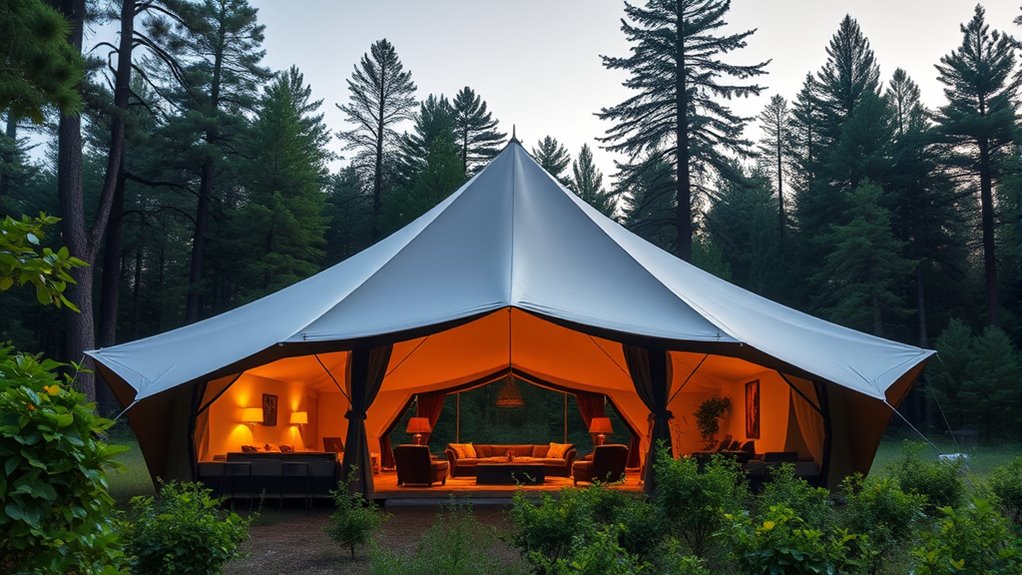

For high-end tents for camping, my best overall pick is the Mountain Hardwear Mineral King 3, a more traditional choice for campers who prioritize a capable shelter over a large group layout. The WHITEDUCK Avalon Canvas Bell Tent stands out for roomy, stove-ready base camping, while the RBM Outdoors UP-5 offers a more compact hot-tent setup. The main tradeoff is between weather-ready portability and space-rich comfort: inflatable and instant cabin tents make group camping more convenient, but their bulk and intended use differ from backcountry-oriented designs. Stove-jack tents add cold-weather flexibility, yet call for extra care around ventilation and safe stove use. Read on for the full breakdown and guidance on matching tent style to your trips.

Get pet supplies delivered free — and shop member deals
- Fast, free delivery on millions of items
- Access to Prime Big Deal Days deals on October 6–7
- Prime Video, Amazon Music and more included
Complete the kit


Key Takeaways
- The roundup’s strongest contrast is between travel-ready shelter and campsite comfort: the Mineral King 3 favors a traditional tent format, while the Avalon and large instant cabins are geared toward spacious base camps.
- Stove-jack models serve a narrower purpose than all-season labels suggest: the RBM UP-5, WHITEDUCK Avalon, and Naturehike Dune are relevant to buyers planning wood-stove use, but safe installation, ventilation, and fire precautions remain part of the setup.
- Inflatable construction is a convenience choice, not a universal upgrade: the 4-person WildFinder and larger 8–12-person and 10-person options trade pole-based setup for dependence on inflation equipment and more demanding packing logistics.
- Instant cabins focus on quick campsite setup and standing room: the Fanttik Alpha C4, Naturehike Village, FanttikOutdoor, and Core 9-Person models suit group camping better than trips where packed size and weight dominate.
- Capacity figures do not tell the whole story: sleeping space, gear storage, vestibule or awning coverage, and the room needed around a stove all affect how comfortable a tent feels at its stated capacity.
| RBM Outdoors UP-5 Double-Layer Hot Tent with Stove Jack |  | Best for Spacious Winter Basecamps | Capacity: Up to 9 people | Frame: Aviation-grade aluminum alloy B95T1 | Outer fabric: Oxford 300 PU 4000 | VIEW ON AMAZON | See Our Full Breakdown |
| 8–12 Person Four-Season Inflatable Camping Tent |  | Best for Large Groups Seeking Fast Inflatable Setup | Capacity: 8–12 people | Floor area: 129 sq ft | Dimensions: 157 × 118 × 79 inches | VIEW ON AMAZON | See Our Full Breakdown |
| WildFinder Inflatable 4-Person Camping Tent with Awning |  | Best for Flexible Four-Person Camps | Occupancy: 4 people | Dimensions: 13 ft × 8.7 ft | Floor area: 116 ft² | VIEW ON AMAZON | See Our Full Breakdown |
| Fanttik Outdoor Alpha C4 Ultra Camping Tent, 4-Person Pop-Up Instant Cabin Tent with Rainfly |  | Best for Fast Family Setup | Capacity: 4 people | Dimensions: 94 × 94 inches | Center height: 80 inches | VIEW ON AMAZON | See Our Full Breakdown |
| Mountain Hardwear Mineral King 3 All-Season Tent – Glacial |  | Best for Technical Three-Season-to-Winter Camping | Occupancy: 3 people | Installation type: Freestanding | Canopy material: 40D 100% nylon ripstop | VIEW ON AMAZON | See Our Full Breakdown |
| Naturehike Village Instant Camping Tent for 4–8 People |  | Best for Fast, Comfortable Family Camping | Capacity: 4 people comfortably; up to 8 people | Dimensions: 12.96 x 8.86 x 6 ft | Fabric: 150D Ti Black Technology fabric | VIEW ON AMAZON | See Our Full Breakdown |
| FanttikOutdoor Instant Camping Tent (4-10 Person) |  | Best for Beginner-Friendly Warm-Weather Camping | Capacity: 4–10 people; up to 5 with gear | Dimensions: 168 x 120 in | Center height: 76 in | VIEW ON AMAZON | See Our Full Breakdown |
| WHITEDUCK Avalon Canvas Bell Tent – Fire & Water Repellent, All-Season Cotton Canvas with Stove Jack |  | Best Premium Canvas Bell Tent | Occupancy: 10 people | Material: 100% cotton canvas, 10.10 oz Army Duck | Coating: Silicone | VIEW ON AMAZON | See Our Full Breakdown |
| Core 9-Person Instant Cabin Tent, 14′ x 9′, Green |  | Best for Large Groups Wanting Quick Setup | Sleeping capacity: 9 people; 4 with gear | Dimensions: 14 x 9 ft | Center height: 78 in | VIEW ON AMAZON | See Our Full Breakdown |
| NANJEEN Luxury Inflatable Camping Tent, 10-Person, 4-Season |  | Best Inflatable Shelter for Spacious Group Camping | Occupancy: Up to 10 people | Interior area: 12 m² | Setup time: Under 8 minutes | VIEW ON AMAZON | See Our Full Breakdown |
| Naturehike Dune 4-Season Hot Tent with Stove Jack |  | Best for Flexible Four-Season Camping | Occupancy: Up to 4 people | Material: 75D 210T polyester | Water resistance: PU 10000mm+ | VIEW ON AMAZON | See Our Full Breakdown |
| highend tents for camping | Dimensions | Setup time |
|---|---|---|
| RBM Outdoors UP-5 Double-Layer | — | — |
| 8–12 Person Four-Season Inflat | 157 × 118 × 79 inches | About 7 minutes |
| WildFinder Inflatable 4-Person | 13 ft × 8.7 ft | — |
| Fanttik Outdoor Alpha C4 Ultra | 94 × 94 inches | About 60 seconds |
| Mountain Hardwear Mineral King | — | — |
| Naturehike Village Instant Cam | 12.96 x 8.86 x 6 ft | About 60 seconds |
| FanttikOutdoor Instant Camping | 168 x 120 in | Under 60 seconds |
| WHITEDUCK Avalon Canvas Bell T | — | — |
| Core 9-Person Instant Cabin Te | 14 x 9 ft | 2 minutes or less |
| NANJEEN Luxury Inflatable Camp | — | Under 8 minutes |
| Naturehike Dune 4-Season Hot T | 14.5 × 9.1 × 6.8 ft (443 × 278 × 203 cm) | — |
More Details on Our Top Picks
RBM Outdoors UP-5 Double-Layer Hot Tent with Stove Jack
The UP-5 is the strongest fit here for groups who want a shared, heated winter shelter rather than a lightweight tent to carry far. Its double-layer construction creates an insulating air gap, while the integrated stove jack makes a compatible wood stove part of the cold-weather setup. The umbrella-style aluminum frame opens quickly and leaves the center unobstructed, a useful contrast with the more compact, expedition-oriented Mountain Hardwear Mineral King 3. Three doors and five windows also give a large group more ways to move and ventilate.
The tradeoff is scale: this 9-person shelter is bulky to transport, and a stove adds weight and setup demands. Buyers should also plan around the removable floor and stove arrangement rather than assume a stove is included. Choose it for a stationary winter basecamp; skip it for backpacking or small-party trips.
Pros:- Double-layer design adds an insulating air gap for cold-weather use.
- Integrated stove jack supports a compatible wood stove for heating and cooking.
- Umbrella-style frame provides quick setup and an open interior without a center pole.
- Roomy hexagonal layout and three doors suit group use.
Cons:- Large size and weight make it unsuitable for lightweight backpacking.
- A wood stove is separate gear and adds transport and operating demands.
- Its many-person capacity requires a broad, suitable pitch area.
Best for: Groups or families building a car-accessible winter basecamp who want room for camp beds and a wood stove.
Not ideal for: Backpackers and small parties who need a light, compact shelter or do not want to carry and manage a separate stove.
- Capacity:Up to 9 people
- Frame:Aviation-grade aluminum alloy B95T1
- Outer fabric:Oxford 300 PU 4000
- Inner fabric:Oxford 240 PU 2000
- Water resistance:4010 mm
- Peak height:83 inches
- Doors and windows:3 doors; 5 windows
- Setup and stove jack:Freestanding umbrella-style setup; stove jack included
Our verdict“Choose the UP-5 for a roomy, stove-ready winter basecamp, not for trips where packed size and carried weight matter.”
8–12 Person Four-Season Inflatable Camping Tent
This inflatable shelter prioritizes group space and a short pitching routine: its 129-square-foot floor and air-beam frame are designed for trips where several campers share one base. The dual-valve system and included pump are listed for setup in about seven minutes, a faster, less pole-focused approach than the RBM Outdoors UP-5’s umbrella frame. Its stove jack, skylight, and multiple ventilation openings give it a broader year-round feature set than the simpler Fanttik Outdoor Alpha C4, though the Alpha is aimed at a much smaller party.
That capacity comes with a transport and site-selection penalty. PVC air beams and a large footprint are better suited to vehicle-accessible camps than remote carries, and the product details do not state that a wood stove is included. The 8–12-person label also calls for realistic expectations about sleeping space once gear is inside. Pick it for a large group wanting fast setup, not for a compact or proven expedition-style shelter.
Pros:- 129-square-foot floor area provides substantial room for group camping.
- Air beams and dual valves are designed for setup in about seven minutes.
- Stove jack and ventilation features support use across seasons.
- Mesh windows, dual doors, and a panoramic skylight offer multiple light and airflow options.
Cons:- Large footprint and capacity make transport and pitching more demanding.
- PVC air beams are a different support system from conventional pole frames.
- A wood-burning stove is not listed as included.
Best for: Large car-camping groups who want a high-capacity shelter with a pump-assisted setup and cold-weather features.
Not ideal for: Backpackers, small campsites, or buyers who need a stated included stove or a compact packed shelter.
- Capacity:8–12 people
- Floor area:129 sq ft
- Dimensions:157 × 118 × 79 inches
- Fabric:High-density Oxford
- UV protection:UPF 30+
- Setup time:About 7 minutes
- Frame:PVC air beams
- Ventilation:Upper and lower vents, mesh windows, and dual doors
- Additional features:Panoramic PVC skylight and integrated stove jack
Our verdict“Pick this tent for a large, vehicle-accessible group that values quick inflation over compact transport.”
WildFinder Inflatable 4-Person Camping Tent with Awning
The WildFinder offers a useful middle ground for four campers who want more than a basic warm-weather shelter. Its inflatable frame and included manual pump avoid conventional pole assembly, while the stove jack and AC port accommodate different campsite setups. With 116 square feet of floor area and a 6.6-foot peak, it gives a smaller group room to move without the huge footprint of the 8–12 Person Inflatable Camping Tent. The two doors can also be adapted into awnings, adding sheltered entry space when conditions suit.
That awning flexibility has limits: only one pole set is included, so both doors cannot form awnings at once. The 420D Oxford polyester fabric has a stated PU3000mm waterproofing, but care is hand-wash only. Compared with the quick-pitch Fanttik Alpha C4, the WildFinder adds a stove jack and AC port but uses an inflatable support system. It makes most sense for car campers who value those options more than simple packability.
Pros:- Included manual pump supports setup without a conventional pole assembly.
- Stove jack and AC port provide options for different campsite arrangements.
- 116-square-foot interior and 6.6-foot peak height offer room for four campers.
- Two doors and mesh windows support access and ventilation.
Cons:- Only one awning pole set is included, so just one door can be propped as an awning at a time.
- Hand-wash care requires more attention than machine-washable alternatives.
- Inflatable construction may not suit buyers who prefer a traditional pole frame.
Best for: Four-person car-camping groups who want an inflatable shelter with a stove jack, AC port, and adaptable entry awning.
Not ideal for: Campers who need a small packed shelter, machine-washable care, or two usable awnings at the same time.
- Occupancy:4 people
- Dimensions:13 ft × 8.7 ft
- Floor area:116 ft²
- Peak height:6.6 ft
- Setup:Inflatable; manual pump included
- Material:420D Oxford polyester
- Water resistance:PU3000mm waterproofing
- Doors and ventilation:2 doors; mesh windows
- Features:Stove jack, AC port, and one set of convertible awning poles
Our verdict“Choose the WildFinder for a four-person car-camping setup that benefits from a stove jack and flexible entry, provided hand-wash care is acceptable.”
Fanttik Outdoor Alpha C4 Ultra Camping Tent, 4-Person Pop-Up Instant Cabin Tent with Rainfly
The Alpha C4 is the most convenience-led choice in this group: its pop-up X-frame sets up in about 60 seconds, with no tools required. For families who would rather start camping than assemble a shelter, that simplicity is a clear contrast with the pole attachments on the Mountain Hardwear Mineral King 3. Its 80-inch center height and vertical walls make the interior feel more usable for sitting and changing, while the removable rainfly and sealed seams add weather protection options.
This is not a substitute for the stove-ready hot tents in the roundup. There is no listed stove jack, and the supplied information does not give a four-season rating; buyers planning winter camping should look at the UP-5 or the four-season inflatable option instead. The 57.8-inch packed length may also be awkward in a small vehicle, and the rainfly needs careful staking in heavy rain. Choose the Alpha for quick family car camping, not harsh-weather trips.
Pros:- Pop-up X-frame is designed for setup in about 60 seconds without tools.
- 80-inch center height and vertical walls create usable interior headroom.
- Removable rainfly and sealed seams provide weather-protection features.
- PFAS-free fabric is specified for the tent materials.
Cons:- No stove jack or four-season rating is listed for cold-weather camping.
- 57.8-inch packed length may be difficult to fit in smaller vehicles.
- Rainfly and stakes need careful setup in heavy rain.
Best for: Families of up to four who want a roomy cabin-style shelter that can be pitched quickly at a car-accessible campsite.
Not ideal for: Winter campers who need a stove jack or a stated four-season design, and drivers with limited cargo length.
- Capacity:4 people
- Dimensions:94 × 94 inches
- Center height:80 inches
- Setup time:About 60 seconds
- Structure:Pop-up X-frame
- Materials:300D bottom fabric, B3 mesh, PFAS-free fabric
- Rain protection:Removable rainfly and sealed seams
- Windows:Double-paned windows
- Packed length:57.8 inches
Our verdict“Choose the Alpha C4 for fast, spacious family camping in milder conditions, but select a stove-ready four-season tent for winter use.”
Mountain Hardwear Mineral King 3 All-Season Tent – Glacial
The Mineral King 3 is the lineup’s more expedition-minded shelter: a freestanding four-season design built around aluminum poles and ripstop fabrics, rather than the large group footprint of the RBM Outdoors UP-5. Its three-person capacity suits smaller parties who need a weather-oriented tent without carrying a cabin-sized basecamp. Pre-bent poles help create more usable interior space, and two large vestibules keep equipment outside the sleeping area—an advantage when comparing it with the group-focused WildFinder, which emphasizes flexible doors and campsite connections instead.
The compromise is setup and carried weight. Multiple poles and vestibule attachments take more work than the Fanttik Alpha C4’s pop-up frame, and this model is described as heavier than lightweight backpacking tents. Its durable materials and waterproof coating suit demanding conditions, but no specific water-resistance measurement is supplied. Choose it for small-party camping where structure and covered gear storage matter more than instant pitching or a stove-ready interior.
Pros:- Four-season, freestanding design is suited to demanding camping conditions.
- Ripstop canopy and fly fabrics pair with aluminum poles for a durable structure.
- Two large vestibules provide covered gear storage outside the sleeping area.
- Pre-bent poles and dual canopy/mesh doors support interior space and ventilation.
Cons:- Heavier than lightweight backpacking tents, limiting its appeal for long carries.
- Multiple poles and vestibule attachments make setup less immediate than pop-up designs.
- No stove jack or numeric water-resistance rating is specified in the supplied details.
Best for: Small groups or pairs who want a freestanding four-season shelter with durable fabrics and vestibule space for gear.
Not ideal for: Large groups, campers seeking a stove jack, or buyers whose main priorities are minimal carry weight and instant setup.
- Occupancy:3 people
- Installation type:Freestanding
- Canopy material:40D 100% nylon ripstop
- Floor material:70D 100% nylon
- Fly material:68D 100% polyester ripstop with polyurethane coating
- Pole material and count:Aluminum; 2 poles
- Vestibules:2 large vestibules
- Doors:Dual canopy/mesh doors
Our verdict“Choose the Mineral King 3 for a smaller party prioritizing a durable four-season structure and vestibule storage over fast setup or stove heating.”
Naturehike Village Instant Camping Tent for 4–8 People
The Naturehike Village pairs a roughly 60-second setup with a two-room cabin layout, making it a strong choice for families who value quick arrival and a little privacy. Its blackout fabric adds UPF 50+ protection and helps limit light inside, while five-sided ventilation and built-in USB-powered lights make the space more accommodating than a basic instant shelter. Compared with the Core 9-Person Instant Cabin Tent, it offers a divider and lighting rather than a larger stated capacity and taped rainfly. The tradeoff is that its comfortable capacity is four, not eight; the larger figure assumes sleeping pads and a tight fit. The lights also need a separate power bank, and this tent’s listed features suit comfort-focused camping better than a gear-light backcountry trip.
Pros:- Pre-attached poles allow setup in about 60 seconds
- Two-room layout and privacy divider give families more separation
- Blackout fabric provides UPF 50+ protection and reduces light inside
- Ventilation, built-in USB-powered lights, and an AC port add campsite comforts
Cons:- Comfortable sleeping capacity is four; eight-person use requires a close sleeping-pad arrangement
- Built-in lights require a power bank, which is not included
- The cabin-style design prioritizes campsite comfort over compact transport
Best for: Families of up to four who want quick setup, separate sleeping space, and light-blocking fabric at established campsites
Not ideal for: Groups expecting to sleep eight comfortably or campers who need a lightweight tent for carrying far from a vehicle
- Capacity:4 people comfortably; up to 8 people
- Dimensions:12.96 x 8.86 x 6 ft
- Fabric:150D Ti Black Technology fabric
- UV protection:UPF 50+
- Setup time:About 60 seconds
- Layout:Two rooms with privacy divider
- Lighting:Built-in USB-powered lights; power bank not included
- Ventilation:Top vent and four-sided windows
Our verdict“Choose the Naturehike Village for fast family setup and divided sleeping space, but not for roomy eight-person sleeping or long carries.”
FanttikOutdoor Instant Camping Tent (4-10 Person)
The FanttikOutdoor Instant Camping Tent makes a large campsite shelter approachable: pre-attached poles enable setup in under a minute, and mesh across the sides and ceiling supports airflow and stargazing. At 76 inches tall, it gives most campers room to move more easily than a low-profile tent. Its 27.5-pound weight and stated capacity of up to ten suit car camping, though the listed fit drops to five with gear. Compared with the Naturehike Village, Fanttik emphasizes mesh ventilation and a simpler open interior rather than blackout fabric, built-in lights, and a privacy divider. That openness is a drawback in rain: the inner roof is mesh, so the outer tent is needed for coverage, and guy lines must be tensioned properly to limit pooling. I’d skip it for campers who want a fully covered setup with fewer weather-related steps.
Pros:- Pre-attached poles support setup in under 60 seconds
- Mesh windows on all sides and a mesh ceiling promote airflow and stargazing
- 76-inch center height makes moving around inside easier
- Tub-style floor and stated wind resistance up to 35 mph suit campsite use
Cons:- Mesh inner roof is not waterproof, so rain protection depends on the outer tent
- Guy lines need correct tension to help prevent water pooling
- Zipper can snag during packing if the tent is not folded neatly
Best for: First-time car campers and families who prioritize rapid setup, open-air ventilation, and a tall interior
Not ideal for: Campers seeking reliable rain coverage without managing an outer tent and guy-line tension
- Capacity:4–10 people; up to 5 with gear
- Dimensions:168 x 120 in
- Center height:76 in
- Weight:27.5 lb
- Setup time:Under 60 seconds
- Wind resistance:Up to 35 mph
- Materials:Polyester, B3 mesh, carbon steel frame
- Floor:Tub-style floor
Our verdict“Pick Fanttik for quick, airy car camping in fair weather, but choose a more fully covered design for simpler rain protection.”
WHITEDUCK Avalon Canvas Bell Tent – Fire & Water Repellent, All-Season Cotton Canvas with Stove Jack
The WHITEDUCK Avalon is the most traditional, cabin-like option here: its cotton canvas construction, galvanized steel poles, and pre-installed stove jack make it suited to campers planning longer stays and cold-weather setups. The breathable canvas and mesh windows offer a different kind of comfort from the instant polyester cabins, such as the Core 9-Person Instant Cabin Tent, which favors fast pitching and taped rain protection. Avalon’s stove-ready design is its main distinction, but it comes with hands-on upkeep: the canvas needs to dry fully before storage, and moisture management matters to reduce mold and mildew risk. Its stated 10-person occupancy also leaves less room for gear than a smaller, less crowded layout. I’d choose it for a dedicated campsite or glamping setup, not for frequent quick trips where heavy canvas is a burden.
Pros:- Cotton canvas construction offers breathable shelter for extended camps
- Pre-cut stove jack supports compatible stove setups
- Galvanized steel poles and double-stitched seams provide a sturdy structure
- Mesh windows and detachable groundsheet allow flexible ventilation and floor use
Cons:- Heavy canvas takes more effort to transport and pitch than instant cabin tents
- Must be dried and stored carefully to reduce mold and mildew risk
- Not suited to unattended permanent year-round setup
Best for: Campers planning extended base-camp stays who want breathable canvas, a stove jack, and adaptable ventilation
Not ideal for: Travelers who need a lightweight, low-maintenance tent or expect to pack it away while damp
- Occupancy:10 people
- Material:100% cotton canvas, 10.10 oz Army Duck
- Coating:Silicone
- Pole material:Galvanized steel
- Floor material:PVC
- Stove jack:5-inch pre-cut
- Doors and windows:1 door; 4 windows
Our verdict“Choose the Avalon for a maintained base camp where canvas comfort and stove compatibility matter more than portability.”
Core 9-Person Instant Cabin Tent, 14′ x 9′, Green
For a large car-camping group, the Core 9-Person Instant Cabin Tent balances substantial floor space with a setup time of two minutes or less. Its 14-by-9-foot footprint and 78-inch center height make it easier to share than compact tents, while the stated capacity distinguishes it from the Naturehike Village, whose comfortable sleeping count is four despite its higher maximum. Core’s weather package is also more explicit: a 1200 mm water-resistant fabric, taped rainfly, and sealed seams give buyers defined rain-protection features. The tradeoff is transport; the tent is described as heavy and bulky, so its quick pitch does not make it a good choice for carrying far from a vehicle. Its nine-person capacity also falls to four when gear is included, so groups should plan around floor space rather than the headline maximum.
Pros:- Pre-attached poles allow setup in two minutes or less
- 14-by-9-foot floor and 78-inch center height create a roomy shared shelter
- Taped rainfly and sealed seams add defined rain-protection features
- Interior pockets and adjustable vents help with organization and airflow
Cons:- Heavy and bulky to transport
- Capacity is listed as four people with gear, far below the maximum sleeping figure
- Large cabin footprint is better suited to established campsites than compact pitches
Best for: Large families or car-camping groups who need a tall, spacious shelter and value quick pitching over compact transport
Not ideal for: Backpackers, small vehicles, or groups expecting nine people to sleep with their gear inside
- Sleeping capacity:9 people; 4 with gear
- Dimensions:14 x 9 ft
- Center height:78 in
- Material:Polyester
- Water resistance:1200 mm
- Setup time:2 minutes or less
- Ventilation:Lower vents and mesh ceiling
- Weather features:Fully taped rainfly and sealed seams
Our verdict“Choose the Core for a spacious group tent with a fast pitch and specified rain features, provided you can transport its bulky packed form.”
NANJEEN Luxury Inflatable Camping Tent, 10-Person, 4-Season
The NANJEEN Luxury Inflatable Camping Tent stands apart from the pole-based cabins by using an inflatable structure that sets up in under eight minutes with the included hand pump. Its 12 m² interior, two doors, and ten mesh windows are aimed at group campsite comfort, while the listed 3500 mm water resistance and reinforced seams give it a stronger stated rain barrier than the FanttikOutdoor Instant Camping Tent, whose mesh inner roof needs an outer tent in wet weather. NANJEEN’s claims of snow protection and Level 7 wind resistance make it sound suited to more demanding conditions, but those performance claims come from the manufacturer data provided. At 35 kg, this is a substantial load, and the pump-based setup is not the same convenience as a near-instant pre-attached frame. It makes most sense when a group can drive close to camp.
Pros:- Inflatable setup takes under eight minutes with the included hand pump
- 12 m² interior is designed to accommodate up to ten people
- 3500 mm water-resistance rating and reinforced seams support wet-weather use
- Two doors and ten mesh windows provide multiple access and ventilation points
Cons:- 35 kg weight makes transport and handling demanding
- Inflatable setup requires pumping rather than the near-instant pole deployment of cabin tents
- Wind and all-weather performance figures are manufacturer claims
Best for: Car-camping groups who want a large inflatable shelter, multiple openings, and a stated high water-resistance rating
Not ideal for: Backpackers, campers with limited vehicle space, or buyers who need independently verified severe-weather performance
- Occupancy:Up to 10 people
- Interior area:12 m²
- Setup time:Under 8 minutes
- Setup type:Inflatable; hand pump included
- Water resistance:3500 mm
- Material:Waterproof tech cotton
- Weight:35 kg
- Doors and windows:2 doors; 10 windows
- Wind resistance:Rated for Level 7 winds
Our verdict“Choose NANJEEN for roomy, pump-inflated group camping near a vehicle, but not for lightweight travel or reliance on unverified weather claims.”
Naturehike Dune 4-Season Hot Tent with Stove Jack
The Naturehike Dune suits campers who want one shelter for varied weather rather than a dedicated warm-weather cabin. Its four setup modes let you switch between enclosed sleeping, mesh ventilation, a TPU viewing configuration, and a canopy arrangement; the canopy and TPU curtains are optional purchases, though. A stove jack, adjustable ventilation, and double-layer construction also make it more adaptable for cold trips than the Fanttik Outdoor Alpha C4, which is positioned as an instant cabin tent rather than a stove-ready four-season shelter.
That flexibility comes with a substantial 27.6-pound carry weight, so this is better for car camping than carrying far from a vehicle. Its 132-square-foot floor and two-room layout offer useful space for groups, but buyers seeking a lighter, simpler shelter should look elsewhere. The fiberglass stove jack has heat-resistant webbing, but stove use still calls for careful setup and safe clearances.
Pros:- Four setup modes adapt the shelter to enclosed, ventilated, viewing, or canopy use.
- Stove jack and adjustable ventilation support cold-weather camping configurations.
- 132.05-square-foot floor area and two rooms provide space for a small group.
- PU 10000mm+ water resistance and UPF 50+ coating add weather and sun protection.
Cons:- At 27.6 pounds, it is best suited to vehicle-based trips rather than long carries.
- Canopy and TPU curtains are optional, adding separate purchases for those configurations.
- The spacious footprint requires a sizable, suitable campsite.
Best for: Car-camping groups of up to four who want a roomy shelter with ventilation and a stove-jack option for colder trips.
Not ideal for: Backpackers and campers prioritizing a light, ready-to-use package; it weighs 27.6 pounds, and the canopy and TPU curtains are sold separately.
- Occupancy:Up to 4 people
- Material:75D 210T polyester
- Water resistance:PU 10000mm+
- Dimensions:14.5 × 9.1 × 6.8 ft (443 × 278 × 203 cm)
- Floor area:132.05 sq ft
- Weight:27.6 lb
- Doors and rooms:6 mesh doors; 2 rooms
- Setup modes and stove jack:4 modes; fiberglass stove jack with heat-resistant webbing
Our verdict“Choose the Naturehike Dune if your group wants a roomy, adaptable four-season car-camping tent and can accept its weight and separately sold accessories.”

How We Picked
I compared the 11 tents through the needs of campers shopping for a higher-spec shelter: weather intent, usable space, construction style, setup demands, and trip fit. I looked at how each format serves its likely buyer, from compact traditional tents to inflatable shelters, instant cabins, canvas bell tents, and stove-jack hot tents. I also treated capacity and season labels as starting points rather than guarantees of comfort or performance; fit depends on sleeping layouts, ventilation, site conditions, and proper use.
The ranking favors versatility and a clear use case over sheer size or a long feature list. The Mineral King 3 leads as the more conventional all-around choice in this lineup, while the Avalon is a specialist pick for spacious, stove-ready base camping. Group-oriented instant and inflatable models rank lower for campers seeking a broadly portable tent, though they may be the better choice for family or car-camping trips. I weighed tradeoffs directly: larger shelters can improve livability but bring more bulk, and specialized hot tents can support cold-weather camping but demand extra operating care.
Factors to Consider When Choosing Highend Tents For Camping
Before choosing a high-end tent, I would start with the trips you actually plan to take—not the most ambitious use printed on a product label. These decisions help separate a genuinely useful upgrade from extra capacity or complexity you may rarely need.
Match the Tent Format to How You Travel
A tent that works well beside a car may be a poor match for a walk-in site, even if both claim similar capacity. Instant cabins and large inflatable tents can simplify setup for family camps, but their packed size and carrying demands deserve attention before purchase. Traditional designs make more sense when you need a shelter that fits a more mobile camping routine. Check packed dimensions and total carried components, not only the tent’s floor area. A common mistake is choosing by sleeping capacity without asking who will transport it from the vehicle to the campsite. If most trips involve a short carry and several campers, room may matter more than packability; for longer approaches, reverse that priority.
Treat Capacity as a Starting Point
Manufacturer capacity usually describes how many sleepers can fit, not how much space they will have for bags, changing, or bad-weather downtime. Group tents need room for gear as well as people, and a layout that feels workable at night may feel cramped during a long rain spell. Think about sleeping pads, child gear, pets, and whether everyone needs to move around at once. A larger floor plan can improve comfort, but it also takes a larger, flatter campsite and may be harder to pitch in crowded areas. Do not assume a taller cabin tent is automatically more comfortable: door placement, usable floor shape, and ventilation affect daily life too. Choose capacity based on your real group and gear, rather than the largest number on the product name.
Read Season Claims Alongside Weather Protection
Season labels alone do not tell you how a tent will handle your expected conditions. Rainfly coverage, seams, ventilation, and site selection all affect performance, while wind exposure and snow loading call for different design priorities. A spacious camping tent is not automatically suitable for severe weather, and a four-season claim does not remove the need to pitch correctly. Check the product details for the intended conditions and the care required for its materials. Another common mistake is buying a more weather-oriented tent for mild summer trips, then carrying extra weight and sacrificing airflow without gaining much practical benefit. Match the shelter to the weather you routinely face, and treat unusually severe conditions as a separate planning decision.
Plan Carefully Before Choosing a Stove-Jack Tent
A stove jack can make a hot tent useful for cold-weather base camping, but it does not make indoor heating risk-free. Stove compatibility, ventilation, clearances, and fire-safe operation matter as much as the tent opening itself. Buyers should confirm what stove equipment is supported and review the maker’s setup and safety guidance before use. The tent also needs a suitable campsite, careful placement, and regular attention while a stove is burning. Do not treat a hot tent as a substitute for a sleeping system rated for the conditions, or assume a stove will safely solve every cold-weather problem. If you will not use a stove, a simpler tent without this specialized feature may be easier to manage.
Weigh Setup Convenience Against Long-Term Complexity
Instant frames and inflatable structures can reduce the effort of pitching a large shelter, especially when several people are waiting to get settled. Fast setup is valuable only if the rest of the process fits your routine, including anchoring, packing, drying, and storage. Inflatable models add an inflation step and equipment that you will need to keep track of; frame-based tents may have bulkier rigid components. Practice setup at home before relying on a new tent in poor weather or after dark. Buyers sometimes focus on the first pitch and overlook how awkward a damp, oversized shelter can be to pack away. Choose the mechanism you are willing to maintain and handle repeatedly, not only the one that sounds quickest.
Pay for Features You Will Use Often
A higher-end tent earns its place when its construction and layout solve recurring problems on your trips. Durability, weather protection, usable space, and ease of care can matter more than a longer feature list. Canvas and stove-ready designs may fit stationary cold-weather camping, while a large cabin may be valuable when several people share one base camp. Extra doors, awnings, and living space are less useful if they add bulk without serving your group’s routine. Ask how often a feature will be used and what it costs in carrying effort, setup time, or maintenance. If your camping is occasional and fair-weather, a simpler model may be the more sensible choice even within a premium-oriented shortlist.
Frequently Asked Questions
Which tent style makes the most sense for family car camping?
For family car camping, I would compare instant cabins and large inflatable tents first, since their roomy layouts and setup approach suit a campsite where weight is less restrictive. The right option depends on how many people and bags need to fit, plus how much sheltered living space your group wants. Check packed dimensions and the number of people needed to manage the tent, not just the advertised capacity. A smaller tent can be easier to pitch and dry, while a larger one may help when everyone spends time inside during rain. If the tent will be carried far from the parking area, a big group shelter may become inconvenient quickly.
Is a four-season tent the right choice for camping in every season?
Not necessarily. A four-season designation does not make every tent ideal for every trip; warmer-weather campers may value airflow and lighter handling more than features intended for colder conditions. Look at the specific shelter’s ventilation, weather protection, and stated use, then compare those details with the conditions you actually expect. Snow, strong winds, and prolonged rain create different demands, so no label replaces sound site choice and proper pitching. For occasional winter trips, consider whether your whole sleep system and camping skills are suited to the conditions too. If most nights are mild, a specialized winter-oriented design may add bulk without much benefit.
Can I use any wood stove with a tent that has a stove jack?
No. A stove jack does not mean that every stove is compatible or safe in every setup. Check the tent maker’s instructions for stove dimensions, flue placement, clearances, and any required protective accessories. The tent must be ventilated and pitched with enough space to reduce fire risk, and the stove needs supervision while in use. Local fire rules and campsite restrictions may also limit wood-stove use. If you are new to hot tents, learn the setup and safety requirements before relying on one in cold or remote conditions.
Should I choose an inflatable tent over a pole or instant tent?
Choose an inflatable tent when its setup method and roomy format suit your camping routine, not because inflatable construction is inherently better. You will need to account for inflation equipment, packing, and how the structure fits your transport and campsite. Pole tents avoid inflation but may take more assembly, while instant tents emphasize a different kind of quick pitch and can still be bulky. Compare packed size, setup instructions, repair guidance, and the number of people needed to handle the shelter. A test pitch at home can reveal whether the process works for your group before a trip.
How much extra space should I plan beyond the listed sleeping capacity?
Plan extra room if you expect to store bags inside, change in the tent, bring a pet, or spend time sheltered from rain. Sleeping capacity is not the same as comfortable living capacity, and pads can consume most of a floor once placed side by side. Think through your actual gear and how each person will enter, exit, and move around at night. A vestibule or awning may keep equipment outside the sleeping area, but it does not replace protected interior space in bad weather. When choosing between two sizes, also check whether the larger footprint will fit the kinds of campsites you use.
Conclusion
For most campers wanting a conventional, flexible shelter from this group, I would start with the Mountain Hardwear Mineral King 3 as best overall. The Naturehike Village is a value-minded direction for buyers who prioritize a spacious instant-camp format, while the WHITEDUCK Avalon is my best premium-style pick for roomy, stove-ready base camping. Beginners focused on straightforward group campsite setup should compare the Fanttik Alpha C4 and the other instant-cabin options, choosing by capacity and transport needs rather than name alone. For specific cold-weather stove use, look at the RBM Outdoors UP-5 or Naturehike Dune; for an inflatable group shelter, compare the WildFinder, 8–12-person, and NANJEEN models against your packing and setup routine. The best match is the one whose space, weather role, and handling fit your trips—not simply the tent with the biggest capacity claim.
Halloween Picks
halloween
As an affiliate, we earn on qualifying purchases.