The best dog training books pair clear, humane methods with advice that suits your dog’s age, behavior, and your own experience. My best overall pick is Training the Best Dog Ever for its structured positive-reinforcement program; Dog Training for Dummies is a flexible reference for new owners, while Don’t Shoot the Dog offers a broader look at how learning works. The main tradeoffs are step-by-step plans versus reference-style coverage, puppy-specific guidance versus all-life-stage advice, and practical routines versus theory. A book can help you build skills, but serious fear or aggression may call for qualified in-person support. Read on for the full comparison and help matching a book to your needs.

Get pet supplies delivered free with Prime
- Fast, free delivery on millions of items
- Prime Video, Amazon Music and more included
- Member-only deals all year
Complete the kit



Key Takeaways
- Training the Best Dog Ever leads this roundup because its five-week format gives readers a clearer practice path than broad manuals, though a fixed program may feel less flexible.
- Dog Training for Dummies and Dog Training Made Simple suit owners seeking an accessible starting point; neither replaces a specialist plan for complex behavior.
- Puppy-focused choices split between owner guidance and family participation: The Art of Raising a Puppy is puppy-centered, while the two kids’ books make the learner’s age part of the choice.
- Don’t Shoot the Dog leans toward learning principles, while Zak George’s Dog Training Revolution and Lucky Dog Lessons emphasize owner-facing training advice.
- Special-purpose books narrow the field rather than cover everything: choose Training High Energy Dogs for activity and enrichment ideas, The Big Book of Tricks for trick practice, or the service-dog handbook only if that goal fits your situation.




| dog training book | Format |
|---|---|
| Training the Best Dog Ever: A | — |
| The Practical Service Dog Trai | — |
| How to Raise the Perfect Dog: | — |
| Training High Energy Dogs: Tra | — |
| Don’t Shoot the Dog: The Art o | Paperback |
| How to Be Your Dog’s Best Frie | Book |
| The Art of Raising a Puppy | Book |
| The Big Book of Tricks for the | Book |
| Lucky Dog Lessons: From Renown | Book |
| Dog Training for Kids: Fun and | Book |
| Puppy Training for Kids: Fun a | Book |
| Zak George’s Dog Training Revo | Not specified |
| Positive Dog Training That Wor | Not specified |
| Dog Training For Dummies | Not specified |
| Dog Training Made Simple: The | Not specified |
More Details on Our Top Picks
Training the Best Dog Ever: A 5-Week Program Using the Power of Positive Reinforcement
A five-week roadmap gives this book a clearer day-to-day structure than Don’t Shoot the Dog, which focuses on behavior principles rather than a timed program. Its emphasis on positive reinforcement makes the approach a fit for owners who want to reward behaviors they want repeated while building a cooperative relationship with their dog. The short program format can help readers turn broad goals into regular practice instead of picking up disconnected tips. The tradeoff is scope: the supplied description centers on training techniques, not wider topics such as health or general care, which How to Raise the Perfect Dog also addresses. The available product details do not specify particular exercises or how the five weeks are divided, so buyers seeking a highly detailed lesson-by-lesson syllabus may want more information before choosing it.
Pros:- Uses positive-reinforcement techniques
- Organizes training around a five-week program
- Frames training as a way to strengthen the owner-dog bond
Cons:- The supplied description does not name specific exercises or weekly milestones
- Focuses on training techniques rather than broader dog care
- May be less useful to readers seeking advanced or specialized instruction
Best for: Dog owners who want a time-bounded, positive-reinforcement plan to guide regular training sessions.
Not ideal for: Readers looking for an all-around puppy-care reference or confirmed lesson-by-lesson details; the supplied information does not establish either.
- ISBN-10:0761168850
- Title:Training the Best Dog Ever
- Subtitle:A 5-Week Program Using the Power of Positive Reinforcement
- Program length:5 weeks
- Training approach:Positive reinforcement
- Primary focus:Dog training techniques
Our verdict“Choose this for a positive-reinforcement routine with a five-week structure, not for a broad care reference or a confirmed advanced curriculum.”
The Practical Service Dog Training Handbook: Your All-in-One DIY Blueprint to Raising a Confident, Reliable Companion
A specific service-dog focus sets this handbook apart from the broader household training plan in Training the Best Dog Ever. Its stated step-by-step approach is aimed at beginners who want to work at home toward a confident, reliable companion, making it more targeted than a general guide to manners. The DIY framing may appeal to readers seeking practical training guidance without relying solely on paid instruction. However, the description does not identify particular tasks, assessment standards, or advanced methods, so I would not treat the title alone as proof that it covers every requirement for a working service dog. Compared with Don’t Shoot the Dog, which explains behavior-modification principles across contexts, this book appears more applied and narrowly directed. That focus is useful for a defined goal, but less suited to owners who simply want everyday obedience or a wider dog-care reference.
Pros:- Targets service-dog training rather than general manners alone
- Presents a step-by-step DIY approach
- Is described as suitable for beginners
- Focuses on raising a confident, reliable companion
Cons:- The supplied description does not specify the tasks or training standards covered
- Advanced techniques may be limited
- The DIY framing may not meet the needs of readers seeking individualized professional guidance
Best for: Beginners seeking a home-based, step-by-step guide specifically framed around training a service dog.
Not ideal for: Readers needing documented advanced task training, formal assessment guidance, or a general-purpose obedience and care manual.
- ISBN-10:1805561103
- Title:The Practical Service Dog Training Handbook
- Subtitle:Your All-in-One DIY Blueprint to Raising a Confident, Reliable Companion
- Subject:Service dog training
- Approach:DIY, step-by-step guidance
- Stated audience:Beginners
Our verdict“Pick this if you want beginner-oriented, at-home guidance with a service-dog focus, but seek more specific coverage if you need advanced task instruction.”
How to Raise the Perfect Dog: Through Puppyhood and Beyond
Training within a broader raising-a-dog guide is the main reason to choose this title over Training the Best Dog Ever, whose described scope centers on a five-week training program. This book is presented as guidance from puppyhood into adulthood, combining training with health and behavior advice. That wider span suits owners who want one reference for several parts of living with a dog rather than a focused set of training techniques. It is also described as suitable for different experience levels, so it can serve households with varied familiarity. The tradeoff is that its breadth may leave less room for a tightly sequenced training plan than the five-week program in Training the Best Dog Ever. The available details do not specify its edition or particular training exercises, which makes it harder to judge the depth of each subject before buying.
Pros:- Covers training alongside health and behavior
- Addresses raising a dog from puppyhood through adulthood
- Is described as suitable for owners at different experience levels
Cons:- A broad subject range may provide less emphasis on a defined training schedule
- The supplied product details do not identify specific exercises
- Edition and publication details are not provided
Best for: New and experienced dog owners who want training guidance alongside general health and behavior advice from puppyhood onward.
Not ideal for: Owners seeking a clearly specified short-term training syllabus or detailed information about individual exercises before purchase.
- ISBN-10:0307461300
- Title:How to Raise the Perfect Dog
- Subtitle:Through Puppyhood and Beyond
- Life stages covered:Puppyhood through adulthood
- Stated topics:Training, health, and behavior
- Stated audience:Dog owners of all experience levels
Our verdict“Choose this as a broad raising-and-care reference with training included, rather than as a narrowly structured training program.”
Training High Energy Dogs: Transform Active Breeds Like Border Collies, Labs & Shepherds in 10 Minutes a Day With Easy Routines, Brain Games & Proven Methods for Calm Obedience, Focus & Fulfillment
Short daily routines and brain games give this book a distinct angle among these picks: it is aimed at owners of energetic dogs, including Border Collies, Labs, and Shepherds. That makes it more tailored to activity and focus needs than How to Raise the Perfect Dog, which is described as covering dog care more broadly. The promised ten-minute-a-day format may suit busy owners who need manageable practice sessions, while mental games offer an alternative to relying on physical exercise alone. The tradeoff is that the description does not explain the methods or establish how the routines are organized, and it explicitly presents the book as less than a comprehensive training program. Compared with the five-week structure of Training the Best Dog Ever, this pick sounds more breed-and-energy focused, but the available details leave its full curriculum unclear.
Pros:- Targets high-energy dogs, with Border Collies, Labs, and Shepherds named
- Promotes short, ten-minute daily routines
- Includes brain games for mental stimulation
Cons:- The supplied description does not explain the training methods
- Is described as not being a comprehensive training program
- The available details do not establish how routines progress over time
Best for: Busy owners of active breeds who want brief routines and mental games to support focus and calmer obedience.
Not ideal for: Readers seeking a complete, clearly detailed training curriculum or specific technique descriptions before choosing a book.
- ASIN:B0FNL4MNG3
- Title:Training High Energy Dogs
- Stated session length:10 minutes a day
- Named breeds:Border Collies, Labs, and Shepherds
- Stated training elements:Easy routines, brain games, and training methods
- Stated goals:Calm obedience, focus, and fulfillment
Our verdict“Choose this for brief, energy-focused practice ideas, but pair it with a broader guide if you need a complete training curriculum.”
Don’t Shoot the Dog: The Art of Teaching and Training
Behavior-modification principles, rather than a fixed course for one stage of dog ownership, distinguish this book from Training the Best Dog Ever. Its described approach centers on teaching without punishment and applies to animals as well as people, giving it a wider conceptual scope than a dog-specific five-week program. That makes it a useful fit for readers who want to understand why reinforcement can change behavior, not just follow a set of routines. The tradeoff is that the ideas may take careful reading to apply, and some examples may feel dated. A beginner looking for straightforward, step-by-step service-dog guidance may find The Practical Service Dog Training Handbook more directly task-oriented; this book is better suited to learning general principles. The supplied format information identifies a paperback, but does not specify edition or length.
Pros:- Focuses on teaching without punishment
- Explains behavior-modification principles
- Applies concepts to animals and humans
- Offers a broader conceptual approach than a time-limited dog-training plan
Cons:- Some examples may feel dated
- Applying the concepts may require careful reading
- The supplied details do not specify a dog-specific program or edition
Best for: Readers who want to understand positive behavior-modification principles they can apply to dog training and other teaching situations.
Not ideal for: Owners seeking a modern, dog-only workbook with a fixed schedule or readers who prefer minimal theory and immediate step-by-step instructions.
- ISBN-10:1982106468
- Title:Don’t Shoot the Dog
- Subtitle:The Art of Teaching and Training
- Format:Paperback
- Subject:Behavior modification and training
- Stated approach:Teaching without punishment
- Stated application:Animal and human behavior
Our verdict“Choose this for foundational, non-punitive behavior principles; choose a more structured handbook if you want a direct training schedule.”
How to Be Your Dog’s Best Friend: The Classic Training Manual for Dog Owners (Revised & Updated Edition)
How to Be Your Dog’s Best Friend suits owners who want training to support a stronger relationship, rather than focusing only on a list of commands. Its practical advice is framed around understanding and working with a dog, giving it a broader role than The Big Book of Tricks for the Best Dog Ever, which centers on teaching specific tricks. That makes this a better fit for everyday obedience and communication, while the tricks guide is more directly geared toward shared activities. The tradeoff is that the description does not identify a staged curriculum, age-specific guidance, or tools for tracking progress. Readers who want a tightly scheduled program may prefer Training the Best Dog Ever; owners seeking general relationship-focused advice may find this classic manual a more natural match.
Pros:- Combines practical training tips with an emphasis on the owner-dog relationship.
- Covers obedience and understanding rather than focusing on tricks alone.
- The revised and updated edition offers an established manual in an updated edition.
Cons:- The supplied description does not specify a structured timeline or step-by-step curriculum.
- It focuses on training advice, with no accompanying tools or practice materials described.
- Its broad relationship-led approach may be less targeted than a book for puppies, children, or a specific training goal.
Best for: Dog owners who want practical obedience guidance grounded in building a positive relationship with their dog.
Not ideal for: Readers who need a day-by-day training schedule, specialized behavior plan, or activity-focused trick lessons.
- Format:Book
- Edition:Revised & Updated Edition
- Subject:Dog training for owners
- Training focus:Obedience and understanding
- Approach:Building a positive owner-dog relationship
- Content described:Practical training advice and techniques
Our verdict“Choose this manual if you want general training advice centered on communication and connection, not a narrowly scheduled program.”
The Art of Raising a Puppy (Revised Edition)
The Art of Raising a Puppy is the clearest match here for owners starting with a young dog: its guidance covers puppy training, behavior, and care, not just obedience exercises. That wider scope sets it apart from How to Be Your Dog’s Best Friend, whose description emphasizes the relationship and general training rather than puppy-specific needs. The revised edition is positioned as updated, and its practical advice may help new owners connect everyday care with behavior. Its main limitation is focus: experienced owners looking for advanced training, or people seeking a specialized plan for a particular behavior, may need another resource. Compared with Dog Training for Kids, it is aimed at owners generally, not specifically at making a child the learner.
Pros:- Addresses puppy behavior and care alongside training.
- Practical guidance is suited to new owners learning essential techniques.
- The revised edition is described as updated with current techniques.
Cons:- Its puppy focus makes it less suitable as a main guide for adult-dog training.
- The supplied description does not specify advanced training coverage or a detailed program structure.
- Owners with a specific behavior challenge may need additional resources.
Best for: First-time puppy owners who want one book covering early training, behavior, and basic care.
Not ideal for: Experienced handlers seeking advanced training plans, or families looking for a child-centered guide.
- Format:Book
- Edition:Revised Edition
- Subject:Puppy training, behavior, and care
- Intended reader:New dog owners
- Training focus:Essential puppy training techniques
- Content described:Guidance for raising a well-behaved, happy puppy
Our verdict“Pick this if you are raising a puppy and want training guidance paired with broader early-care advice.”
The Big Book of Tricks for the Best Dog Ever: A Step-by-Step Guide to 118 Amazing Tricks and Stunts
If your main goal is to teach new behaviors for fun, The Big Book of Tricks for the Best Dog Ever is the most activity-focused choice in this group. Its stated 118 tricks and stunts give practice sessions a clear destination, unlike How to Be Your Dog’s Best Friend, which is described as a broader guide to obedience and relationship-building. Step-by-step instructions can also make it easier to work through individual skills, though the description does not say how the lessons are sequenced or what prerequisites they assume. This is not the strongest stand-in for a puppy-raising manual or a broad behavior guide. Buyers who need help with everyday manners should look to a general training book; choose this one when variety and shared training activities are the priority.
Pros:- Provides a substantial stated selection of 118 tricks and stunts.
- Step-by-step instructions give owners concrete skills to practice.
- Positions training as a way to spend engaging time with a dog.
- Described as suitable for dog owners at all skill levels.
Cons:- Its trick-centered scope is narrower than general obedience and behavior guides.
- The supplied description does not identify lesson sequencing or prerequisites.
- It does not describe a broader puppy-care or behavior curriculum.
Best for: Owners who already want to practice engaging tricks and stunts with their dog, at any stated skill level.
Not ideal for: New owners whose primary need is puppy care, basic manners, or help with a specific behavior problem.
- Format:Book
- Subject:Dog tricks and stunts
- Number of tricks:118
- Instruction style:Step-by-step guide
- Intended audience:Dog owners of all skill levels
- Training purpose:Teaching tricks and sharing training activities
Our verdict“Choose this for a wide range of guided tricks, but not as your main resource for everyday behavior or puppy care.”
Lucky Dog Lessons: From Renowned Expert Dog Trainer and Host of Lucky Dog: Reunions
Lucky Dog Lessons is the pick for readers drawn to practical guidance associated with an identifiable trainer and television host. The description promises training lessons and tips for building a better relationship, placing it closer to How to Be Your Dog’s Best Friend than to The Big Book of Tricks for the Best Dog Ever, which focuses on a specific set of activities. The distinction is its expert-led framing; that may appeal to owners who want lessons presented through a trainer’s perspective. The description, however, does not specify a step-by-step schedule, particular methods, or coverage of individual behavior issues. Readers who want a clearly bounded puppy curriculum may get more direct guidance from The Art of Raising a Puppy; this book suits those seeking general lessons and relationship advice.
Pros:- Training advice is attributed to a recognized dog trainer and television host.
- Offers practical tips and lessons rather than focusing solely on tricks.
- Connects training with improving the owner-dog relationship.
Cons:- The supplied description does not identify a specific training method or program structure.
- It does not specify puppy-only, advanced, or issue-specific coverage.
- Readers cannot tell from the supplied details how lessons progress or what skills are included.
Best for: Dog owners who want general training lessons and relationship advice presented through an expert trainer’s perspective.
Not ideal for: Readers who need a clearly described training schedule, puppy-specific curriculum, or detailed guidance for a named behavior problem.
- Format:Book
- Subject:Dog training
- Training focus:Practical lessons and behavior advice
- Author positioning:Renowned expert dog trainer
- Associated program:Host of Lucky Dog: Reunions
- Additional focus:Building a better owner-pet relationship
Our verdict“Choose this for broadly framed, trainer-led lessons and relationship advice, rather than a specified training curriculum.”
Dog Training for Kids: Fun and Easy Ways to Care for Your Furry Friend
Dog Training for Kids stands apart by making children—not just adult owners—the intended learners. Its fun, simple approach can give a child a way to participate in care and basic training, while an adult remains responsible for the dog’s needs. That audience distinction makes it a better family supplement than The Art of Raising a Puppy, which is described as a broader guide for new owners. The tradeoff is depth: the supplied description says it lacks detailed training plans and advanced guidance. It is also not interchangeable with Puppy Training for Kids, the separate puppy-specific title in this roundup, since this book is described more broadly around caring for and training a furry friend. Buy it to involve a child, not as your only training resource.
Pros:- Designed specifically to make training approachable for children.
- Connects training with learning to care for a dog.
- Simple, fun methods can give young family members a defined role.
Cons:- The supplied description says it does not provide detailed training plans.
- Advanced training and behavior guidance are limited.
- Children’s guidance is not a substitute for an adult’s full training and care responsibility.
Best for: Families who want an age-accessible way for a child to take part in basic dog training and care with adult supervision.
Not ideal for: Owners seeking advanced methods, a detailed training plan, or a stand-alone resource for resolving behavior problems.
- Format:Book
- Subject:Dog training and care for children
- Intended reader:Children
- Instruction style:Fun and simple techniques
- Training focus:Basic training participation
- Care focus:Learning to care for a dog
Our verdict“Choose this as a child-friendly way to involve kids in basic dog care and training, alongside adult guidance.”
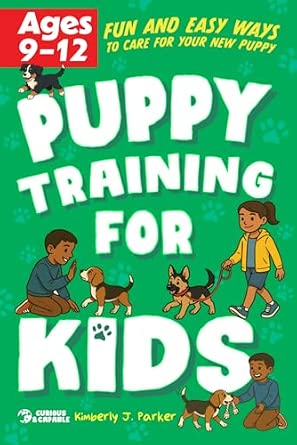
Puppy Training for Kids: Fun and Easy Ways to Care for Your New Puppy (Ages 9-12)
This guide is built around a specific audience: children ages 9–12 who are learning to help care for a puppy. Its kid-friendly language and activities make training and care feel approachable, while coverage of obedience, feeding, grooming, and responsible ownership gives young readers a broader picture than commands alone. Compared with Dog Training Made Simple, which is framed for new adult owners, this book puts the child’s role at the center. That focus is its strength, but also its limit: experienced handlers and adults looking for detailed behavior plans may find the guidance too basic. I’d choose it as a shared learning book for a child and supervising adult, not as the household’s sole resource for complex training problems.
Pros:- Uses language aimed at readers ages 9–12
- Activities can help keep young readers engaged
- Covers training alongside feeding, grooming, and care
- Introduces responsible pet ownership, not just commands
Cons:- Basic coverage may not satisfy older readers or experienced owners
- Limited depth on advanced training techniques
- A child-focused guide is not a substitute for adult oversight of puppy care
Best for: Families with children ages 9–12 who want a kid-readable introduction to puppy training and daily care to use alongside adult supervision.
Not ideal for: Experienced owners or adults seeking advanced obedience plans, detailed behavior troubleshooting, or a standalone guide for managing serious behavior concerns.
- Format:Book
- Target age:9–12
- Primary audience:Children
- Training coverage:Basic obedience
- Care coverage:Feeding and grooming
- Ownership guidance:Responsible pet ownership
Our verdict“Choose this as a supervised introduction for children ages 9–12; pick an adult-oriented guide for deeper training instruction.”
Zak George’s Dog Training Revolution: The Complete Guide to Raising the Perfect Pet with Love
For readers who want training guidance centered on positive reinforcement and the relationship between dog and owner, Zak George’s book is the broadest fit in this group. The description points to practical, approachable advice for raising a well-behaved dog, making it a stronger match for owners who want a general training framework than the narrowly timed routines in Positive Dog Training That Works in Real Life. Its emphasis on building a bond also gives it a different purpose from a reference-style overview like Dog Training For Dummies. The tradeoff is that the supplied details do not specify a schedule, format, or particular behavior topics, so I can’t recommend it for a specific problem or learning plan. It suits owners seeking a positive-method starting point, rather than readers who need a tightly structured program.
Pros:- Centers training on positive reinforcement
- Offers practical, easy-to-follow advice according to the description
- Connects good behavior with a stronger owner-dog relationship
Cons:- The supplied product information does not identify a training schedule or specific topics
- May be less structured than the 10-minute routine approach in Positive Dog Training That Works in Real Life
- No format or other edition details are provided in the available data
Best for: New or current dog owners who want an approachable, positive-reinforcement foundation that emphasizes cooperation and the owner-dog bond.
Not ideal for: Readers who need a clearly specified day-by-day curriculum, focused help for a particular behavior issue, or detailed product and format information before choosing.
- Format:Not specified
- Training approach:Positive reinforcement
- Primary focus:Practical dog training
- Relationship focus:Building a strong bond
- Intended outcome:A well-behaved and happy dog
- Training schedule:Not specified
Our verdict“Pick this for a relationship-focused introduction to positive training, but choose a more specifically structured guide if you want a defined routine.”
Positive Dog Training That Works in Real Life: The 10-Minute-a-Day System to Stop Living on Alert, Read Your Dog, Regain Control & Finally Enjoy Life Together
The clearest point of difference here is the 10-minute-a-day system: this book is aimed at owners who want manageable practice woven into everyday life, rather than a broad reference or long training sessions. Its positive-reinforcement approach and emphasis on reading a dog’s signals make it more communication-focused than Dog Training Made Simple, whose description promises step-by-step help across common scenarios. That narrow daily format can help readers stick with practice, but it still depends on consistent effort; a short routine is not a promise that every behavior issue will resolve quickly. The description also warns that it may not address all problems. I’d choose it for owners seeking practical, repeatable habits, and pair or replace it with more targeted help when a behavior needs specialized attention.
Pros:- Organizes practice around 10 minutes a day
- Applies positive reinforcement to everyday situations
- Emphasizes reading the dog and improving communication
- Aims to make training fit into a regular routine
Cons:- Requires consistent daily commitment to follow the stated system
- May not cover every behavior issue
- The supplied description gives no specific tools or additional product details
Best for: Busy dog owners who can commit to a brief daily routine and want positive, real-life practice that builds communication and control.
Not ideal for: Owners seeking a full reference for a wide range of behavior problems or readers unable to maintain consistent daily practice.
- Format:Not specified
- Daily routine:10 minutes a day
- Training approach:Positive reinforcement
- Training focus:Real-life techniques
- Communication focus:Reading your dog
- Stated outcome:Improved communication and control
Our verdict“Choose this for short, consistent positive-training sessions; select a broader guide if you need coverage across more behavior concerns.”
Dog Training For Dummies
Dog Training For Dummies stands out for breadth: its described coverage spans basic commands, behavior management, and training techniques, making it a plausible starting reference for owners with varied questions. That scope separates it from Positive Dog Training That Works in Real Life, which offers a more specific 10-minute daily framework, and from the child-focused puppy guide, which is aimed at a much younger reader. The broad approach may be useful when a buyer wants one book to consult across ordinary training topics, but the available description does not identify a particular method, schedule, or focused progression. Owners who prefer a tightly sequenced program may find Dog Training Made Simple’s step-by-step positioning more appealing. This is the pick for range, not for a specialized plan or a clearly defined training routine.
Pros:- Covers basic commands and behavior management
- Described as suitable for owners at different experience levels
- Broad scope can serve as a general training reference
Cons:- The supplied description does not name a particular training method
- No specific training schedule or step-by-step program is identified
- Broad coverage may be less focused than a guide aimed at one clear routine or audience
Best for: First-time and general dog owners who want one broad guide to basic commands, common training techniques, and behavior management.
Not ideal for: Readers who want a specific daily curriculum, a child-oriented guide, or specialized instruction for a particular behavior or training goal.
- Format:Not specified
- Experience level:All experience levels
- Command coverage:Basic commands
- Behavior coverage:Behavior management
- Training content:Training techniques
- Training schedule:Not specified
Our verdict“Choose this for broad, general training coverage; pick a routine-led book if you want a more defined progression.”
Dog Training Made Simple: The New Owner’s Manual for Raising a Happy, Well-Behaved Pup
New owners who want clear instructions for everyday situations are the audience this book addresses most directly. Its step-by-step guidance and positive-reinforcement focus make it more explicitly beginner-oriented than Zak George’s Dog Training Revolution, whose description emphasizes practical advice and bonding without specifying a stepwise format. It also promises a wider set of common scenarios than the brief, routine-led approach in Positive Dog Training That Works in Real Life. That breadth and accessibility come with a ceiling: experienced trainers may find the material too basic, and the product details do not name a schedule or specific tools. I’d choose it as a first guide for someone learning everyday training fundamentals, not as a specialized manual for advanced work or complex behavior challenges.
Pros:- Presents guidance as clear, step-by-step instructions
- Uses positive-reinforcement methods
- Covers common everyday training scenarios
- Addresses behavior management and the owner-dog bond
Cons:- May be too basic for experienced trainers
- The supplied description does not specify a training schedule
- No specific tools or detailed topic list are provided
Best for: First-time dog owners who want accessible, step-by-step positive-reinforcement guidance for common training and behavior situations.
Not ideal for: Experienced trainers or owners seeking advanced techniques, a specialized behavior plan, or a clearly stated daily training schedule.
- Format:Not specified
- Intended audience:New dog owners
- Training approach:Positive reinforcement
- Instruction style:Step-by-step
- Training coverage:Fundamentals and common scenarios
- Additional focus:Behavior management and owner-dog bond
Our verdict“Pick this as an accessible first manual for everyday puppy and dog training; experienced owners may want more advanced instruction.”

How We Picked
I compared the 15 books by the kind of training help each promises: a structured program, a broad reference, puppy-raising guidance, family instruction, learning theory, or a focused topic such as tricks or high-energy dogs. I prioritized clarity of purpose, how readily a reader can turn advice into practice, and whether the book’s scope matches the needs named in its title. I also considered the likely audience, from first-time owners to readers seeking a particular training lens.
The ranking favors books that appear useful across common household training needs and make their approach easy to identify. More specialized titles rank lower overall, not because their focus is inherently weaker, but because they fit fewer readers. Since these options vary in scope and intended audience, a lower placement can still be the better match for a child, puppy, active breed, or specific training goal. I treat book descriptions as guides to fit, not proof that a book can address every behavior or replace professional support.
| dog training book | Format |
|---|---|
| Training the Best Dog Ever: A | — |
| The Practical Service Dog Trai | — |
| How to Raise the Perfect Dog: | — |
| Training High Energy Dogs: Tra | — |
| Don’t Shoot the Dog: The Art o | Paperback |
| How to Be Your Dog’s Best Frie | Book |
| The Art of Raising a Puppy | Book |
| The Big Book of Tricks for the | Book |
| Lucky Dog Lessons: From Renown | Book |
| Dog Training for Kids: Fun and | Book |
| Puppy Training for Kids: Fun a | Book |
| Zak George’s Dog Training Revo | Not specified |
| Positive Dog Training That Wor | Not specified |
| Dog Training For Dummies | Not specified |
| Dog Training Made Simple: The | Not specified |
Factors to Consider When Choosing Dog Training Books
Before choosing among dog training books, match the book’s structure and intended reader to the work you actually need to do. A focused manual can be more useful than a broad guide when your goal is clear, while a reference may serve better when questions arise over time. These factors help separate a promising title from one that sounds appealing but does not fit your dog or household.
Choose a format you will use consistently
A scheduled program gives you a sequence of exercises and can make regular practice easier to organize. A reference-style manual offers more flexibility, but you may need to decide what to work on first. Think about whether you prefer a daily plan, short routines, or the ability to look up one issue at a time. A common mistake is buying the most detailed book and then trying to follow every section at once. Pick a format that fits the time and attention you can realistically give. Consistent short sessions usually make a better plan than an ambitious schedule you cannot maintain.
Match the book to your dog’s life stage
Puppies need guidance around early routines and growing skills, while adult dogs may need help with particular habits or a refresher on basics. A puppy title can give useful context for early development, but it may not serve as a lasting reference for every later challenge. Broad manuals can cover more situations yet devote less space to the details of puppyhood. Consider whether you are preparing for a new dog, raising a puppy now, or working with an established adult. Avoid assuming that a book marketed for all dogs will address your dog’s specific stage in equal depth. If your household includes children, also check that the advice is meant for their age and role.
Look for a training approach you can apply
Books differ in how much attention they give to teaching principles, step-by-step exercises, and everyday routines. A theory-oriented title may help you understand why behavior changes, but you may want a more practical companion for exact practice ideas. A highly procedural book can be easier to follow yet leave less room for understanding why a technique works. Read the description for the type of guidance offered rather than relying on a broad promise of better behavior. Choose advice that feels humane and that you can repeat calmly in ordinary settings. If a method seems confusing or makes your dog more distressed, pause and seek qualified help instead of forcing the plan.
Prioritize the problem you most want to solve
Specialized books can offer a closer fit for a defined goal, such as trick training, service-dog preparation, or activities for high-energy dogs. Their narrower focus also means they may not cover everyday skills as broadly as a general manual. Decide whether the goal is a primary need or an additional interest before choosing a specialist title. Buyers sometimes expect a book centered on one topic to function as a complete training library. If several needs compete, start with the one that affects daily life most, then add a focused resource later if needed. For fear, aggression, or safety-sensitive issues, a book alone may not provide enough individualized guidance.
Account for who will do the training
A book’s intended reader matters as much as its training topic. Family-focused titles can help children take part, but adults should remain responsible for safety, consistency, and decisions about difficult behavior. A manual written for adult owners may use explanations or expectations that are less suitable for a younger reader. Before buying, ask who will read the book and who will practice the exercises with the dog. Shared training works best when everyone agrees on cues and household rules. If multiple people use different signals or reward different behaviors, even a sound training plan can become hard for the dog to follow.
Decide when a book is enough—and when to add help
Books can provide structure, explain common training principles, and help owners practice foundational skills. They cannot observe your dog’s body language or tailor a plan to the home in real time. For routine manners, a clear guide may be a useful starting point; for persistent fear, aggression, or behavior that risks injury, seek a qualified professional. A frequent mistake is repeating an exercise that is not working because the book presents it as a standard step. Use progress and your dog’s comfort as signals to adjust, rather than treating a chapter plan as a guarantee. Paying for individualized support can make more sense than collecting multiple general books when the issue is complex.
Frequently Asked Questions
Should I choose a training program or a general reference book?
Choose a program if you want a defined sequence of exercises and a prompt to practice regularly. A reference book is a better fit if you prefer to look up topics as they arise or do not want to follow a fixed schedule. Consider how you learn: readers who like clear milestones may stick with a plan, while flexible readers may use a manual more often. You can also pair the two formats, but start with one main resource so the advice does not compete. The strongest choice is the one you will return to during ordinary training sessions.
Can one dog training book cover puppies and adult behavior equally well?
Some broad guides address multiple life stages, but a book with a wide scope may give less detail to any one stage. Puppy-specific books can better match early routines and development, while general manuals may remain useful as questions change over time. Check the book’s stated audience and chapter focus instead of assuming a broad title covers every need thoroughly. If you are raising a puppy, prioritize early-life guidance first; you can add an adult-focused resource later if a new concern appears. A dog’s age is only one factor, so match the book to the behavior you want to teach as well.
Are books written for children enough to teach a child to train a dog?
Children’s books can introduce age-appropriate ways to participate, but an adult should guide practice and manage safety. A child may learn a cue or routine without being ready to handle every situation the dog presents. Check whether the book is aimed at the child’s age and whether its activities fit your dog’s temperament and size. Keep sessions supervised, brief, and positive, and have an adult take over if the dog becomes unsettled. These books work best as a family learning aid, not as a substitute for adult responsibility.
When should I get professional help instead of relying on a book?
A book is a reasonable starting point for basic manners and routine skills, especially when the dog remains comfortable during practice. Seek individualized help if behavior is severe, persistent, escalating, or creates a risk to people or animals. Fear and aggression can have causes that a general book cannot evaluate from a description alone. A qualified professional can observe context and tailor steps to your dog and household. You can still use a book to learn terminology or support practice, but it should not delay help when safety or welfare is at stake.
Is a specialized training book a better buy than a general guide?
A specialist title can be a better fit when you have a clear goal, such as trick practice or activities for a highly active dog. A general guide makes more sense when you are new to training or expect to need help with several everyday topics. The tradeoff is breadth versus depth: focused books may give more attention to one area while leaving other skills out. Before choosing, name the problem you most want to address and check whether the book covers it directly. If your needs are broad, begin with a general resource and add a specialist book only when a specific gap remains.
Conclusion
For one flexible starting point, I recommend Training the Best Dog Ever as the best overall, especially for owners who want a guided positive-reinforcement program. Dog Training for Dummies is my best value-style pick for readers who want a broad, accessible reference, while Dog Training Made Simple is another approachable choice for new owners. If you want more depth on learning principles, choose Don’t Shoot the Dog as the best premium-style option for readers who value theory over a simple checklist. For puppies, compare The Art of Raising a Puppy with How to Raise the Perfect Dog; for children, choose one of the two kids’ titles by age and whether the focus is general dog care or a new puppy. High-energy-dog owners, trick learners, and service-dog aspirants should start with the book that matches that specific goal. If behavior is serious or safety-related, pair reading with qualified professional guidance.