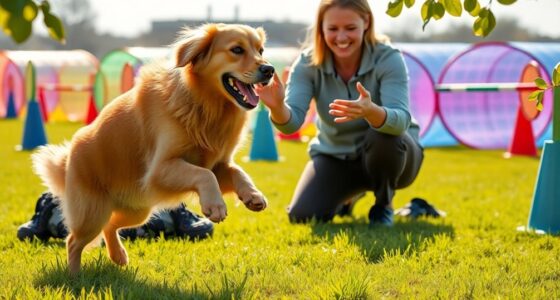
Fast training often fails with slow dogs because rushing their progress can overwhelm them, making it harder to build trust and understand behaviors. Quick fixes and immediate results can cause frustration and damage your bond. Slow dogs need patience, consistency, and small steps to learn effectively. By focusing on behavior modification and creating a supportive environment, you’ll see better, lasting results. Keep exploring to learn how patience and tailored strategies can truly transform your training approach.

Get pet supplies delivered free with Prime
- Fast, free delivery on millions of items
- Prime Video, Amazon Music and more included
- Member-only deals all year
Key Takeaways
- Fast training methods often neglect patience, overwhelming slow dogs and hindering their ability to learn effectively.
- Rushing can damage trust, causing slow dogs to become anxious or resistant to training.
- Quick fixes do not address individual learning paces, leading to inconsistent progress and frustration.
- Rapid training approaches may ignore small behavioral improvements essential for long-term change.
- Lack of reinforcement of gradual progress prevents slow dogs from building confidence and reliable habits.

Fast training methods often fall short with slow dogs because these dogs require more patience and consistency to build trust and understanding. When you rush through commands or expect immediate results, you risk overwhelming your dog, which can hinder their learning process. Slow dogs often need a different approach—one rooted in behavior modification that emphasizes gradual progress rather than quick fixes. Patience strategies become essential here; they help you stay calm and steady, creating a safe environment where your dog feels secure enough to learn at their own pace.
Instead of pushing for instant obedience, focus on small, achievable goals. Break down commands into simple steps and reward even the tiniest improvements. This reinforces positive behavior and encourages your dog to keep trying. With slow learners, consistency is essential. Repeating the same cues and rewards regularly helps your dog associate certain behaviors with positive outcomes. Over time, this behavior modification builds a strong foundation of trust, which is indispensable for effective behavior change. Developing a training plan that accommodates your dog’s individual pace can make a significant difference in their progress. Incorporating patience strategies into your routine can also help you stay motivated and reduce frustration during the process. Additionally, understanding that training environment plays a crucial role in how well your dog responds can help you tailor your approach for better results.
Focus on small goals, consistent cues, and patience to build trust and effective behavior in slow learners.
Remember, patience isn’t just about waiting; it’s about maintaining a calm, encouraging attitude that reassures your dog as they navigate new challenges. You’ll find that patience strategies involve understanding your dog’s individual needs. Some dogs may take longer to respond because they’re naturally cautious or have had less exposure to training. Recognizing these differences allows you to tailor your approach, avoiding frustration and fostering a more positive training experience. It’s important to celebrate small victories and not get discouraged by slow progress. Each step forward, no matter how minor, is a sign that your training efforts are paying off and that your dog is gaining confidence.
Behavior modification for slow dogs isn’t about forcing them into quick obedience but about creating a supportive environment where they can learn at their own speed. This means avoiding punishment or harsh corrections, which can damage trust and slow down progress even more. Instead, focus on reinforcing good behaviors with gentle praise and rewards. Patience strategies will help you maintain a steady, calm demeanor, making your dog feel safe and motivated to continue learning.
In the end, slow dogs thrive when they sense you’re patient and consistent. Your willingness to adapt your training style, embrace gradual progress, and stay committed to behavior modification will yield more reliable results than any fast training method. Building a well-behaved dog takes time, but with perseverance and the right mindset, you’ll create a strong bond and a confident, happy companion.
dog training clicker for slow learners
As an affiliate, we earn on qualifying purchases.
As an affiliate, we earn on qualifying purchases.
Frequently Asked Questions
How Do I Identify if My Dog Is a Slow Learner?
You can tell if your dog is a slow learner by observing their puppy development and how quickly they pick up new commands. If progress seems consistently slow despite your training patience, your dog might need extra time. Every dog learns at a different pace, so avoid rushing. Celebrate small wins, stay consistent, and give your dog the time they need to understand and retain commands.
Are Certain Breeds More Prone to Slow Training?
Some breeds are more prone to slow training due to breed tendencies that demand extra patience. For instance, stubborn breeds like Bulldogs or Afghan Hounds may require more training patience and consistent effort. You might feel like you’re battling an unstoppable force, but understanding your dog’s unique traits helps. Tailoring your approach, being patient, and recognizing breed tendencies make training more effective, turning slow progress into steady success.
Can Slow Training Methods Be More Effective Long-Term?
Yes, slow training methods can be more effective long-term if you focus on positive reinforcement and patience techniques. By rewarding your dog’s progress and giving them time to understand commands, you build trust and confidence. This approach encourages consistent behavior, reduces anxiety, and solidifies learning. While it takes more patience, your dog’s training becomes more durable, fostering a stronger bond and better overall obedience over time.
What Signs Indicate My Dog Is Overwhelmed During Training?
If your dog shows signs of stress, like yawning, lip licking, or avoiding eye contact, they’re overwhelmed during training. Studies show that patience and reading behavioral cues improve long-term results. When your dog becomes distracted, restless, or starts to shut down, it’s time to pause and give them a break. Recognizing these signs helps you adjust your training, ensuring it remains positive and effective without overwhelming your dog.
How Does the Dog’s Age Affect Training Speed?
Your dog’s age influences training speed because younger dogs often have more learning flexibility and can pick up new commands quickly, but they also need more patience and consistent training. Older dogs may learn at a slower pace due to reduced cognitive flexibility, so your training patience is key. Adjust your approach based on age, allowing for more repetition and gentle guidance, ensuring your dog stays motivated and engaged throughout the process.
Conclusion
You see, rushing through training leaves slow dogs stranded in the dust, their progress stalling like a paused film. Patience becomes your steady heartbeat, guiding each gentle step forward. Picture a slow river carving its way through stone—consistent, deliberate, unstoppable. When you embrace patience, those slow dogs bloom like dawn breaking over silent fields, their trust and understanding blossoming with each passing moment. In slow, steady waters, true progress flows—just like your bond with them.
Halloween Picks
halloween
As an affiliate, we earn on qualifying purchases.