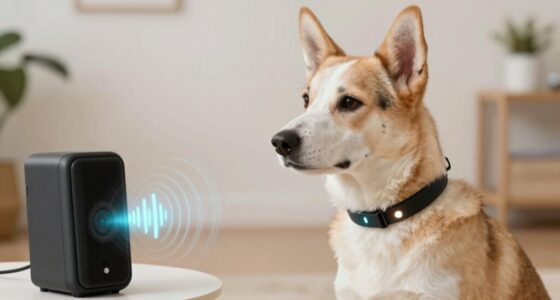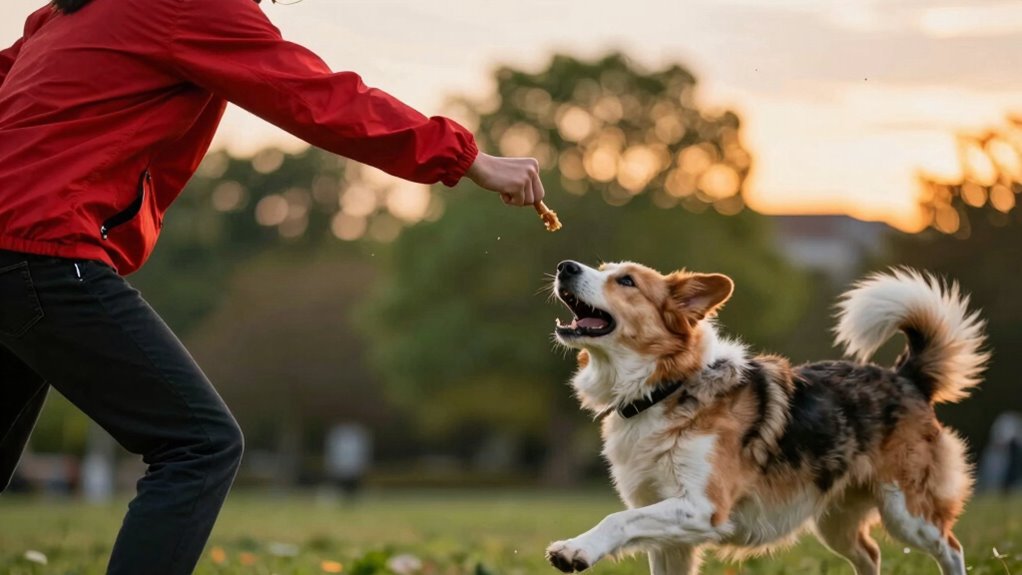
If your treat is too late, you’re missing the key moment your dog associates with the desired behavior. To fix this, focus on timing your rewards immediately when your dog shows the right action. Watch for signals like body language or focus shifts, and respond promptly. Stay calm, consistent, and use cues or tools to help tighten your timing. Keep practicing, and soon you’ll see your dog’s behavior improve as the connection sharpens. More tips to refine your approach are ahead.
Key Takeaways
- Reward immediately after desired behavior to strengthen the connection and prevent confusion.
- Observe your dog’s body language and cues to time rewards accurately.
- Practice patience and stay calm to ensure responses are well-timed.
- Use consistent signals, cues, or tools to improve timing and reinforce behaviors.
- Reflect on delays and adjust your responses to enhance training effectiveness.
Why Poor Timing Can Sabotage Your Dog’s Training
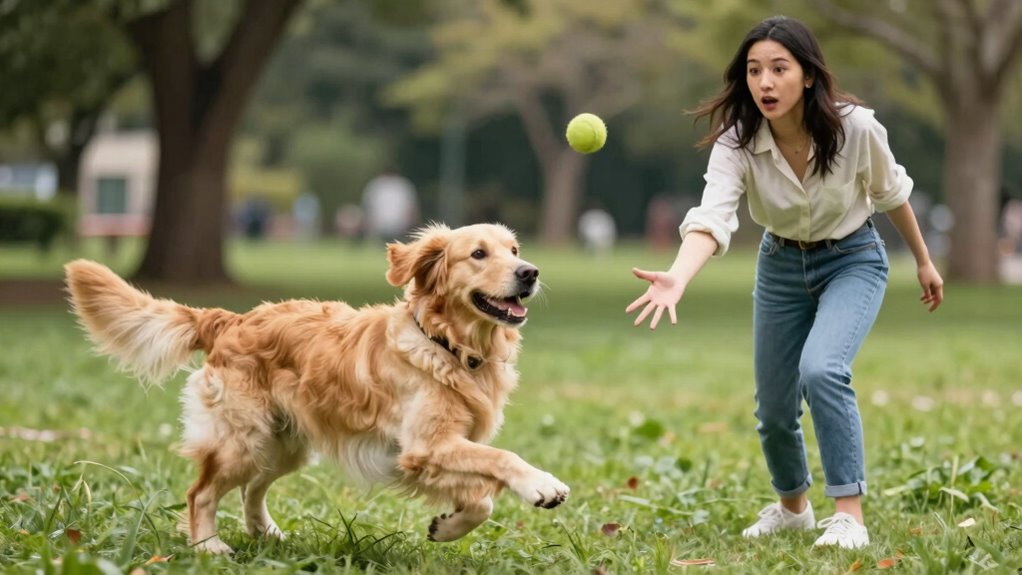
Poor timing during training can quickly undermine your efforts and confuse your dog. When your timing awareness isn’t sharp, your dog struggles to connect actions with rewards or corrections. If you reward too late, your dog might think the wrong behavior is being reinforced, causing confusion. Conversely, if you reward too early, your dog may not understand what specific action earned the praise. Accurate cue recognition is essential for effective training; it ensures you respond at the right moment. When your timing is off, your dog misses the link between commands and consequences, making it harder to learn. Consistent, well-timed responses help your dog understand expectations and build confidence, leading to faster progress and a stronger bond. Additionally, understanding the role of contrast ratio in visual perception can help you better interpret your dog’s reactions to training cues and adjust your approach accordingly.
Recognizing the Perfect Moment to Reward or Correct
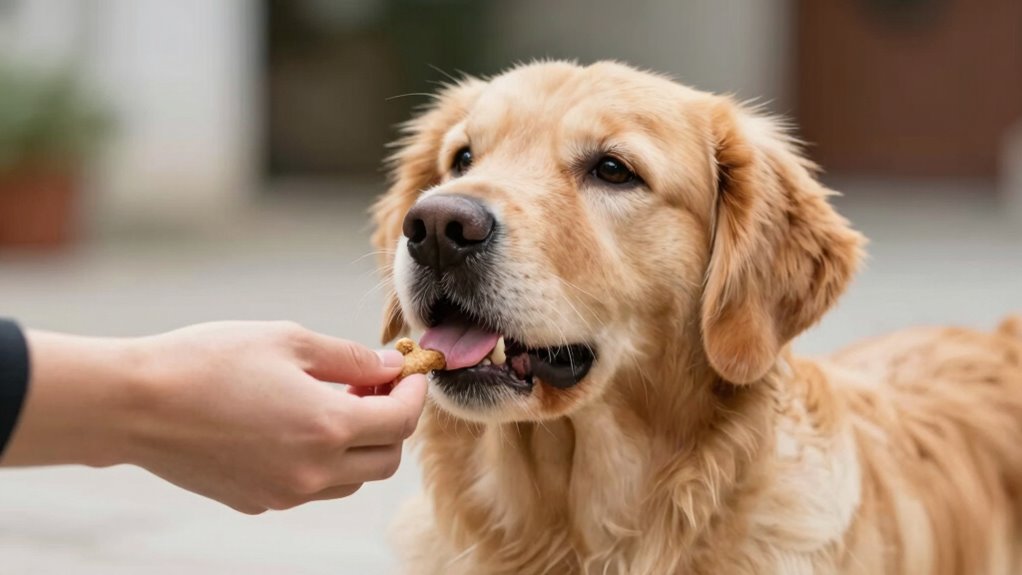
Recognizing the perfect moment to reward or correct your dog is key to effective training. Developing timing awareness helps you identify when your dog truly exhibits the desired behavior, ensuring your response is immediate and relevant. Patience is essential; rushing to reward or correct can lead to confusion and weaken your training. Watch for subtle cues that signal your dog has understood what you’re asking—like a pause or focus shift. When you see these signs, deliver your reward or correction promptly, within seconds. This precision reinforces the connection between behavior and response. Consistent timing not only improves your dog’s understanding but also enhances their trust and confidence, making training more efficient and enjoyable. Remember, consistent timing builds your dog’s understanding and trust, making training more effective. Practicing timing awareness helps you respond at the optimal moment, strengthening your training outcomes. Practice patience, stay alert, and act at the right moment to maximize your training success. Incorporating training consistency into your routine ensures your dog clearly associates your responses with their actions.
Simple Techniques to Improve Your Timing in Dog Training
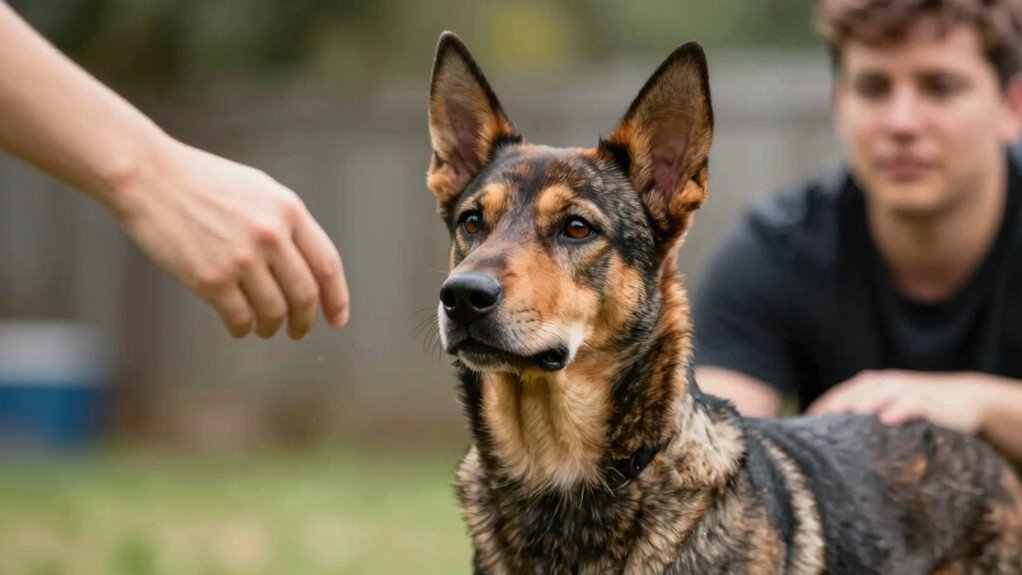
Improving your timing in dog training doesn’t have to be complicated; simple techniques can make a significant difference. One effective method is paying close attention to your dog’s body language, which often signals when they’re ready for a cue or reward. Watch for subtle signs like tail wagging, ear positioning, or eye contact. Additionally, environmental cues—such as the location, sounds, or distractions—can help you anticipate your dog’s behavior. By observing these cues, you can better predict when to give commands or rewards, ensuring your timing is precise. Practice staying calm and focused, and start timing your cues when your dog shows readiness rather than reacting after the moment has passed. Small adjustments in your awareness can dramatically improve your training accuracy. Tuning into your dog’s inner guidance can deepen your understanding of their unique signals and improve training outcomes. Recognizing energyLast cues can help you refine your response and enhance your dog’s learning process. Incorporating passive voice detection tools into your training routine can also help you identify and correct unintentional passive constructions in your commands, leading to clearer communication. Additionally, understanding body language can give you valuable insights into your dog’s emotional state and readiness to learn.
Common Mistakes That Make You Miss the Cue: and How to Fix Them

One common mistake that causes you to miss the cue is getting distracted or losing focus during training sessions. Timing errors often occur when you don’t pay close attention to your dog’s behavior, leading to reward delays. When you hesitate to reward immediately after the desired action, your dog may become confused about what earned the treat. This delay weakens the association and reduces learning efficiency. To fix this, stay engaged and watch your dog closely, rewarding promptly at the exact moment the behavior occurs. Consistent, immediate rewards reinforce the correct response and help establish reliable timing. Avoid rushing or second-guessing your timing, as even small delays can cause your dog to miss the cue and slow down progress. Focus, patience, and precision are key.
What to Do When You Miss the Right Moment

Even with careful focus, it’s possible to miss the perfect moment to reward your dog. When this happens, don’t panic—your timing awareness can still improve. Focus on these steps to turn the mistake into progress:
- Reflect on what caused the delay to identify patterns and improve future timing. Recognizing training cues that may have been unclear can help refine your approach.
- Maintain patience development by practicing calm, consistent cues rather than rushing to reward. Being aware of timing principles helps reinforce good habits.
- Adjust your expectations to allow more flexibility, understanding that perfect timing takes practice.
- Consider filtration and pump protection techniques to ensure your training equipment functions smoothly, minimizing distractions and interruptions during training sessions.
Using Tools and Cues to Keep Your Timing Precise
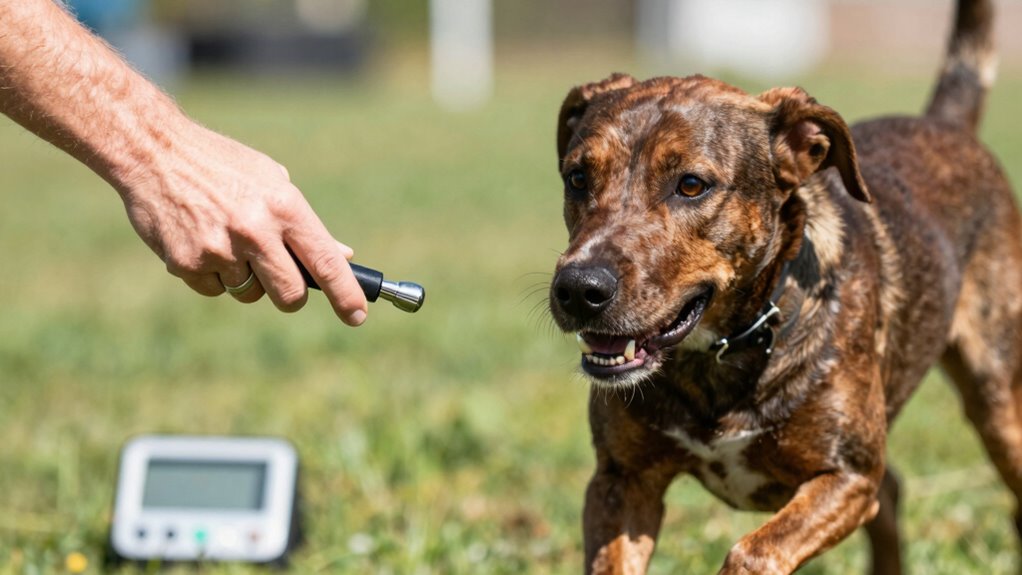
Using tools and cues can substantially enhance your ability to deliver precise timing during training sessions. Timing cues, such as a specific word, gesture, or whistle, create clear signals for your dog to act. Consistently pairing these cues with reward signals helps your dog understand exactly when to perform desired behaviors. For example, immediately marking the correct response with a clicker or a verbal cue ensures your dog links the action to the reward. These cues act as dependable anchors, preventing missed or delayed responses. By integrating consistent timing cues and prompt reward signals, you reinforce accurate timing. This clarity helps your dog learn faster and stay attentive, making your training sessions more effective and ensuring your timing remains precise and reliable.
Building Consistency and Confidence for Better Results

Building consistency and confidence starts with practicing regularly so you can rely on your skills. Setting clear goals keeps you focused and guarantees steady progress. Celebrate small wins along the way to stay motivated and encourage ongoing growth. Incorporating support breakfast options into your routine can further reinforce your success by providing nutritious fuel for your efforts. Establishing routines that integrate smart appliances can help streamline your kitchen tasks and foster better habits. Being aware of cloud service vulnerabilities, like those highlighted during the recent Microsoft outage, can help you develop contingency plans to avoid setbacks. Additionally, understanding the benefits of essential oils for confidence can create a calming environment that supports your journey toward consistent habits.
Consistent Practice Builds Trust
Consistent practice is essential because it helps you develop trust in your abilities and routines. When you commit to regular training, you reinforce habits that support trust building and improve your watch behavior. This consistency boosts your confidence, making it easier to stay focused during vital moments. To strengthen your trust, consider:
- Implementing daily consistency training to reinforce habits
- Tracking progress to recognize improvements
- Setting small, achievable milestones for steady growth
- Focusing on clarity in decision-making to reduce confusion and make better choices. Developing a better understanding of automotive repair fundamentals can also help you recognize issues more quickly and make informed decisions. Engaging in study techniques and exam preparation can further consolidate your skills and reduce uncertainty in critical situations. Building psychological assessment awareness can provide insights into your personality traits that influence your decision-making processes.
Clear Goals Drive Progress
Clear goals are the driving force behind steady progress, providing you with direction and motivation. When you set specific goals, you create a clear path forward, helping you stay focused and committed. Effective goal setting involves defining what you want to achieve and establishing a timeline, which influences reward timing. When rewards come promptly after hitting milestones, you reinforce positive behaviors and boost confidence. This alignment keeps you motivated and makes it easier to track progress. Without clear goals, your efforts can feel aimless, and reward timing can lose its impact. By intentionally setting goals and aligning your rewards accordingly, you build consistency, develop confidence, and accelerate your journey toward better results. Goal setting helps clarify your intentions and ensures your actions stay aligned with your desired outcomes. Clarity and structure make your progress more intentional and sustainable.
Positive Reinforcement Encourages Growth
Positive reinforcement acts as a powerful motivator, encouraging you to repeat behaviors that lead to growth. When you receive motivational feedback or behavioral rewards, it boosts your confidence and helps build consistency. Recognizing your progress with positive signals reinforces good habits and keeps you motivated to improve. To maximize this effect, focus on:
- Celebrating small wins regularly
- Providing specific, encouraging feedback
- Using rewards that align with your goals
These strategies create a positive cycle where growth becomes a natural outcome. Consistent positive reinforcement helps you develop trust in your abilities and strengthens your commitment to improvement. Over time, this approach fosters a mindset that seeks growth opportunities, leading to better results and a more confident, disciplined watch behavior.
Frequently Asked Questions
How Long Does It Typically Take to See Improvements in Timing?
You’ll likely see improvements in timing within a few weeks if you stay consistent with your training. Keep in mind that training consistency and patience development are key. As you practice regularly, your timing will naturally improve, though it may take a month or more for noticeable changes. Stay committed, trust the process, and give yourself time to develop better timing skills through steady effort and patience.
Can Poor Timing Affect a Dog’s Long-Term Behavior?
Poor timing in dog training, especially with reward timing, can profoundly impact your dog’s long-term behavior. If rewards come too late, your dog might associate the wrong behavior with the reward, leading to confusion or unwanted habits. Consistently good reward timing helps reinforce positive behaviors, ensuring they stick. So, by focusing on precise timing, you set your dog up for lasting success and better overall behavior.
What Are Signs That My Timing Is Consistently Off?
Your timing is off when your cues feel like missed beats in a song, causing confusion. You might notice your dog hesitating or looking away, signaling anticipation signs that your cues aren’t clear or consistent. If your commands don’t lead to the expected response or your treats arrive too late, it’s a sign your cue consistency needs sharpening. Pay close attention; your dog’s reactions reveal whether your timing hits the right note.
Is It Better to Reward Immediately or Wait a Second?
It’s generally better to give instant rewards for good behavior because it strengthens the connection between the action and the reinforcement. Immediate rewards, or instant rewards, help your pet understand what they did right right away. Delayed reinforcement can cause confusion, making it harder for your pet to associate the reward with the behavior. So, reward promptly to reinforce positive actions effectively and promote consistent, desirable behavior.
How Do I Adapt My Timing for Different Dog Breeds?
Think of each breed as a different instrument in an orchestra—some need a gentle tap, others a firm beat. To adapt your timing, observe breed-specific cues and adjust your reinforcement accordingly. Training adaptability is key; reward quickly for high-energy breeds and slightly later for more sensitive ones. By tuning your timing to each dog’s unique needs, you’ll create harmonious progress and a well-behaved companion.
Conclusion
Remember, timing makes or breaks your training. A moment too late can undo all your progress, just like a missed cue can create confusion. While patience and practice are key, don’t forget that precision is your best tool. When you get it right, your dog responds instantly—confidence grows. But slip up, and progress stalls. Mastering timing isn’t just about perfection; it’s about creating clarity amid the chaos, turning small moments into big results.