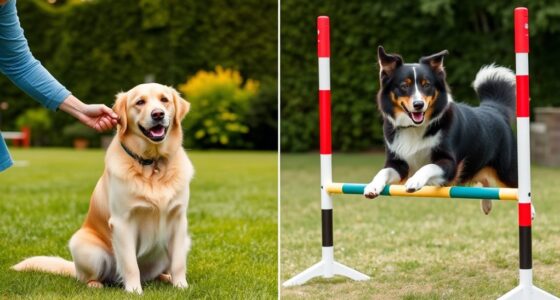

To find the right dog trainer or behaviorist, start by evaluating their training philosophy; choose someone who uses humane, positive reinforcement methods. Verify their credentials with reputable organizations, and ask about their experience with dogs similar to yours. Look for signs of compassion, patience, and clear communication. Make certain their approach addresses your dog’s specific needs and creates a safe environment. Keep exploring to discover even more tips for selecting a trustworthy, effective professional.
Key Takeaways
- Verify trainer credentials through reputable certifications like CCPDT or IACP to ensure professional standards.
- Assess their experience with similar dogs and behavioral issues for effective, tailored training.
- Choose trainers who use humane, positive reinforcement methods and avoid corrective or dominance-based techniques.
- Observe their communication style, body language, and empathy to ensure a compassionate and trustworthy relationship.
- Ensure compatibility with your dog’s personality and specific needs, creating a safe, consistent training environment.
Understanding Different Training Approaches

Understanding different training approaches is essential when choosing a dog trainer or behaviorist because not all methods suit every dog or owner. Positive reinforcement is a popular approach that rewards good behavior, encouraging your dog to repeat it. It builds trust and fosters a strong bond between you and your pet. Balanced training combines positive reinforcement with corrections or commands when necessary, providing an all-encompassing strategy for addressing behavioral issues. Some trainers focus solely on reward-based methods, while others incorporate a mix of techniques. Knowing the differences helps you select a trainer whose approach aligns with your dog’s temperament and your preferences. Additionally, being aware of the training techniques used can help you evaluate the trainer’s philosophy and commitment to your pet’s well-being. Recognizing training philosophies can further assist in making an informed decision that aligns with your values and your dog’s best interests. Understanding the training tools employed can also give insight into the trainer’s methods and their emphasis on humane treatment. Being familiar with vetted methods ensures you choose a trainer who uses safe and effective practices. Furthermore, understanding the behavior modification techniques used can help you identify approaches that prioritize your dog’s emotional health and safety.
Identifying Certified and Qualified Professionals

To make certain you choose a qualified professional, start by checking their certifications and credentials. Look for proven experience records and ask for references or success stories. Additionally, verify if they’re members of reputable professional associations, which can indicate ongoing education and adherence to industry standards. Reviewing client testimonials and reviews can also provide insight into their effectiveness and professionalism. Furthermore, inquire whether they utilize evidence-based methods, such as behavioral science, to ensure effective and humane training practices. Recognizing cloud service dependencies can help you understand the importance of a trainer’s ability to adapt to different situations and client needs.
Certification and Credentials
When choosing a dog trainer or behaviorist, verifying their certification and credentials is essential to guarantee you’re working with a qualified professional. A valid training certification indicates they’ve completed recognized coursework and practical training, ensuring they understand effective, humane methods. Credential verification helps confirm their qualifications and prevents false claims. Look for certifications from reputable organizations like the Certification Council for Professional Dog Trainers (CCPDT) or the International Association of Canine Professionals (IACP). Don’t hesitate to ask for proof of their credentials and check their standing with these organizations. Certified professionals demonstrate a commitment to ongoing education and ethical standards, giving you confidence that your dog’s training will be safe, effective, and tailored to your pet’s needs. Additionally, understanding the importance of ethical standards in training practices can help you select a professional who prioritizes humane and responsible methods. Recognizing ongoing education requirements within certification programs can ensure your trainer stays current with the latest humane techniques and industry standards. Furthermore, seeking professionals with continuing education shows a dedication to maintaining high-quality training standards and adapting to new advancements in the field. Staying informed about certification renewal requirements can also help you verify that your trainer remains qualified over time. Incorporating market demand awareness can also guide you to trainers who are respected and sought-after within the professional community.
Proven Experience Records
Looking for proven experience records is one of the quickest ways to identify qualified dog trainers and behaviorists. You should ask for details about their past training sessions and behavior modification success stories. Experienced professionals can demonstrate a history of working with dogs similar to yours and show evidence of successful outcomes. You can also inquire about their training methods and how they tailor their approach to individual dogs’ needs. Check if they can provide references or testimonials from previous clients, highlighting their expertise. Well-established trainers often document their work, showcasing their ability to handle various issues, from basic obedience to complex behavioral problems. Remember, a trainer’s track record of effective training sessions and behavior modification indicates they have the skills needed to help your dog. Prioritize those with solid experience records to ensure you’re hiring a knowledgeable and capable professional. Additionally, reviewing vetted credentials and certifications can further confirm their qualifications and commitment to ongoing education in the field. A reputable trainer will also stay updated with current training techniques and industry standards, ensuring your dog receives the best care. To further assess their credibility, consider seeking reviews or feedback on professional reputation from other pet owners.
Professional Associations Membership
Verifying a dog trainer or behaviorist’s membership in professional associations is a strong indicator of their credibility and commitment to ethical standards. Membership benefits often include access to ongoing education, adherence to industry best practices, and a code of ethics that guides their work. Reputable associations, such as the Association of Professional Dog Trainers (APDT) or the International Association of Canine Professionals (IACP), set high standards for certification and professionalism. When you see a trainer listed as a member, it shows they’re dedicated to staying current with training techniques and ethical guidelines. This commitment not only benefits your dog’s training but also gives you peace of mind, knowing you’re working with someone who values professionalism and continuous improvement. Additionally, a focus on digital literacy and critical thinking skills in the industry can help trainers better understand and address diverse behavioral challenges. Staying informed about different training methods and their effectiveness is crucial for selecting the best approach for your dog. Recognizing their understanding of credit card security measures can further indicate their professionalism in managing client information securely. Furthermore, being knowledgeable about AI ethics and safety can assist trainers in adopting responsible and transparent practices as technology becomes more integrated into pet training tools.
Evaluating Experience and Specializations

Evaluating a dog trainer or behaviorist’s experience and specializations helps make certain you find someone well-suited to your dog’s needs. Look for trainers with expertise in breed-specific training, as different breeds have unique behaviors and learning styles. If you have a puppy, prioritize those with experience in puppy socialization to help prevent future issues. Consider their background in handling various behavioral problems, such as aggression or separation anxiety. Ask about their certifications and years in practice to gauge their professionalism. Additionally, find out if they have worked with dogs similar to yours in age or temperament. This ensures they understand your dog’s particular challenges, making your training sessions more effective. Ensuring the trainer is knowledgeable about puppy socialization can significantly influence your puppy’s development and future behavior. Recognizing the importance of mental wellbeing in trainers and behaviorists can also impact the success of your dog’s training journey. Incorporating professional experience can help you choose a trainer who is both skilled and trustworthy.
Recognizing Signs of a Compassionate Trainer

A trainer’s compassion often shows through in how they interact with your dog and you. Look for signs of empathy development, like their ability to understand your dog’s feelings and respond kindly. A compassionate trainer demonstrates patience, giving your dog time to learn without frustration. They remain calm during training, showing genuine concern for your dog’s well-being. Recognizing modern training methods can also indicate a trainer’s commitment to humane and effective techniques.
Asking the Right Questions During Consultations

When you meet with a dog trainer or behaviorist, asking thoughtful questions can make all the difference in choosing the right professional for your pet. Focus on their experience with dog socialization and leash training, as these are common challenges. Ask about their methods to guarantee they align with your goals. Clarify how they handle aggressive behaviors or fearfulness during socialization sessions. Find out if they use positive reinforcement techniques and how they customize training plans. Be sure to inquire about their success stories with similar issues. Also, ask about their availability for ongoing support and whether they provide guidance for home practice. These questions help you gauge their expertise and ensure a good fit for your dog’s specific needs.
Checking References and Client Testimonials

When checking references and client testimonials, make sure to verify the trainer’s credentials and ask about their past successes. Hearing about real experiences can give you insight into their effectiveness and professionalism. Don’t hesitate to follow up and gather detailed feedback before making your decision.
Verify Trainer Credentials
To guarantee a trainer’s credibility, it’s essential to verify their credentials by checking references and client testimonials. Credential verification helps ensure they possess the necessary skills and experience, especially through their professional accreditation. You should ask for proof of certification from reputable organizations and confirm their training background. Reach out to previous clients to learn about their experiences and the trainer’s effectiveness. Look for consistent positive feedback about the trainer’s methods and professionalism. Keep in mind that reputable trainers will be transparent about their qualifications and willing to share references. Verifying these details provides peace of mind and helps you choose someone truly qualified to work with your dog. Trustworthy trainers prioritize credential verification as part of their commitment to quality.
Assess Past Successes
Checking references and client testimonials is a vital step in evaluating a trainer’s past successes. By reviewing success stories, you gain insight into how effectively they’ve helped dogs and owners overcome specific challenges. Ask for case studies or examples that mirror your situation, such as behavior modification or obedience training. Pay attention to details about the trainer’s methods, patience, and ability to adapt to individual dogs’ needs. Client testimonials can reveal consistency in results and overall satisfaction. If previous clients highlight positive transformations and effective communication, it’s a strong indicator the trainer has a proven track record. This step helps you confirm that your chosen professional has demonstrated real success and can deliver the results you’re seeking.
Assessing the Trainer’s Communication Style

Evaluating a trainer’s communication style is essential because it directly affects how effectively you and your dog will learn together. Pay attention to how they use body language and tone of voice—these cues reveal their confidence and consistency. A good trainer maintains open, friendly body language, avoiding crossed arms or intimidating gestures. Their tone should be calm, clear, and encouraging, helping your dog feel safe and motivated. Observe whether they listen actively and respond thoughtfully during your interactions. A trainer who adapts their communication to your dog’s responses will likely be more effective. Consider these points:
- Consistent body language that matches verbal cues
- Calm, encouraging tone of voice
- Respectful, attentive listening
- Clear, concise instructions
- Positive reinforcement through gestures and words
Considering Compatibility With Your Dog’S Needs

To find the right trainer, you need to contemplate how well their methods match your dog’s specific needs. Look for someone whose training style aligns with your dog’s personality and learning preferences. Additionally, make sure they can address any particular behavior issues your dog may have.
Match Training Styles
Choosing a training style that aligns with your dog’s personality and learning preferences is essential for effective behavior development. Some dogs respond best to positive reinforcement, while others may benefit from balanced training approaches that combine rewards and correction. When selecting a trainer, consider how their methods fit your dog’s temperament and learning style.
Look for trainers who:
- Emphasize positive reinforcement techniques
- Use consistent, clear cues
- Avoid harsh punishment or aversive methods
- Adapt their approach to your dog’s individual needs
- Incorporate balanced training when appropriate
Matching your dog’s preferences with a compatible training style increases cooperation, reduces stress, and helps your dog learn more effectively. Finding the right fit ensures training remains a positive experience for both of you.
Assess Personality Compatibility
Since every dog has unique personality traits and behavioral needs, evaluating how well a trainer’s approach aligns with your dog’s temperament is vital. Personality compatibility plays a key role in establishing a successful trainer dog rapport. You want a professional who understands your dog’s unique quirks and responds with patience and empathy. Observe how the trainer interacts during an initial consultation—do they seem attentive to your dog’s signals? A good match will involve someone whose style complements your dog’s personality, whether it’s energetic, shy, or stubborn. This compatibility fosters trust and helps your dog feel more comfortable during training. Ultimately, choosing someone who clicks with your dog’s personality ensures a smoother, more effective training experience.
Address Specific Behavior Needs
Understanding your dog’s specific behavioral challenges helps guarantee the trainer you select can address them effectively. Whether your dog struggles with leash pulling, barking, fearfulness, or aggression, look for someone skilled in behavior modification tailored to these issues. A good trainer will incorporate socialization techniques that suit your dog’s needs, helping build confidence and reduce anxiety. Ask about their experience with similar behavior problems and their approach to handling them. Verify they use positive reinforcement methods and customized plans. It’s essential they understand your dog’s temperament and history to develop a suitable training strategy. The right professional will focus on practical solutions that foster trust and long-term improvements, making sure your dog’s unique needs are prioritized.
Understanding Training Methods and Techniques

When evaluating training methods, it’s essential to recognize that different techniques can produce varying results depending on your dog’s temperament and learning style. Positive reinforcement, like praise or treats, encourages good behavior by rewarding desired actions. Clicker training, a popular form of positive reinforcement, uses a small device to mark the exact moment your dog performs the right behavior, making learning quicker and clearer. Some trainers rely on corrections or dominance-based techniques, but these can cause confusion or stress. It’s important to ask potential trainers about their methods and ensure their approach aligns with your values and your dog’s needs. Understanding these techniques helps you choose a professional who uses effective, humane methods to foster a trusting and cooperative relationship with your dog.
Ensuring a Safe and Supportive Environment

Creating a safe and supportive environment is essential for effective dog training and behavior improvement. When selecting a trainer or behaviorist, guarantee they prioritize safety protocols and use positive reinforcement techniques. A secure space prevents accidents and builds your dog’s confidence.
Consider these key factors:
- Clear safety protocols to protect both you and your dog
- Use of positive reinforcement to motivate and reward good behavior
- A calm, distraction-free training area
- Trainers who communicate expectations clearly
- Consistent, humane handling practices
Frequently Asked Questions
How Much Do Professional Dog Training Services Typically Cost?
You might wonder about the cost of professional dog training services. Typically, prices vary based on experience, location, and training type. Look for trainers who offer pricing transparency and clear training package options, so you know what you’re paying for. Expect to spend anywhere from $30 to $100 per session or more. Some trainers offer discounts for multiple sessions or group classes, helping you find a plan that fits your budget.
What Is the Average Duration of a Training Program?
The average duration of a training program varies based on your dog’s needs, but most programs last between 4 to 8 weeks. Training sessions typically range from 30 to 60 minutes, depending on the goals and your dog’s attention span. You’ll notice progress as you complete each training session, and consistent commitment helps guarantee lasting results. Be patient, and adjust the training session length or program duration as needed for maximum success.
Are There Any Guarantees or Guarantees of Results?
While guarantees of results are rare, focusing on training consistency and selecting a trainer with strong credentials can greatly improve your dog’s progress. Reputable trainers understand that each dog is unique, so they don’t promise overnight success. Instead, they commit to guiding you and your pup through steady, positive sessions. Trust a professional who emphasizes ongoing support and transparent methods, giving you the best chance for long-lasting improvements.
Can Training Be Tailored to My Dog’S Specific Issues?
Absolutely, training can be tailored to your dog’s specific issues through personalized plans. A professional trainer or behaviorist assesses your dog’s unique behaviors and creates a customized behavior modification program. This targeted approach addresses your dog’s individual needs, making training more effective. By focusing on your dog’s particular challenges, they help you achieve better results faster, ensuring your dog’s training is both effective and compassionate.
What Should I Do if I’M Unhappy With the Trainer’S Methods?
If you’re unhappy with a trainer’s methods, address your concerns immediately. For example, if they use harsh discipline, you should question their trainer accountability and insist on ethical practices. If your concerns aren’t addressed, consider ending the session and seeking a professional who aligns with your values. Remember, a good trainer values transparency and respects your wishes, ensuring your dog’s well-being and your satisfaction.
Conclusion
Choosing the right trainer is like finding the perfect key to unseal your dog’s potential. Trust your instincts, listen closely, and let your questions be your compass. When their methods harmonize with your dog’s needs and their compassion shines through, you’ll find a partner who guides your journey with patience and care. With the right fit, your training path becomes a smooth melody, turning everyday moments into a symphony of understanding and joy.