
To train your dog to station at the doorbell, start by observing their body language to recognize signals of excitement or overwhelm. Use calm commands like “Stay” or “Wait,” and reward their compliance immediately with praise or treats. Gradually increase challenge by ringing the doorbell multiple times or adding distractions. Consistency, patience, and a calm environment help reinforce the behavior. Keep practicing, and you’ll discover more tips to improve your training approach.
Key Takeaways
- Use calm body language and clear commands like “Stay” when the doorbell rings to establish station behavior.
- Reinforce calmness and staying in place immediately with treats or praise.
- Gradually increase challenge by ringing the doorbell multiple times and adding distractions.
- Monitor your dog’s body language for signs of overstimulation and adjust training accordingly.
- Maintain consistency, patience, and positive reinforcement to reinforce the desired station behavior.
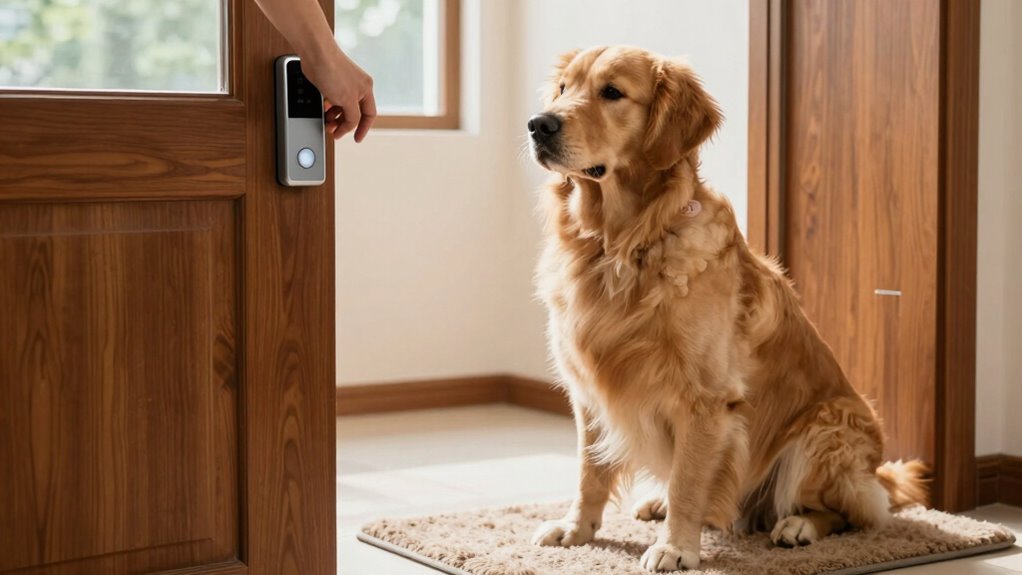
Have you ever wondered how to teach your dog to stay at the door when the doorbell rings? It’s a common challenge, but with patience and the right approach, you can help your dog understand what’s expected. The first step is to observe your dog’s body language closely. Dogs communicate so much through their posture, tail position, ear orientation, and eye contact. When you notice your dog becoming excited or moving toward the door at the sound of the doorbell, you can use this awareness to guide your training. Recognizing these signals helps you determine when your dog is about to break the desired behavior, so you can reinforce the correct response immediately.
Reinforcement techniques are essential to teaching your dog to stay at the door. Start by having your dog in a calm, seated position near the door. When the doorbell rings, don’t rush to open it right away. Instead, use a command like “Stay” or “Wait” in a firm but friendly tone. If your dog remains in place, immediately reward with praise, a treat, or both. This positive reinforcement helps your dog associate staying at the door with good things. If your dog gets up or moves toward the door, gently guide them back to the starting position and repeat the command, then reward only when they succeed. Consistency is vital here; always reinforce the desired behavior and avoid giving attention when they break the command.
As your dog begins to understand and reliably stay at the door when the bell rings, increase the challenge gradually. You can do this by ringing the doorbell multiple times, adding distractions, or practicing in different rooms. Throughout this process, stay attentive to their body language. If your dog seems overwhelmed or overly excited, take a step back and reinforce calm behavior before proceeding. Using reinforcement techniques that match your dog’s temperament—like treats for more food-motivated dogs or praise and petting for others—can make the training more effective. Additionally, understanding dog body language can help you anticipate and manage their reactions better. Being aware of your dog’s body language signals further enhances your ability to respond appropriately and reinforce calmness. Learning to interpret these signals is an important dog training skill that can reduce frustration and improve communication. In addition, understanding indoor air quality and maintaining a healthy environment can contribute to your dog’s overall wellbeing and responsiveness during training.
Patience and consistency are your best tools. Remember, dogs thrive on clear communication and positive reinforcement. By paying close attention to their body language and rewarding the right responses, you’ll help your dog learn to stay calm and station at the door when the doorbell rings. With time, your dog will understand that staying put is not only expected but also rewarding, making your home a calmer, more controlled space.
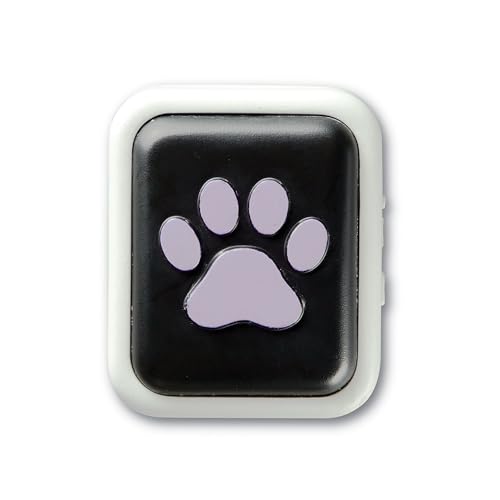
Hunger for Words Talking Pet Doorbell – Potty Training Door Bell, Dog Training Tools, Puppy Must Haves, Puppy Buttons, Potty Train Bell for Dogs, Button for Dogs, Housetraining Dog Doorbell
- Easy Potty Training: Helps dogs signal potty time
- Press to Ring: Loud chime or custom recording
- Training Tool: Encourages dogs to ask to go outside
As an affiliate, we earn on qualifying purchases.
As an affiliate, we earn on qualifying purchases.
Frequently Asked Questions
How Long Does It Typically Take to Train a Dog for This Behavior?
It usually takes a few weeks to train your dog to station at the doorbell, but it varies based on the dog’s age and temperament. You need to reward consistency, patience, and persistence throughout the process. Keep training sessions short and positive, gradually increasing difficulty. With steady effort, your dog will learn this behavior, but remember, progress depends on your commitment and how well you reinforce the training consistently.
What Are Common Mistakes to Avoid During Training?
Avoid common mistakes like inconsistent training, neglecting reinforcement techniques, and rushing progress. You want to focus on training consistency—repeating commands, rewarding desired behaviors, and maintaining patience. Don’t punish mistakes; instead, reinforce positive actions. By keeping your approach steady and using effective reinforcement techniques, you help your dog understand expectations clearly. Consistency and positive reinforcement build trust, making the training process smoother and more successful for both of you.
Can This Training Work for All Dog Breeds?
Breed-specific training can influence how well your dog learns to station at the doorbell, as behavioral variations exist across breeds. While some breeds respond quickly, others might need more patience and tailored approaches. You should adapt your training methods to your dog’s individual traits and temperament, regardless of breed. Consistency and positive reinforcement help guarantee success, but always consider your dog’s unique behavioral tendencies for the best results.
How Do I Handle Setbacks or Regressions?
When setbacks happen, stay calm and avoid punishment; instead, focus on consistency. Reinforce the behavior you want by rewarding your dog immediately, which helps avoid punishment avoidance and builds positive associations. Keep training sessions short and frequent, and don’t get discouraged by regressions. Remember, patience and steady reinforcement are key. Over time, your dog will regain confidence and stay station at the doorbell reliably.
Is Professional Help Necessary for Effective Training?
Think of training as planting a garden—sometimes, you need expert guidance to cultivate thriving growth. Professional help isn’t always necessary but can be invaluable for refining training methods and ensuring behavior consistency. If your dog’s responses stall or regress despite your efforts, a trainer offers tailored strategies. They help you navigate setbacks, strengthen communication, and turn your training into a steady, confident dance rather than a stumble in the dark.
Conclusion
Training your dog to station at the doorbell can markedly improve your home’s safety and reduce anxiety. Consistent practice and positive reinforcement are key to success. Did you know that dogs with trained station behaviors are 40% more likely to respond calmly during unexpected doorbell rings? By investing patience and effort, you’ll create a well-behaved companion who understands boundaries, making your daily routines smoother and more enjoyable for everyone involved.