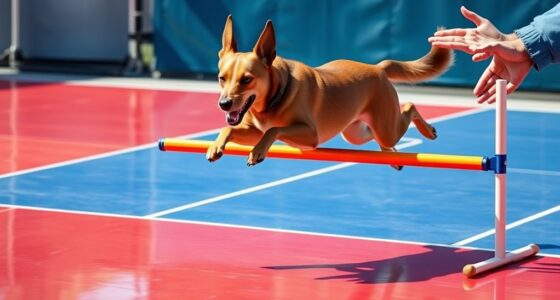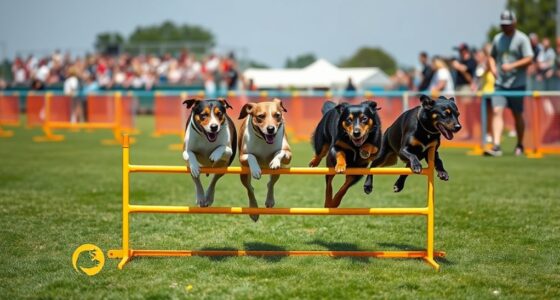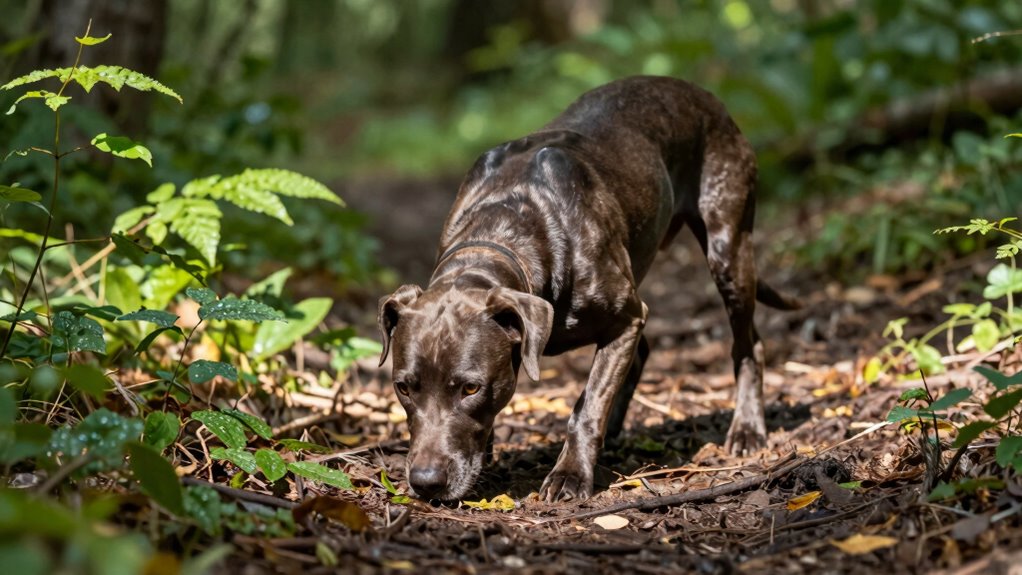

To teach your dog to hunt methodically, establish clear search patterns like grid, spiral, or zigzag to guarantee thorough ground coverage. Use systematic, deliberate movements that build your dog’s confidence and consistency. Incorporate scent discrimination exercises to help localize the target scent amid distractions. Combining these techniques enhances efficiency and accuracy in your dog’s searches. Keep practicing these patterns, and you’ll discover more ways to improve your dog’s tracking skills.
Key Takeaways
- Use systematic search patterns like grid, spiral, or zigzag to ensure thorough area coverage.
- Train dogs to follow deliberate, organized movements to build consistency and confidence.
- Incorporate scent discrimination exercises to help dogs focus on target scents amid distractions.
- Gradually progress from basic to advanced search techniques as the dog’s skills improve.
- Combine structured search patterns with scent discrimination for maximum efficiency and accuracy.

Have you ever wondered how searchers systematically find what they’re looking for? It’s not just luck—there’s a lot of skill involved, especially when it comes to training dogs to hunt methodically. One key aspect of this training is teaching your dog effective search patterns. These patterns help your dog cover ground thoroughly, ensuring no scent is left untracked. To do this successfully, you need to focus on tracking techniques that encourage your dog to follow specific paths and develop scent discrimination skills to distinguish relevant scents from background odors.
Tracking techniques involve guiding your dog through a series of deliberate search motions. You might start with grid searches, where your dog systematically crosses a designated area in straight lines, ensuring complete coverage. This approach helps prevent missed spots and builds your dog’s confidence in tracking scents across different terrains. As your dog becomes more proficient, you can introduce more advanced patterns such as spirals or zigzags, which allow for a more flexible search in complex environments. The goal is to develop consistency in your dog’s movements, so they learn to follow scent trails in a logical, organized manner. Developing these search patterns is essential for building your dog’s confidence and efficiency during real search scenarios. Incorporating systematic search techniques can further enhance your training, leading to more reliable performance in the field. When training your dog, understanding the importance of clear tracking techniques helps ensure they stay focused and motivated. Additionally, understanding the fundamentals of scent detection can improve your overall training approach and results. Knowing how to optimize indoor air quality can also influence your dog’s ability to detect scents more effectively, especially in enclosed environments.
Guide your dog with deliberate patterns like grid searches, spirals, and zigzags for thorough, confident scent tracking.
Scent discrimination is equally critical. You want your dog to focus on the specific scent they’re supposed to track, ignoring other odors that could lead them astray. This skill is cultivated through focused exercises where your dog learns to differentiate the target scent from decoys or distracting smells. For example, you might hide the scent source in a cluttered environment, encouraging your dog to sniff out the right trail without getting sidetracked by unrelated smells. Over time, your dog will begin to identify the unique scent signature and follow it precisely, even amidst competing odors.
Combining tracking techniques with scent discrimination training allows your dog to hunt methodically. You’ll notice your dog becoming more disciplined and efficient, covering areas systematically rather than rushing or wandering aimlessly. This methodical approach is crucial, especially in search-and-rescue operations, where missing a spot can mean the difference between finding someone and not. Training your dog to understand these patterns and scent cues takes patience, but the results are worth it. With consistent practice, your dog will develop the ability to hunt meticulously, making every search more thorough and effective.

Nose Work for Dogs, Dog Scent Training Kit Magnetic Scent Work Tins Training Kits, Dogs Smell Training Kit Aluminum Cans with Lids, Dog Nose Work Containers (18 Pack)
Package Including: 18 pieces of dog scent training tins, comes with 18 pieces of magnetic dots, you can…
As an affiliate, we earn on qualifying purchases.
As an affiliate, we earn on qualifying purchases.
Frequently Asked Questions
How Long Does It Take to Train a Dog in Search Patterns?
Training your dog in search patterns typically takes several weeks to months, depending on their age, breed, and learning pace. Consistent search pattern training and regular, focused training session durations help reinforce skills efficiently. You should aim for short, frequent training sessions to maintain your dog’s enthusiasm and attention. With patience and persistence, your dog will develop reliable search pattern skills, improving their hunting methodically over time.
What Breeds Are Best Suited for Search Pattern Training?
Breeds like German Shepherds, Belgian Malinois, and Labrador Retrievers are best suited for search pattern training because of their intelligence, drive, and strong scent work capabilities. Your breed selection plays a key role in mastering search pattern techniques, as these dogs tend to excel in methodical hunting. Focus on consistent training and positive reinforcement to help your dog develop reliable search skills, regardless of the breed.
Can Older Dogs Learn New Search Techniques Effectively?
Yes, older dogs can learn new search techniques effectively. Age considerations might influence their stamina or speed, but their training adaptability remains strong with patience and positive reinforcement. You should focus on gradual, consistent training sessions that match their energy levels and learning pace. Older dogs often bring experience and calmness, making them excellent at methodical search patterns. With the right approach, you’ll see impressive progress regardless of age.
How Do Weather Conditions Affect Search Pattern Training?
Imagine the wind whispering through trees or rain creating ripples across a pond—that’s weather impact on search pattern training. You should adjust your training to account for wind, rain, or extreme temperatures, which can obscure scents or distract your dog. Training adjustments might include shorter sessions in bad weather or using scent-enhancing techniques. By adapting, you guarantee your dog remains confident and effective, regardless of the weather conditions.
What Common Mistakes Should I Avoid During Training?
During training, avoid rushing or becoming impatient, as these training setbacks can hinder progress. Stay consistent with your commands and routines, and don’t overlook your dog’s comfort and signals. Use patience strategies like positive reinforcement to build confidence. Remember, rushing can cause confusion, so give your dog time to learn each step thoroughly. Keep your approach calm and encouraging, fostering a positive environment for your dog to master methodical search patterns.

Search and Rescue Canine Training Log and Journal
As an affiliate, we earn on qualifying purchases.
As an affiliate, we earn on qualifying purchases.
Conclusion
As you guide your dog through each search pattern, remember you’re planting seeds of trust and patience. Like a lighthouse guiding ships through fog, your consistent training illuminates their path, turning instinct into skill. With every methodical step, you’re forging a bond that empowers your dog to navigate the unknown with confidence. In this dance of discovery, patience becomes your compass, and your partnership transforms into a beacon of hope, guiding both of you toward success.

Five Chapter Books 1: Systematic Decodable Books for Phonics Readers and Folks with a Dyslexic Learning Style (DOG ON A LOG Chapter Book Collections)
As an affiliate, we earn on qualifying purchases.
As an affiliate, we earn on qualifying purchases.

SNOUTFLUX Find Fur Fun Dog Scent Training Kit, Nosework Puzzle Game for Bored Dogs, Interactive Hide and Seek Dog Toy with Anise Scent Pouches, Dog Brain Game for Mental Stimulation
DOG MENTAL STIMULATION TOY FOR DAILY ENRICHMENT: Turn playtime into a rewarding nosework challenge that keeps dogs focused,…
As an affiliate, we earn on qualifying purchases.
As an affiliate, we earn on qualifying purchases.