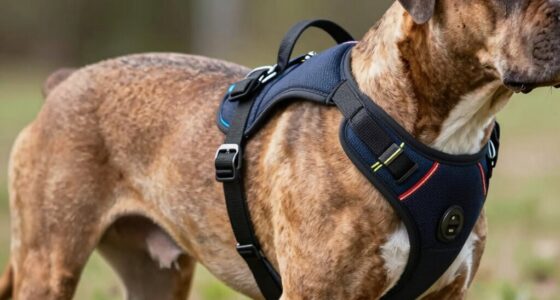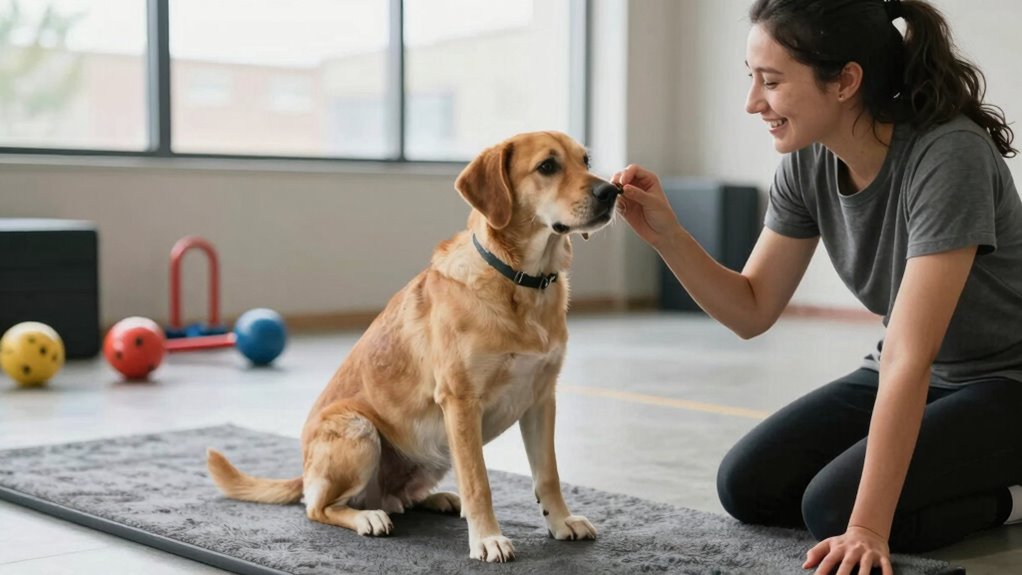

To teach your dog to say ‘yes’ to handling, start by creating a calm environment and gradually introduce gentle touches with positive reinforcement like treats and praise. Watch your dog’s body language to avoid stress and build trust slowly over time. Practice handling tasks in small steps and reinforce cooperation consistently. If you keep at it, you’ll help your dog become more comfortable, making routine care easier and less stressful for both of you.
Key Takeaways
- Use positive reinforcement like treats and praise to encourage dogs to tolerate and enjoy handling.
- Gradually introduce handling in small steps to build trust and reduce fear or resistance.
- Recognize and interpret body language to identify stress signs and adjust handling techniques accordingly.
- Create a calm environment with soothing sounds and a designated safe space for handling sessions.
- Practice routine handling tasks, such as paw and ear checks, to foster willing participation during vet visits.
dog positive reinforcement training treats
As an affiliate, we earn on qualifying purchases.
As an affiliate, we earn on qualifying purchases.
Why Dogs Resist Handling and How Cooperative Care Helps
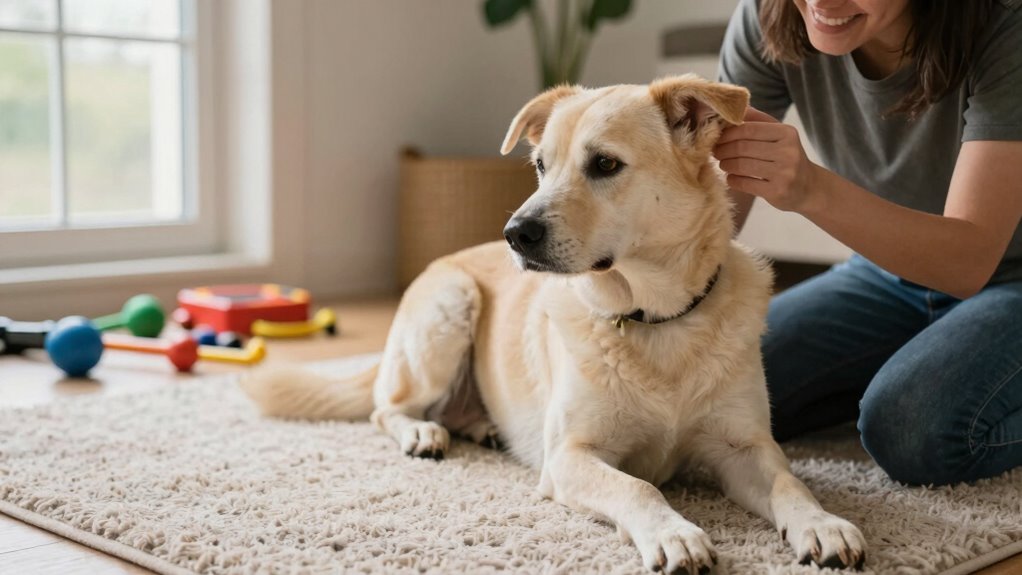
Many dogs resist handling because they find certain touches or procedures uncomfortable, unpredictable, or frightening. Recognizing dog body language helps you understand their handling fears; signs like stiffening, lip licking, or avoiding eye contact indicate discomfort. When dogs feel threatened, they may resist touch or become anxious, making handling more difficult. This resistance isn’t stubbornness—it’s a clear signal of stress or fear. Cooperative care teaches you to read these cues and respond calmly, gradually easing your dog’s fears. By respecting their signals and building trust through gentle, positive experiences, you help your dog feel safer during handling. Understanding body language cues enables better communication and reduces stress during care routines. Over time, this approach reduces anxiety and fosters a cooperative attitude, making routine care easier and less stressful for both of you.
dog handling training tools
As an affiliate, we earn on qualifying purchases.
As an affiliate, we earn on qualifying purchases.
Creating a Calm Environment for Handling Dogs
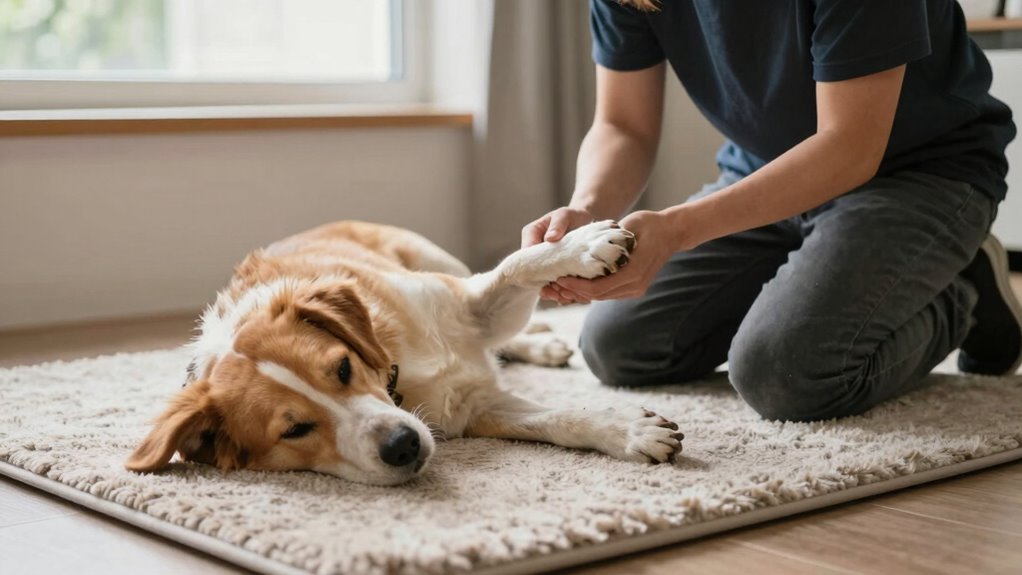
To create a calm environment for handling your dog, start by minimizing distractions around the space. Make sure your dog’s area is comfortable and free of loud noises or sudden movements. Using soothing sounds can also help keep your dog relaxed during handling sessions. Additionally, ensuring good air quality with an appropriate air purifier can reduce airborne irritants that may cause discomfort or anxiety in your dog. Maintaining proper indoor air quality can also contribute to your dog’s overall comfort and well-being. Incorporating energy-efficient cloud solutions can further support your efforts by providing reliable environmental controls through smart home systems. Being aware of family photoshoot fails can also remind you to keep the environment distraction-free and lighthearted during handling.
Minimize Distractions Around
Creating a calm environment is essential when handling dogs, as distractions can cause stress or make them resistant to cooperation. Effective distraction management helps keep your dog focused and relaxed during handling sessions. Start by minimizing unnecessary noise, such as loud toys or household sounds, which can be overwhelming. Keep the area free of clutter and distracting objects that might divert your dog’s attention. Use environmental control to set the scene, like choosing a quiet, familiar space where your dog feels safe. Avoid sudden movements or loud commands that could startle them. By reducing visual and auditory distractions, you help your dog stay calm and attentive, making cooperative care easier and more successful for both of you. Incorporating reliable educational techniques can further enhance your understanding of your dog’s responses and improve handling outcomes. Being aware of cloud service vulnerabilities can also remind you to develop contingency plans for emergencies during training or handling sessions. Additionally, understanding market dynamics in related fields can provide insights into best practices for maintaining a secure and distraction-free environment. Paying attention to behavioral science can help you better interpret your dog’s signals and reactions, leading to more effective training and handling.
Establish Comfortable Space
A calm, familiar environment sets the foundation for comfortable handling sessions. Creating a safe space helps your dog feel secure and reduces stress. To establish this, consider these steps:
- Incorporate calming routines like gentle petting or brief play before handling to signal relaxation.
- Designate a specific area as your dog’s safe space, free from loud noises or interruptions.
- Keep handling sessions short and positive, gradually increasing duration as your dog becomes more comfortable.
- Use consistent cues and familiar objects to reinforce a sense of security and positive associations during handling.
- Pay attention to natural behaviors that indicate your dog is relaxed, and adapt your approach accordingly.
- Incorporating modern training techniques can further enhance your dog’s comfort and cooperation during handling.
- Regularly observe and adapt to your dog’s responses to build trust and ensure a stress-free handling experience.
Use Soothing Sounds
Using soothing sounds can considerably enhance your dog’s sense of calm during handling sessions. Playing calming music or gentle ambient noise creates a peaceful environment that helps reduce stress. These soothing sounds act as a comforting background, signaling to your dog that there’s no need to be anxious. Consistent use of calming music can also help your dog associate handling with positive, relaxed feelings. Keep the volume low and choose music specifically designed to promote relaxation. Over time, your dog will become more comfortable with handling, knowing that the environment remains calm and reassuring. Incorporating soothing sounds into your routine makes handling sessions smoother and more cooperative, fostering trust and reducing fear or resistance. When combined with evidence-informed guidance, these strategies can effectively support your dog’s emotional well-being during handling. Additionally, understanding how neuroplasticity influences a dog’s ability to adapt can further enhance your training approach. Using consistent routines can reinforce positive associations and help your dog feel more secure during handling sessions. Paying attention to sensory processing can also improve your understanding of how soothing sounds impact your dog’s comfort level.
calming dog environment products
As an affiliate, we earn on qualifying purchases.
As an affiliate, we earn on qualifying purchases.
How to Teach Your Dog to Accept Touch Step-by-Step
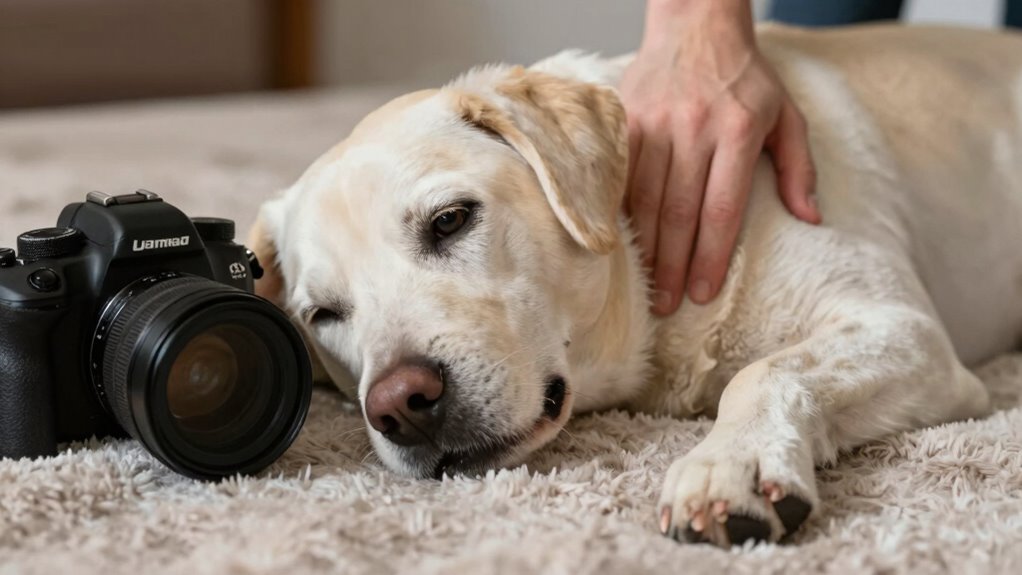
To help your dog accept touch, start with gradual desensitization by gently introducing contact in short sessions. Use positive reinforcement, like treats and praise, to make each experience rewarding. Consistent practice with patience will build your dog’s confidence and comfort over time. Incorporating trust-building techniques can further enhance your dog’s willingness to accept handling, making the process smoother and more effective. Additionally, understanding dog behavior cues can help you gauge your dog’s comfort level and adjust your approach accordingly. Recognizing body language signals will enable you to respond appropriately and foster a sense of safety during training. Being aware of their unique needs is also essential, as some breeds or individual dogs may require tailored handling strategies.
Gradual Touch Desensitization
When teaching your dog to accept touch, starting slowly and gradually increasing contact is key. This approach helps improve their touch tolerance and builds confidence through sensitivity training. To do this effectively:
- Begin by gently touching your dog in low-stress areas, like their chest or shoulders, for a few seconds.
- Gradually increase the duration and intensity of the touch, always observing your dog’s reactions.
- Use calm, reassuring voice cues to create a positive association with touch, reinforcing their comfort.
- Remember that building trust and confidence is an ongoing process, much like the gradual progress seen in cooperative care practices with dogs.
Positive Reinforcement Techniques
Positive reinforcement is a highly effective way to teach your dog to accept touch because it encourages calm and cooperative behavior. When your dog responds positively, they’re more likely to relax during handling sessions. Focus on understanding dog body language; signs like relaxed posture or wagging tail indicate comfort, while stiffness or lip licking suggest discomfort. Avoid handling myths that dogs should just tolerate touch; instead, use rewards to create positive associations. Consistently reward gentle, calm behaviors with treats, praise, or play. This builds trust and reduces anxiety. Remember, patience is key. Use the table below to track your progress:
| Behavior to Reinforce | Reward Type |
|---|---|
| Relaxed body language | Treat or praise |
| Calm response to touch | Play or affection |
| No signs of stress | Extra attention |
dog body language reading guide
As an affiliate, we earn on qualifying purchases.
As an affiliate, we earn on qualifying purchases.
Reinforcing Cooperative Behavior With Positive Rewards
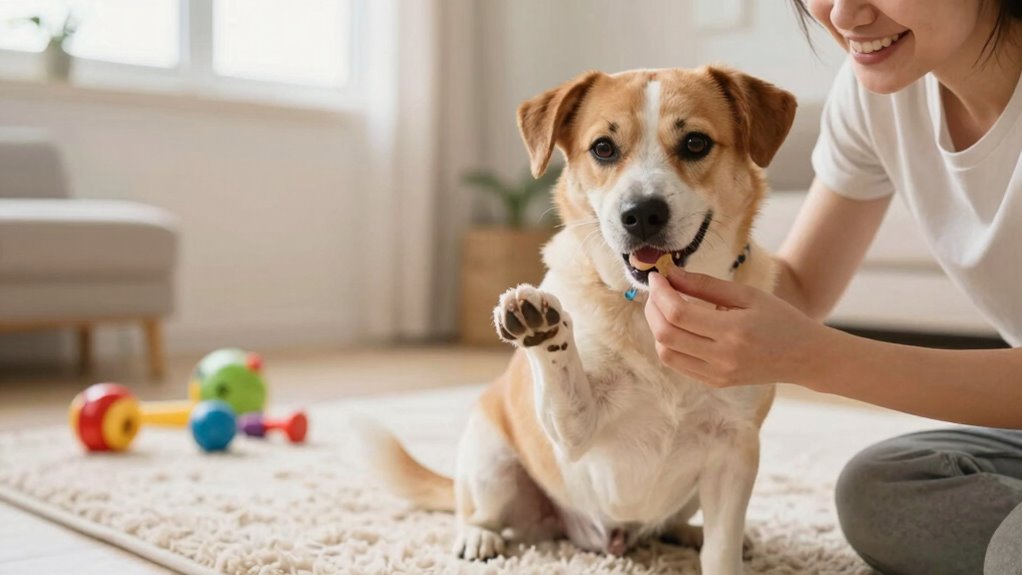
Have you ever wondered why rewarding your dog immediately after they cooperate works so effectively? It’s because positive reinforcement helps your dog associate good behavior with rewards. Using treat-based training or clicker training makes this connection stronger. To reinforce cooperation:
Rewarding your dog immediately after cooperation strengthens good behavior through positive reinforcement.
- Offer a tasty treat right after your dog complies, strengthening the behavior.
- Use a clicker to mark the exact moment of cooperation, creating a clear signal.
- Keep rewards consistent to build trust and understanding over time.
- Incorporate calming essential oils like lavender or chamomile to create a soothing environment that encourages relaxation during training sessions. calming environment
This approach encourages your dog to repeat cooperative behaviors. Remember, immediate praise and rewards make it clear what you want. By consistently reinforcing positive actions, you’ll foster a willing, cooperative attitude during handling sessions.
Troubleshooting Common Challenges in Dog Handling Training

Even with consistent positive reinforcement, sometimes dogs still face hurdles during handling training. Dog anxiety can cause your pet to become tense or fearful, leading to handling resistance. When this happens, it’s important to identify triggers and adjust your approach. Break the handling tasks into smaller steps, gradually desensitizing your dog to new sensations. Use calm, reassuring tones and avoid forcing your dog, which can escalate anxiety. If your dog shows signs of distress, take a break and revisit the training later. Consistency and patience are key. Remember, every dog is different; some may need more time to build comfort. Addressing underlying anxiety and avoiding confrontations will help your dog become more cooperative during handling. Always verify that your training methods are safe and appropriate by consulting with a certified trainer or veterinarian, especially if your dog’s anxiety persists or worsens.
Incorporating Cooperative Care Into Grooming and Vet Visits
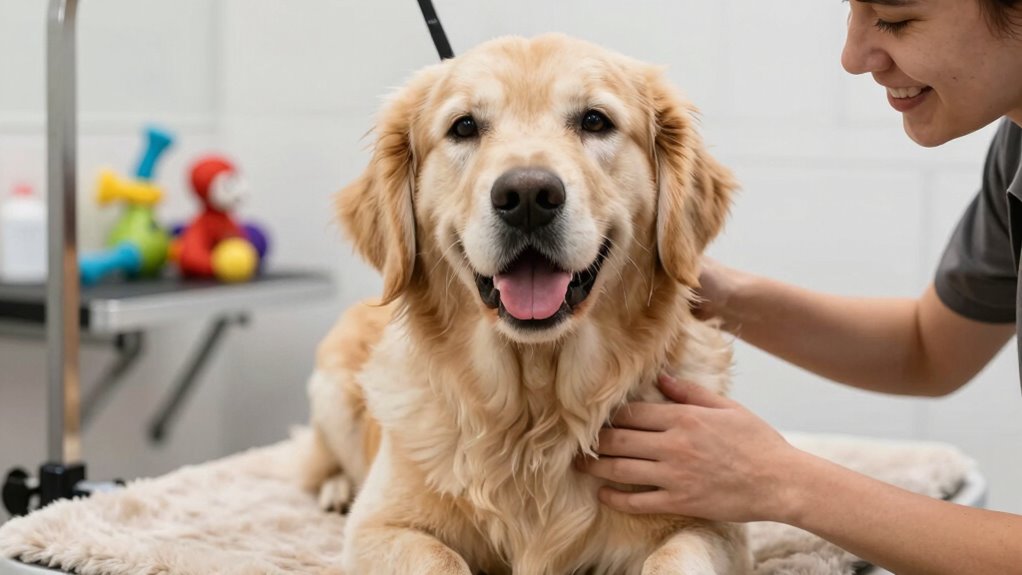
Incorporating cooperative care into grooming and vet visits helps make these routine tasks less stressful for both you and your dog. To do this effectively:
Practicing cooperative care reduces stress during grooming and vet visits for both dogs and owners.
- Teach your dog to willingly present paw pads, which simplifies nail trims and paw checks.
- Practice gentle ear checks, rewarding calm behavior to reduce resistance during vet visits.
- Use treats and praise to reinforce positive associations with handling areas like the ears and paws.
How to Recognize When Your Dog Is Fully Comfortable
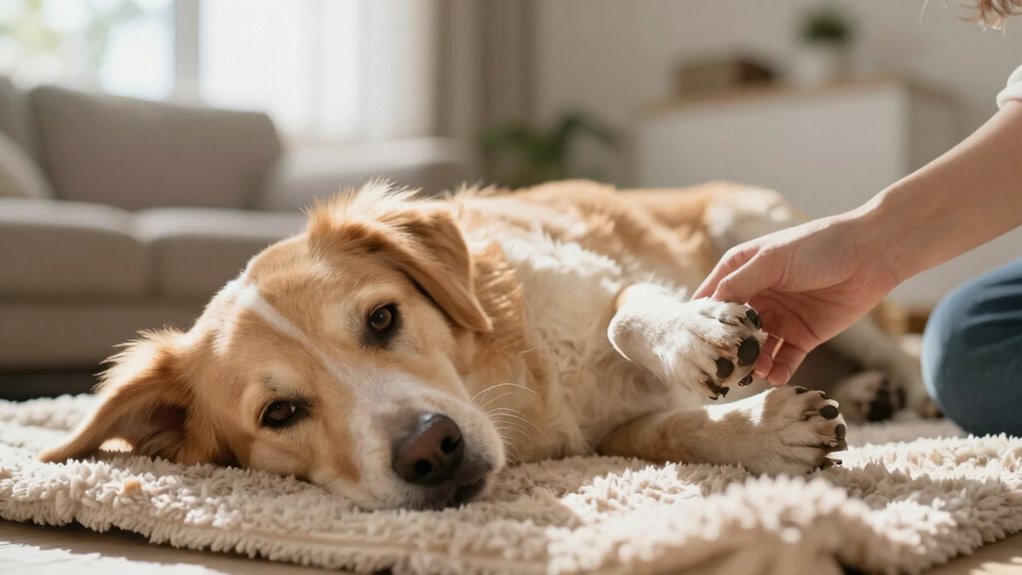
When your dog begins to respond calmly and willingly during grooming and vet visits, it’s a good sign they’re becoming comfortable with the handling. Look for relaxed body language, such as a loose tail, soft eyes, and a relaxed mouth. They might also lean into your touch or seek your attention. Conversely, watch for stress signals like lip licking, yawning, shifting away, or tensing muscles. These indicate discomfort or anxiety. A fully comfortable dog will exhibit confident, relaxed body language and avoid stress signals. They’ll remain calm and steady, even when touched in sensitive areas. Recognizing these signs helps you gauge their emotional state, ensuring you continue to build positive associations and maintain their trust during handling.
Frequently Asked Questions
How Long Does It Typically Take for a Dog to Learn Cooperative Handling?
It typically takes anywhere from a few days to several weeks for your dog to learn cooperative handling, but the training duration varies based on individual progress. You’ll notice steady improvements as you consistently practice, and some dogs pick it up faster than others. Patience and positive reinforcement are key. Keep sessions short and fun, and your dog will gradually become more comfortable saying ‘yes’ to handling.
Can Older Dogs or Rescue Dogs Easily Learn Cooperative Care Techniques?
You can absolutely teach older or rescue dogs cooperative care techniques—they’re surprisingly adaptable, like a chameleon changing to fit new environments. With patience and positive reinforcement, even rescue success stories happen daily. Age doesn’t limit learning; it might just take a little more time and gentle, consistent training. Your dog’s willingness to learn and your dedication make all the difference, turning hesitant pups into cooperative, happy companions.
What Are Signs That a Dog Is Becoming Overwhelmed During Training?
You’ll notice signs of overwhelm through your dog’s body language and stress signals, like lip licking, yawning, or avoiding eye contact. If they start to tremble, tuck their tail, or become rigid, it’s a clear sign they’re stressed. Recognizing these cues helps you pause or back off, ensuring the training remains positive. Always pay close attention to their signals to keep the experience comfortable and build trust.
How Often Should I Practice Cooperative Care Sessions With My Dog?
You should aim for regular, short sessions to keep your dog interested and relaxed. Training frequency of about 3-4 times a week works well, with session durations around 5-10 minutes. This consistency helps your dog build confidence without feeling overwhelmed. Remember, quality over quantity matters, so keep each session positive and engaging, gradually increasing time as your dog becomes more comfortable with handling.
Is Cooperative Care Effective for Dogs With Previous Negative Handling Experiences?
Yes, cooperative care can be effective for dogs with negative handling experiences. You’ll want to focus on trust building through patience and gentle, consistent positive reinforcement. By gradually introducing handling exercises and rewarding calm behavior, your dog learns to associate handling with positive outcomes. Over time, this approach helps heal past negative experiences, strengthening your bond and making future care easier and less stressful for both of you.
Conclusion
Think of your dog’s comfort as a delicate dance—you lead with patience and gentle steps, and soon, harmony follows. When you teach your dog to say ‘yes’ to handling, you’re building trust that turns stressful moments into a smooth, flowing routine. Keep practicing with kindness and rewards, and watch as your bond deepens. With each successful step, you’re weaving a tapestry of cooperation, making every handling experience feel like a graceful dance you both enjoy.