
TL;DR

Get pet supplies delivered free with Prime
- Fast, free delivery on millions of items
- Prime Video, Amazon Music and more included
- Member-only deals all year
A Pets Plus report says independent pet retailers can pursue holiday sales without matching online rivals’ discounts by emphasizing in-store discovery, personal service and gift-focused merchandising. The report cites online sales accounting for 41% of pet-product dollars, but offers no study details or evidence that its suggested tactics guarantee results.
Pets Plus has published advice for independent pet retailers seeking holiday sales without matching the discounts or convenience of online sellers. The report recommends building an in-store shopping experience around discovery, gift merchandising and personal service, while citing a figure that 41% of pet-product dollars are spent online.
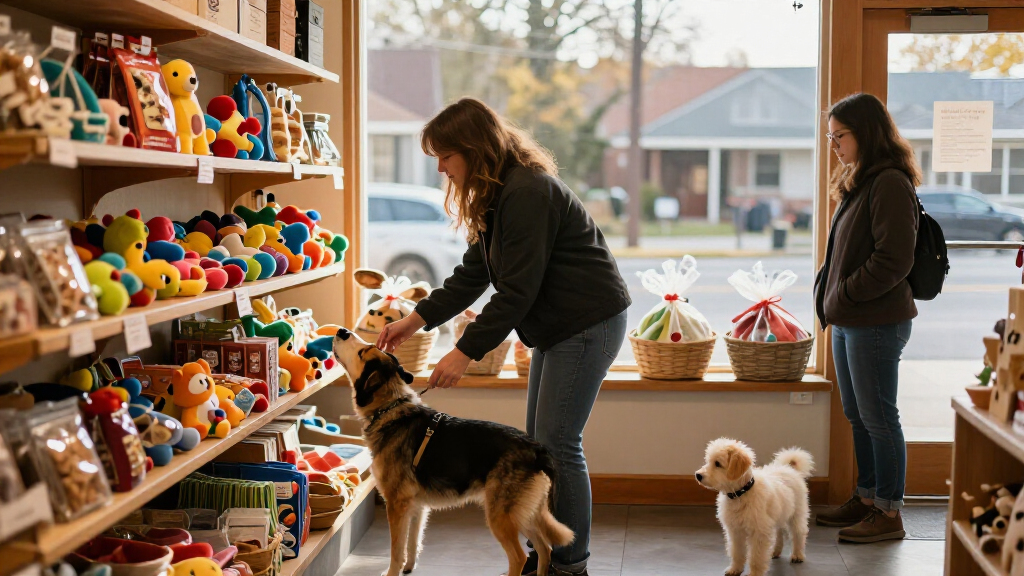
The report argues that independent stores have a stronger chance of standing out through experiences that online retailers cannot readily provide: welcoming shoppers and their pets, helping customers find gifts, and creating displays that encourage browsing. It offers examples such as holiday photo opportunities, themed product displays and sampling experiences, including a gingerbread-flavored treat for dogs. These are recommendations in the report, not documented results from a retailer survey or controlled study.
Its merchandising advice focuses on making gift discovery visible throughout the shop. Suggested sections include “Stocking Stuffers,” “Santa’s Favorites” and “Foodie Finds.” The report also recommends positioning products customers can readily add to a basket near the entrance and using checkout displays for additional purchases.
For checkout add-ons, the report suggests a $10–$20 retail price range, saying those products need not be the store’s cheapest items. It also advises retailers to watch how shoppers move through the shop, identify effective endcaps and give prominent placement to products with stronger margins. The report presents these steps as ways to improve product visibility and sales opportunities, but does not quantify their likely impact.
Competing Beyond Holiday Prices
The advice addresses a practical challenge for independent stores: shoppers can compare prices and buy pet supplies online, while smaller retailers may have less room to match large sellers’ discounts. The report’s proposed alternative is to give customers reasons to visit beyond price, then make it easy to discover gifts and extras while they are there.
That approach could matter during a holiday season when people are shopping for pets as family members, as the report describes it. A store visit can include personal assistance and experiences involving the pet itself; these are different from a delivery transaction. Still, the report does not establish that such tactics will offset online competition or protect margins for every retailer. Results would depend on factors including customer demand, staffing, inventory and execution.
As an affiliate, we earn on qualifying purchases.
The Online Sales Figure
The report opens with the claim that 41% of pet-product dollars are spent online and uses it to frame the competitive problem for independent retailers. The source does not give the figure’s date, research provider, geographic scope, product categories or calculation method. It should therefore be treated as a statistic cited by the report, not as a fully documented measure in the material provided.
The article’s central distinction is between convenience and experience. Rather than trying to beat online sellers at delivery, it urges independent shops to focus on store layout, curated gift choices and customer interactions. It also recommends communicating offers through promotions, bundles, sales conversations and marketing, while emphasizing that the goal is to keep the business in customers’ minds without relying on price cuts.
What the Advice Does Not Measure
The source does not identify the basis for its 41% online-sales figure, including when or where the data were collected. It also provides no retailer case studies, sales comparisons or profit figures showing whether the suggested displays and events increased purchases or prevented the need for discounts.
It is also unclear how widely the recommendations apply. A small shop’s ability to host pet events, stock seasonal gifts or redesign displays may depend on its space, budget, staffing and local customer base. The report presents ideas for retailers to test, not guaranteed outcomes or a measured forecast for the holiday season.
Testing Displays Through the Season
The report does not announce a formal program, deadline or follow-up research. Its guidance points retailers toward actions they can take during the holiday season: review customer paths through the store, refresh themed displays, select checkout add-ons and promote bundles or seasonal events.
Whether those efforts translate into stronger sales will depend on how shoppers respond. Retailers could track product movement, basket additions and customer feedback as they adjust displays, but the source does not prescribe a measurement method or report results. No later findings or retailer outcomes are provided in the material available.
Key Questions
What is the report’s main recommendation for independent pet stores?
It recommends competing through in-store discovery, personal service and holiday merchandising rather than trying to match online sellers on convenience or discounts.
What holiday displays does it suggest?
Examples include themed areas such as “Stocking Stuffers,” “Santa’s Favorites” and “Foodie Finds,” along with interactive displays and photo opportunities.
What price range does it suggest for checkout add-ons?
The report suggests $10–$20 retail items for a checkout “Last Chance Zone.” It does not cite sales evidence supporting that specific range.
Is the 41% online-sales figure independently documented in the source?
The report cites 41% of pet-product dollars as being spent online, but the supplied source does not identify the date, geography, methodology or research provider behind the figure.
Does the report prove these tactics increase holiday sales?
No. It offers recommendations but provides no case studies or measured sales results showing that the tactics increase revenue or remove the need for discounts.
Source: rss
Halloween Picks
halloween
As an affiliate, we earn on qualifying purchases.