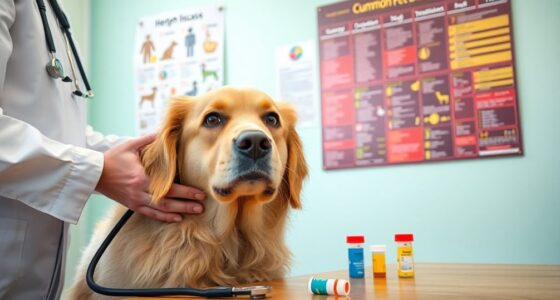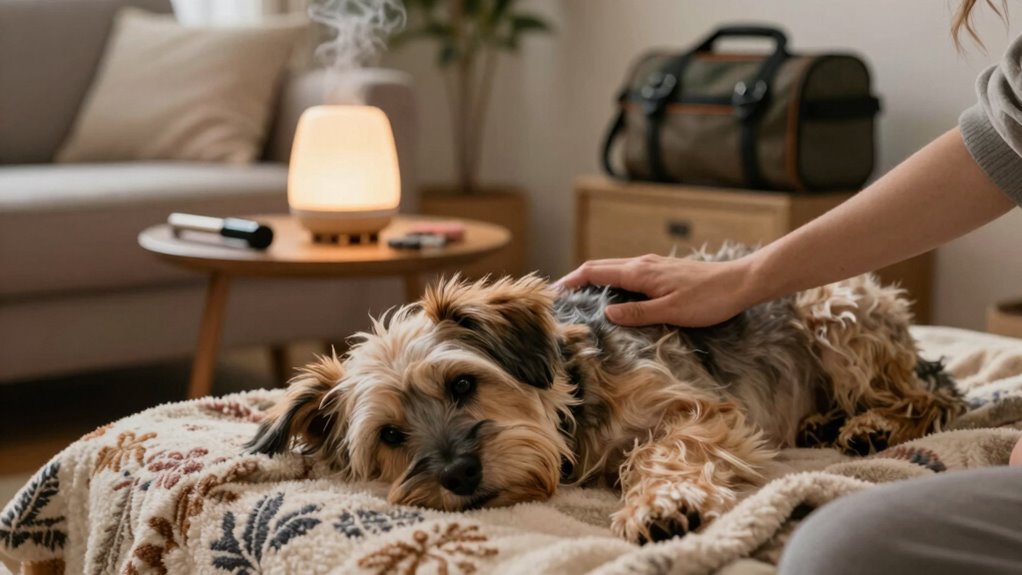
After grooming, vet visits, or travel, create a calm space with familiar scents, soft sounds, and gentle lighting to help your pet recover. Use gentle petting, soothing music, and slow, deep breaths to ease anxiety. Watch for signs of stress like trembling or hiding, and respond patiently with positive reinforcement. Incorporate cozy surroundings and calming products if needed. Want to know more ways to support your pet’s emotional recovery? Keep exploring for helpful tips.

Get pet supplies delivered free with Prime
- Fast, free delivery on millions of items
- Prime Video, Amazon Music and more included
- Member-only deals all year
Key Takeaways
- Create a calm, dimly lit space with familiar scents and soothing sounds to promote relaxation.
- Use gentle petting, soft talking, and calming music to soothe nerves and reduce stress.
- Observe for signs of distress like trembling or hiding, responding patiently and giving space.
- Incorporate calming aids such as pheromone sprays or diffusers to support emotional recovery.
- Provide positive distractions like favorite toys or treats in moderation to help regain comfort.
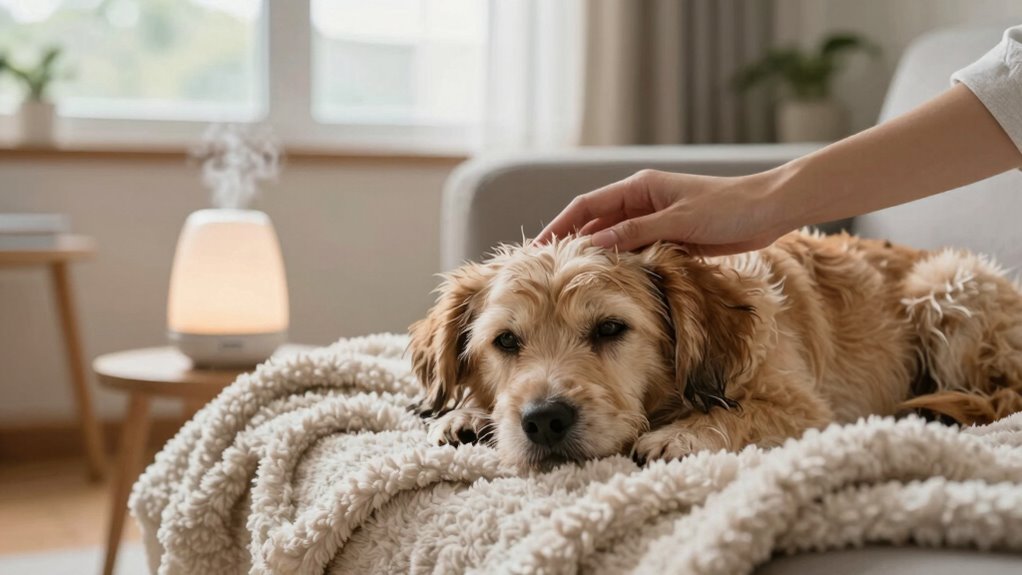
After a stressful grooming session, vet visit, or travel, your pet needs time to recover and return to their normal self. Stress can take a toll on their physical and emotional well-being, so it’s essential to help them unwind quickly. Using pet relaxation techniques can be highly effective in easing their anxiety. Gentle petting, soft talking, and creating a calm environment can make a big difference. You might consider playing soothing music or providing a cozy space where your pet feels safe. These small actions signal to your pet that they’re in a secure space, encouraging relaxation.
In addition to creating a calming environment, stress relief exercises can help your pet recover faster. Simple activities like gentle massage or light stretching can help reduce muscle tension and promote the release of endorphins. For example, softly massaging their shoulders or along their back can help soothe nerves and lower stress levels. If your pet is comfortable with it, guided breathing exercises—slowly encouraging them to take deep, calming breaths—can also be beneficial. These exercises mimic relaxation techniques used in humans and can help your pet regain a sense of control and comfort after stressful events. Incorporating a calm environment can further enhance their overall relaxation and recovery.
It’s crucial to give your pet plenty of space and time to unwind without feeling pressured. Keep their environment quiet and dim the lights if possible, as bright lights and loud noises can heighten their anxiety. Offering favorite toys or treats can serve as positive distractions, but avoid over-stimulating them. Instead, focus on gentle, calming interactions that reinforce a sense of security. Understanding pet environment can help you create a space that promotes comfort and relaxation for your pet during recovery. Creating a soothing atmosphere with familiar scents or calming sounds can also significantly support their relaxation process.
Monitoring your pet’s behavior is key. Watch for signs of stress, like panting, trembling, or hiding, and respond with patience. If they seem particularly anxious, consider incorporating calming aids like pheromone diffusers or calming sprays designed specifically for pets. These products can enhance the effectiveness of your relaxation efforts. Additionally, understanding small wood stoves can help you create a cozy, warm environment that promotes relaxation and comfort for your pet during recovery.
Products Worth Considering

Shark Pet Cordless Stick Vacuum, Up to 40-Minute Runtime, Ocean Blue, IX141

PetSafe Electronic Pet Door with Collar Key Sensor, Large

PetSafe Guardian GPS 2.0 Dog Fence and Tracking Collar
As an affiliate, we earn on qualifying purchases.
Frequently Asked Questions
How Long Does It Typically Take for a Pet to Recover From Stress?
Recovery time varies, but most pets start feeling calmer within a few hours to a couple of days. To speed up recovery, you can use relaxation techniques like gentle petting or calming music, and environmental enrichment such as cozy spaces or favorite toys. Keep an eye on their behavior, and give them plenty of patience and comfort. With consistent care, your pet will regain their usual calmness sooner than you might expect.
Are There Specific Signs Indicating My Pet Needs Immediate Veterinary Attention?
Imagine your pet’s health as a delicate garden; signs of distress are weeds that need urgent removal. If you notice emergency symptoms like difficulty breathing, seizures, persistent vomiting, or extreme lethargy, seek veterinary care immediately. These are clear indicators your pet’s well-being is at risk. Don’t wait—trust your instincts and act fast when you see these signs of distress, ensuring your furry friend recovers safely.
Can Diet Influence My Pet’s Recovery Process After Stress?
Yes, diet impact can substantially influence your pet’s recovery process after stress. Proper nutritional support helps restore energy levels, boost immune function, and promote healing. By providing a balanced diet rich in essential nutrients, you’re aiding their body in bouncing back more quickly. Focus on high-quality protein, vitamins, and hydration to support their recovery. Consult your vet for tailored dietary advice to ensure your pet gets the best nutritional support during this time.
What Are Some Common Behavioral Changes After Grooming or Travel?
After grooming or travel, your pet might act aloof, overly clingy, or suddenly anxious—ironic, isn’t it? These behavioral shifts are common signs of stress. You can use pet calming techniques and stress reduction tools like soothing music, gentle petting, or pheromone diffusers to ease their nerves. Recognizing these changes helps you respond with patience, making recovery smoother and reassuring your furry friend that they’re safe and loved.
How Can I Prevent Future Stress During Grooming, Vet Visits, or Travel?
To prevent future stress during grooming, vet visits, or travel, focus on stress reduction and calming techniques. Gradually introduce your pet to new experiences, using positive reinforcement like treats and praise. Create a soothing environment with familiar scents and calming music. Practice short, frequent sessions to build comfort, and stay calm yourself—your demeanor influences your pet’s stress levels. Consistent routines and gentle handling help your pet feel secure and less anxious in future situations.
Conclusion
Remember, giving your pet extra love and patience after grooming, vet visits, or travel helps them recover faster. Did you know that 80% of pets show signs of stress within 24 hours after such events? By providing a calm environment, favorite treats, and gentle cuddles, you can ease their anxieties and help them bounce back quicker. Your reassurance makes a big difference, turning stressful experiences into opportunities for bonding and comfort.