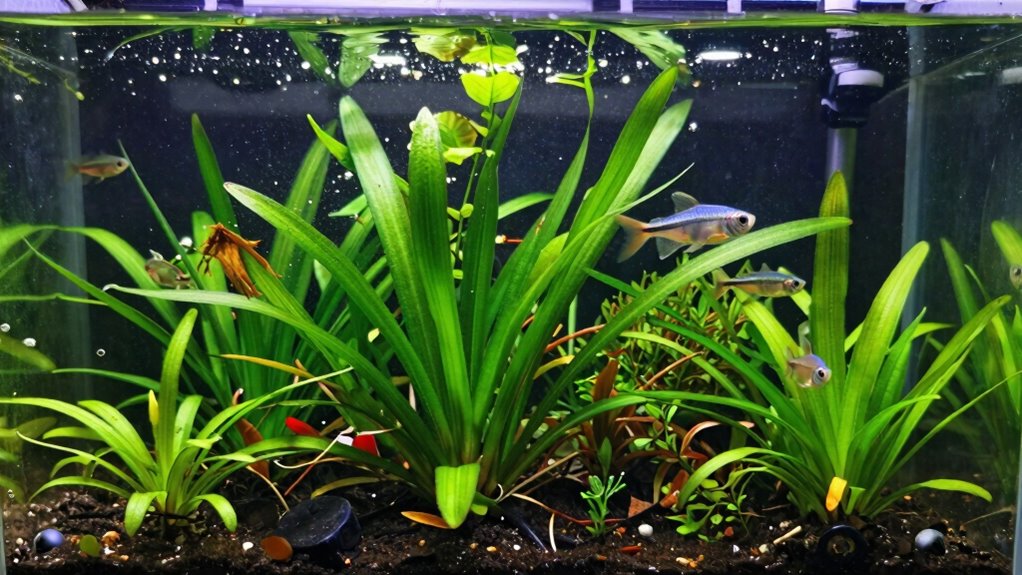
As a beginner, you might over-donate CO2 or set it too high too quickly, causing sudden pH drops that stress your fish. Avoid abrupt CO2 spikes by monitoring your system carefully, and guarantee your diffuser and controllers are reliable. Balancing CO2 with lighting and fertilization is vital—too much can cause algae, too little stunts plants. Regularly test water parameters and maintain your equipment; understanding these interactions helps create a peaceful, healthy tank environment. There’s more to learn to perfect your setup.
Key Takeaways
- Over-dosing CO2 causes rapid pH drops, stressing and harming fish.
- Sudden CO2 spikes lead to unstable water parameters, stressing aquatic life.
- Failing to regularly test water parameters can mask dangerous CO2 and pH fluctuations.
- Inadequate system maintenance and leaks waste CO2, causing inconsistent levels.
- Imbalanced CO2, lighting, and fertilization promote algae growth, stressing fish and plants.

If you’re aiming to create a lush, healthy planted tank, understanding CO2 systems is vital. CO2 is an indispensable element for plant growth optimization, helping your aquatic plants thrive and preventing algae issues. However, many beginners make mistakes with CO2 setups that can stress your fish and compromise the overall health of your aquarium. One common error is over-dosing CO2, which can cause rapid fluctuations in the water’s pH levels. When CO2 levels spike suddenly, it lowers the pH sharply, creating an environment that becomes stressful or even dangerous for your fish. To avoid this, you should monitor your CO2 injection carefully and guarantee that your system is balanced with your tank’s size and plant load. Using a reliable CO2 diffuser and a controller can help maintain steady levels, making aquarium maintenance easier and more effective.
Another mistake beginners often make is not testing water parameters regularly. Without consistent testing, you might not notice changes in CO2 levels or pH, leading to sudden shifts that stress your aquatic creatures. Regular testing helps you fine-tune your CO2 system, guaranteeing your plants get enough carbon dioxide without compromising fish safety. Properly integrating CO2 with lighting and fertilization routines is also vital. Too much CO2 combined with intense lighting can accelerate algae growth, while too little can stunt plant development. Achieving the right balance is key to plant growth optimization and a healthy, clear tank.
Regular water testing ensures balanced CO2 levels, healthy plants, and safe conditions for your fish.
Many new hobbyists also overlook the importance of a good aquarium maintenance routine. Dirty filters, excess waste, and unclean substrate can all interfere with CO2 absorption and distribution, making your system less efficient. Regular cleaning, water changes, and substrate vacuuming help maintain ideal conditions, supporting healthy plant growth and preventing stress on your fish. Additionally, if you’re using pressurized CO2 systems, guarantee all fittings are secure and check for leaks regularly. Leaks not only waste CO2 but can also cause fluctuations in levels that stress your fish. Understanding how CO2 interacts with your tank’s ecosystem is crucial for achieving a stable environment. Incorporating monitoring tools such as pH and CO2 meters can provide real-time data, allowing you to react promptly to any changes. Furthermore, familiarizing yourself with aquarium chemistry concepts can help you better understand the delicate balance necessary for a thriving planted tank. It’s also helpful to educate yourself on the effects of CO2 fluctuations, so you can recognize signs of imbalance early and take corrective action.
In essence, investing time in understanding how CO2 interacts with your tank’s ecosystem makes all the difference. Properly setting up and maintaining your CO2 system guarantees your plants flourish, your aquarium remains clean, and your fish stay stress-free. Avoiding common beginner mistakes—like over-dosing, neglecting water testing, and poor aquarium maintenance—sets the foundation for a thriving, beautiful planted tank. Remember, patience and consistent care are your best tools in creating a balanced environment where both plants and fish can thrive happily.
As an affiliate, we earn on qualifying purchases.
Frequently Asked Questions
How Often Should I Calibrate My CO2 Regulator?
You should calibrate your CO2 regulator every 3 to 6 months to maintain regulator accuracy. Regular calibration guarantees consistent CO2 levels, preventing stress on your fish caused by fluctuations. Check your regulator’s readings against a bubble counter or pH controller, and recalibrate if you notice discrepancies. Consistent calibration frequency helps keep your planted tank stable and your aquatic life healthy.
Can CO2 Systems Cause Algae Outbreaks?
Imagine a lush, green jungle overtaking a clear, vibrant stream—that’s what algae outbreaks can look like in your tank. Yes, CO2 systems can cause algae issues if there’s a CO2 overdose, disrupting algae control. Too much CO2 lowers pH and boosts nutrient availability, fueling algae growth. To prevent this, monitor CO2 levels carefully and maintain balanced dosing, ensuring your plants thrive without inviting unwanted algae.
What Is the Ideal CO2 Level for Beginners?
You should aim for a CO2 saturation level of around 20-30 ppm for your aquarium plants. This range promotes healthy growth without stressing your fish. Keep an eye on your CO2 levels using a drop checker or test kit, especially as a beginner. When CO2 is too high, it can stress or harm your fish, so maintaining a balanced level is key to a thriving, healthy tank.
Are DIY CO2 Systems Safe for Fish?
Think of DIY CO2 systems as a double-edged sword—while they can be safe if carefully managed, they often risk causing fish stress if not set up correctly. Using a CO2 diffuser, you must regulate pressure and flow to prevent sudden CO2 spikes, which stress your fish. Always monitor your tank closely, and if you notice signs of stress, adjust or stop your DIY system immediately. Your fish’s safety depends on your vigilance.
How Do I Detect CO2 Poisoning in Fish?
You can detect CO2 poisoning in fish by observing symptom identification, such as rapid breathing, gasping at the water surface, or lethargy. Check your water parameter regularly; elevated CO2 levels often cause decreased oxygen levels, leading to stress. If you notice these signs, immediately test the water for CO2 concentration and adjust your CO2 system accordingly. Prompt action helps prevent serious health issues for your fish.
Conclusion
Remember, nearly 60% of beginner aquarists experience stress in their fish due to improper CO2 system setup. By avoiding common mistakes—like overpressurizing or underdosing—you create a stable environment where your plants thrive and your fish stay healthy. Proper CO2 management isn’t just about lush greenery; it’s about ensuring your aquatic friends live their happiest, healthiest lives. Keep learning and adjusting, and your planted tank will flourish without stressing your fish.