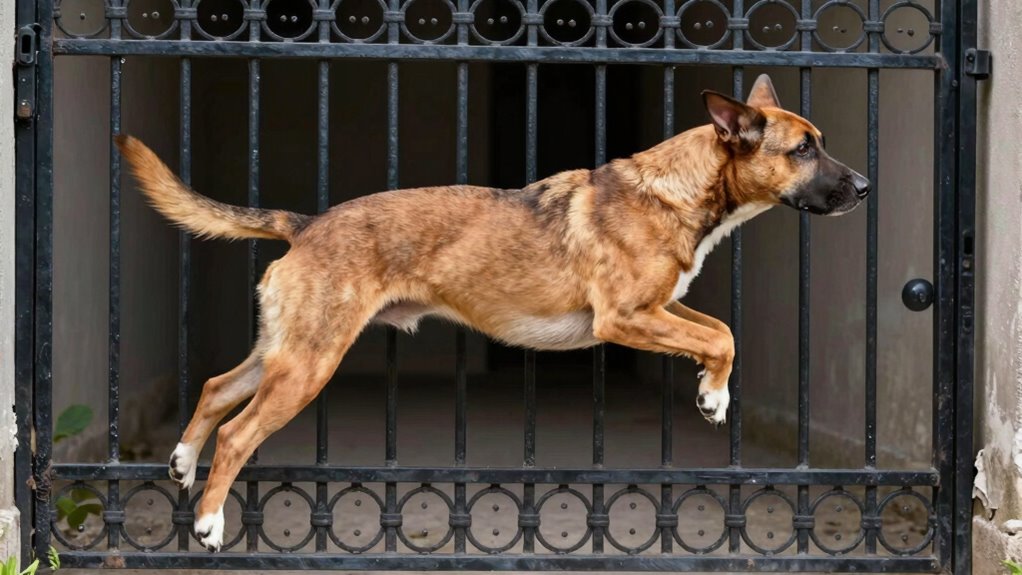
To prevent your dog from jumping over a gate, you need to take into account both height and behavior. Match the gate height to your dog’s size and jumping tendencies, but remember that motivation and training matter just as much. Using sturdy materials and reinforcing good behavior with positive commands will make your setup more secure. Keep in mind, combining appropriate height, strong fencing, and training creates the best protection—more tips await to help you optimize your setup.
Key Takeaways
- Match gate height to the dog’s size and jumping ability for better prevention.
- Strong, durable fencing materials are essential, regardless of height.
- Training techniques like positive reinforcement and boundary commands effectively reduce jumping.
- Highly motivated jumpers may overcome moderate gate heights without proper training.
- Combining appropriate gate height with behavioral training offers the most secure solution.

Have you ever wondered how to choose the right gate height for your dog? It’s a common concern among pet owners who want to keep their dogs safe while allowing them freedom to move around. The key isn’t just about matching the gate height to your dog’s size but understanding what actually prevents jumping. While it might seem straightforward—simply making the gate taller than your dog’s height—there’s more to the story. Your approach should combine the right fence materials with effective training techniques to create a secure environment.
First, consider the limitations of fence materials. Some materials, like wooden or vinyl panels, can be quite sturdy, but if the gate isn’t tall enough, your dog might still find a way over it. Conversely, a very tall gate made from flimsy material won’t be effective if your dog is determined. Heavy-duty materials like metal or reinforced composite fences tend to be more resistant to jumping, but even the strongest fences can be overcome if your dog is motivated enough. That’s where training techniques come into play. Teaching your dog boundaries and commands can considerably reduce their instinct to jump over the gate, regardless of its height. Techniques such as positive reinforcement when they stay calm near the gate or redirecting their attention with toys and commands can make a big difference.
Choosing sturdy materials and training your dog is key to preventing escapes over the gate.
When choosing the right gate height, think about your dog’s jumping ability and behavior. Smaller or older dogs might not need a very high gate, but if your pup has a history of jumping or climbing, you’ll want a taller barrier. Keep in mind that some dogs are natural jumpers, and no matter how high the gate, they might still try to clear it. In those cases, integrating training techniques that discourage jumping is essential. Consistent commands like “stay” or “leave it,” combined with rewards, can teach your dog to respect boundaries and reduce their desire to leap over the gate. Additionally, understanding dog jumping behavior can help you anticipate and address your pet’s tendencies more effectively. Recognizing the importance of proper fencing can also contribute to a safer environment for your pet. It’s also beneficial to consider the role of dog motivation, as understanding what drives your dog to jump can inform more targeted training strategies. Moreover, paying attention to your dog’s individual temperament can help you tailor your training approach to better suit their personality and tendencies.
Furthermore, paying attention to the dog’s motivation can help you tailor your training methods to better prevent jumping. Ultimately, preventing your dog from jumping isn’t just about the height of the barrier. It’s a combination of choosing the right fence materials that are strong and durable, and implementing effective training techniques that modify your dog’s behavior. By doing so, you create a safer environment without relying solely on increasing gate height. Remember, a well-trained dog paired with appropriate fencing is much more effective than a barrier that’s simply too tall for them to jump.
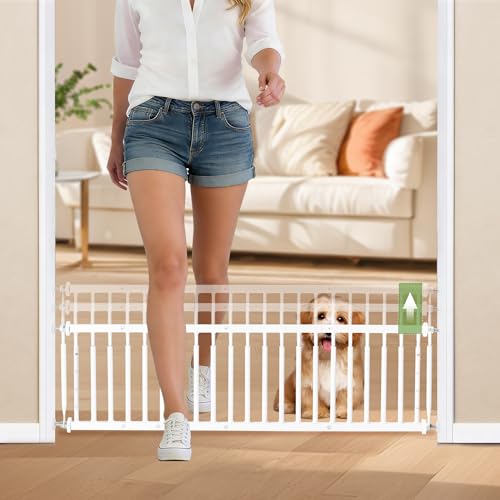
Yoochee 10''-15.8'' Height Adjustable Dog Gate, Extra Wide 18.1"-46" All Metal Short Dog Gate to Step Over, Pressure Mount Small Pet Puppy Gate for Stairs & Doorways(White)
【Height-Adjustable Pet Gate】Adjustable from 10" to 15.8" in height, this dog gate offers four precise settings. Unlike fixed-height…
As an affiliate, we earn on qualifying purchases.
As an affiliate, we earn on qualifying purchases.
Frequently Asked Questions
Can a Taller Gate Still Be Climbed by Smaller Dogs?
Yes, a taller gate can still be climbed by smaller dogs, especially if they’re agile or motivated. Small dog agility varies, so some may find a taller gate easier to clear. The gate height illusion can trick your eye, making it seem harder or easier than it actually is. To prevent jumping, focus on training and barriers that consider your dog’s agility, rather than just relying on height alone.
Do Gate Materials Affect a Dog’s Ability to Jump Over?
Yes, gate materials do affect a dog’s ability to jump over. Durable materials like metal or reinforced plastic provide better gate stability, making it harder for dogs to push or climb over. Smooth or slippery surfaces can also discourage jumping, while flimsy materials might be easily scaled. Choosing a gate with sturdy, high-quality materials enhances safety and effectively prevents your dog from jumping over, regardless of its size or agility.
How Do Gate Design Features Influence Jumping?
You might notice your dog trying to leap over the gate, but the right design makes a difference. A gate with enhanced stability and sturdy design features discourages jumping by preventing wobbling and toppling. Well-built gates are less tempting for your dog to test, ensuring safety. Focus on features like reinforced frames and secure latches, which not only improve durability but also create a reliable barrier that discourages your dog’s jumping attempts.
Are There Specific Breeds That Can Jump Higher Regardless of Gate Height?
Yes, some breeds with high breed agility and strong jumping genetics can clear taller gates regardless of height. Border Collies, Australian Shepherds, and Jack Russell Terriers are prime examples. Their natural jumping ability stems from their genetic predisposition for agility and athleticism. Even if you set a gate at a standard height, these breeds may attempt or succeed in jumping over, so understanding your dog’s breed traits helps in choosing the right barrier.
What Training Methods Can Prevent Dogs From Jumping Over Gates?
Did you know that consistent training can reduce jumping by up to 80%? To prevent your dog from jumping over gates, try leash training to establish boundaries and control their movements. Using scent deterrents around the gate can also dissuade your dog from attempting to jump. Combining these methods helps reinforce boundaries effectively, ensuring your dog stays put without relying solely on gate height.

Kfvigoho Dog Playpen Outdoor Extra Wide 12 Piece Panels Heavy Duty Anti-Rust Coating-Strengthened Dog Fence 40" Height with Doors Portable for RV Camping Yard, Total 32FT, 79 Sq.ft, Snowy Black
【Anti-Rust Coatings Material】Kfvigoho puppy playpen made of heavy-duty metal, sturdy and durable, steel wire smooth and solid, pet…
As an affiliate, we earn on qualifying purchases.
As an affiliate, we earn on qualifying purchases.
Conclusion
Ultimately, understanding your dog’s jumping limits is key. While a gate might seem high enough, a clever pup, like a modern-day Houdini, can surprise you. Remember, it’s not just about the height but also your dog’s agility and determination. Don’t rely solely on medieval castle walls—sometimes, a simple barrier and training do the trick. Keep an eye on your furry friend, and you’ll prevent escapes better than any knight guarding a fortress of old.

Lilyeel GPS Wireless Dog Collar Fence System – No Monthly Fee App Control, Custom Polygon Boundary & Remote Training, Free Phone Tracker for Up to 5 Pets, Virtual Electric Fence for Dogs, Black
NO MONTHLY SUBSCRIPTION FEES: Unlike other GPS dog fences on the market that require expensive monthly plans, our…
As an affiliate, we earn on qualifying purchases.
As an affiliate, we earn on qualifying purchases.

Reinforced 42” Extra Tall Retractable Baby Gates with Rods, Extends up to 60” Wide, Tall Retractable Dog Gate for Doorways Prevent Crawling Through Mesh Pet Gate Indoor Outdoor, Black
Upgraded Reinforcement – No Gaps at The Bottom: Our upgraded reinforced retractable baby gates has added support rods…
As an affiliate, we earn on qualifying purchases.
As an affiliate, we earn on qualifying purchases.