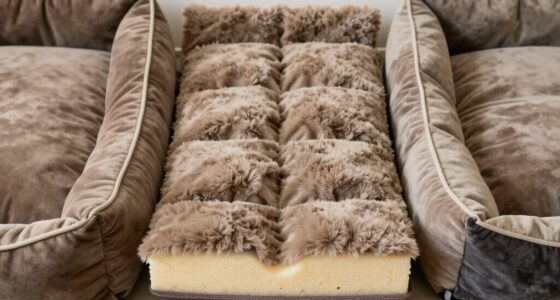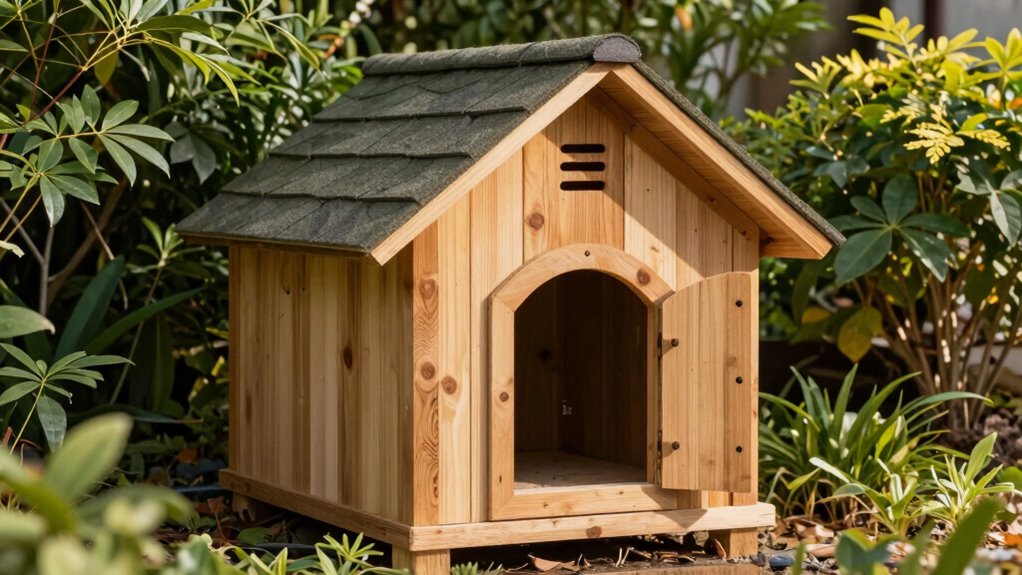
To keep your outdoor dog house comfortable and safe, focus on proper insulation, ventilation, and moisture control. Use insulating materials like foam boards and elevating the floor to reduce dampness. Install vents or screened windows for airflow, and add overhangs or waterproof roofs to protect against rain. Managing ground contact and sealing gaps prevents moisture buildup. Keep your dog dry and comfortable by following these tips—exploring these strategies can help you create the perfect shelter.
Key Takeaways
- Use insulated flooring, elevated platforms, and moisture barriers to prevent dampness and ground contact.
- Incorporate strategic ventilation like roof vents and adjustable windows for airflow control and humidity reduction.
- Install rainproof roofing, overhangs, and seal cracks to keep water out and maintain a dry interior.
- Utilize pest-proof screens and moisture barriers to enhance durability and prevent pest entry and moisture buildup.
- Ensure proper insulation and ventilation to maintain a stable, comfortable temperature year-round for your dog.
Why Insulating Your Outdoor Dog House Keeps Your Dog Warm and Healthy
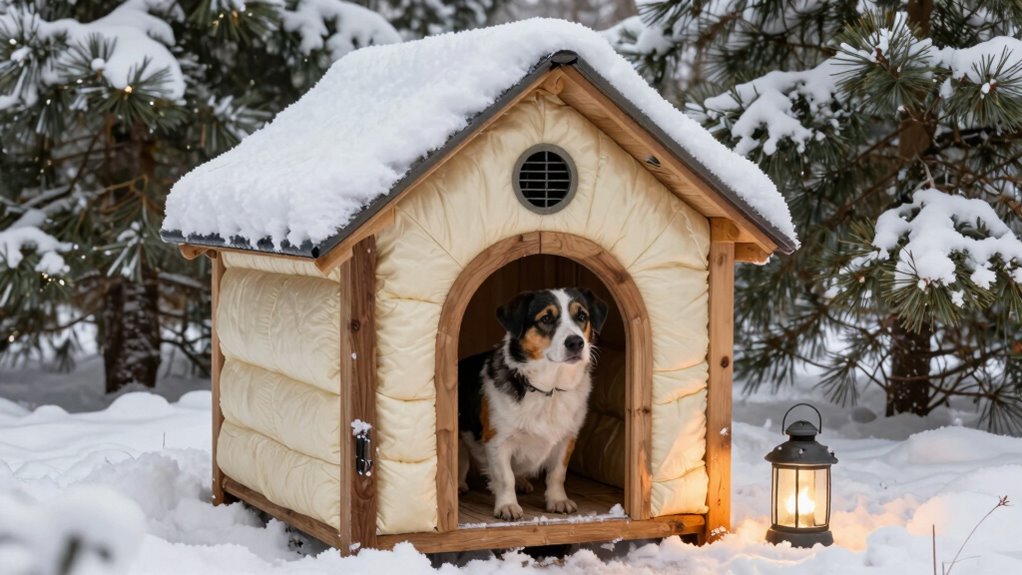
Insulating your outdoor dog house is essential because it helps maintain a stable temperature, ensuring your dog stays warm and comfortable even in harsh weather. The insulation benefits are significant; they prevent heat loss during cold months and keep the interior cool in summer. Proper insulation can also reduce your dog’s stress and discomfort caused by temperature extremes. It creates a barrier against drafts and cold air, supporting your dog’s immune system and overall well-being. When your dog’s environment stays consistent, it promotes better sleep and reduces anxiety caused by temperature fluctuations. Additionally, understanding climate considerations can help you choose the right insulation for your specific location. Considering seasonal changes can further optimize your dog’s comfort year-round. Proper venting is also crucial to prevent moisture buildup and ensure good air quality inside the shelter. Incorporating moisture control measures, such as vents or desiccants, can further enhance your dog’s living conditions. For example, selecting appropriate insulation materials can make a significant difference in performance and durability. Overall, insulation is an indispensable investment to keep your furry friend safe, healthy, and comfortable outdoors.
How to Choose the Best Ventilation System for Your Dog House
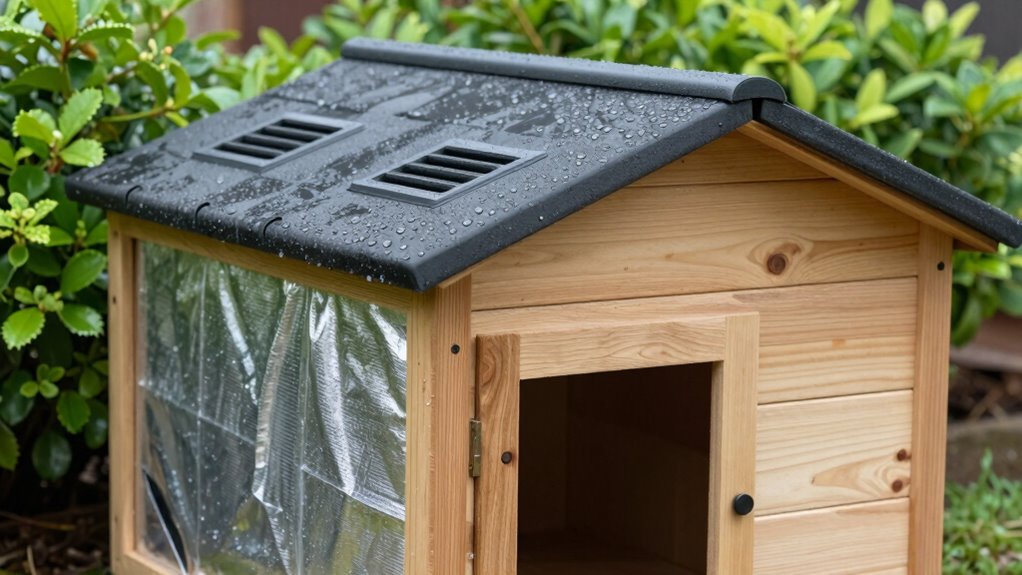
While insulating your outdoor dog house helps keep your pet warm and comfortable, proper ventilation guarantees fresh air circulates, preventing stuffiness and moisture buildup. Choosing the right ventilation system involves understanding airflow optimization and ventilation types. You want a setup that balances air exchange without creating drafts or temperature drops. Consider ventilation options like passive vents, exhaust fans, or adjustable vents to suit your climate and your dog’s needs. Here’s a quick comparison:
| Ventilation Type | Pros | Cons |
|---|---|---|
| Passive Vents | Easy, low cost, silent | Less control over airflow |
| Exhaust Fans | Active airflow, adjustable | Power needed, noise |
| Adjustable Vents | Customizable, versatile | Installation effort |
| Screened Windows | Natural airflow, simple | Limited control |
| Roof Vents | Good airflow, prevents moisture | May need sealing |
Proper ventilation design is essential for maintaining a healthy environment inside your dog house, especially in varying weather conditions. Incorporating proper airflow techniques can significantly improve indoor air quality and comfort for your pet. Effective ventilation can also help prevent the buildup of indoor humidity and odors, which is crucial for your dog’s health. Natural airflow can be enhanced with ventilation placement, which is crucial for effective air circulation. Ensuring smart‑home integrations such as automated vents or fans can optimize airflow based on weather conditions and indoor humidity levels. Choose a system that maximizes airflow with minimal draft, ensuring your dog stays comfortable year-round.
Simple Ways to Manage Moisture and Keep Your Dog Dry
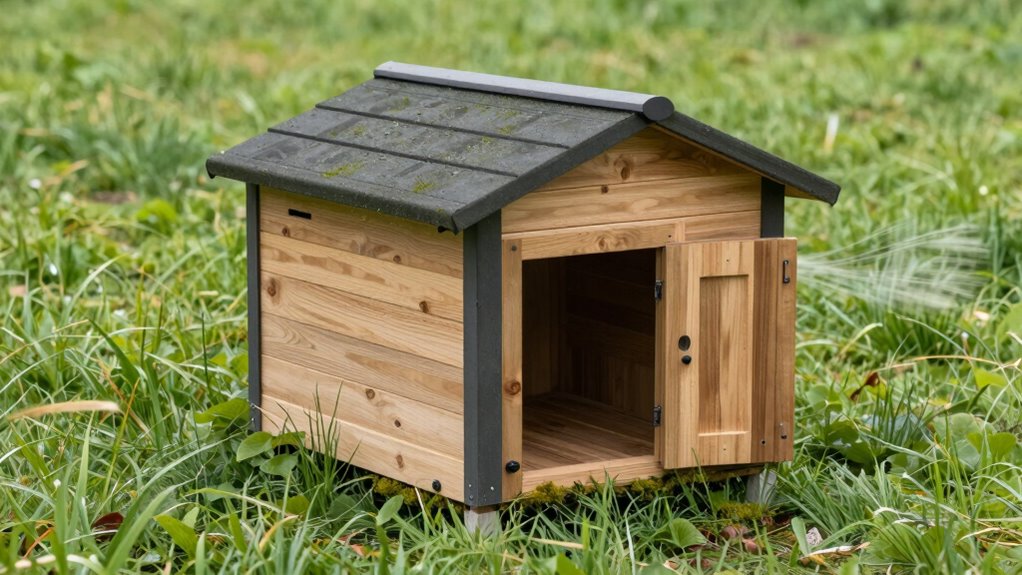
Moisture buildup can quickly turn your outdoor dog house into a breeding ground for discomfort and health issues. To manage this, start by elevating the dog house off the ground to reduce ground moisture seeping in. Ensure the foundation is solid and well-drained so water doesn’t accumulate underneath. Install rain protection like overhangs or waterproof roofing to keep rain from splashing inside. Regularly check for leaks or cracks and seal them promptly. Use absorbent bedding that stays dry and change it frequently to prevent dampness. Ventilation also helps dry out excess moisture, but proper rain protection is key to preventing water intrusion. Properly insulating your dog house can also help regulate temperature and moisture levels. Incorporating moisture barriers in construction can further prevent water entry and improve overall dryness. Additionally, ensuring adequate airflow inside the dog house promotes faster drying and reduces humidity. Using dehumidifiers designed for outdoor use can also significantly decrease moisture levels inside the shelter. For added protection, consider selecting materials with moisture-resistant properties, which further help keep the environment dry. These simple steps keep your dog dry, comfortable, and healthier in its outdoor home.
The Best Materials and Design Tips for Insulation and Ventilation
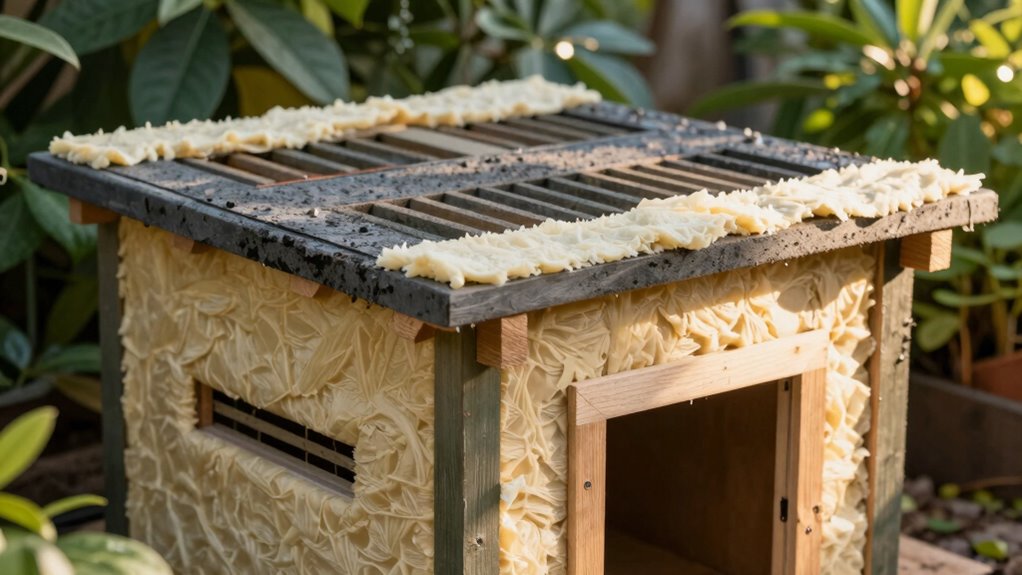
Choosing the right materials and design features can make a significant difference in maintaining a comfortable, well-ventilated outdoor dog house. Material options like cedar, plastic, and metal each offer distinct insulation and durability benefits. For insulation, consider foam boards or straw to keep your dog warm without trapping moisture. Design considerations include proper roof overhangs to shield from rain and strategic ventilation openings to promote airflow. Incorporate adjustable vents or windows to control airflow based on weather conditions. Avoid materials that trap heat or moisture, which can lead to dampness and discomfort. Additionally, selecting energy-efficient materials can enhance insulation performance and contribute to a sustainable, eco-friendly dog house. Proper moisture control techniques are essential to prevent mold and ensure your dog’s comfort. Using ventilation strategies such as cross-ventilation can further improve airflow and reduce humidity inside the shelter. Properly designed ventilation systems help prevent moisture buildup and improve overall air quality. Implementing moisture barriers in the construction can also help keep the interior dry and prevent water intrusion. By selecting suitable materials and thoughtful design features, you guarantee your dog’s outdoor space stays cozy, dry, and well-ventilated year-round.
Troubleshooting Common Outdoor Dog House Problems: Temperature and Dampness
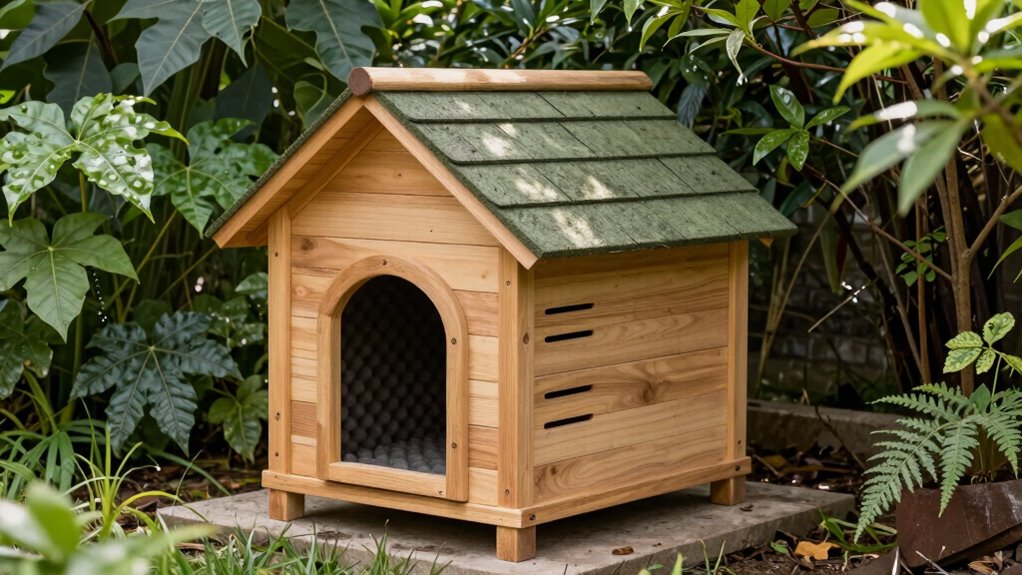
Even with the best materials and thoughtful design, outdoor dog houses can still face issues like temperature fluctuations and dampness. To combat this, guarantee your dog’s house has adequate flooring that insulates against cold ground and prevents moisture from seeping in. Raising the structure on stilts or using insulated pads helps maintain a stable temperature inside. Dampness often invites pests, so implement pest prevention measures such as sealing gaps and using non-toxic repellents. Proper venting also helps regulate airflow, reducing humidity buildup. Additionally, selecting appropriate insulation materials can significantly improve temperature stability and moisture control. Using ventilation systems designed for outdoor structures can further enhance air circulation and prevent dampness. Keeping the area clean and dry, along with providing adequate flooring, creates a comfortable environment and reduces the risk of dampness and pest problems. Utilizing Universal Screen Types such as ALR screens can also aid in controlling humidity and pests by reducing outdoor elements that enter the space. Incorporating moisture barriers can provide an extra layer of protection against ground moisture infiltration. Understanding Youngster Choice in design elements can help optimize comfort for your pet during varying weather conditions.
Frequently Asked Questions
How Often Should I Inspect My Outdoor Dog House for Insulation Integrity?
You should inspect your outdoor dog house for insulation integrity at least once every three to six months. This inspection schedule helps catch any issues early, ensuring your pet stays warm in winter and cool in summer. During insulation maintenance, look for sagging, damage, or moisture buildup. Regular checks keep the insulation effective, protect your dog from harsh weather, and extend the life of the dog house.
Can Insulation Materials Pose Health Risks to My Dog?
Insulation materials can pose health risks if they contain chemicals or allergens. About 20% of pet allergies are caused by exposure to certain insulation fibers or chemicals. To keep your dog safe, choose insulation with proven chemical safety and hypoallergenic properties. Always check for non-toxic, pet-friendly options, and verify proper ventilation to reduce allergen concerns. Regular inspections help you catch any potential hazards early.
What Are the Signs of Poor Ventilation Affecting My Dog’s Health?
You might notice your dog showing signs of suffocation or breathing difficulties if ventilation is poor. Watch for rapid or labored breathing, coughing, or wheezing. If your dog seems restless, pawing at their face, or appears anxious, these could also indicate they’re struggling to get enough fresh air. Poor airflow traps moisture and odors, which can lead to respiratory issues, so make certain your dog’s outdoor house is well-ventilated.
How Do Seasonal Changes Impact Moisture Control Strategies?
Did you know that seasonal moisture fluctuations can increase humidity inside your dog’s house by up to 30%? As temperatures change, temperature-related condensation becomes a bigger concern. During winter, you should enhance venting and insulation to prevent moisture buildup, while in summer, focus on improving airflow. Adjust your moisture control strategies seasonally to keep your dog dry, comfortable, and healthy all year round.
Is It Necessary to Upgrade Insulation as My Dog Ages?
Yes, you should consider upgrading insulation as your dog ages. Aging dogs are more sensitive to temperature fluctuations, and insulation aging can reduce its effectiveness over time. Regularly check your outdoor dog house’s insulation to guarantee it still provides adequate warmth and protection. Upgrading or adding extra insulation helps keep your aging dog comfortable, especially during extreme weather, preventing health issues related to cold or heat.
Conclusion
Did you know that improperly insulated or ventilated outdoor dog houses can lead to health issues in over 60% of outdoor dogs? By choosing the right insulation, ensuring proper ventilation, and managing moisture, you can keep your pup comfortable and healthy year-round. Remember, a well-designed dog house isn’t just about comfort—it’s about safeguarding your dog’s well-being. Take these tips seriously, and your furry friend will thank you with years of happy, healthy companionship.