
In a multi-cat home, the ‘One Box Plus One’ rule means giving each cat their own litter box plus an extra one for good measure. This helps reduce territorial disputes, encourages consistent use, and keeps your cats healthier. Proper placement, regular cleaning, and offering different types or covered options can make a big difference. If you want to guarantee your feline family stays happy and stress-free, understanding these tips can be a game-changer.
Key Takeaways
- The ‘One Box Plus One’ rule recommends providing one litter box per cat plus an extra to prevent territorial disputes.
- Proper placement in quiet, accessible areas reduces stress and encourages consistent use by all cats.
- Regular cleaning and maintenance are essential to prevent odors, promote hygiene, and discourage avoidance.
- Adjust the number and location of boxes based on cats’ preferences and behavior for optimal harmony.
- Additional environmental enrichments like vertical spaces and hiding spots support healthy interactions and reduce conflicts.
How to Implement the ‘One Box Plus One’ Rule in Your Home
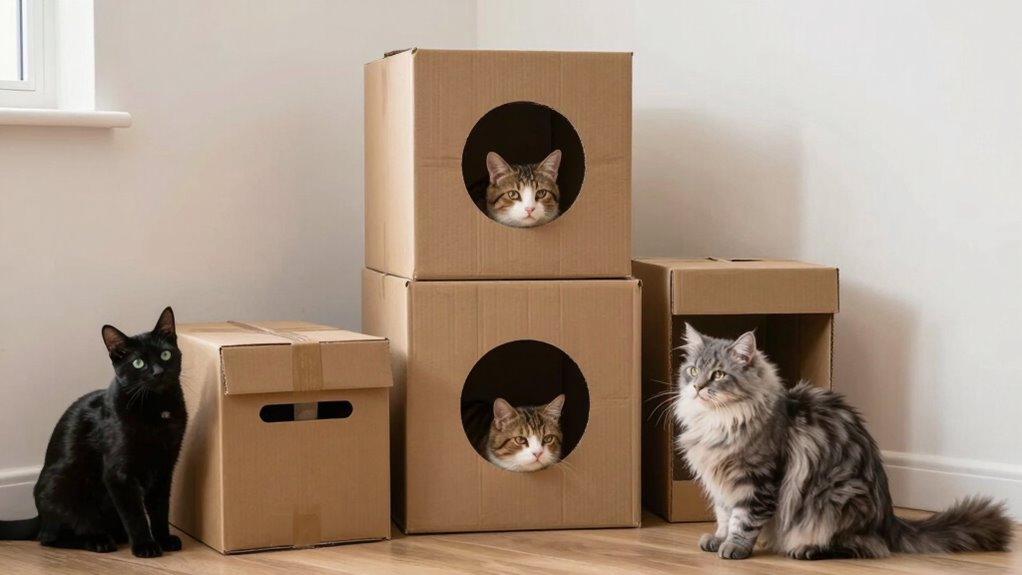
Implementing the ‘One Box Plus One’ rule is a simple yet effective way to keep your multi-cat home clean and reduce litter box conflicts. To do this, focus on litter box placement by positioning each box in quiet, accessible areas away from heavy foot traffic or noisy appliances. This setup encourages consistent use and minimizes territorial disputes. Keep in mind that multiple cat personalities can influence their litter box habits—some cats prefer privacy, while others are more social. Providing enough boxes helps cater to these differences, preventing territorial disputes or accidents. Regularly scoop each box and keep them clean to encourage use. Proper litter box placement and consideration of your cats’ personalities are essential to creating a harmonious environment that minimizes conflicts and maintains cleanliness. Additionally, understanding cat behavior can help you identify signs of stress or dissatisfaction related to their litter box setup, enabling you to make adjustments proactively. Recognizing multi-cat dynamics can further improve your approach, ensuring each cat’s needs are met comfortably. Being aware of territorial instincts can also help you design a setup that reduces competition and stress among your cats. Incorporating appropriate space separation can help satisfy their natural instincts and reduce territorial tensions.
Assessing Your Household Cat Count and Personalities
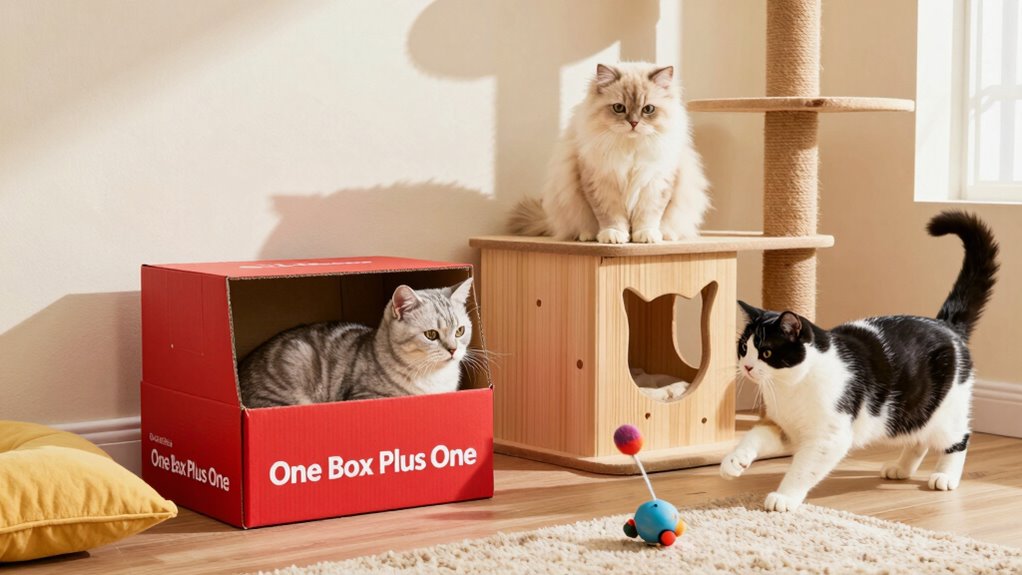
Before setting up litter boxes and arranging your space, it’s important to evaluate how many cats you’ll be caring for and understand their individual personalities. Conducting a cat personality assessment helps you determine each cat’s social tendencies, activity levels, and comfort zones. Knowing your household cat count is essential for planning appropriate resources and interactions. Some cats are more territorial or shy, while others are social and outgoing. By appraising their personalities, you can tailor your environment to reduce stress and foster harmony. Understanding biodiversity factors can also help you create a supportive environment for your cats. Recognizing individual needs allows you to provide enough space, hiding spots, and resources for each cat, making multikat living smoother. Additionally, considering AI ethicist jobs can be helpful for designing ethical environments and resources that respect each cat’s individuality. Ultimately, matching your space to your cats’ personalities supports their well-being and helps prevent conflicts.
Why You Need Extra Litter Boxes to Prevent Fights
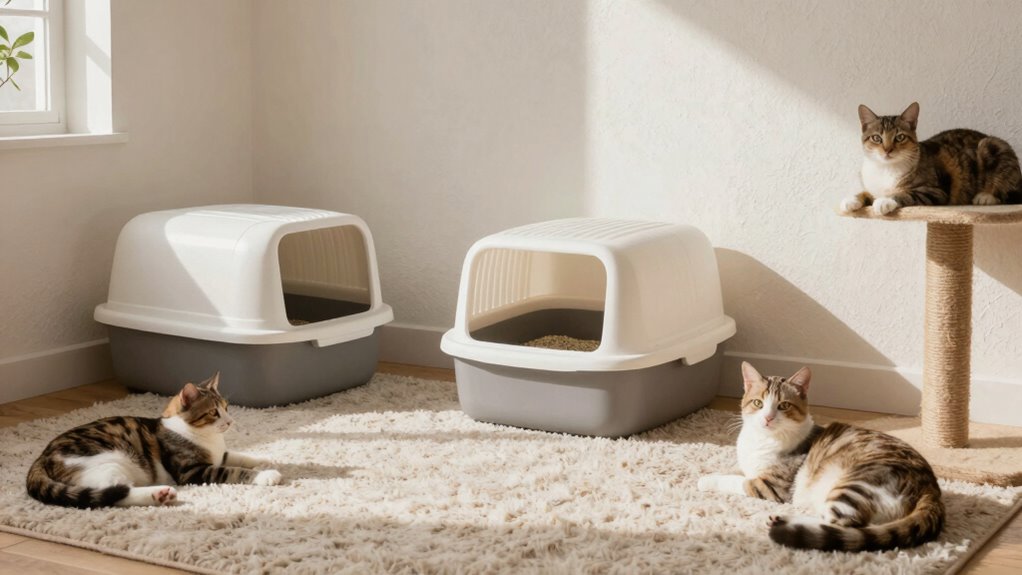
Having enough litter boxes is essential for maintaining harmony in a multi-cat household, as it helps prevent territorial disputes and fights. Proper litter box placement allows each cat to access one without conflict, reducing competition and stress. When cats feel they have a dedicated space, they’re less likely to guard resources or become aggressive over shared areas. Relying on just one or two boxes can make cats feel territoriality is threatened, leading to fights. To avoid this, provide a litter box for each cat and place them in different quiet, accessible locations. This setup respects each cat’s need for personal space and helps minimize territorial disputes, promoting a peaceful environment for everyone. Additionally, understanding cookie management options can help improve your online experience while researching best practices for multi-cat households. Ensuring proper litter box hygiene is also crucial, as dirty boxes can lead to avoidance and increased tension among cats. Maintaining a stress-free environment can significantly reduce conflicts and promote overall well-being for your cats.
Setting Up Multiple Litter Boxes: Tips and Best Practices

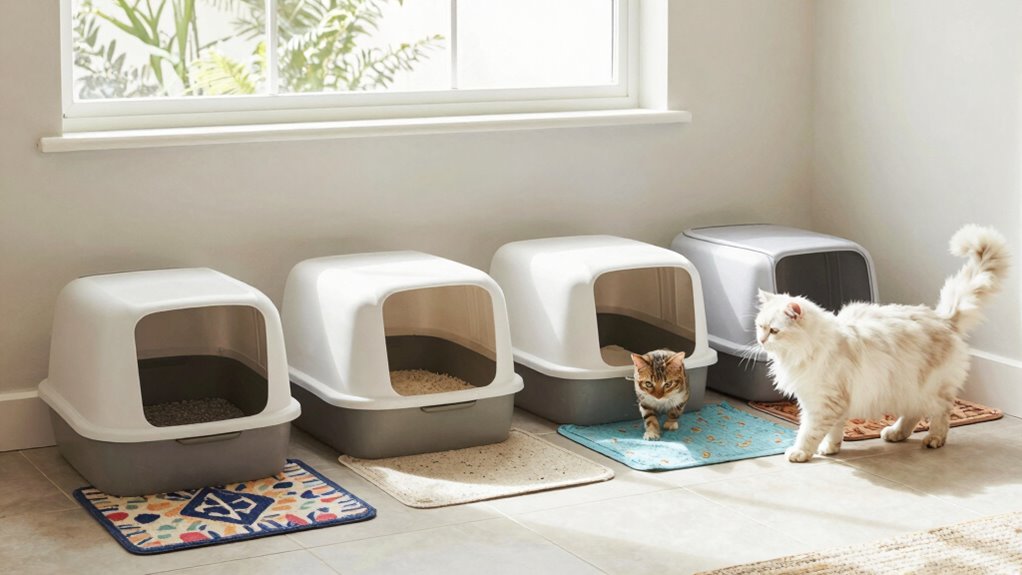
Setting up multiple litter boxes correctly is key to maintaining harmony in a multi-cat home. Focus on litter box placement by spreading them out across different areas, ideally in quiet, accessible spots. Avoid clustering boxes together, which can cause territorial disputes or accidents. Consider your cats’ personalities—some may prefer privacy, while others are more social and comfortable sharing space. Use covered or open litter boxes based on their preferences. Regularly scoop each box and keep them clean to prevent odors that might discourage use. Make sure each litter box is large enough for your cats to move comfortably. Proper deep-sky imaging techniques can help you observe your cats’ behaviors and preferences more clearly. Additionally, understanding essential oils for cat safety can help you choose safe cleaning products and avoid substances that might be harmful to your cats. Using litter box accessories such as mats or liners can also help keep the area tidy and reduce tracking outside the box. Paying attention to your cats’ elimination habits and adjusting the setup accordingly can further promote healthy use of the litter boxes. Regular monitoring of your cats’ behavioral patterns can help you identify preferences and potential issues early on. By thoughtfully placing and maintaining these boxes, you help reduce stress and promote healthy elimination habits for all your cats.
Where to Place and Which Types of Litter Boxes Work Best for Multiple Cats
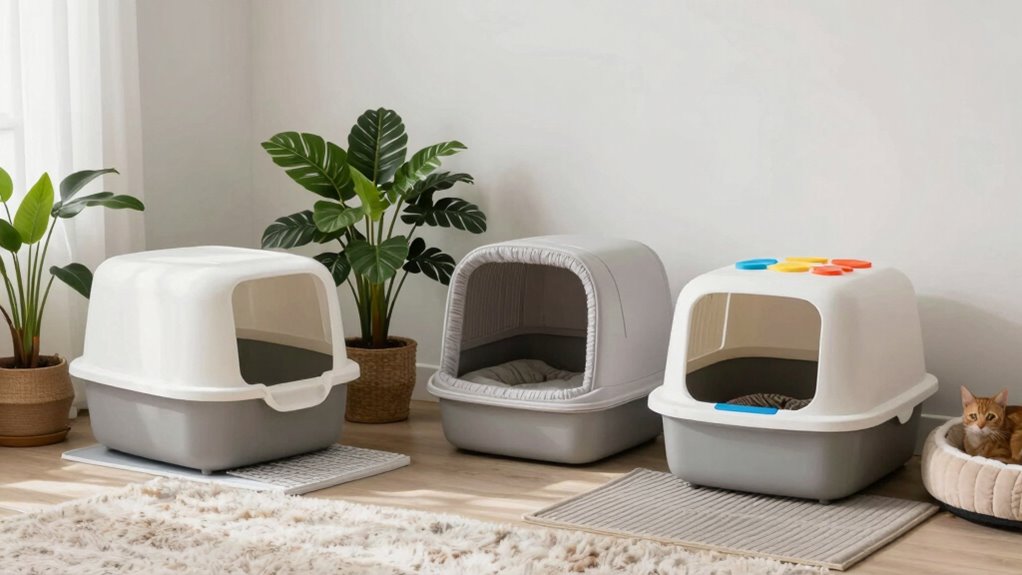
Choosing the right locations for your litter boxes is essential to keep your cats comfortable and prevent conflicts. Proper litter box placement ensures easy access and reduces stress. Place each box in a quiet, low-traffic area, so your cats feel safe when using it. Consider these key points:
Proper litter box placement keeps cats comfortable, reduces stress, and prevents conflicts.
- Spread out litter box types and locations to prevent territorial disputes.
- Use multiple litter box types—such as covered and uncovered—to cater to different preferences.
- Avoid placing boxes near food or water bowls to maintain hygiene and comfort.
- Ensure proper ventilation in the area to help control odors and keep the environment fresh. Good ventilation can also help mitigate odor buildup, which is important for maintaining a pleasant home environment for both your cats and household members.
- Recognize that cultural differences can influence preferences for litter box styles and placement, so observe your cats’ behaviors to optimize their comfort and well-being. Additionally, knowledge of feline behavior can help you adapt your setup to suit your cats’ individual needs.
What Resources Do Your Cats Need Besides Litter Boxes?
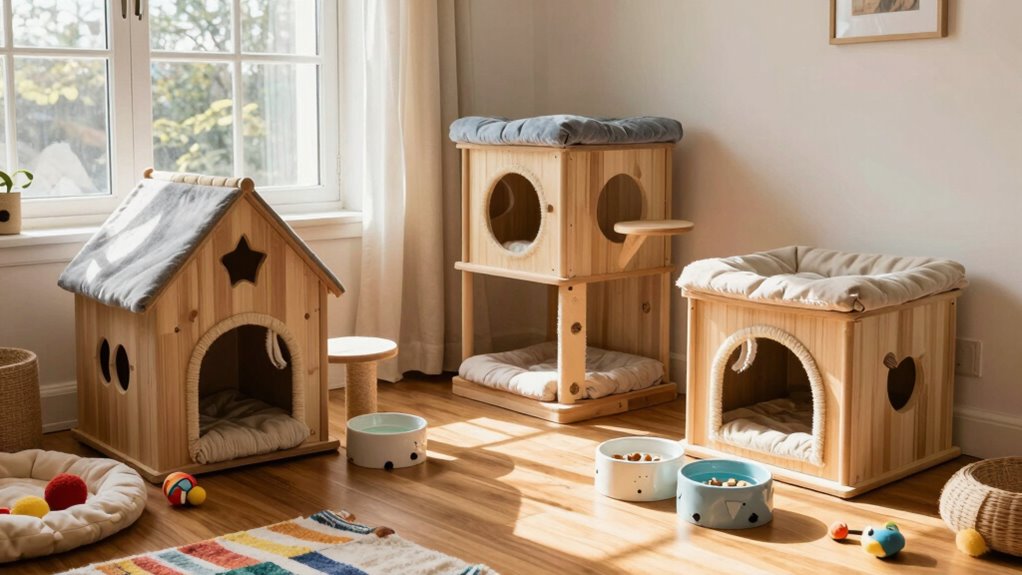
Along with providing suitable litter boxes, ensuring your cats have access to other resources can make a big difference in their happiness and feline health. Regular cat grooming helps keep their coats clean, reduces hairballs, and allows you to spot any health issues early. Providing scratching posts and toys keeps your cats mentally stimulated and prevents destructive behaviors. Elevated perches or cozy hiding spots give them safe spaces to relax and observe their environment. Additionally, offering body jewelry measurements and materials like puzzle feeders or interactive toys can help keep their minds active and reduce boredom. Proper cleaning and maintenance of their environment can further reduce the risk of health problems. Meeting their resource needs beyond litter boxes supports their physical and emotional well-being, reducing stress and promoting a harmonious multi-cat household.
Common Mistakes When Setting Up Multi-Cat Litter Box Systems

One common mistake is overcrowding litter boxes, which can cause stress and accidents. Failing to clean the boxes regularly also leads to odor issues and reduced use. Additionally, ignoring your cats’ preferences for box types or locations can discourage them from using the litter boxes altogether.
Overcrowding Risks
Overcrowding is a common mistake that can cause serious issues in multi-cat households. When too many cats share limited litter boxes, territory conflicts escalate, and litter box sharing becomes stressful. This often leads to accidents outside the box or avoidance altogether. To avoid these problems:
- You increase tension, risking fights over space and dominance.
- You make litter box sharing uncomfortable, leading to avoidance and soiling elsewhere.
- You create a stressful environment where cats feel their territory is threatened.
When litter boxes are too few or too close, cats become territorial and resentful. Overcrowding can quickly turn a harmonious home into one filled with conflicts and messes. Properly managing litter box access is key to reducing these overcrowding risks.
Inadequate Cleaning Schedules
Neglecting to establish and stick to a regular cleaning schedule can quickly turn your multi-cat household into a breeding ground for odors and bacteria. Proper litter box maintenance depends on consistent cleaning schedules that remove waste and clump debris promptly. When you delay cleaning, litter becomes foul-smelling and less appealing to your cats, leading to potential accidents outside the box. Establish a routine, such as scooping twice daily and changing the litter weekly, to keep the boxes fresh. This not only ensures hygiene but also encourages your cats to use the litter boxes consistently. Ignoring cleaning schedules can cause discomfort for your cats and create a messy, unhealthy environment. Stay diligent with litter box maintenance to promote cleanliness and reduce the risk of health issues.
Ignoring Cat Preferences
Ignoring your cats’ preferences when setting up a multi-cat litter box system can lead to accidents and stress. Cats have unique preferences for litter choice, and neglecting them can make your pets avoid the box altogether.
Consider these common mistakes:
- Using a litter type your cats dislike, causing reluctance to use the box.
- Ignoring the importance of scent and texture, which can trigger avoidance.
- Not offering enough options, forcing cats to share an unsuitable litter environment.
Adjusting the ‘One Box Plus One’ Rule for Different Cats and Households
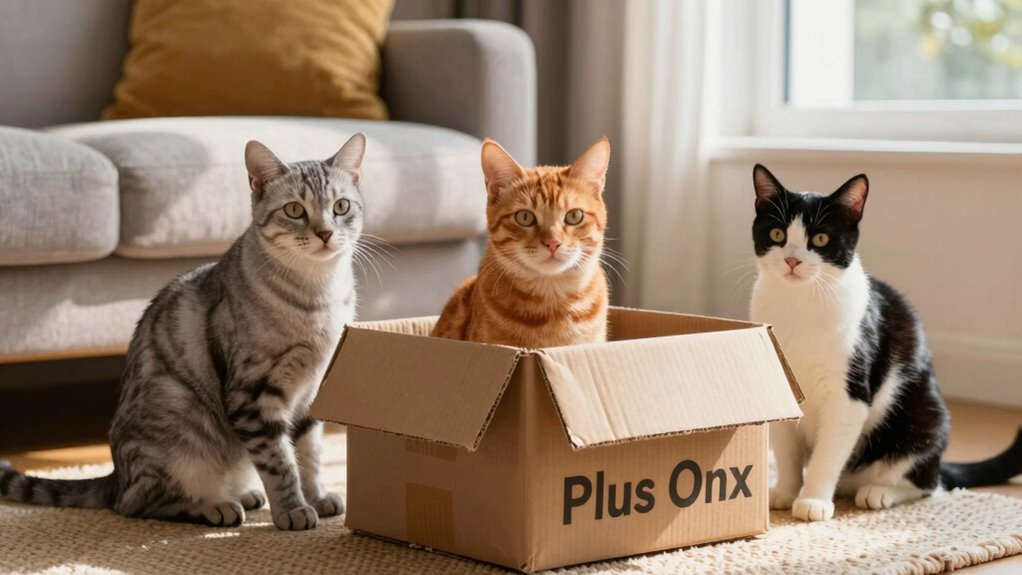
While the standard “One Box Plus One” rule works well for many households, you may need to modify it based on the number of cats and their individual needs. If your cats are well-socialized and comfortable with each other, you might get away with fewer boxes. However, if you notice issues like cats avoiding the litter box or marking territory, adding more boxes can help. Consider litter box placement carefully—spread boxes throughout your home, especially in areas where cats spend most of their time. Proper placement encourages good cat socialization and minimizes conflicts. Keep an eye on your cats’ behavior and adjust your setup as needed to ensure everyone has easy access and feels secure using their litter boxes.
Signs Your Multi-Cat Litter Box Setup Is Working or Needs Changes
Monitoring how your multi-cat litter box setup functions in everyday life is key to ensuring everyone stays comfortable. Keep an eye on these signs to see if it’s working or needs adjustments:
- All cats are using the litter box without hesitation, showing healthy litter box habits.
- There’s no evidence of territorial disputes or hiding near the litter area, indicating feline territoriality is well-managed.
- You notice no lingering odors or excessive cleaning, which suggests proper litter box maintenance and placement.
If any of these signs aren’t present, it might be time to rethink your setup. Multiple cats can challenge litter box dynamics, so addressing issues early helps prevent stress or inappropriate elimination. Your vigilance keeps your feline family happy and healthy.
Final Tips for a Happy, Harmonious Multi-Cat Household

Creating a peaceful multi-cat household requires intentional effort and thoughtful management. Understanding cat behavior helps you anticipate conflicts and address them proactively. Make certain each cat has access to litter boxes with proper etiquette—maintain cleanliness, scoop regularly, and provide enough boxes (at least one per cat, plus one). Observe how your cats interact and watch for signs of stress or territorial disputes. Reward positive behavior and avoid punishment, which can escalate tension. Provide vertical space and hiding spots to reduce competition and give each cat a sense of security. Keep routines consistent and spend quality time with your cats to strengthen bonds. These small but vital steps help create harmony, making your home a happy, peaceful space for everyone.
Frequently Asked Questions
How Many Litter Boxes Are Ideal for Different Household Sizes?
For your household size, aim for one litter box per cat plus one extra, ensuring proper litter box placement. Consider each cat’s personality traits—shy cats may prefer private spots, while social ones might share. Keep boxes in quiet, accessible areas, and avoid overcrowding. This setup minimizes conflicts and accidents, keeping everyone comfortable and happy. Adjust the number if you notice signs of stress or mess, ensuring ideal hygiene and harmony.
Can Cats Share Litter Boxes Without Issues?
Imagine two cats sharing a litter box daily. While some cats adapt, sharing often leads to territorial marking and litter box hierarchy issues. Typically, cats prefer their own space to avoid conflicts. If you want harmonious sharing, provide multiple boxes to reduce stress and prevent territorial disputes. Sharing can work, but it’s not always ideal—observe your cats for signs of stress or marking, and adjust accordingly.
What Are Signs of Litter Box Avoidance or Stress?
If your cat avoids the litter box, you’ll notice behaviors indicating discomfort, like urinating outside the box or excessive grooming near the area. Signs of stress in cats include hiding, decreased appetite, or vocalizing more than usual. You might also see them scratching furniture or showing aggression. These behaviors suggest your cat feels uneasy or overwhelmed, so it’s essential to observe their environment and consult a vet if issues persist.
How Often Should I Clean the Litter Boxes in a Multi-Cat Home?
You should clean your litter boxes at least once a day to maintain proper litter box maintenance in a multi-cat home. This frequency helps prevent odor buildup and encourages good cat hygiene routines. If you notice your cats avoiding the box or signs of stress, increase cleaning to twice daily. Regular scooping guarantees a clean environment, reducing the chance of accidents and promoting healthy, happy cats.
Are There Specific Litter Types Preferred by Multiple Cats?
You should choose litter that offers effective odor control and suits your cats’ preferences. Many cats prefer clumping litter because it’s easier to clean and controls odor better, but some like non-clumping options for their softer texture. Test different types to see what your cats prefer, and keep the litter box clean to minimize odor. Regular cleaning helps prevent smell buildup and keeps your cats happy and healthy.
Conclusion
With the ‘one box plus one’ rule as your guiding star, your home can transform into a peaceful oasis where cats glide gracefully between cozy boxes like gentle streams meeting in harmony. By thoughtfully evaluating your cats’ personalities and setting up the perfect litter stations, you’re crafting a sanctuary where feline friendships flourish instead of flounder. Keep tweaking and observing, and soon your multi-cat household will bloom into a symphony of contentment and purrs.