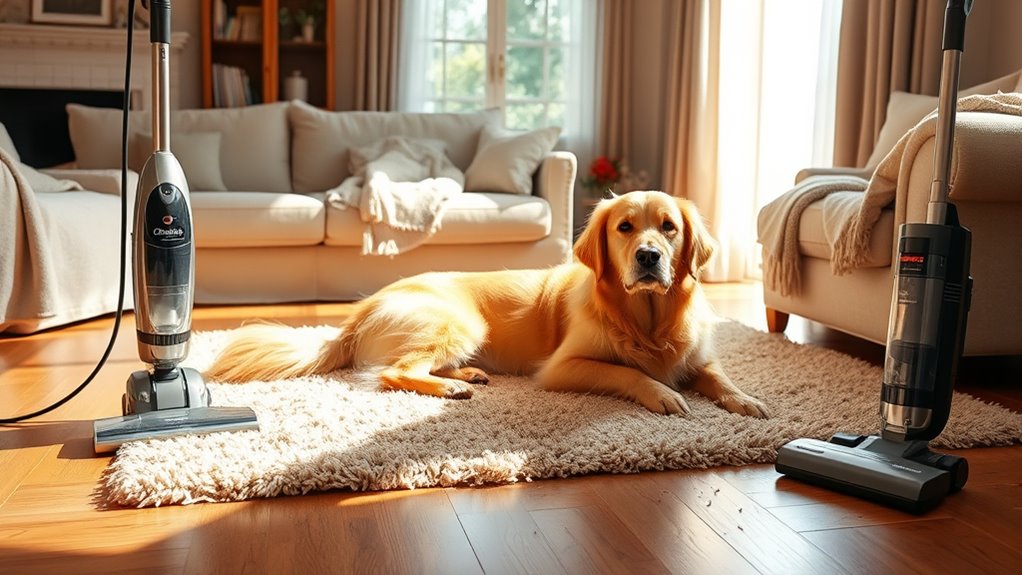

To manage your dog’s shedding at home, establish a consistent grooming routine with the right tools tailored to their coat type, like brushes or de-shedding gloves. Keep a clean, shedding-friendly environment using washable fabrics and regular vacuuming with pet-specific attachments. Support their coat health through a balanced diet rich in omega-3s and frequent baths with vet-approved shampoos. For more tips on controlling shedding and keeping things tidy, explore the full guide below.
Key Takeaways
- Establish a regular grooming routine tailored to your dog’s coat type to reduce loose hair and manage shedding effectively.
- Use appropriate grooming tools like slicker brushes and de-shedding tools to remove loose fur before it falls around the house.
- Maintain a clean home environment with regular vacuuming, air purifiers, and washable furniture covers to trap hair and allergens.
- Support coat health through a balanced diet rich in omega-3 fatty acids and routine baths with vet-approved shampoos.
- Adjust grooming frequency during seasonal changes and keep indoor air quality high to minimize shedding and hair buildup.
Understanding Why Dogs Shed and What to Expect
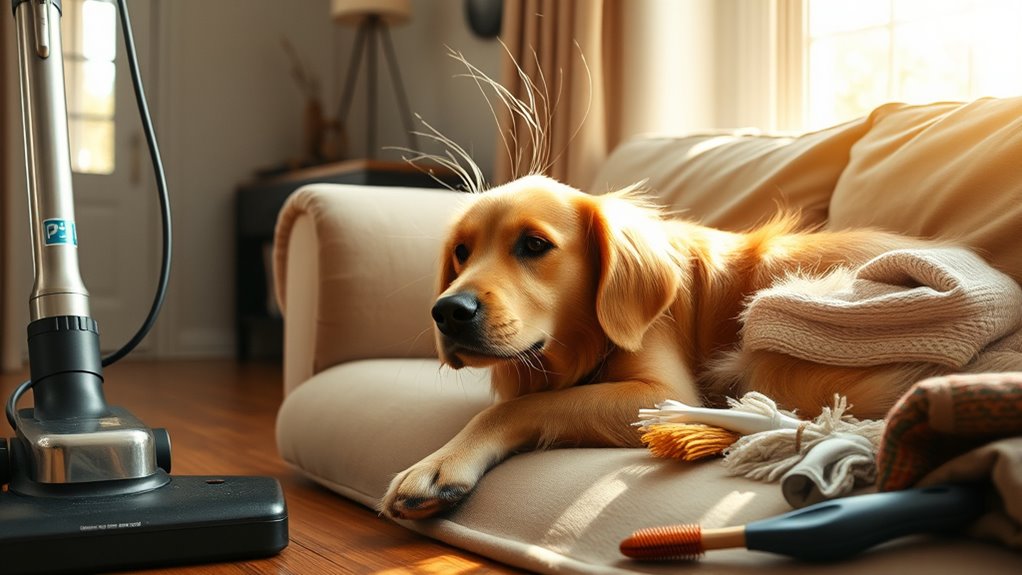
Understanding why dogs shed and what to expect can help you better manage your pet’s grooming needs. Shedding is a natural part of maintaining a healthy coat and varies depending on breed, season, and health. Regular dog grooming helps remove loose hair and promotes good coat health, reducing excess shedding around your home. Dogs shed to get rid of old or damaged hair and to adapt to temperature changes. Some breeds shed heavily year-round, while others shed seasonally. Recognizing these patterns lets you plan grooming sessions effectively. Keep in mind that excessive shedding could signal underlying health issues, so staying attentive is key. Additionally, understanding shedding patterns can help you anticipate when your dog will shed more, making grooming more manageable. Proper coat maintenance supports your dog’s overall health and can minimize shedding indoors. Incorporating tools like fabric decorating markers into your cleaning routine can also help in identifying and marking areas with excess hair, making cleanup easier. Staying consistent with grooming routines can significantly reduce the amount of hair shed around your home. Being aware of seasonal shedding cycles allows you to adapt your grooming schedule accordingly. By understanding these basics, you can better support your dog’s coat health and keep your living space cleaner.
Establishing an Effective Grooming Routine
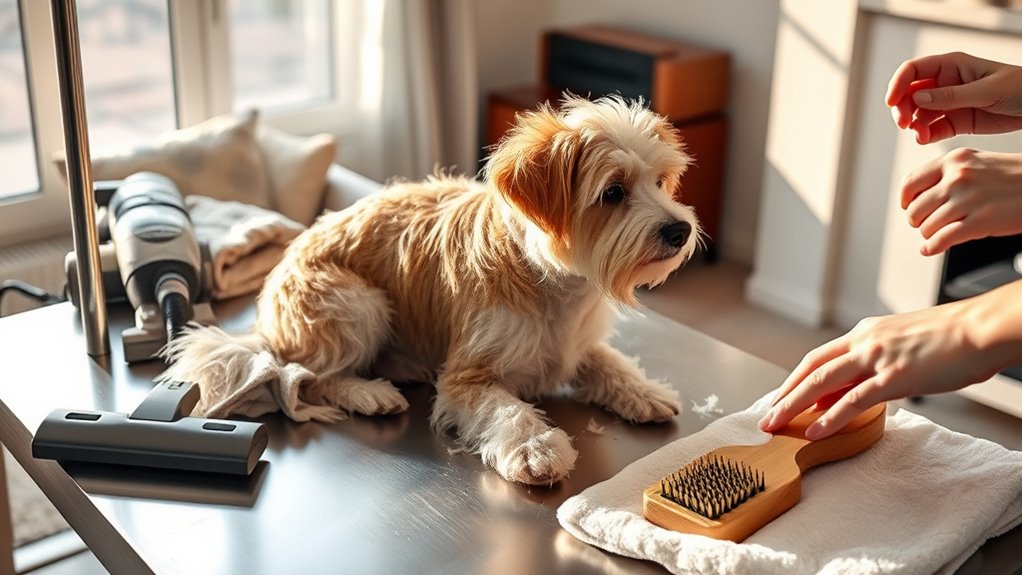
Creating a consistent grooming routine is essential for managing your dog’s shedding and maintaining their overall coat health. Understanding your dog’s coat pattern helps you tailor your grooming schedule—whether they have short, wiry, or double coats. Regular brushing reduces loose hairs and prevents mats, making shedding less noticeable. It’s important to dispel shedding myths, such as the idea that shedding can be completely stopped; instead, consistent grooming minimizes the mess. Establishing a routine means choosing specific days for brushing and baths, which keeps your dog’s coat healthy and reduces excess hair around your home. Incorporating proper exfoliation techniques can further enhance your dog’s coat health by removing dead skin cells and promoting a shiny, healthy appearance. Additionally, selecting the right grooming tools can optimize the effectiveness of your routine and improve coat quality. Remember that regular grooming also provides an opportunity to check for skin issues or parasites, ensuring your dog stays comfortable and healthy. Using the appropriate headphones during grooming can help you stay organized and listen to calming music or instructional videos, making the process more enjoyable for both you and your pet.
Choosing the Right Tools for Hair Removal
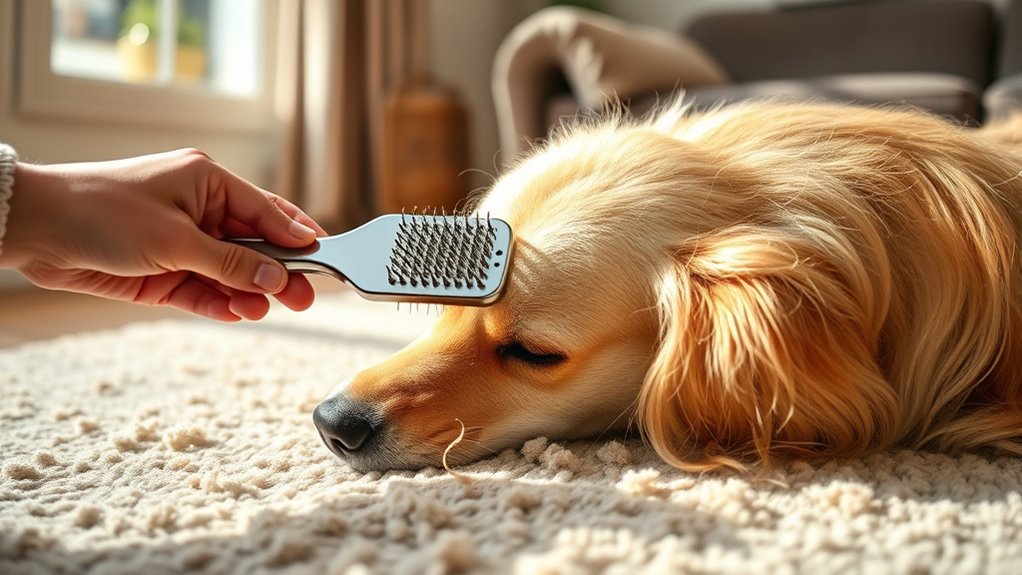
Selecting the right tools is essential for effectively managing your dog’s shedding. The proper grooming tools can reduce pet hair allergies by minimizing loose hair around your home. Start with a quality slicker brush or deshedding tool designed for your dog’s coat type—long-haired, short-haired, or double-coated breeds all require different options. A grooming glove can be excellent for quick daily removal, while a de-shedding rake helps reach undercoat layers. When choosing grooming products, consider your dog’s skin sensitivity to avoid irritation. Regularly updating your grooming tool selection guarantees consistent shedding control. Using the appropriate tools not only keeps your home cleaner but also promotes healthier skin and coat, making grooming a more comfortable experience for your dog and reducing allergen spread. Incorporating automation in business solutions like automated grooming tools can further streamline the shedding management process.
Creating a Shedding-Friendly Home Environment
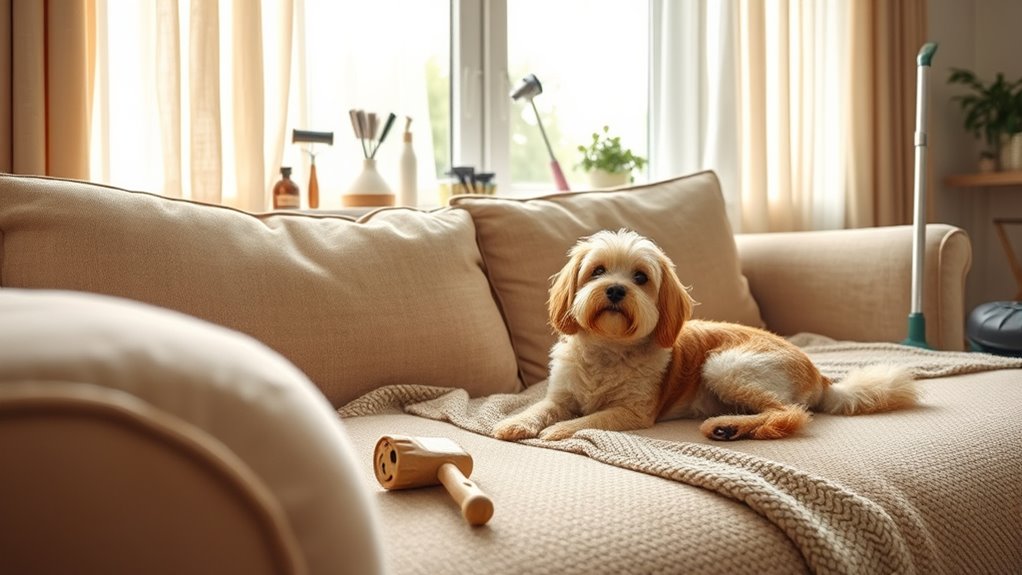
To effectively manage shedding, you need to make your home environment as shedding-friendly as possible. Start by choosing furniture and flooring that trap hair easily, like washable rugs or leather furniture. Keep your dog’s coat in top condition by providing a balanced dog diet rich in omega-3 fatty acids, which can improve coat health and reduce excessive shedding. Also, be mindful of your dog’s coat color; lighter coats tend to show shed hair more prominently, so regular cleaning is essential. Designate specific areas for your dog to rest, minimizing hair spread throughout the house. Using air purifiers can help catch airborne hair, while keeping your home climate controlled prevents excess shedding caused by temperature fluctuations. Incorporating best anime movies into your leisure time can provide relaxing distraction from cleaning routines, making shedding management more enjoyable. Ensuring proper sleep patterns for your dog, such as consistent feeding and exercise routines, can also help reduce unnecessary shedding linked to stress or health issues. Proper home heating solutions can also help maintain a stable indoor temperature, reducing stress-induced shedding in some dogs. Maintaining proper cookie consent management can also help you optimize your website’s performance and user experience while managing your household efficiently. Creating this environment makes managing shedding much more manageable.
Regular Cleaning and Maintenance Tips
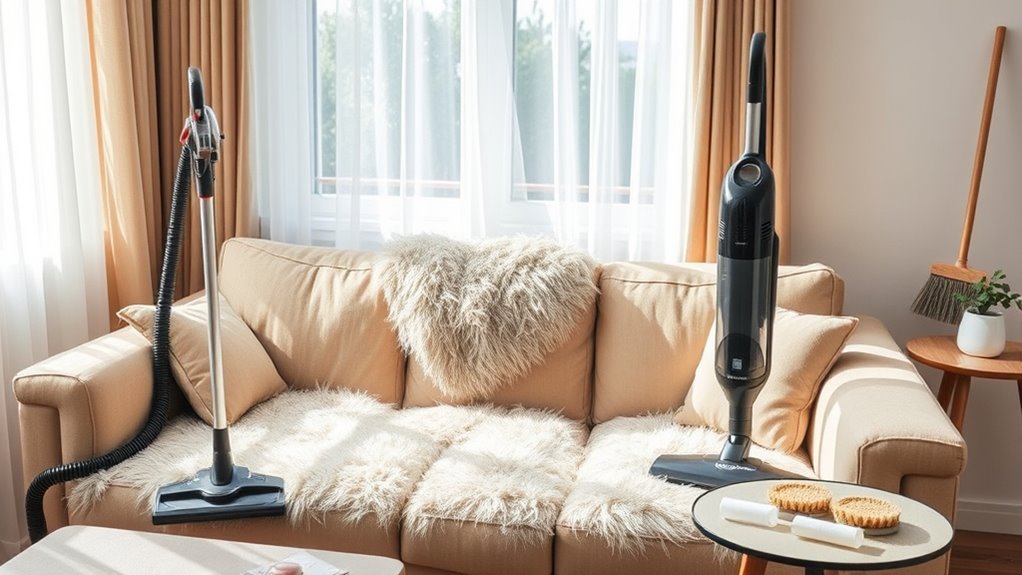
To keep shedding under control, using your vacuum effectively is key—make sure to focus on all the usual spots and use attachments for tricky areas. Regular grooming helps reduce loose fur before it ends up everywhere, so stick to a consistent schedule. Combining these tips makes cleaning easier and keeps your home tidier. Additionally, understanding the IRA investment strategy can help you plan your finances effectively for retirement, ensuring you have the resources to maintain your home and pet care routines. For those interested in enhancing their vehicle’s performance, exploring options like Kia Tuning can provide tailored modifications to improve handling, power, and appearance. Incorporating regular cleaning routines and proper grooming can further minimize shedding and keep your environment cleaner. Implementing a HVAC system with high energy efficiency can also improve indoor air quality and temperature control, making your living space more comfortable and reducing allergens that might affect pets. Regularly using an anti-shedding shampoo during grooming can also help manage loose fur more effectively.
Effective Vacuum Techniques
Have you ever wondered why your vacuum doesn’t seem to pick up pet hair as effectively as it used to? Over time, pet allergy triggers like dander and loose hair can clog filters and reduce vacuum efficiency. To keep it working its best, empty the canister or replace bags regularly. Use a vacuum with a high-efficiency particulate air (HEPA) filter, which traps allergens more effectively. Make sure to adjust settings for different surfaces—carpets, hardwood, or tiles—to maximize cleaning power. Move the vacuum slowly over surfaces to dislodge embedded hair. Also, check and clean brushes and rollers frequently to prevent hair buildup. Proper vacuum maintenance guarantees your vacuum continues to remove shedding efficiently, creating a healthier environment for both you and your pet. Regularly inspecting your vacuum’s filtration system can prevent loss of suction and ensure optimal performance. Additionally, choosing appropriate cleaning tools designed for pet hair can significantly improve cleaning results.
Grooming for Less Shedding
Regular grooming plays a key role in reducing pet shedding and making cleaning easier. Consistent brushing helps remove loose hair before it falls around your home and can improve coat health. For breed-specific shedding, tailor your grooming routine to target areas where your dog tends to shed most. Additionally, good dog nutrition supports a healthy coat, reducing excessive shedding caused by nutrient deficiencies. Use appropriate brushes and grooming tools suited for your dog’s coat type, whether it’s short or long-haired. Regular baths with vet-approved shampoos also help keep fur clean and less prone to shedding. Incorporating a diet rich in omega fatty acids for coat health can significantly impact shedding levels. Monitoring social media for giveaways and contests can sometimes provide opportunities for free pet care products that support healthy coats. Ensuring your dog receives proper nutritional support can significantly impact shedding levels. By maintaining a consistent grooming schedule and focusing on breed-specific needs, you’ll minimize loose hair and create a cleaner, more comfortable environment for both you and your dog.
Managing Shedding During Seasonal Changes

As the seasons change, you might notice more shedding and need to adjust your grooming routine to keep your home cleaner. Increasing indoor ventilation helps reduce excess hair buildup and improves air quality. These simple steps make managing seasonal shedding much easier for both you and your pet. Additionally, understanding vulnerability assessment principles such as regular monitoring can inspire effective strategies to anticipate and manage challenges during this period.
Adjust Grooming Routines
When seasonal changes arrive, your pet’s shedding can increase unexpectedly, making it essential to adjust your grooming routine accordingly. Regular brushing becomes even more important to remove loose hair before it spreads around your home. Consider changing your grooming tools to suit your dog’s coat type, ensuring you’re effectively reducing shedding. Additionally, pay attention to your dog’s diet, as a balanced dog diet rich in omega-3 fatty acids supports healthy skin and coat, minimizing excessive shedding. Adjust exercise routines to keep your dog active and healthy, which also promotes better coat health. By maintaining a consistent grooming schedule and supporting your dog’s overall well-being, you’ll better manage seasonal shedding and keep your home cleaner.
Increase Indoor Ventilation
Increasing indoor ventilation is an effective way to manage shedding during seasonal changes. Good air circulation helps remove loose fur and reduces pet dander buildup, making your home cleaner and healthier. Use fans or open windows to enhance airflow, but guarantee your space stays comfortable. Incorporate air purifiers with HEPA filters to trap floating hair, dust, and allergens, improving air quality. Regularly changing filters keeps the system working efficiently. Proper ventilation also helps dissipate odors caused by shedding and keeps the environment fresh. By increasing ventilation, you support a cleaner home and help your dog shed more comfortably, especially during seasonal shifts. This simple step makes a noticeable difference in managing shedding and maintaining a healthier living space.
Tips for Keeping Your Dog’s Coat Healthy and Well-Groomed
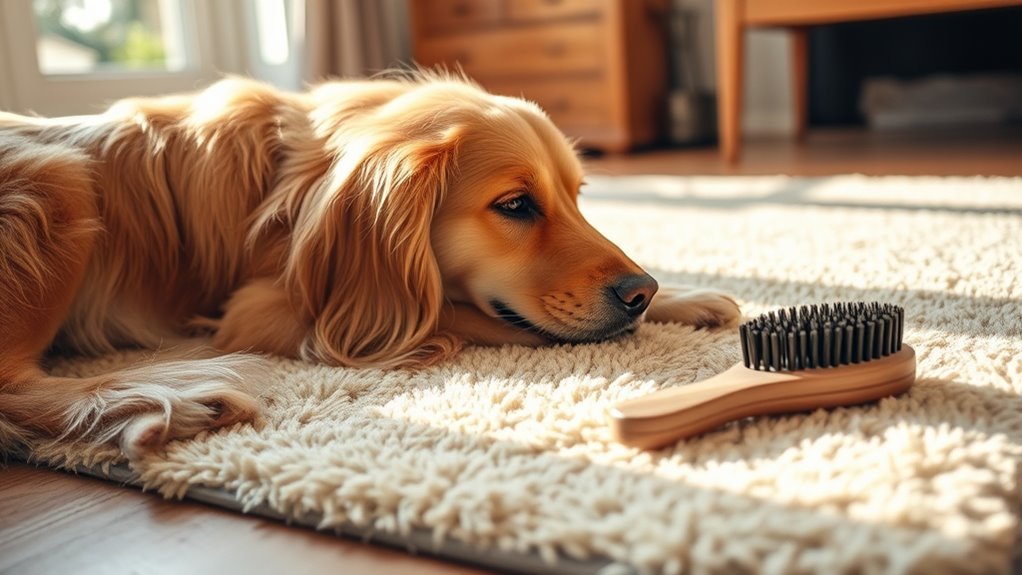
Maintaining a healthy, well-groomed coat starts with regular brushing, which helps remove loose hair, dirt, and debris while distributing natural oils. Consistent grooming prevents matting and promotes a shiny, strong coat. Proper dog nutrition plays a vital role, so ensure your dog gets a balanced diet rich in essential fatty acids, vitamins, and minerals. Consider coat supplements if recommended by your vet, as these can enhance coat health and reduce shedding. Regular baths with gentle, dog-specific shampoos also keep the coat clean and healthy. Additionally, keep an eye out for skin issues or dryness, addressing them promptly. By combining proper grooming, nutrition, and supplements, you support your dog’s coat health and minimize shedding around your home.
Frequently Asked Questions
How Can I Reduce My Dog’S Shedding Naturally?
To reduce your dog’s shedding naturally, focus on consistent grooming routines to remove loose fur and promote healthy hair growth. Regular brushing helps minimize hair around your home. Additionally, consider coat supplements rich in omega fatty acids, which support a shiny, healthy coat and reduce shedding. By maintaining a balanced diet, staying consistent with grooming, and adding supplements, you’ll see less hair around your house and a happier, healthier dog.
Are There Specific Diets That Minimize Shedding?
While some diets promise to reduce shedding, your focus should be on balanced nutrition that supports coat health. Proper grooming routines and coat maintenance are essential, but a diet rich in omega-3 fatty acids, vitamins, and high-quality protein truly makes a difference. Choose foods with these ingredients to strengthen your dog’s coat from within, minimizing shedding and keeping their fur shiny and healthy.
How Does Stress Affect My Dog’S Coat Shedding?
Stress can considerably impact your dog’s coat shedding, making it worse during times of anxiety or change. When your dog experiences stress, it can disrupt their grooming routines and cause increased shedding, especially during seasonal changes. To help, keep a consistent grooming routine and create a calm environment. This not only reduces stress but also helps manage shedding effectively, keeping your dog comfortable and their coat healthier.
Can Certain Medications Influence Shedding Levels?
Certain medications can definitely influence your dog’s shedding levels. You might notice medication side effects that cause coat changes, like increased shedding or dullness. Always check with your vet before starting new medication, as they can advise whether shedding might be affected. Monitoring your dog’s coat closely helps you spot unusual changes early, ensuring you can address any concerns or adjust medication if necessary to keep your pup comfortable and healthy.
What Are Signs of Underlying Health Issues Causing Excessive Shedding?
Is your dog’s shedding a silent scream for help? Excessive shedding might signal underlying health issues like fungal infections or hormonal imbalances. Watch for bald patches, skin redness, or persistent itching. These signs suggest something more serious than seasonal change. Regular vet check-ups are essential to diagnose and treat these conditions early. Don’t ignore the clues—your dog’s health depends on your attentive eye and prompt action.
Conclusion
By following these simple tips, you’ll turn shedding chaos into a manageable routine. With consistent grooming, smart cleaning, and a little patience, you’ll keep your home looking spotless — almost like you’ve tamed a wild lion! Remember, understanding your dog’s shedding patterns and caring for their coat is the key to a happier, healthier pup and a cleaner home. Stick to these strategies, and shedding will become just a minor blip in your daily life.