To stop trapped odors at the source in litter furniture, guarantee proper airflow by maintaining clear vents and using fans or exhaust systems that circulate fresh air continuously. Incorporate odor-absorbing materials like activated charcoal or HEPA filters, and regularly clean or replace filters and liners. Proper maintenance prevents buildup and keeps odors from lingering, creating a healthier space for your pets. If you want to learn effective tips to keep your pet’s environment fresh, stay tuned for more expert advice.
Key Takeaways
- Ensure vents and fans are unobstructed to promote continuous airflow and prevent odor buildup.
- Incorporate activated charcoal or carbon liners to absorb and neutralize odors at the source.
- Regularly inspect and replace filters and liners to maintain effective odor control.
- Use proper ventilation methods like opening windows or installing exhaust fans for fresh air circulation.
- Maintain a clean environment by promptly cleaning litter and replacing stale air to prevent trapped odors.
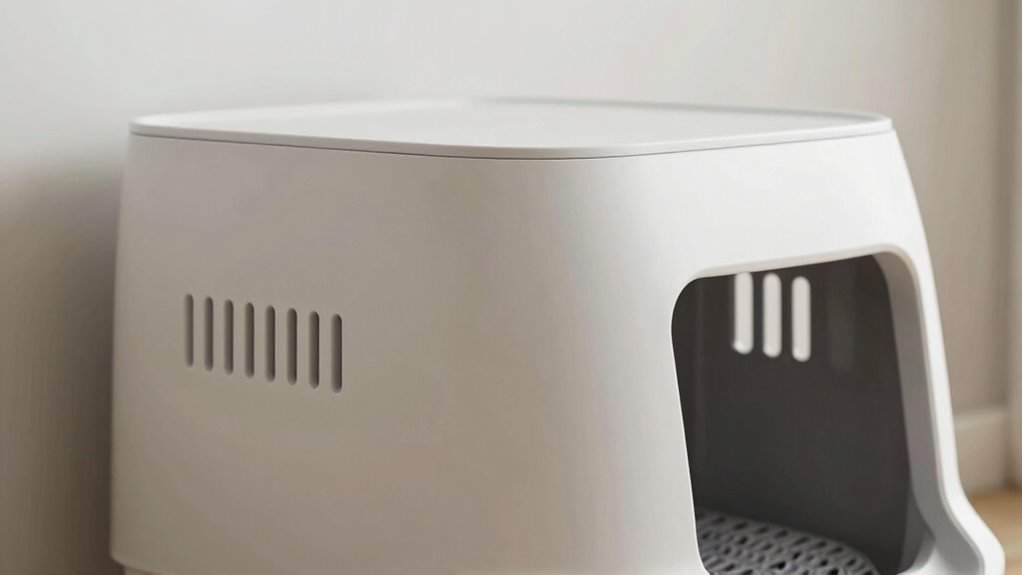
Proper airflow in litter furniture is vital for maintaining a fresh and healthy environment for your pets. When your litter box isn’t ventilated properly, odors can build up quickly, making your space uncomfortable and unpleasant. To combat this, you need to understand the importance of effective air filtration and odor absorption. These two elements work together to prevent trapped smells from lingering and guarantee your pet’s living area stays clean and inviting.
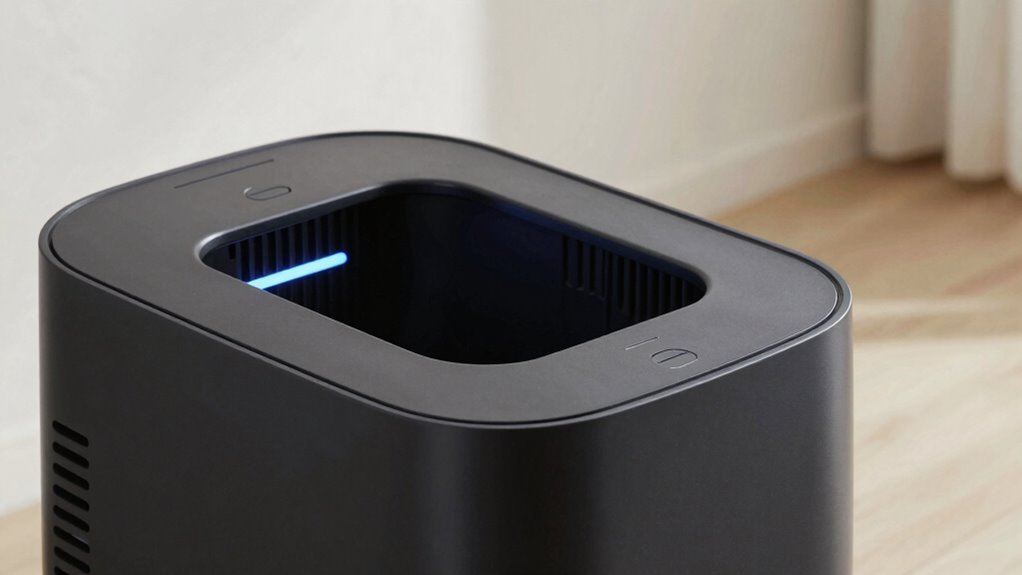
Air filtration plays a pivotal role in maintaining good airflow within your litter furniture. It involves installing vents, fans, or filters that actively move air through the enclosure. When air moves freely, it carries away moisture, debris, and odor particles, preventing them from settling and creating that telltale smell. An efficient ventilation system ensures fresh air circulates continuously, reducing the likelihood of unpleasant odors becoming trapped inside. You can even opt for charcoal filters or HEPA filters, which are designed specifically to trap airborne particles, including odor molecules and allergens. This not only helps keep the air clean but also minimizes airborne contaminants that could affect your health or your pet’s. Ensuring proper air filtration is essential for a truly odor-free environment. Regularly inspecting and replacing filters is crucial to maintain their effectiveness over time.
Effective air filtration ensures continuous fresh airflow, trapping odors and allergens for a healthier, cleaner pet environment.
Odor absorption is equally significant in the fight against trapped smells. When designing or choosing litter furniture, look for features that promote odor control, such as built-in odor-absorbing materials or sealed compartments. Activated charcoal or carbon liners are excellent options because they naturally absorb and neutralize odors at the source. These materials trap odor molecules before they escape into your living space, making the environment more pleasant. Proper airflow enhances odor absorption by continuously bringing fresh air into contact with these materials, allowing them to do their job more effectively. Additionally, regular cleaning of the litter box and changing the liners or filters ensures that odor absorption remains efficient over time. Implementing proper maintenance routines helps sustain optimal odor control and prolongs the effectiveness of filtration systems. In addition, choosing high-quality materials for your litter furniture can further improve odor management over the long term. Creating a well-ventilated space is essential for preventing odors from becoming trapped and ensuring continuous fresh air circulation.
Incorporating good airflow practices isn’t just about installing fans or filters; it’s also about maintaining them. Make sure vents aren’t blocked and that fans are functioning correctly. Opening windows or adding small exhaust fans can further improve air circulation. The air circulation process is vital for dispersing stale air and preventing odor buildup. The goal is to create a system where stale, odor-laden air is replaced with fresh, clean air constantly. When you prioritize air filtration and odor absorption, you control the smells at the source, rather than letting them spread throughout your home. This way, your pets get a healthier environment, and your living space stays fresh and inviting for everyone. Proper airflow isn’t just a luxury—it’s a necessity for keeping litter furniture odor-free and your home smelling clean.
activated charcoal odor absorber for litter box
As an affiliate, we earn on qualifying purchases.
As an affiliate, we earn on qualifying purchases.
Frequently Asked Questions
Can Airflow Systems Be Customized for Different Litter Box Sizes?
Yes, airflow systems can be customized for different litter box sizes. You should consider litter box design to guarantee proper airflow and odor control. Custom airflow integration allows you to tailor the system to fit various dimensions, enhancing efficiency and odor removal. By choosing adaptable components, you can guarantee your airflow system effectively manages trapped odors, regardless of your litter box size, creating a fresher and more comfortable environment for your pets.
How Often Should Airflow Filters Be Replaced?
You might be surprised how often you need to replace your airflow filters—usually every 3 to 6 months. Regular filter maintenance is essential for maintaining air quality and preventing odors from lingering. If you notice decreased airflow or persistent smells, it’s a sign to change the filter sooner. Keeping up with filter replacements ensures your litter box stays fresh, odor-free, and healthy for both you and your pets.
Do Airflow Solutions Work With All Types of Cat Litter?
Airflow solutions generally work with most types of cat litter, but their effectiveness depends on proper litter box maintenance and odor control techniques. If you choose clumping or silica gel litter, airflow systems can help minimize trapped odors. However, some lightweight or scented litters might not benefit as much. Always guarantee your airflow system is compatible with your litter type and maintain regular cleaning routines to maximize odor control.
Are There Any Safety Concerns With Active Airflow Systems?
Sure, active airflow systems are generally safe, but beware—they can stir up noise levels and impact air quality if not properly maintained. You might find yourself caught in a noisy battle of whirring fans or worried about drafts that disturb your indoor air. Always check for secure wiring, clean filters regularly, and make sure proper installation. A little vigilance keeps your space fresh without turning your home into a noisy, drafty circus!
How Does Airflow Impact the Overall Hygiene of the Litter Area?
Airflow markedly improves the overall hygiene of your litter area by enhancing ventilation efficiency and promoting odor dispersion. When you use proper airflow, it reduces trapped odors, keeps the environment fresher, and minimizes bacterial buildup. This not only makes the space more pleasant for your pets but also helps prevent potential health issues. By maintaining consistent airflow, you guarantee a cleaner, more hygienic litter environment for everyone involved.
Conclusion
Remember, a clean environment starts with taking simple steps. By improving airflow in your litter furniture, you directly stop trapped odors at their source, making your space fresher and more comfortable. Don’t wait for odors to become a problem; address them proactively. As the saying goes, “A stitch in time saves nine.” Taking quick action now guarantees long-term freshness, saving you effort and frustration in the future. Keep airflow in mind, and enjoy a more pleasant space.