
To match your dog’s grooming schedule to their coat type, consider their breed and coat characteristics. Long-haired breeds need more frequent brushing and regular baths to prevent matting and dirt buildup, while short-haired dogs require less upkeep, with weekly brushing and occasional baths. Using the right tools and techniques makes grooming easier and more effective. By following a schedule suited to their coat, you can keep your dog comfortable and healthy—plus, you’ll discover more ways to tailor your routine.

Get pet supplies delivered free with Prime
- Fast, free delivery on millions of items
- Prime Video, Amazon Music and more included
- Member-only deals all year
Key Takeaways
- Assess your dog’s coat type to determine appropriate grooming frequency and tools needed.
- Long-haired breeds require more frequent brushing and trims, while short-haired breeds need less maintenance.
- Use breed-specific grooming tools like wide-tooth combs for long coats and slicker brushes for short coats.
- Establish a consistent grooming routine tailored to coat length and texture to prevent matting and skin issues.
- Regularly monitor your dog’s skin and coat health to adjust grooming schedule as needed, avoiding guesswork.

Are you unsure how often to groom your dog based on their coat type? It’s a common question among dog owners, especially when you want to keep your pet comfortable and healthy without overdoing it. The key is understanding your dog’s specific coat and sticking to a grooming schedule that matches it. Instead of relying on guesswork, you should consider your dog’s breed and coat characteristics. For example, long-haired breeds like Shih Tzus or Afghan Hounds require more frequent grooming, while short-haired breeds like Beagles or Boxers need less maintenance.
Understanding your dog’s coat type helps create an effective grooming routine tailored to their needs.
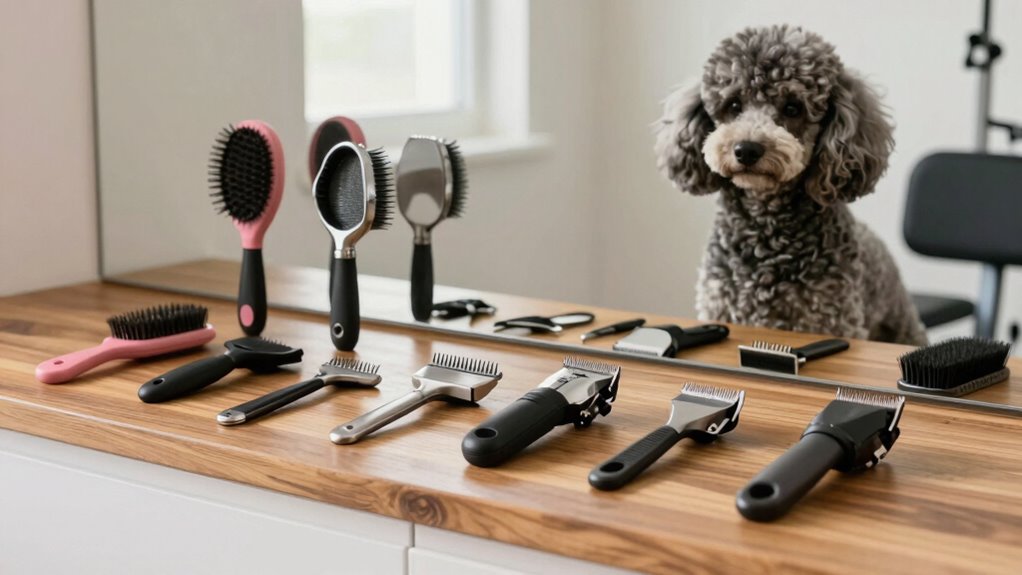
Choosing the right dog breed can make a big difference in grooming needs. If you’re selecting a new dog, think about how much time you’re willing to devote to grooming. Some breeds are low-maintenance, which means less time spent brushing and bathing. Others have coats that need daily attention to prevent matting and dirt buildup. Once you know your dog’s breed, you can plan an appropriate grooming routine. Don’t forget to compare grooming tools as well. For short-haired dogs, a slicker brush or rubber grooming mitt might suffice, whereas long-haired breeds benefit from a wide-tooth comb and thinning shears to keep their coats tidy.
A grooming tools comparison helps you find what works best for your dog’s coat type. Using the right tools not only makes grooming easier but also minimizes discomfort for your pet. For example, slicker brushes are excellent for removing loose hair from dense coats, while pin brushes work well for long, flowing fur. Electric clippers can speed up trimming for breeds with thick coats, but only if you’re comfortable using them properly. Regularly cleaning your grooming tools ensures they remain effective and safe for your dog. Additionally, understanding the specific coat type of your dog can help you tailor your grooming routine more effectively. Recognizing the differences in coat types can guide you in choosing the most appropriate grooming frequency and techniques. Moreover, staying informed about the grooming needs of various breeds can help you anticipate and manage your dog’s grooming schedule better. Being aware of your dog’s specific coat characteristics can also aid in preventing skin problems, which are common if grooming is neglected or improperly performed.
Knowing your dog’s coat type and selecting suitable grooming tools allows you to create a consistent schedule without guesswork. Short-haired dogs might only need weekly brushing and bi-monthly baths, but long-haired breeds often require grooming every few days and more frequent baths to prevent matting and skin issues. Establishing this routine helps maintain your dog’s coat health and reduces shedding around your home. It also prevents skin problems caused by dirt, debris, or matting. Understanding coat characteristics can further help identify signs of skin irritation or allergies early, ensuring prompt treatment and care.
In the end, understanding your dog’s breed and coat type, coupled with the right grooming tools comparison, empowers you to set a realistic, effective grooming schedule. This approach keeps your dog comfortable, healthy, and looking their best without unnecessary stress or effort.
Frequently Asked Questions
How Often Should I Trim My Dog’s Nails?
You should trim your dog’s nails every 3-4 weeks to prevent discomfort and overgrowth. Regular dog dental care and coat brushing complement grooming routines, keeping your pet healthy. Check for signs of long nails, like clicking on floors, and trim carefully to avoid quick injury. Consistent grooming maintains overall health, reduces stress, and keeps your dog comfortable. Adjust frequency based on your dog’s activity level and nail growth rate.
What Grooming Supplies Are Essential for Different Coat Types?
For different coat types, you need specific grooming tools to keep your dog’s coat healthy and manageable. For short coats, a slicker brush and trimming scissors work well for coat maintenance. Long or curly coats require a detangling comb, slicker brush, and possibly thinning scissors. Always choose tools suited for your dog’s coat type to prevent matting and skin irritation, making grooming easier and more effective.
How Do I Prevent Matting in Curly Coats?
Did you know that regular grooming can reduce matting in curly coats by up to 90%? To prevent matting, focus on consistent curly coat maintenance with daily brushing to loosen tangles. Use a slicker brush or wide-toothed comb, and always be gentle. Regular baths with conditioner help keep curls soft and manageable. Schedule professional grooming every 4-6 weeks to maintain a healthy, tangle-free coat.
When Should I Start Grooming My Puppy?
You should start grooming your puppy early, around 3 to 4 weeks old, to establish good habits. During the early stages, focus on gentle handling and socialization, which helps your puppy get comfortable with grooming routines. Incorporate puppy socialization and follow a consistent training timeline to build trust. Regular, positive grooming sessions now set the foundation for easier maintenance as they grow, preventing mats and ensuring a happy, healthy coat.
Are There Specific Shampoos for Sensitive Skin?
Did you know that around 20% of dogs have sensitive skin? You should definitely look for specific shampoos for sensitive skin, like hypoallergenic shampoos or natural grooming products. These are gentle, free from harsh chemicals, and designed to reduce irritation. Using the right shampoo helps keep your dog comfortable and healthy, especially if they have sensitive skin. Always choose products tailored to their needs for the best results.
Conclusion
By tailoring your grooming schedule to your dog’s coat type, you guarantee healthier skin and a happier pet. Did you know that dogs with double coats shed up to 30% more during shedding season? Keeping up with the right grooming routine can make those seasonal messes much easier to manage. So, don’t guess—know your dog’s coat, stick to a schedule, and enjoy a cleaner, more comfortable pet every day.
Fall Picks
fall essentials
As an affiliate, we earn on qualifying purchases.