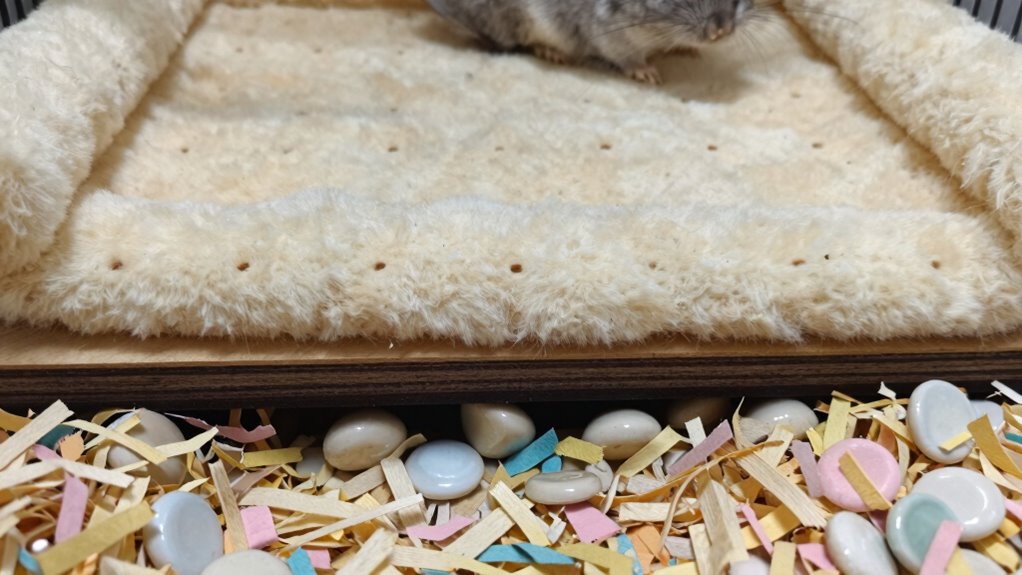

To protect your chinchilla’s sensitive feet, choose a solid, smooth surface like plastic or metal for the cage floor. Avoid wire floors, as they can cause soreness or bumblefoot. Add soft bedding such as shredded paper or aspen shavings on top for extra comfort and cleanliness. Regularly clean and replace bedding to prevent odors and maintain health. Keep going if you want to learn more about creating a safe, cozy environment for your chinchilla.
Key Takeaways
- Use solid, smooth surfaces like plastic or metal to prevent foot sores and allow easy cleaning.
- Avoid wire floors, which can cause sore feet or bumblefoot in chinchillas.
- Add solid platforms with bedding on wire cages to provide a safe, comfortable area.
- Choose wipeable, non-porous materials for flooring to facilitate sanitation and reduce health risks.
- Incorporate soft, dust-free bedding materials on solid surfaces to cushion feet and minimize irritation.
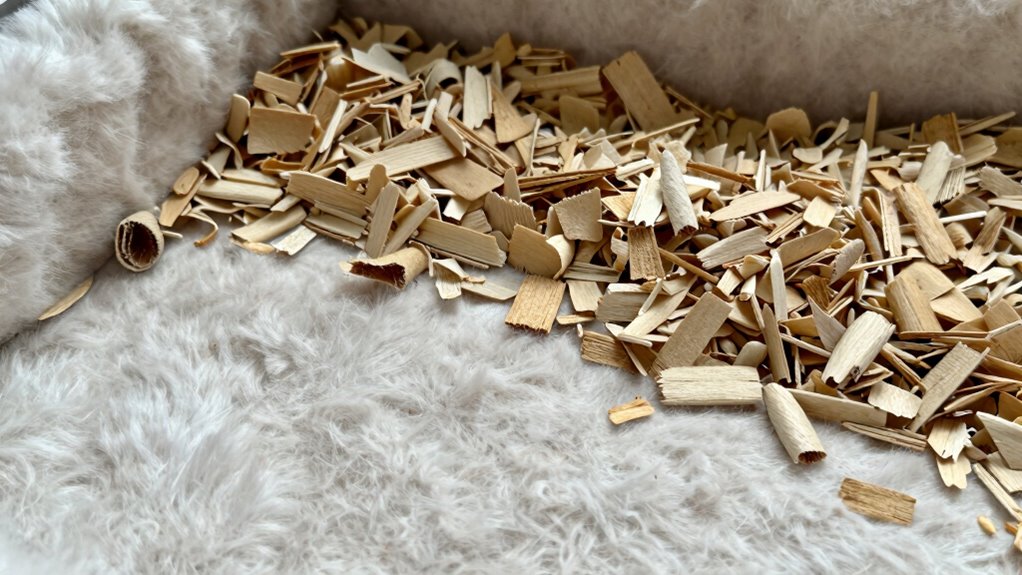
Are you wondering what the best flooring options are for your chinchilla’s cage? Choosing the right flooring is essential to keep your pet comfortable and healthy. Your goal should be to provide a surface that protects their sensitive feet while making cleaning routines manageable. When exploring bedding options, think about materials that absorb waste, reduce odor, and are easy to replace. Soft bedding like shredded paper, aspen shavings, or specialized chinchilla bedding can serve as a comfortable layer, but it’s important to select options that aren’t too dusty or abrasive. Avoid bedding that’s too coarse or that creates a lot of dust, as it can irritate your chinchilla’s delicate feet and respiratory system.
The flooring underneath the bedding plays a key role in ensuring your chinchilla’s well-being. A solid, smooth surface like plastic or metal is preferable to wire floors, which can cause sore feet or bumblefoot. If your cage has a wire base, consider adding a thick, solid platform on top, covered with bedding, to provide a softer landing. This setup not only protects their feet but also simplifies cleaning routines. When it’s time to tidy up, you’ll want a flooring option that’s easy to clean and sanitize regularly. Plastic trays or removable platforms make it straightforward to replace bedding and wipe down surfaces, reducing the risk of bacteria buildup. Additionally, selecting appropriate cleaning tools designed for small animal cages can help maintain hygiene effectively. Regular inspection of the flooring is also important to detect any damage or areas that may cause discomfort. Using dust-free bedding materials can further minimize respiratory issues and support overall health.
Furthermore, choosing safe flooring options can help prevent injuries and promote a comfortable environment for your chinchilla. In terms of cleaning routines, avoid flooring materials that trap waste or are difficult to sanitize. Regularly removing soiled bedding and replacing it with fresh material keeps the environment clean and minimizes odors. Using a smooth, wipeable surface underneath the bedding allows you to easily disinfect the cage without having to dismantle the entire setup. This is especially important because chinchillas are sensitive to dust and strong cleaning chemicals. It’s also beneficial to select hypoallergenic bedding to further support your pet’s respiratory health. Opt for cleaning products that are gentle and safe for small animals, and make sure to rinse and dry the surfaces thoroughly before replacing bedding. Establishing a consistent routine—such as daily spot checks and weekly deep cleans—helps maintain a hygienic environment, ensuring your chinchilla’s feet stay healthy and comfortable. Proper cage maintenance supports overall well-being and prevents potential foot injuries.
As an affiliate, we earn on qualifying purchases.
Frequently Asked Questions
How Often Should I Replace Chinchilla Cage Flooring?
You should replace your chinchilla’s cage flooring when it shows signs of wear or damage, usually every 6 to 12 months. Prioritize cage flooring durability and material safety by choosing high-quality, chew-resistant options. Regularly inspect for loose or frayed areas, and replace them promptly to prevent injuries. Keeping the flooring clean and intact guarantees your chinchilla’s feet stay protected and comfortable, promoting overall health and happiness.
Are There Eco-Friendly Flooring Options for Chinchilla Cages?
Yes, eco-friendly flooring options exist for your chinchilla cage. You can choose recycled materials like recycled paper or wood, which are gentle on sensitive feet and sustainable. Non-toxic options, such as natural linoleum or untreated wood, also work well. These choices not only protect your chinchilla’s delicate feet but also help reduce environmental impact, creating a healthier habitat for your pet and the planet.
Can Certain Floor Materials Cause Allergies in Chinchillas?
Certain floor materials can cause allergies in chinchillas if they contain allergy triggers or lack proper material safety. You should avoid harsh chemicals, synthetic fabrics, or dusty substrates that might provoke respiratory issues or skin irritations. Instead, choose natural, non-toxic materials that are dust-free and hypoallergenic. Always make sure your chinchilla’s bedding and flooring are safe, clean, and free from potential allergens to keep your pet healthy and comfortable.
What Is the Best Way to Clean Chinchilla Cage Floors?
It might seem like a coincidence, but the best way to clean chinchilla cage floors is to use gentle cleaning techniques that preserve material longevity. Regularly remove waste and debris, then wipe down with a damp cloth using mild, non-toxic cleaners. Avoid harsh chemicals, and let the floor dry completely before returning your chinchilla. This keeps the flooring in good shape and guarantees your pet’s feet stay protected and healthy.
How Do I Prevent My Chinchilla From Chewing on the Cage Floor?
To prevent your chinchilla from chewing on the cage floor, use safe flooring materials like linoleum or layered wood, which are less tempting and safer if chewed. Add chewing deterrents, such as natural sprays or bitter apple, to discourage destructive behavior. Providing plenty of toys and chewable accessories also helps redirect your chinchilla’s urge to chew, keeping them engaged and protecting their delicate feet from harm.
Conclusion
Just like Cinderella’s delicate feet needed the perfect slipper, your chinchilla’s tiny paws deserve the best flooring. Choosing the right material protects their sensitive feet and keeps them happy and healthy. Remember, a cozy, gentle surface isn’t just a luxury—it’s essential for their well-being. By giving your chinchilla a soft landing, you’re ensuring they feel safe and loved, much like the fairy godmother’s touch that transforms a rough road into a fairy tale ending.