To measure your pet and carrier accurately, use a soft measuring tape to record your pet’s length from nose to tail base, height from paws to the top of the head while standing, and girth around the widest chest part. Then, measure your carrier’s interior dimensions—length, width, and height—to verify it fits airline regulations. Stick to these guidelines closely for a safe, comfortable trip. Keep going to discover detailed steps and tips for perfect measurements.
Key Takeaways
- Use a soft measuring tape to measure your pet’s length, height, and girth accurately before selecting a carrier.
- Measure from nose tip to tail base for length, paws to top of head for height, and around the widest chest for girth.
- Check airline-specific maximum dimensions for pet carriers and choose one slightly larger to ensure proper fit.
- Double-check measurements against airline rules to avoid carriers that are too small or too large for travel.
- Prioritize carriers with good ventilation, secure closures, and sturdy materials to meet airline safety standards.
What Are Airline Pet Carrier Size Limits and Why Do They Matter?
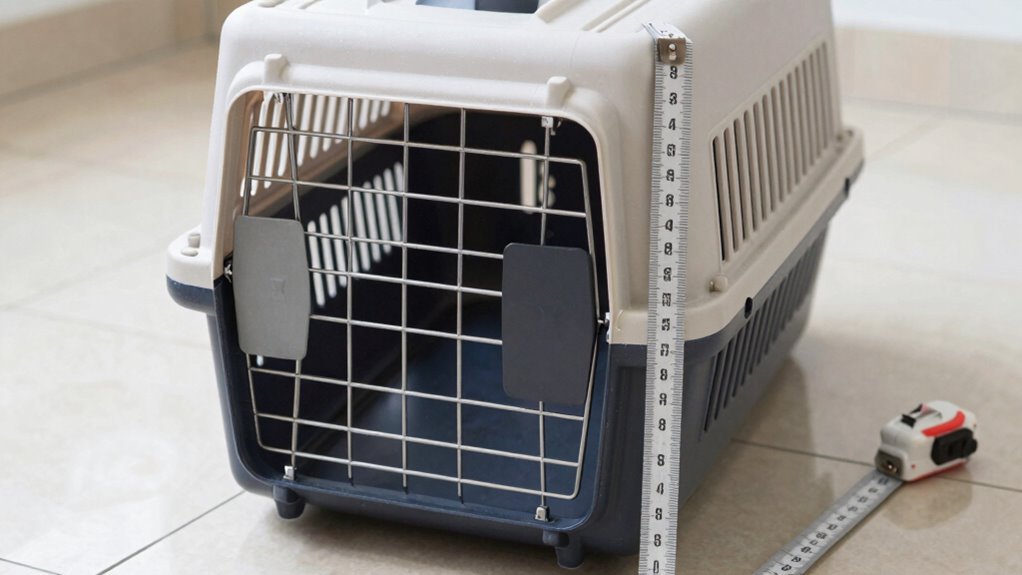
Most airlines specify size limits for pet carriers to guarantee your pet can travel comfortably and safely. These restrictions are part of travel regulations designed to assure proper pet safety during flights. If your carrier is too large, it may not fit under the seat or comply with airline policies, risking delays or denied boarding. Conversely, a carrier that’s too small can cause discomfort or restrict your pet’s movement, impacting their well-being. Understanding these size limits helps you select a carrier that meets airline standards and keeps your pet secure throughout the journey. Following these regulations isn’t just about compliance; it’s about prioritizing your pet’s safety and comfort while traveling. Always check specific airline requirements before packing your carrier. Additionally, airline pet policies are essential for ensuring a smooth travel experience for your furry companion. Properly adhering to these guidelines can prevent last-minute surprises at the airport.
How to Measure Your Airline Pet Carrier and Your Pet Correctly
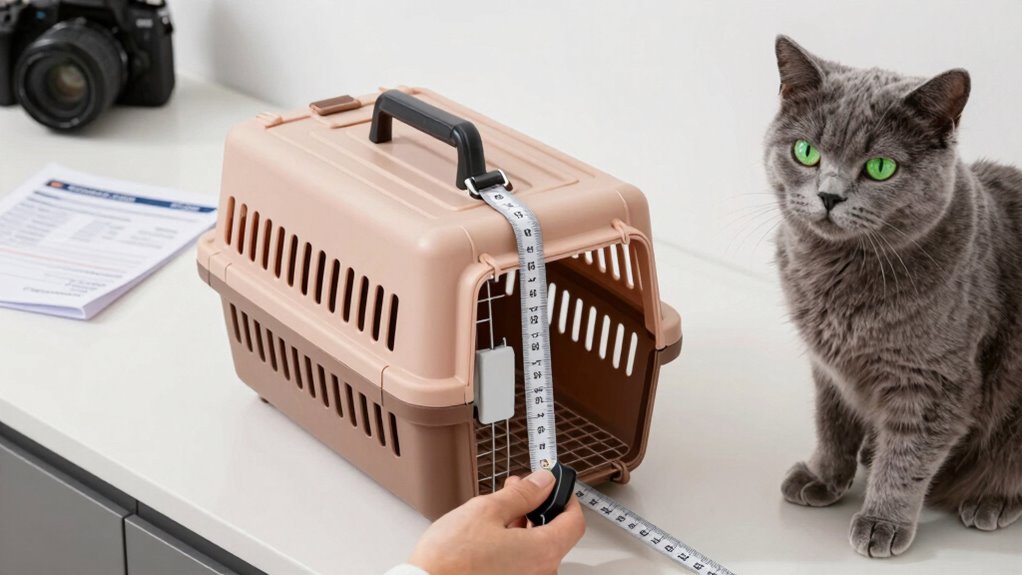
To guarantee your pet travels comfortably and meets airline requirements, you need to measure both your pet and their carrier accurately. Proper measurements ensure pet safety and reduce stress during travel. For your pet, measure length from the nose to the base of the tail, height from the paws to the top of the head when standing, and girth around the widest part of the chest. For the carrier, measure interior length, width, and height, ensuring it’s slightly larger than your pet’s dimensions for comfort. Use a soft measuring tape for accuracy. Avoid guesswork, as improper measurements can compromise safety and comfort. Accurate sizing helps your pet stay secure and relaxed during the journey, making travel smoother for everyone involved. Additionally, understanding projector specifications like size and resolution can help you create an optimal environment for your pet’s comfort during travel. When measuring the carrier, consider airline carrier regulations to ensure compliance and avoid last-minute surprises at the airport. Being familiar with measuring techniques can also improve your accuracy and confidence in selecting the right carrier size. Conducting a proper fitting ensures that your pet has enough space to move comfortably without excess room that could cause sliding or tipping. Consulting pet travel tips can further prepare you for a stress-free journey.
Step-by-Step: Measuring Your Pet and Carrier for Airline Travel

Accurately measuring your pet and their carrier is essential for a smooth travel experience. First, measure your pet’s length from the tip of the nose to the base of the tail, and their height from the ground to the top of the head or ears. Record these measurements carefully. Next, check the airline pet policies to determine the maximum allowed dimensions for carriers. When selecting a carrier, ensure it’s just slightly larger than your pet’s measurements—allowing comfort without exceeding limits. Keep pet travel documentation handy, as airlines often require updated records showing your pet’s size. Proper measurements help prevent last-minute surprises and ensure your pet meets airline requirements, making your journey stress-free and compliant with airline pet policies. Incorporating European cloud innovation into your planning can also provide peace of mind through reliable and secure travel arrangements. Additionally, using precise measurement tools can improve accuracy and reduce the chance of errors during the sizing process. Being aware of modern energy-efficient fans can also inspire you to create a more comfortable environment during travel preparations. Moreover, utilizing vintage-inspired travel accessories can add a stylish and functional touch to your pet’s carrier, blending practicality with retro charm.
Common Mistakes to Avoid When Picking and Measuring Your Pet Carrier
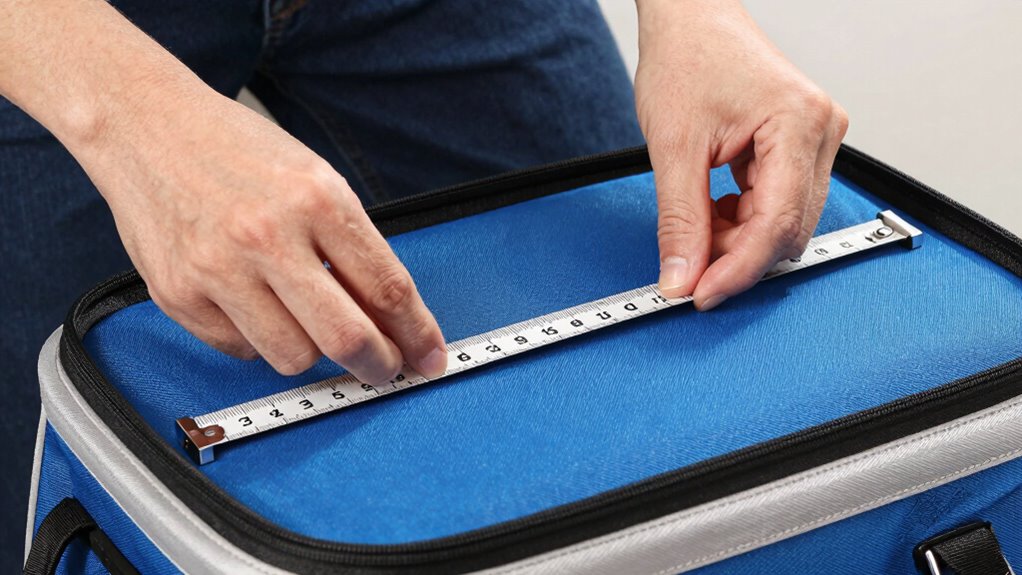
Choosing the wrong carrier size or mismeasuring your pet can lead to delays, additional fees, or even being denied boarding. One common mistake is selecting a carrier that’s too small, compromising your pet’s safety and comfort. Conversely, a carrier that’s too large can cause issues with airline regulations and stability. Avoid ignoring the importance of carrier durability; a flimsy or poorly made carrier might break during travel, risking your pet’s safety. Always double-check measurements and ensure the carrier’s dimensions match airline specifications. Don’t assume your pet will fit without proper measurement—this can lead to unnecessary stress and complications. Proper measurement techniques, including understanding carrier dimensions, are essential for a smooth travel experience. Additionally, paying attention to herbal properties can help you choose the best carrier materials that are safe and comfortable for your pet. Prioritize a sturdy, well-built carrier that provides enough space for your pet to stand, turn around, and lie down comfortably. Ensuring proper airline carrier regulations helps guarantee a safe and hassle-free journey for your furry friend. It’s also important to consider animal safety standards to select a carrier that meets all necessary requirements. Proper selection guarantees safe, smooth travel for your furry friend, and being aware of travel safety guidelines can further ensure a stress-free trip.
Tips for Choosing an Airline-Approved Pet Carrier That Keeps Your Pet Comfortable

Selecting an airline-approved pet carrier that keeps your pet comfortable begins with understanding the specific features that promote a positive travel experience. Focus on pet carrier styles that prioritize ventilation, softness, and secure closures. To guarantee maximum travel comfort, consider these tips:
- Choose a style with mesh panels for breathability and airflow.
- Opt for padded, cozy interiors that mimic your pet’s favorite resting spot.
- Look for sturdy, lightweight materials that are easy to carry.
- Ensure the carrier has secure zippers and clasps to prevent escapes.
- Additionally, understanding wood movement can help you select durable, well-constructed carriers that withstand travel conditions. Being aware of material expansion can aid in choosing carriers that won’t warp or crack during temperature fluctuations.
Frequently Asked Questions
Can I Use a Soft-Sided Carrier for All Airlines?
You can often use a soft-sided carrier for most airlines, but it’s essential to verify each airline’s specific travel safety and pet comfort rules. Soft-sided carriers are popular because they’re lightweight and fit under seats, but sizes vary. Always measure your carrier accurately and compare it to airline requirements to avoid surprises. This ensures your pet’s travel safety and comfort, making your journey smoother and more enjoyable for both of you.
What Materials Are Best for Airline Pet Carriers?
You should choose pet carrier fabrics that are durable, lightweight, and breathable to guarantee airline compliance. Materials like nylon, polyester, or durable mesh are ideal because they provide strength and ventilation. Avoid fabrics that are too flimsy or heavy, as airlines require carriers to be secure yet comfortable for your pet. Always verify the specific airline’s compliance standards, but generally, these fabrics help you meet regulations while keeping your pet safe and comfortable.
Are There Specific Weight Restrictions for Carriers?
Sure, your pet carrier’s weight must stay within airline weight limits, typically around 15-22 pounds, including the carrier. Imagine fitting a suitcase-sized pet into a tiny backpack—sounds fun, right? Always check specific airline policies for pet carrier dimensions and weight restrictions before packing. Keep your furry travel buddy comfy, and avoid surprise fees or the dreaded “no boarding” look from airline staff.
How Do I Handle Measuring a Squirming or Anxious Pet?
To handle measuring a squirming or anxious pet, stay calm and use gentle measuring techniques. Wrap your pet in a familiar towel to reduce anxiety, then gently hold them while you measure their length and height with a flexible tape measure. Keep the process brief, speak softly, and reward your pet afterwards. If needed, enlist a helper to keep your pet steady, ensuring accurate measurements without causing stress.
Can I Modify My Carrier to Fit Airline Requirements?
Sure, you can modify your carrier to fit airline regulations, but don’t expect it to be a free-for-all. Focus on the carrier dimensions that airlines specify, and make certain any changes stay within those limits. Cutting or padding might seem tempting, yet it’s vital to maintain the integrity and safety of your pet. Always double-check airline rules first—because even the most creative modifications shouldn’t violate airline regulations.
Conclusion
By understanding airline size limits and mastering accurate measurements, you guarantee your pet’s comfort and compliance. Think of it as fitting a key perfectly into its lock—precision is everything. When you choose the right carrier, you’re not just meeting regulations, but crafting a safe haven for your furry friend. So, measure twice, choose wisely, and travel confidently—because a well-prepared journey begins with knowing exactly how your pet and carrier align.