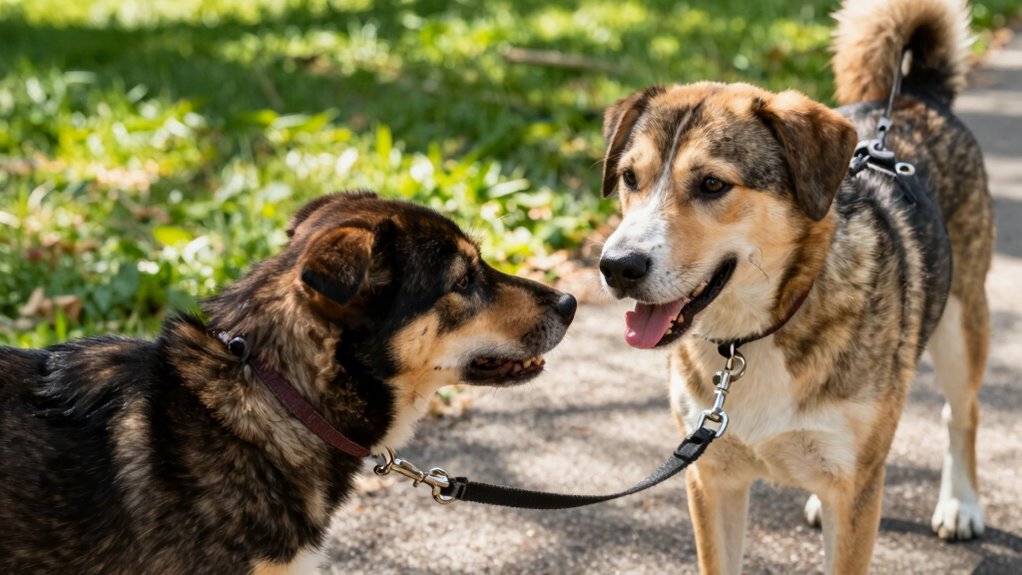

To prevent lunging during leash greetings, watch your dog’s body language for signs of excitement like wagging tails or tense posture. Handle the leash calmly, keeping it loose yet controlled, and set up controlled, calm introductions in neutral settings. Teach your dog to focus on you first and reward polite behavior with treats. Identifying triggers and practicing these skills consistently can stop lunges before they start—becoming familiar with these steps can help you create stress-free greetings.
Key Takeaways
- Use calm, loose leash handling and consistent cues to promote relaxed greetings and prevent lunging.
- Recognize early body language signs of overexcitement or stress to intervene proactively.
- Set up controlled, neutral-location introductions with relaxed leash and positive reinforcement.
- Train focus exercises to redirect attention and reinforce calm behavior during greetings.
- Seek professional help if lunging persists, to address underlying fears and improve socialization skills.
Read Your Dog’s Body Language to Spot Excitement Early
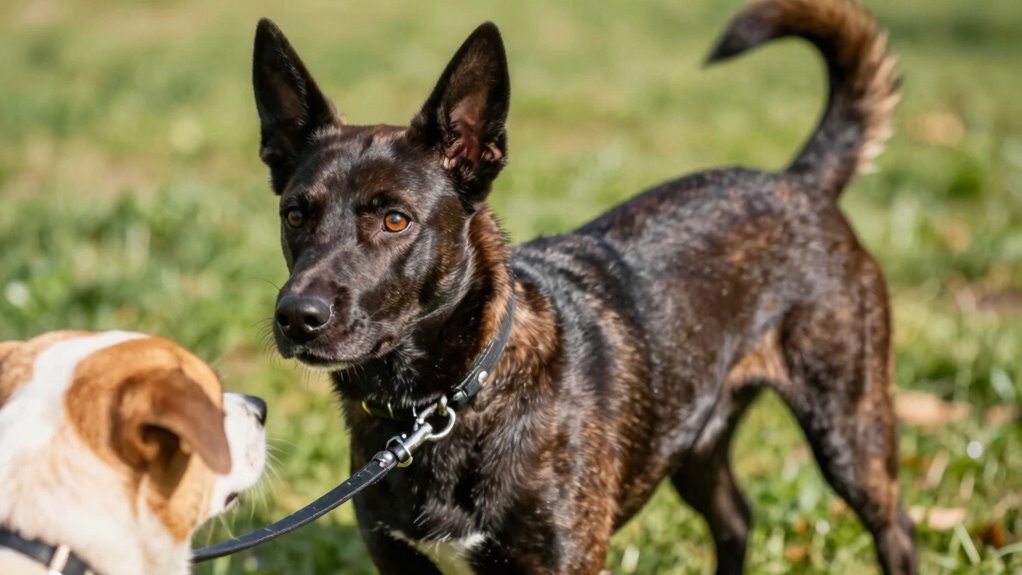
To spot your dog’s enthusiasm early, paying close attention to its body language is essential. Dog body language offers clear excitement cues, helping you recognize when your pup is getting overly eager. Look for signs like a wagging tail, bouncing movements, or perked ears. An aroused dog might also have a tense stance or a stiff tail, signaling heightened excitement. Notice if your dog’s eyes are wide or if it’s leaning forward, indicating anticipation. Understanding dog communication can help you interpret these signals more effectively. Being familiar with body language cues allows you to respond appropriately and prevent overexcitement. Recognizing excitement cues early enables you to intervene before your dog becomes too excited. Staying attentive to your dog’s body language is key to managing greetings politely and maintaining control. Additionally, recognizing energy levels can help you better gauge when your dog is approaching an overly excited state.
How Proper Leash Handling Can Prevent Lunges
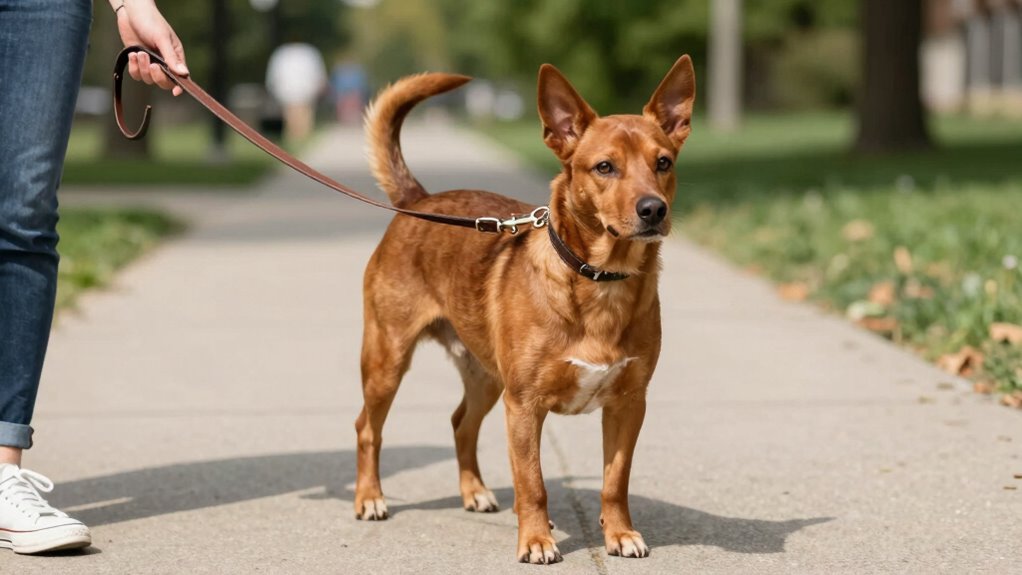
Proper leash handling is a key factor in preventing lunges and maintaining control during greetings. When you practice good leash etiquette, you give your dog clear signals about acceptable behavior, helping them feel secure. Consistent slack in the leash allows your dog to move freely without feeling trapped, reducing anxiety that can lead to lunging. During dog socialization, handling the leash calmly reassures your dog and prevents overexcitement. Keep the leash short enough for control but loose enough to avoid tension that might trigger lunging. Regularly rewarding calm behavior reinforces positive habits. Using proper equipment, like harnesses or appropriate leash types, can further enhance control and safety during interactions. Additionally, practicing consistent training helps your dog understand boundaries and reduces the likelihood of lunging. Maintaining appropriate distance during greetings also plays a crucial role in preventing overarousal and lunging. By managing the leash carefully, you set a foundation for safe, polite greetings, reducing the likelihood of lunges before they begin. Proper leash handling fosters trust and helps your dog learn appropriate social boundaries.
Setting Up Controlled Introductions to Keep Things Calm

When setting up controlled introductions, choose neutral locations where neither dog feels territorial. Keep both dogs on leashes and maintain a calm, relaxed demeanor to prevent excitement or tension. By managing the environment and their interactions carefully, you help guarantee the greeting stays smooth and stress-free. Incorporating appropriate apparel can also help reinforce a calm atmosphere and project confidence during introductions. Additionally, using calm signals can aid in communicating your control and reassuring the dogs as they meet. Being aware of dog body language can further enhance your ability to intervene early if signs of stress or discomfort appear. Paying attention to breed-specific behaviors can also provide insights into how each dog might react during introductions.
Choose Neutral Locations
Choosing a neutral location for leash greetings helps prevent territorial behaviors and reduces stress for both dogs. A neutral spot, like a quiet park or open field, minimizes the chances of one dog feeling possessive or asserting dominance. Follow dog park etiquette by keeping greetings brief and calm, avoiding overstimulation. This setting also helps manage leash tension, which can escalate excitement or frustration. If your dog feels secure in a neutral environment, they’re less likely to react defensively or lunge. Keep both dogs on loose leashes and maintain steady, relaxed body language. Utilizing proper socialization techniques in these environments further promotes polite, controlled introductions, laying the foundation for better social interactions and reducing the risk of reactive behaviors.
Use Calm, Leashed Encounters
To keep introductions calm and controlled, start by keeping both dogs on loose leashes and maintaining steady, relaxed body language. Your calm demeanor signals safety, helping dogs feel secure. Use leash management to prevent tension and sudden pulls, which can escalate excitement or fear. Watch their dog body language closely—look for relaxed tails, soft eyes, and loose muscles. If either dog shows signs of stress, such as stiff posture or raised hackles, calmly create distance. Keep encounters brief and positive, gradually increasing interaction time. Remember, your calm energy sets the tone. Incorporating dog body language awareness can further prevent misunderstandings and promote peaceful greetings, as understanding dog communication cues is essential for a successful introduction. Additionally, being mindful of biodiversity basics in your environment can help create a more calming and natural setting for your dogs during greetings, reducing environmental stressors that might contribute to tension.
Teach Your Dog to Focus on You Before Approaching Others
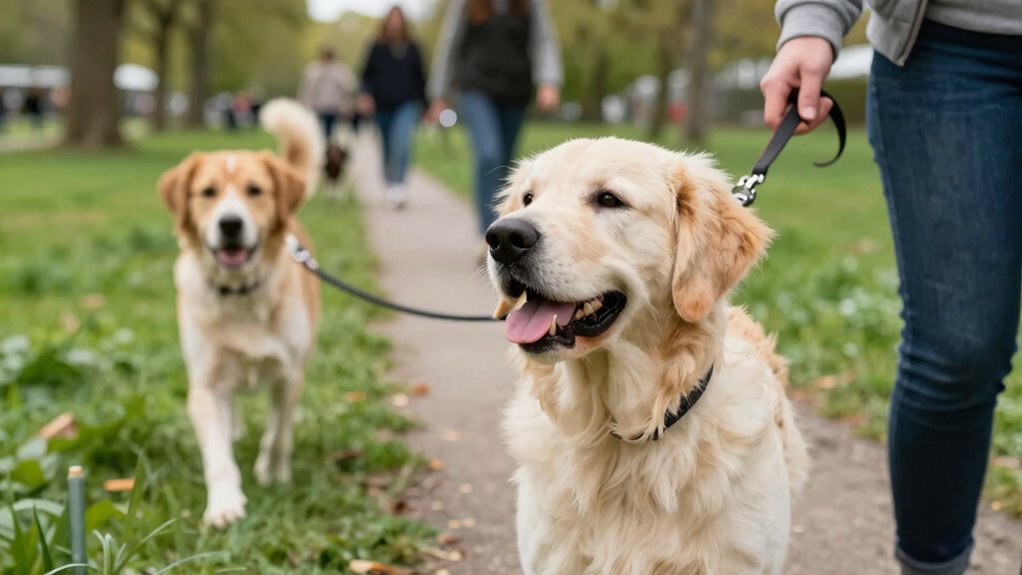
Teaching your dog to focus on you before approaching others sets the foundation for polite leash greetings. Start by practicing focus exercises in low-distraction environments, rewarding your dog for eye contact and attention. This builds a solid bond and teaches leash etiquette, ensuring your dog understands that your cues come first. Proper dog socialization helps your dog become comfortable around new people and other dogs, reducing excitement or anxiety that can lead to lunging or pulling. When you’re out together, give your dog clear signals to look at you when encountering someone. Keep your leash short but loose, and reward calm behavior. Consistent practice reinforces that your dog should seek your guidance before approaching others, promoting polite, controlled greetings. Incorporating dog socialization into your training routine can further enhance your dog’s comfort level in various situations. Additionally, practicing focused attention around different distractions can significantly improve your dog’s impulse control and responsiveness. Regular training with positive reinforcement techniques helps solidify these behaviors and fosters trust between you and your dog. Building impulse control through these exercises will also help prevent sudden lunging or pulling behaviors in more stimulating environments.
Use Positive Reinforcement to Encourage Polite Leash Greetings
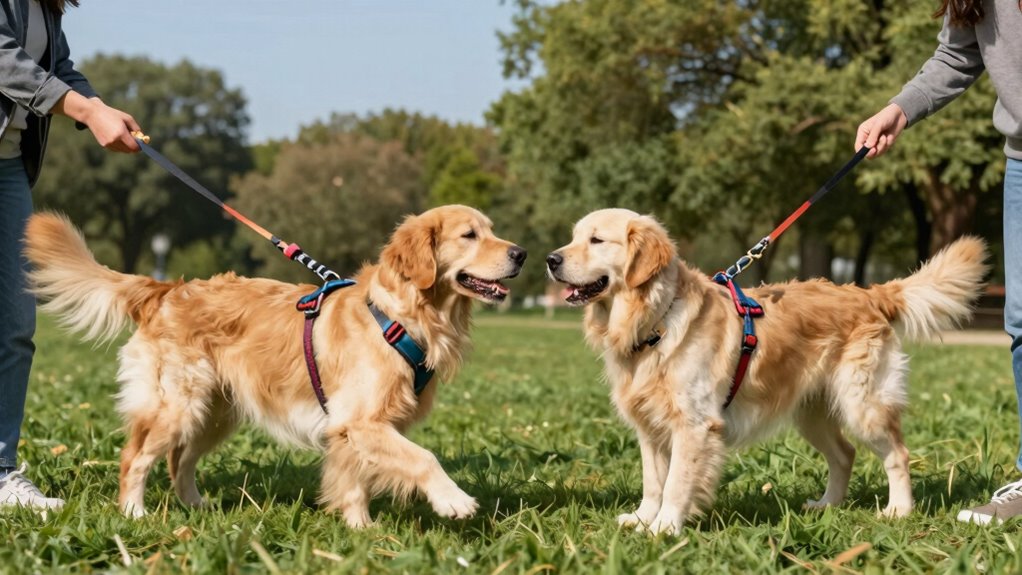
Using positive reinforcement is a powerful way to encourage your dog to have polite leash greetings. When your dog displays calm, controlled behavior during socialization, reward them immediately. This reinforces good leash etiquette and builds confidence in new situations. To do this effectively:
- Celebrate small victories, like a relaxed posture when meeting another dog.
- Offer treats or praise when your dog remains calm during interactions.
- Use consistent cues to signal appropriate behavior.
- Gradually introduce new social settings to strengthen leash manners.
Identify and Manage Common Triggers for Lunging
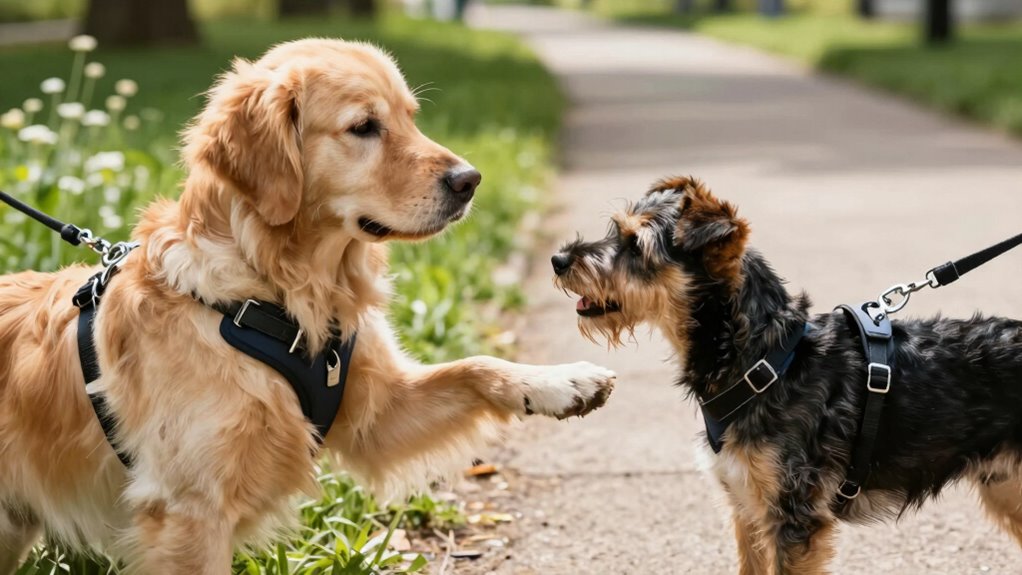
Understanding what causes your dog to lunge helps you address the behavior effectively. Common triggers include environmental factors like other dogs or loud noises, as well as your dog’s emotional cues. Recognizing these signals allows you to manage the situation and promote calmer leash greetings. Additionally, applying consistent storytelling techniques can help reinforce positive behaviors and build trust during interactions. Being aware of trigger points can further assist in preventing lunging episodes before they escalate.
Common Environmental Triggers
Environmental triggers are common causes of lunging behavior in dogs, often catching owners off guard. Urban noise, unfamiliar scents, and crowded settings can quickly overwhelm your dog. These stimuli spark their instinct to protect or explore, leading to lunging if not managed. Recognizing these triggers helps you prevent escalation. Here are key triggers to watch for:
- Loud urban noise that startles your dog and heightens their alertness.
- Unfamiliar scents that cause curiosity or anxiety, prompting lunging.
- Crowded areas where your dog feels trapped or overwhelmed.
- Sudden movements from passersby or other animals that provoke a defensive response.
- Environmental factors such as weather conditions or lighting that can influence your dog’s reactions based on security system features.
Behavioral and Emotional Cues
Recognizing your dog’s behavioral and emotional cues is essential for preventing lunging episodes. By paying close attention to their dog body language and emotional signals, you can intervene before they escalate. Signs like stiffening, raised hackles, intense staring, or lip licking often indicate arousal or anxiety. Flattened ears, tucked tail, yawning, or avoiding eye contact may show discomfort or fear. When you notice these cues, calmly create distance or redirect your dog’s attention. Understanding their emotional signals helps you anticipate triggers and respond appropriately, reducing the likelihood of lunging. Additionally, dog body language can provide vital clues that help you modify your training approach for better results. Consistently observing and interpreting these cues empowers you to manage situations proactively, fostering calmer greetings and a safer, more enjoyable experience for both of you. Recognizing emotional cues from your dog’s behavior is a key step in building a calm and well-managed greeting routine.
Training Exercises to Stop Lunges Before They Start
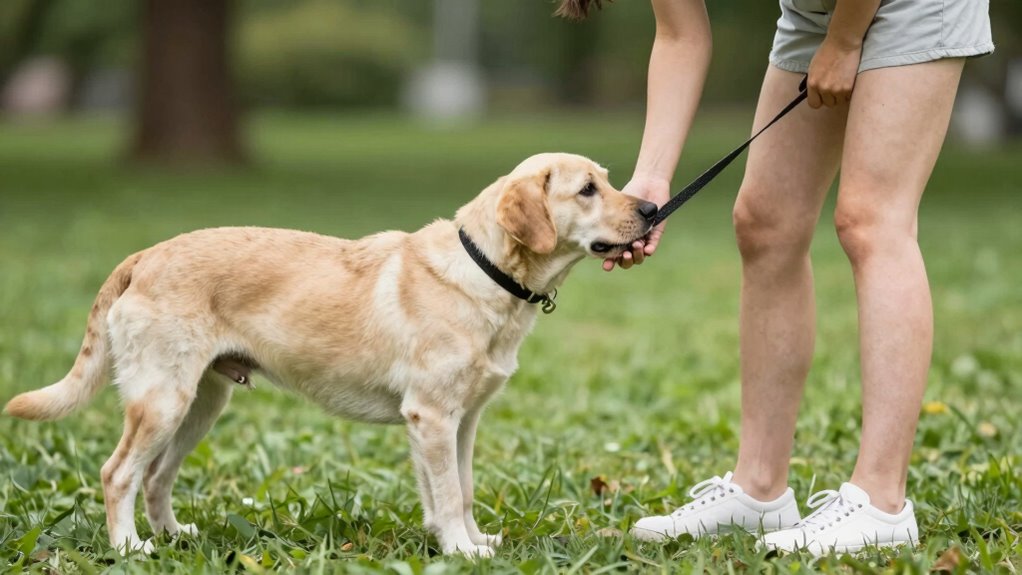
To prevent lunges before they start, it’s essential to incorporate specific training exercises that teach your dog impulse control and proper leash manners. These exercises help your dog understand dog park etiquette and reduce the urge to lunge at other dogs or people. Start with controlled focus exercises, rewarding your dog for keeping attention on you. Practice leash walking, rewarding calm behavior and gently redirecting lunges. Use a long line to give your dog space while maintaining control. Incorporate distraction training by introducing low-level stimuli and rewarding calm responses. Consistency is key: with patience and persistence, your dog will learn polite leash manners, making every walk safer and more enjoyable. Remember, stopping lunges before they start is about proactive training.
Troubleshooting Persistent Lunging and When to Get Help
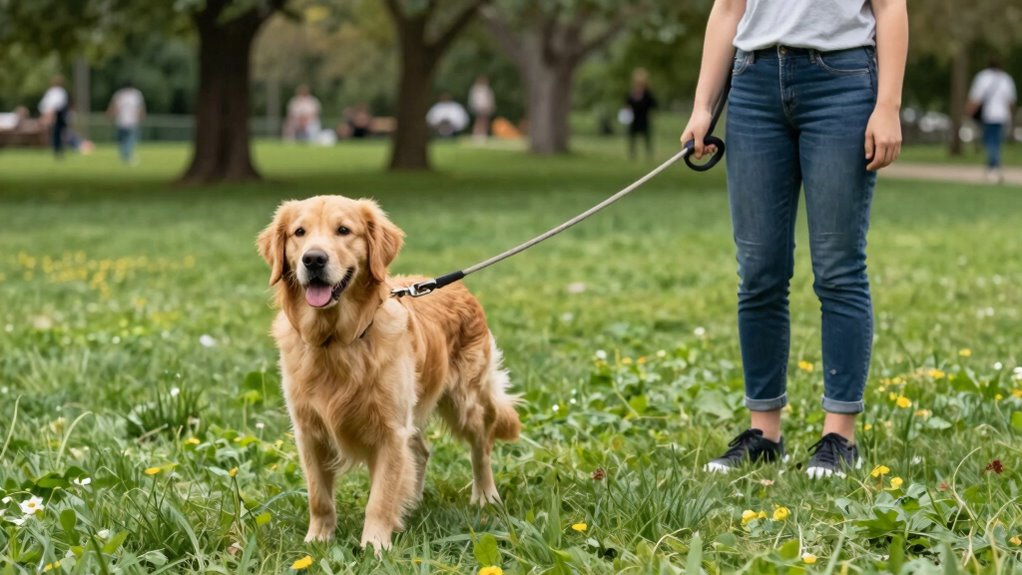
Persistent lunging can be frustrating, especially when your dog continues to lunge despite consistent training efforts. If your dog struggles with leash etiquette or poor socialization, it might be time to seek professional help. Persistent lunging often signals underlying issues like fear or overstimulation. Address these by consulting a trainer or behaviorist who can evaluate your dog’s socialization skills and develop a tailored plan. Consider this table to understand key factors:
| Issue | Cause | Solution |
|---|---|---|
| Lack of socialization | Inadequate exposure | Gradual, positive socialization |
| Poor leash etiquette | Reinforcement of bad habits | Consistent, polite leash training |
| Overstimulation | Too many triggers | Controlled exposure, calming techniques |
Getting help early prevents frustration and improves your dog’s behavior and safety.
Keep Consistent Training for Safe, Stress-Free Leash Greetings

Maintaining consistent training is essential for ensuring your dog greets others safely and calmly on leash. When you focus on regular practice, your dog learns to interpret dog body language and respond calmly. Use gentle leash techniques to create a sense of security, avoiding tension that can trigger lunging. Consistency builds trust and helps your dog understand expectations.
Consider these pivotal steps:
- Reinforce calm behavior daily to evoke pride and confidence.
- Recognize early signs of excitement or stress in your dog’s body language.
- Practice leash techniques that promote relaxed greetings.
- Celebrate small successes to foster emotional connection and trust.
Staying consistent helps your dog associate leash greetings with positive experiences, reducing stress and preventing lunging before it starts.
Frequently Asked Questions
How Long Does It Usually Take to See Progress in Leash Greeting Training?
You can usually see progress in leash greeting training within a few weeks, but it varies based on your consistency and your dog’s temperament. Most dogs respond well with daily practice, patience, and clear cues. Stick to consistency tips like rewarding calm behavior and avoiding punishment. With regular training sessions, you’ll notice fewer lunges and more polite greetings in about 2 to 4 weeks, depending on your dog’s learning pace.
Can Aggressive Behavior During Greetings Indicate Underlying Issues?
Did you know that 40% of dogs exhibit aggressive behavior during greetings? This often signals underlying socialization barriers or fear. When you notice aggression, it’s a sign to reassess your leash training techniques, focusing on positive reinforcement and controlled exposure. Addressing these issues early helps prevent escalation and builds confidence, ensuring calmer greetings. Recognizing these signs allows you to tailor your approach, making socialization smoother and less stressful for both of you.
Are There Specific Breeds More Prone to Lunging on Leash?
Certain breeds are more prone to lunging on leash due to breed tendencies and leash sensitivity. For example, terriers and retrievers may react strongly to new stimuli or other dogs, leading to lunging. These breeds often have high energy levels and strong prey drives, making them more reactive. To prevent lunging, you should work on proper socialization and leash training, ensuring your dog feels safe and confident during walks.
What Are Signs of Stress or Fear in My Dog During Greetings?
You’ll notice your dog’s stress or fear through body language cues like tucked tail, flattened ears, or avoiding eye contact. Ironically, they might also use calming signals such as yawning or sniffing the ground to hide their discomfort. Keep an eye on these signs during greetings; recognizing them early helps you intervene before your dog feels overwhelmed, ensuring a calm, positive interaction for both of you.
How Can I Ensure My Dog Remains Calm in Busy, Noisy Environments?
To keep your dog calm in busy, noisy environments, focus on dog anxiety and noise desensitization. Gradually expose your dog to loud sounds and busy settings at a manageable level, rewarding calm behavior. Use positive reinforcement and provide a safe space for your dog to retreat to if overwhelmed. Consistent practice helps your dog build confidence, reducing anxiety and making noisy environments less stressful over time.
Conclusion
By reading your dog’s body language and practicing calm, controlled greetings, you create a peaceful leash experience. Instead of a sudden lunge, imagine a relaxed pup calmly focusing on you, like a gentle breeze replacing a storm. Consistent training transforms potential chaos into harmony, making every walk enjoyable. When you stop lunges before they start, you lay the foundation for a confident, well-behaved companion—turning tense moments into trust-filled connections.